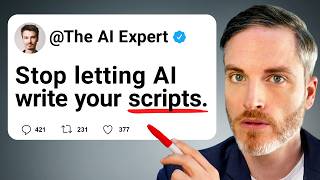

The Biggest AI Unlock for YouTube
60sReveals a simple but powerful method to use YouTube transcripts as rich context for AI, which is highly actionable for creators.
▶ Play Clip"Delivers practical, actionable AI strategies for YouTube creators, though the title slightly overstates the novelty—most advice is time-tested."
In this podcast interview, Igor Pogani, founder of The AI Advantage, shares actionable AI strategies for YouTube creators. He emphasizes using video transcripts to train AI to understand your unique voice, vocabulary, and patterns, and warns against using AI to generate scripts from scratch. Igor also outlines three levels of AI integration—from basic search to autonomous agents—and explains his efficient content creation workflow that enables publishing news videos within hours.
YouTube transcripts provide rich, pattern-rich context for AI, allowing it to analyze your style, cadence, and vocabulary. Using 5–10 transcripts helps AI understand your unique voice.
Paste three transcripts into ChatGPT with the prompt 'Extract the patterns, habits, and unexpected truths from these transcripts.' This reveals insights about your content you might not have noticed.
After analyzing his own transcripts, Igor discovered his news show was actually storytelling—clustering topics into coherent narratives. This shifted his preparation process to pre-weaving stories.
Most creators use AI to generate scripts from scratch (zero-to-one), but it's better to use AI to refine and rearrange your own raw ideas (one-to-99). Voice memos are a great starting point.
Run your transcripts through AI with the prompt 'Extract my tone, voice, cadence, and vocabulary.' Save the vocabulary list and reuse it in future prompts to maintain authenticity.
Level 1: AI as Google/drafting. Level 2: AI as clone/thought partner (hyper-personalized). Level 3: AI as agent working for you while you sleep. Don't skip levels; otherwise you give 'a stranger the keys to your car.'
Igor's AI Advantage channel grew from 50 views to viral after he had already been uploading for two years, building an audience and refining his on-camera skills. Timing is essential but not everything.
Igor publishes one news video and one tutorial per week. He outsources editing and thumbnail design, and uses a producer for script research. His goal is to minimize time spent while maintaining quality.
Short, outcome-oriented tutorials perform well because they respect viewers' time and deliver on the hook. They simplify complex tasks quickly.
Using a live-streaming mindset: record in one take without stopping, correct mistakes naturally. Setup: Sony FX6, CamLink 4K, eCam Live, Stream Deck for switching between camera and screen. Publish within 2–3 hours for 4x more views.
The key takeaway is to use AI as an amplifier of your unique voice—not a replacement for it. By leveraging transcripts, avoiding script generation, and mastering the three levels of AI, creators can save time, produce authentic content, and stay ahead in a rapidly evolving landscape.
What is the prompt to analyze your own YouTube transcripts for patterns?
'Extract the patterns, habits, and unexpected truths from these transcripts.'
03:29
What is the common mistake creators make with AI?
Using AI to create (write scripts from scratch) rather than edit (refine existing ideas).
06:17
What three elements should you ask AI to extract from your transcripts to maintain your voice?
Tone, voice, cadence, and vocabulary.
07:30
What are the three levels of AI usage described by Igor?
Level 1: AI as Google/drafting. Level 2: AI as clone/thought partner. Level 3: AI as agent working autonomously.
10:21
Why should you not skip from Level 1 to Level 3 of AI usage?
Because you'd be giving a stranger the keys to your car—the AI isn't calibrated to your patterns and goals.
15:45
What is the recommended YouTube upload schedule for creators according to Igor?
One news video per week and one tutorial per week.
31:15
How much more views can you get by uploading a news video within 3 hours vs 24 hours?
Up to 4 times more views.
41:02
Self-Analysis via Transcripts
Reveals that AI can uncover blind spots in your own content style that you wouldn't notice otherwise.
03:05Create vs Edit Distinction
Highlights a fundamental misuse of AI that leads to generic content, offering a clear alternative.
06:17Three Levels of AI
Provides a framework for scaling AI use, from basic to autonomous, with emphasis on not skipping steps.
10:21Live-Streaming Mindset for Recording
Shows how to drastically reduce production time by eliminating perfectionism and multiple takes.
33:37Speed to Upload Multiplies Views
Quantifies the impact of timeliness on viewership, a concrete metric for content strategy.
41:02[00:02] and new opportunities when it comes to growing a YouTube channel or your social media following using AI. YouTube, like come on, like people coming here to see unique perspective. Like, you don't want to automate that away with like script
[00:15] writing. You will ask it to extract your tone, your voice, your cadence, and the big one, your vocabulary. Authenticity rules on this platform, right? And might not be aware of them. if you extract the vocabulary when you're
[00:30] script. >> One of the biggest mistakes though you their channel. >> Yeah. Okay. Actually, this is an easy one. I see this all the time. They use it to my guest today is Igor Pogani and
[00:47] he is the founder of the AI advantage, an incredible YouTube channel where he's pumping out incredible amounts of content himself and going to be also the best video concepts and ideas that get views right now. So, Eigor, welcome
[01:03] Sean. >> So, let's go zero to 100 real quick. What's the biggest single best AI hack right now that you're enjoying or that be using on their content? >> Okay, let's get the value out of the
[01:18] way. So, look, there's so much you can do, but YouTube is particularly great when it comes to working with AI because as you might know, AI really likes rich context when you work with it, right? You say, "Write me an essay about XYZ,"
[01:32] it's going to be a random essay. If you say, "Write me an essay about XYZ." And then you give it the last three essays that you wrote and all of a sudden it's really going to be able to extract those pattern patterns and understand how you
[01:44] write and what preferences you have. Right? Now, here's the beautiful thing. If you're on YouTube, every video has a transcript, right? And that transcript to making videos that, you know, sometimes are 5 to 10 minutes, but often
[01:57] are 20 to 30 minutes. If you're doing a podcast, even more than that. All of that is context and all of that is very patternrich context. That's what we're short form creator, you know that 30 second short like cool. You can extract
[02:11] the hook. You can extract like the value piece. Maybe there's a gimmick in there and maybe there's a formula to it. Sure. But really, YouTube is just so thankful the biggest unlock is working with transcripts. And then obviously the
[02:25] question is like, okay, Gore, I got transcripts. What do I do with those? number one thing that I tell anybody creating long form content is just let it analyze yourself, right? Because it's it's so seasoned, it's so smart, it's so
[02:40] well read. I don't care how many books you read, it read more, right? And it saw patterns across all of that. Plus, by the way, there was this whole thing where they were talking about how they OpenAI trained it on YouTube content,
[02:53] it was kind of like unclear and it was swept under the rug. But like truthfully, they watched most of YouTube I think and you can use that to your advantage. So what what you're going to do now, let's get practical.
[03:05] You take your latest transcripts, free at least five ideally. Okay? If you YouTube, you kind of just go under the video, you expand the description, and there's a button like 90% of the video that says show transcript. You can just
[03:17] copy paste from there. That's the easiest no cost way. Sure, there's tools and other ways, but you just copy paste three of these transcripts into chat GPT. You say transcript one paste, transcript two, paste, transcript three,
[03:29] paste. Right? And then you tell it extract the patterns, habits, and extract the patterns, habits, and unexpected truths that I wouldn't even videos. Those three keywords, use those in there. That's it. You gave it so much
[03:44] context. You gave it so many patterns. I guarantee you if you do that, you're about your video creation style that you might not have known. This helped me. It help you too. >> Yeah. So that's incredible. Extract the
[03:59] patterns, habits, and unexpected truths from these transcripts. When you did this, what was like one epiphany you had about your own content and that you were able to double down on? >> Oh my god. So we do this one um content
[04:12] together all the different stories and then I basically it's it's a news show, right? And the thing is that's how I saw it. I thought thought, okay, it's a it's a news show, right? When I did this on the past, I think I pulled like the past
[04:25] 10 transcripts and I I ran this on it. It told me, "Hey, Eager, you're not just presenting the news." You're trying to tell a story every time. You leave out the stories that don't fit together or are not that relevant to your audience.
[04:38] You're very clear on your avatar, like non-technical middle-aged people who amplify them with the use of AI so they have more like time on to do what they want, right? That's avatar. And then you weave it into a story. So you you
[04:53] cluster certain topics that belong together um in that segment and you you examples or sometimes you weave two things into one. You try to like tell something that's relatively coherent in a sea of well madness quite frankly
[05:08] because that's that's what AI is these days. There's just so much of it. It's so overwhelming and you try to tell a little story once a week. That insight true. So then it changed the way I think about it. Now like in my preparation I I
[05:22] categorize these things according to their length according to the theme and in my head I I weave them together in the preparation process whereas that during the shooting because like I was you know presenting I was doing the tech
[05:36] like you always have to spin so many easier. I just felt like okay like in my preparation I can go deeper and I don't recording while doing all these other things. Um so I prepped the stories like
[05:51] that in advance and I it showed me what to prep which was amazing. >> Yeah that's super powerful. So I know that listeners will either save this or do this immediately and use that prompt
[06:04] you just gave us take you know three of your transcripts and then you find these key insights and you double down on it. So now it's takes less cognitive load in the future. Such a powerful framework. Well, I'm curious. That's a really great
[06:17] faster. What's a one of the biggest mistakes though you see creators making where >> AI is overrated or less helpful? one. I see this all the time. They use
[06:32] it to create rather than to edit. There's a big difference on go of going from zero to one rather than going from, you know, one to 99. Okay. Like in this between going from zero to one and then going from one to like the polished
[06:47] finished product. >> What I see a lot of people do is they go context, but they say, you know, write me a script. That's like like in my mind that's a I don't I don't ever write scripts with
[07:00] >> not to saying I never create scripts with it, but I don't write scripts with it. Big difference. So, what you do want to do is maybe you want to hit the microphone button and you want to start speaking for 3 to 5 minutes and mind
[07:16] dump all of your thoughts regarding this video that you're creating into it and script. Right? Then it's like re-editing and and rearranging those ideas. It's using some of your writing. Or another one in the first example I told you to
[07:30] like use multiple transcripts to extract you know unexpected truth and patterns. Well, you can do the same thing the step with the transcript, but you will ask it to extract your tone, your voice, your cadence, and the big one, your
[07:45] vocabulary. YouTubers, you know, we usually have a unique way of expressing ourselves. And that's like there's a there's just right? And there's probably certain words that you use that others don't
[07:58] them. If you extract the vocabulary, then if you have a list of that or that in a document, you can put it back in when you're turning your three minute the little vocabulary document and all of a sudden you're working with it,
[08:12] right? Maybe you're improving flow, maybe you're um if you're do like for you can do things like adding punctuation or fixing the grammar. You're editing, you're not creating. That's a big difference. That was one of
[08:26] the most powerful AI hacks I've heard this year. And so a lot of us want AI to write better for us or write in our voice. But what you can do, what you couple transcripts, three of them in this case prompt by saying, "Hey, can
[08:42] you extract my tone, my voice, my cadence, but then here's the super cadence, but then here's the super prompt of the year is what is my unique vocabulary? Can you put that in the list? save that and then use that in the
[08:55] fe future because when everyone sounds like the same chat GPT script regurgitated, it will have already you don't have to sit down and try to think the types of words you use. Just pull
[09:08] those out of a transcript and refeed those into AI in the future and now it's going to sound like you. And what's powerful is that's a very contrarian use AI to create scripts, but really not to
[09:22] write scripts, or however you said it. And um I think that's a trap a lot of people are falling into. We're even seeing especially faceless channels, but if there's no interchangeability and all the scripts are just, you know,
[09:37] like you said, authenticity is king. And so I love how we can use AI, but not just depending on it. We become vanilla. we sound like everybody if we fully lean on AI. So, you're giving us the exact prompts. Uh, another one as we before we
[09:53] really want to hear about even just your gear and your setup because you have this cool way of turning videos around quickly to hop on hop on to viral stories. >> Um, you you talk about AI being a
[10:06] little bit when you're thinking about some ideas that we could learn from >> 100%. I think as you kind of graduate through these different levels of AI usage and and as as I experienced um
[10:21] what what's hopefully most of the facets that AI provides most of the use cases like I've literally made a living of just no lifing it and testing everything then working with others and seeing what works for them. One pattern that became
[10:36] clear over time is that there's a progression and and it's always this the progression of where people come in, they create an account, and what's Google. What's really intuitive for people is also to start drafting stuff,
[10:50] trap that I just talked about is like with an email draft, it's fine, right? information along. But with YouTube, like come on, like people come here to your unique perspective. Like you don't want to automate that away with like
[11:04] >> and let's just underline that last point. But what people do is they draft emails, they draft different documents, right? They use it to to develop like a all of these like sort of like entry-level use cases where it just
[11:19] makes sense. Now, there's nothing wrong with that, right? But there is way more, potential and and I think the biggest potential of AI lies behind uh behind its ability to hyperpersonalize things to you, right? So in other words, it's
[11:35] giving you outputs that wouldn't make sense to any other person on this world but you, right? That's where you want to get. That's where we start entering this territory of a thought partner or what we also refer to as a clone because you
[11:48] kind of clone yourself. Like there's a second you and you're in the same level. who who kind of like reach that level and use it at this level, they couldn't imagine a world in which they don't have this anymore. They would they wouldn't
[12:02] this anymore. They would they wouldn't give this up. like that it's as valuable almost as valuable as as their closest people in their life, right? To them or like maybe maybe a better way to put it is it's as valuable it's more valuable
[12:15] is it's as valuable it's more valuable than their most priced toys and and gadgets and it's just it's just like smartphone level importance to your existence in this modern world when you get it right. Now, how do you get it
[12:30] like master that first level and start getting comfortable there. But over madness. And it's basically what we teach is you develop these documents where you save certain characteristics and and facts about your identity and
[12:46] your goals and why those goals matter to you in a document. And then you'll add keep using that and you work in there. That's your that's your baseline, right? interacting with chat or maybe even having memories on where it randomly
[13:00] kind of pulls things together about you and really being conscious about that and and having this clone setup is like the difference of like being on a first date with a girl versus being with her for six months. M
[13:13] of a sudden you can open conversations that are deeper because there's there's context that is established and all of a sudden she or like the clone or chat will respond in a way where that answer wouldn't make sense in any other context
[13:26] but it makes sense to you and when you get to that level you start like almost I almost want to say like respecting how AI can help you and and I know even a lot of a lot of leaders I don't care what industry I don't care how
[13:40] successful you were they start viewing it like in a way that they don't make big decisions without consulting without consulting their thought partner. And again says like one thing and that's this is just something that people
[13:54] people should have like it's just it's just incredible and it's you know doable in um in hours of learning and progression. Um so that's what what a thought partner is. Did I hear you? This is like the levels. And so most
[14:08] level are you at when it comes to using AI? Are you using it just kind of as advanced search, using it as Google, using it just to draft things? Have you levels, Eigor. >> Exactly. So, so that and then beyond
[14:25] level two comes this level that has been hyped so much recently, right? this this level of not AI just working alongside you like this as a fault partner or as you like this as a fault partner or as an assistant but an AI working for you
[14:37] while you sleep right often this is in the public referred to as a personal agent and really what that means is that all the stuff that you've been doing manually in chat now happens automatically and it connects to more
[14:50] >> so all of a sudden like if you think about it like if we think in YouTube terms the difference there would be you know level one you're kind of like using it to answer questions and do research. Level two, all of a sudden you're maybe
[15:03] already like bringing in data and it knows you. You analyze your style. You know what your patterns are. You kind of have that saved and set up in your chat and you're working with it and maybe you like look at the past five podcasts you
[15:17] comment sections and you analyze all the comments and then it gives you really good insights. Well, level three is where you can say, "Okay, go pull the past 50 podcasts I were on and analyze all the comment sections." And then once
[15:29] 50." And it just happens overnight, right? And you don't have to sit there the free levels. But it's important to understand that just like school, you don't want to skip levels because if you skip from level one to level three, then
[15:45] >> you're giving a stranger the keys to your car. like it's a it's a good car, to go, >> right? That's one way of putting it. you'll be going really fast, but in the wrong direction. Like it it really
[16:00] between, that you get it dialed in, that you get it calibrated, that it knows your patterns, knows your habits, knows your identity, knows your goals, and then level three really works. >> You that's mind-blowing really. these
[16:13] anybody that wants to grow their channel, grow an online business, make more money, impact more people. There's level one, using it as Google, drafting things. Level two, you clone you. Level three, you get it working for you while
[16:25] you sleep. But that's a powerful insight to not just skip levels, especially in to not just skip levels, especially in the midst of the hype, and maybe follow the shiny objects of AI with a lot of truth under the surface, but doing it
[16:37] want to really get into your YouTube strategy, but you actually are hosting a summit that's going to be going deeper into those levels and a whole bunch of other stuff. You're you're partnering up with Tony Robbins, Dean Graiosce. It's
[16:52] actually went to this six months ago, Brian and our team. Uh we joined your community and we've been loving everything we've been learning from you. But can you tell us a little bit about
[17:04] our show notes if anybody wants to register. It's free, but how will it take people a little bit deeper when it comes to, you know, creating an advantage with AI? >> Yeah. So, here's the So, I love YouTube,
[17:17] right? As do you and as everybody that watches this does totally. I grew up with it and it's incredible, but the one big problem is like it's rarely can you on like a long journey. Sure, you can upload like a 2-hour video, right? But
[17:34] there's a difference between having a two-hour video or having free 30 minute videos with exercises in between. Like it's just a whole different journey. So what we do over at the AI advantage with the summit and everything around that is
[17:46] really we take people on that journey that guides them through these levels and gives them all the wins that took us thousands of hours to unlock with AI. Right? A lot of it is subtle, a lot of it is not so subtle, but basically in
[17:59] just free days and it's completely free. It's not kind of free. It's completely It's not kind of free. It's completely free. We have guest speakers, myself, Dean, and Tony, all leading you through through this journey of mastering AI and
[18:13] put it to work in a way where it's going to give you back time and where it's going to increase the leverage in your personal life and your business, right? we do that not to, you know, become like techy and have fun with it. We do that
[18:27] because like we want you to do more of what matters to you, right? Ultimately, maybe that might be spending time with your family, maybe it's hustling more. It doesn't matter. Like, it it's up to you how you spend that time, but we give
[18:39] through these levels, by showing you this journey, by teaching you and and on in the world. I mean, Tony's going to be interviewing Ray Kursal, who's like going to be it's going to be unbelievable. So, you can sign up for
[18:54] unbelievable. So, you can sign up for free uh May April April 21st through 25th. um free. The link is below and yeah, you can check it out there and more on the levels also on that summit. >> Yeah, I'm I'm excited. I'm going to be
[19:08] check that out, we'll make sure there's a link in the show notes to the free AI a link in the show notes to the free AI advantage summit. Um you are crushing it advantage summit. Um you are crushing it on YouTube, 400,000 subscribers plus. um
[19:20] you are covering AI but you have done some really cool things that anybody listening business owners and creators could copy to get more views to grow their channel and that is by some of your show formats some of the strategies
[19:34] that you're using so I kind of want to unpack those give us first an overview of what has been the weekly schedule or the types of videos that have helped you subscribers on your channel >> yeah so first of all I I should say to
[19:50] start this off so anybody that's listening they can put it into context, right? Because I started my first YouTube channel when I was 17, which is 15 years ago now. And this is my fifth channel. Okay, this this is the first
[20:02] way. But I've just always been doing YouTube just for the love of the game. You know, 15 years ago, what was it 2011? Nobody was doing it like for there sponsors. It was just like a bunch of people recording themselves gaming and
[20:16] then having fun on the web. So that's that's kind of the cohort of people that I come from and and ju just in short let's let's now hop to this like AI moment and this AI advantage channel. What happened is I was running two
[20:28] to my video production company. So you know I always I never let go of this idea of like creating and and producing. I always love that um all throughout my 20s but I realized at a certain point like I just want more self-expression. I
[20:42] want more creativity and I did that through the YouTube channel. Now the what I told you I was running two YouTube channels right now what happened is like COVID came around like that started during COVID and I kind of
[20:55] learned like Python development and I started hanging out in communities who were doing that um and in one of these communities just randomly it came up that yeah there's this new thing called chat it's really incredible now because
[21:09] I didn't have much of a personal life back then honestly I guess it is what it is I was hanging out every day and I found out about Chach GPT. I was like, "What is this?" Kind of go in there. I tried it out and it blew my mind, right?
[21:23] You could do like storyboards, you could flesh out like these client emails. and I was like, "This is unbelievable." Now, this is that version of chat was compared to today. I was like, "Please, that was GPT3.5 or something. It barely
[21:38] worked." But it was incredible to me. So, as I usually do, I kind of like locked like I closed the blinders, locked the door, and I stayed inside all figured it out or like learned some figured some stuff out for myself,
[21:52] usually do. I went back to work and I was like, I got to create a video about this. Like, I'm doing one of the channels was on video production and the other channel was on it was actually on gaming NFTs completely, not even the
[22:06] technical tutorials around it too. My most viewed video was like how to mint NFTs from the blockchain directly. Anyway, on that channel, I uploaded a AI interested. Okay, it's kind, you know, it's tech, whatever. That video instead
[22:20] of like 50 views, it got like 70 views in the first day. I was like right on the money. Like they what this is great. This is what I I'm obsessing now about and what they're doing. So, what I did then is I uploaded u one more right two
[22:34] blew up. It got 1,000 views in the first be I think right now it's it's kind of insane. It's the second most viewed chat she chippy tutorial in the world. Um at a certain point when people that's the
[22:46] like it's insane at a certain point when people Googled like I had a friend who lives in Dubai from University Times and like he googled chat GPT and my face popped up next to the OpenAI logo and he sends me this. He's like dude I thought
[23:00] this is a joke. I VPN over into like Asia and it was the same thing. I'm Asia and it was the same thing. I'm like, well, so truthfully, like that was, you know, preparation meets timing.
[23:15] >> Like truthfully, you know, so I I was doing it since very long time. At that point, I was uploading twice a week for two years, doing doing long live streams to get the channel monetized. Barely got over that that hurdle. And I think that
[23:28] add that that's like a strategy, you know. I think if that was my first been no existing audience, there would have the 50 views wouldn't have been performs. It would have just landed in like zero view land. And this way it was
[23:42] the rest. And I I believe the signal from the first video amplified the second video. Um, so, you know, it was two years of uploading and preparation getting the channel monetized um before and then all of a sudden it just took
[23:55] off. Now, mind you, this was December 2022. Yeah. So, so by by Christmas I already I I knew like the whole like online marketing game pretty well. So I wrote a book and I started an email newsletter like one day before Christmas
[24:09] I started you know just um building the full stack the full like ecosystem with products and everything and then just kept going and and that stuck with me you know and I think like the lesson there is really like timing
[24:22] is not everything because you know I think if the channel wasn't monetized at that point it wouldn't have worked if I wouldn't have had like already two years of like speaking on camera behind my belt, that wouldn't have worked either.
[24:36] I think if I wouldn't have had like a video production company before that and like a good setup and everything, that wouldn't have worked either. So, timing is essential. Um, but it's not everything. And I kept that throughout.
[24:49] today and and videos that do really well on the channel. Well, I think you just broke down a full stack of tips for listeners to just also think about because so many are on the climb and I mean you got 400,000 subs, they've got
[25:03] 40 or four, you know, and we all start from zero and sometimes >> it can feel like, man, how do I how do I break through? But that's your story is the untold story of so many successful content creators. This wasn't your first
[25:17] channel. it was your fifth channel and the stack of practice it's underrated that the more time we have to practice to develop our voice develop some communication skills plus preparation you've done different channels getting
[25:32] ready even being in spaces I was think about that people wait too long on the sidelines overthinking not realizing that if you get in the game they're pick a topic but once you get in the game
[25:45] >> there is a rel it's related gaming NFT keys. It's kind of that digital space forward thinking. So, you know that first or current idea that that if working. It's still working on you even if it's not working and it's working for
[26:00] future, but you're taking action, preparation, timing, right time, right place. You see that AI, of course, there's insane traffic around that one there's insane traffic around that one topic. Not every niche is as big, but
[26:14] holds. You know, somebody could be talking about Lord of the Rings and it's not super hot and then Amazon Prime launches the Lord of the Rings show and all of a sudden your channel 10x's because you never really know if
[26:27] sourdough is going to be a trend again. But if you're strategically taking I just think perseverance. It's like a really good foundational mindset for any of us whether we're trying to reach 4,000 subs, you know, 40,000 or cross
[26:42] 4,000 subs, you know, 40,000 or cross 400K. But I want to ask you, so now you have a workflow though, and I think one of the most powerful things from talking to you about your channel is a system like a kind of like a weekly routine.
[26:55] What is your YouTube routine that's helping you consistently get views, grow your channel so that things can be sustainable uh for you to create >> Yeah, 100%. were super systematized, especially because as kind of everything
[27:10] especially because as kind of everything grew. Um, it's you just don't have the where you spend like 40 to 60 hours a week on the content. You really have to. So, the first thing that I did was, as most people do and as most people
[27:24] probably should do, is outsource the editing. Now, I was the quintessential guy who would claim nobody can replicate my editing style. I have my Sean I have Premiere Pro and I would mess around with other software in the beginning. I
[27:40] was I was a freelance videographer turned you know video production uh company owner all my 20s. All I I did like in the beginning I did like three everything myself. Each one of those took took 8 to 12 hours. I was doing
[27:53] that for years. So I really thought like that's irreplaceable. That was the first thing. So it takes some time. I always tell people like don't judge editors on the first edit. judge them on how they take feedback on on on what you tell
[28:07] them a few more shots and see how they readjust how they and now by this time my editing team is incredible like they get so creative with it. They have their own language, right? Um and and it's just amazing. So that that was the first
[28:21] piece, but now also we have a producer now that that prepares scripts and and too that we also utilize in other parts of the company. We also have some automated research workflows where where that feeds into the research team. But
[28:36] that feeds into the research team. But really ultimately um I my goal is to get it to a point where I do I spend as little time as possible um on the YouTube while not sacrificing the performance. So I think the the high
[28:50] being involved in the title thumbnails discussion. I obviously have to record and I also have to stay on top of the that it's new every week and I actually need to be playing with those things. So
[29:02] I spend my time there but I don't spend my time in graphic design or editing or I don't spend my time in ideiation for the thumbnails right I want to have the final word give me some options but I I like even now I extracted myself from
[29:16] years I used to be there every time but it's like no they got it like they they know my thinking patterns and if they don't I'll use AI to to formalize them the rating system this is what we're looking for in the thumbnails hey I take
[29:30] screenshots of the best 20 performing thumbnails and I'm like what patterns exist across these and then I edit that myself and I give it to them and like that can give them guidance. So we pretty much systematized everything
[29:43] pretty much systematized everything except of me recording and um me because that's just essential to me being a trainer and a creator in this space. But we have a really good system and that system is then then slots into
[29:56] a content cadence if we do one news video a week. Although I always refuse channel like you know in the AI niche new stuff's been coming out that that covers it and then we do these beginner tutorials um where we use a formula
[30:10] tutorials um where we use a formula where we say XYZ in X minutes um like really well for us because there's just so much new stuff in AI all the time and what I found over time is that kind of like my unique gift that life has given
[30:24] everything that I went through I found that I can really like simplify things down well for people and really people at all levels have an ability to follow and that's why those like short videos, those short tutorials, they perform
[30:38] really well because it's not just that I get the click with packaging that is like what like no way I thought this skill takes hours to learn. How can you that? But then also that video
[30:50] delivering on an outcome and then you know they subscribe and and they come You got to get them in and then keep them watching. That's it. So, I want to hear a little bit about your like actual physical content creation tech stack for
[31:03] making these, but just so I'm clear, and you dropped a lot of that might be worth rewinding and saving this episode because you talked about some team stuff, systems, and structure, but your upload schedule is one news video per
[31:15] upload schedule is one news video per week and then one video on how to XYZ in >> That's the base. Sometimes we kind of veer from that, but we try to do like one tutorial and one news video a week. Yeah. Okay. And then um you specifically
[31:30] said a title that maybe doesn't apply to everybody listening, but I think everybody listening should should try this. How to XYZ in X minutes. That's it. That's not just a title. It's a content format. And it's a concept that
[31:43] is incredible in a day when the most valuable resource I think it's almost that anybody has is time itself. There's so much overwhelm, so much and and you doing the heavy lifting. I mean, that's why even your channel and the event
[31:57] investing the thousands of hours. Like you you need specialists that you can follow that invest the thousands and tens of thousands of hours and it it is difficult to simplify complex things. So, um, you know, this is a longer form
[32:12] podcast, but we've been talking a lot about shorter long- form content, and that shorter long form content being 10 minutes, 13, 18 minutes, still long form, still rich, but it's honoring people's time, which
[32:27] is such a scarce resource. I encourage you, Think Media Podcast, be thinking about that of maybe how to distill down some of your ideas. But I am curious because one of the things you have set up is these news videos that when we
[32:39] and just like hit record and record these in 15 minutes. You do this at curious if you do at least like a fly over of your tech. How are you recording that? Are you screen recording? How do you teach through? Because there's a lot
[32:54] of busy especially professionals that I think could imitate what you're doing industry. business owners, finance professionals, real estate cover the news or do something quickly on our team. Craig calls it quick and dirty
[33:08] overpolish. You've developed Yeah. break that this doing that and what gear you use. So just to say like we especially use this when when news really breaks and I I create like um and then this allows me
[33:23] to I don't know OpenAI comes out with GPT5 and this allows me to have an upload of two to two to three hours within the blog post being posted right and it's >> in short it's basically bringing a live
[33:37] streaming mindset to recording a YouTube video it's like you don't take breaks if you say something wrong you correct yourself and you keep going And you kind person that's there, right? If you're over coffee with somebody, you're not
[33:51] going to be like, I said that wrong. If you're over coffee with Oh, I said that somebody, you're not going to do that, right? But we catch ourselves in those loops when we have the ability to edit when you know you can edit. But
[34:03] >> this is really something that it's it's not easy. I'm not here sitting here it's incredibly efficient, right? because you just hit record, you talk for 10 minutes, that's the video. Most likely, you don't
[34:16] even need to edit it much depending on your speaking ability. Now, here's a real kind of hack that I found for people who might try this or or not like be like, h, not sure I can do that, man. If you just put a person behind that
[34:29] friend, I I tried like putting YouTube videos of like people behind that myself properly. But like in a live stream, I'm not going to get stuck, when I stumble over my words, whatever. I'm like blah blah blah. It's okay. We
[34:43] >> now, if you can like put a person behind that camera, it becomes really easy because you just talk to them and hit record and you keep talking and keep explaining and that you kind of got to trick yourself. All of us could like
[34:55] coffee in 10 minutes that we're confident on, right? But somehow the YouTube camera comes on and you're like, "Oh my god, got to make it perfect. You can edit this. This could be better. My hook could be better." uh just and so
[35:09] that actually looks like production wise. So it's a live streaming setup, production comedy is overkill. I have a Sony FX6 um on a tripod and that's
[35:21] linked via CamLink 4K into my Mac Mini that records it through eCam Live on a that records it through eCam Live on a Mac. And um then I have a Roadcaster Pro 2 I think that links into a Audio Technica RE20 that's on a boom arm of
[35:35] the table. No, it's it's an arm from the table. And that's it. It's all just linked together and it's all recorded in software. And then I do the camera switching between my screen because, you know, AI stuff is a lot on your screen.
[35:48] I do do the camera switching on the little switcher that I have um what is it? Elgato um you know, stream deck. And I just have one preset for screen plus me in the bottom right and the second preset for just camera. To start the
[36:01] Welcome. Today we had brand new news from OpenAI GP55. It's unbelievable. is better at using agents. Blah blah then I, you know, just press the button and edit myself and it switches to my
[36:14] know, there's no editing needed because just you just go to the screen and then you just go ahead there. Um, and you're talking. You're in the bottom right. still the same. You kind of go for the whole thing. If you want, you can always
[36:28] the camera. I do that sometimes. It's kind of nice, you know, adds dynamics. But then, um, yeah, I just finish up the video like that. It gets saved and then my, you know, my video editing and and graphic design team, they just design a
[36:42] thumbnail while I'm recording the video. I just ping them immediately. It's a protocol. Internally, we call it a code red. Um, and it's like when code heads, they get uh they make more money. Um, but it can also come at any time. And
[36:54] we've become pretty good at kind of kind of doing that. Um, so yeah, that's a way efficiently and if you get good at it, all of a sudden you can do like free videos in an hour, you know. Um, now,
[37:06] it also kind of >> That's amazing. So, a couple things for listeners. Let me summarize some stuff and, uh, get us all synchronized here. One, I love that you gave the disclaimer
[37:19] that, you know, you've really worked up to this, your level of production switching, etc., But, um, what I'm going to do for our community is there's actually, um, we call it our two under $250 live
[37:33] streaming setup. And, um, a real estate agent in our community recently got this simple webcam, 250 bucks, Insta 360, simple USB mic, simple light, and then he's using Streamyard, and he's doing like Seattle metro real estate updates.
[37:49] He goes, he actually does go live. He goes live, talks, good or bad beginning, you're live. And so he talks, he shares his screen. It's a very user friendly software. And if you're interested in that, um, I'm going to put a link to
[38:05] that. It's just a Google, uh, doc. I'll put that in the show notes and you could other things. So, we'll put that there for you. You just got the fancier gear, but basically it's camera plugged in the Cam Link. eCam Live is a great software.
[38:20] >> And you're What's really cool about that though is you're capturing it rather than capture to an SD card or separate whatever. You're you're you're switching live, right? So you're saying you only have two preset scenes. Sounds complex,
[38:34] but basically it's like you on camera or you screen share and you switch that whole thing live. Correct. Which means as you're filming, you just click on your mouse between the two looks. You've got used to kind of having a hook
[38:48] teaching through your screen share that becomes an exported file through your software. You upload that directly to YouTube. You mentioned having a team, but anybody listening to this then your next step would be come up with a good
[39:01] title, design a great thumbnail, make that video public. But the big key here that video public. But the big key here is how can you have a low friction setup that when news breaks, you're saying you're publishing a video within
[39:16] saying you're publishing a video within 2 to 3 hours of the news breaking. >> Yeah. >> And that's the real key, right? >> Yeah. 100%. So on the technical side, that's a fixed setup. Right now I'm in
[39:28] Miami traveling and you know, this is my mobile setup. Um, it's why it's it's simpler. It's just one light. There's also like two um I use I use what like two lights um basically at home. But the real key is the velocity of like the
[39:44] upload, right? So So even like if you're doing that solo, if you do everything that Sean outlined so beautifully there, what you can do is you can just like while it's uploading to YouTube, you can just throw it into some software that
[39:56] that pulls you the transcript of that recording and you can throw that into chat. like give me 10 titles that fit my channels. Again, ideally, you already right? Where it knows what kind of how you title. Usually, you want to fix
[40:08] or in the context files as we talked about at the beginning. You don't have mess around and now go and pull the lightest 20. So, so you go in there and up with title and thumbnail. Now, look, practically I always start with title
[40:24] and thumbnail because then it allows you to like reframe the video. So actually ideally you would that but but that being said like there's always instances remember in the beginning I used to oh my god it's uploading here I'm in
[40:37] Photoshop. I'm I'm brainstorming title ideas with chat. I'm doing it all at the same time. It just uploads boom boom boom. And also sometimes what I do is I do a thumbnail that is like a placeholder. I just want to get it up.
[40:49] So like, so like the thumbnail is maybe like a six out of 10, but I go with it and then I spend the next 30 minutes refining the thumbnail and I update it. don't know, especially in the eye space with competition being so high, that
[41:02] upload the same video 3 hours after the news breaks or or just 24 hours after the news breaks, >> we're talking um four times the views. >> Wow. I mean, think about that. Now, not everyone's velocity and niche is as hot,
[41:17] everyone's velocity and niche is as hot, but um 99% of niches at some point, and that's I think a big key. News is not always breaking. Um it is an AI, but in of some kind set up, and this will be a conversation for a future time or really
[41:32] the summit that you're hosting with others because getting the right AI tools in place to get you that right information. So then you're like, "When you're ready, hey honey, instead of watching, you know, a show tonight, I
[41:46] just see it a couple hours." Because if I jump on this just in three hours versus 24 hours later could be 4x more views. Yeah. >> And some of us are reaching stories days later. Still good. There's still like a
[41:58] later. Still good. There's still like a long tail there, but speed to upload today's episode is how to grow your YouTube channel with AI. And AI AI can there's so much more we could talk about this. I want to make sure people are
[42:12] back for a couple other episodes and this was pure gold. So, we're going to people get registered for the summit because obviously AI is changing the world. Um, it of course matters not just for growing a YouTube channel, but
[42:27] really for listeners that are thinking about they're already entrepreneurs, they want to build an at home business, they're looking at AI disrupting even the jobs market and thinking about starting side hustles. investing in your
[42:39] AI education right now is probably the most important investment that you could >> And the fact that this summit is free, it's a pretty good price. So, uh, if you have a link in the show notes. I mentioned a few other resources that
[42:54] channel. Um, that'll all be linked in the show notes. But again, tell us a little bit about that summit in terms of I mean, zoom out a little bit and you're getting to study this all day. I'm already on, you know, the I'd say kind
[43:08] of the maybe not the bleeding edge. I'm like an a AI early adopter. You're on look to uh to to give us some information. Where we're at in today's landscape, what is the urgency of like no matter how busy life is,
[43:23] >> not missing an event like this just because of the sheer disruption of AI? >> I think the big problem is a lot of it like compounds, right? So what I laid out there, what we learned across teaching hundreds of thousands of people
[43:38] is like that framework is very real, the free levels. And the problem is the people who like get who who just like hang out at level one, not just that the time savings of level two. Like that's fine. The problem is like the
[43:52] world is evolving into this level three, this kind of agentic reality. And the works if you've done the work at level two. And the like the results that it's
[44:06] just the results are completely different. Like it's not just people doing things the same things more efficiently at that final level that eventually if you want to like stay relevant in the coming years. You just
[44:20] going to be a reality where there's one YouTuber who is doing everything manually and the second YouTuber is ripping a 100 transcripts and analyzing 10,000 comments overnight and that they're going to it's it's not a level
[44:33] >> Wow. So at level three um things start becoming possible and you you just have a new way of operating versus people who
[44:45] are like blindsided to this and it's developing every day like we know that right and what I always say is like not every latest update matters right these everything up all the creators hype everything up because that's that's how
[44:58] like your thumbnails got to be a 10 not a not a eight right you you use more sensational words to get people in there and once they're in there, you deliver the best content. So, it's good and it's it's good that they clicked on it. These
[45:11] increase their valuation, but they overwhelm people. They scare people and then it just feel starts feeling like too much. And I get it. Like, we get it. Like both Tony and Dean, their entire life, they've been helping people manage
[45:25] their emotions and become the best versions of themselves. And now in this partnership I get to show them show people how to do that through the usage of AI. And what the summit is about is not about the latest greatest thing like
[45:38] we might you know talk about it but the whole point is just giving you a system so that you know where you're at and you know where the next step is and so that you can thrive in this new age, not just survive, right? Everybody like watching
[45:54] this, they're probably already really good at something, right? If you've been around, you build certain skills and you you have experience that is unique to you. Now, AI is like this great amplifier and our job is to show you how
[46:07] to amplify the gold that already is there. And that's that's the whole back. We do that for giving you more leverage on that gold that you already up to you to take those steps and to take that action because nobody else is
[46:20] technology is democratized. It's available to all of us. It's up to you available to all of us. It's up to you to use it. So yeah, Summit April 23rd to 25th, we're gonna show you all that and more. Lot lots of amazing speakers.
[46:34] Don't miss it. Like, you know, the train has left the station, but um it's up to has left the station, but um it's up to you to kind of, you know, run a little and catch up, get in the train, and then then do what you do, but in an amplified
[46:47] >> I appreciate you breaking that down, and I can't wait to uh continue to learn from y'all. We we joined your community cuz obviously your mission to be the number one AI education company uh in the world uh is super inspiring and
[47:01] keep us on the cutting edge and help us do it in a way that doesn't sacrifice freedom um our sanity and allows us to prioritize things. though think media podcast grateful for you and uh if you want to register for the free AI
[47:16] advantage summit with Eigor with Tony Robbins Dean Graziosis and a bunch of that in the show notes we mentioned a few other things uh as well so always take advantage of those my name is Sean Kel your guide to building a profitable
[47:31] podcast and we can't wait to connect with you in a future What's up?



⚡ Saved you 0h 47m reading this? Transcribe any YouTube video for free — no signup needed.