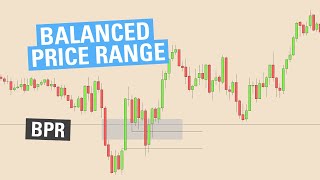

What is BPR? The Key to Aggressive Price Action
46sBPR is a core ICT concept that traders struggle with, clear definition drives curiosity and shares.
▶ Play Clip"Title accurately describes the content; the video delivers a clear explanation of BPR with practical examples."
This video explains how to trade using the Balance Price Range (BPR) concept, a combination of overlapping fair value gaps that create a high-probability entry zone. The presenter demonstrates how to identify BPRs on lower timeframes and use them to frame a bullish or bearish bias, with a focus on price action and liquidity sweeps.
BPR (Balance Price Range) is formed when two fair value gaps overlap; the smaller gap defines the BPR zone.
Look for a retracement back to the BPR area to enter a trade. The BPR acts as a key support or resistance zone.
Use higher timeframe points of interest (e.g., old lows, fair value gaps) to identify where liquidity rests and anticipate price reactions.
Equal lows around midnight on the 15-minute chart serve as a target; liquidity is below these lows, and the presenter watches for a setup.
Price takes out the low with displacement, creating fair value gaps. An aggressive move back up forms a larger fair value gap, creating a BPR entry.
If the BPR entry is too risky, wait for an internal low to be taken, then look for a long setup when higher timeframe fair value gaps align.
During London session, price reaches down into the BPR/fair value gap, providing a long entry. This demonstrates the concept in real market conditions.
The BPR concept is similar to Alex's Box strategy: breakout of consolidation, retest of low, then long. Both approaches align.
The Balance Price Range (BPR) is a powerful tool for identifying high-probability entry zones by combining overlapping fair value gaps. Using higher timeframe context and waiting for liquidity sweeps can improve trade accuracy.
What does BPR stand for?
Balance Price Range
00:09
How is a BPR formed?
By two overlapping fair value gaps; the smaller gap defines the BPR zone.
00:09
What is the entry strategy for a BPR?
Look for a retracement back to the BPR area to enter a trade.
00:24
What should you use to identify higher timeframe points of interest?
Old lows, fair value gaps, and other liquidity zones.
00:55
What is an alternative entry method if the BPR entry is too risky?
Wait for an internal low to be taken, then look for a long setup when higher timeframe fair value gaps align.
01:49
What strategy is the BPR concept similar to?
Alex's Box strategy: breakout of consolidation, retest of low, then long.
02:57
BPR Definition
Core concept of the video; defines the Balance Price Range as overlapping fair value gaps.
00:09Higher Timeframe Context
Emphasizes the importance of using higher timeframes to identify liquidity and bias.
00:55Alternative Entry Method
Provides a risk management alternative when direct BPR entry is too risky.
01:49Comparison with Alex's Box
Links BPR to a known strategy, reinforcing its validity.
02:57[00:09] going to be how to trade BPR or how to use aggressive price action to your advantage this is what BPR is is you have some sort of fair value gap on this here that is overlapped with a bullish for a
[00:24] value Gap here and so if you combine the two whatever one is smaller there is your BPR right so then ideally you are looking for a retracement back to this area in order to get an entry right and now you
[00:39] might be wondering why not look for this one right here since it lines up as well and that's just because if this is our set range premium right going back to the basics there ideally you want to see this type
[00:55] of action run below some sort of point of Interest right so whether this is an old low into a fair value Gap have some sort of liquidity rate that gives you a like I said you want your higher time frame point of Interest looking at this
[01:10] price action here on the 15 minute chart you can see we have and low around midnight here equal lows right here which are obviously a Target so this is our point of Interest right liquidity is resting below this and this is where we
[01:23] want to watch to see if we get a setup so going down to the one minute we head for this low and take it out with quite a bit of displacement putting in Fair Value gaps with each candle we continue lower and this is making me think
[01:36] bullish until we get an aggressive move right back up putting in even a larger fair value cabin now if you look we have a BPR right here and you could take an entry in there however if it's too much risk for the
[01:49] bottom there what you can do is use this idea to frame a narrative as you're looking for long entries wait for an internal low to be put in and then once that low is taken look for a long setup which would be your higher
[02:03] time frame fair value gets there and you would see how it worked out previous lows right so here's our deviation from the range
[02:15] what do we have I think the rest of the price movement done right or clear value yet what is also right here the fair value got and if you combine those right whatever one is smaller you take that move that all the way over you can see
[02:31] here is your long entries right and so you want to be looking along into there London comes around reaches down into reaches down into that fair value Gap or BPR and then you
[02:44] get long right so even if you do miss these type of Trades you can look for Price action like this in your higher time frames to give narrative or bias right so that is a lot of times how I get some bias this is also very similar
[02:57] to Alex's Box video If you guys haven't I'll link it right above but you can see breaks out of the consolidation returns to it retests the low and then long so all kind of lines up there hope this video was kind of helpful if you need
[03:11] more examples or have any questions let me know in the comments below but other than that I hope you have an incredible day see ya
⚡ Saved you 0h 03m reading this? Transcribe any YouTube video for free — no signup needed.