
China's Secret Oil Weapon
45sReveals hidden geopolitical strategy that could explain oil price suppression, sparking curiosity and debate.
▶ Play Clip"The title promises insights into China's hidden oil reserves, and the content delivers a focused analysis, though it's a brief segment with some filler."
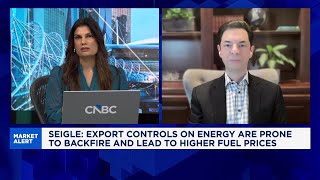
This video analyzes the hidden influence of China's strategic petroleum reserves and import behavior on global crude oil prices during a seven-month conflict. It explains how China's reduced buying helped cap prices below $100 a barrel and how its recent return to the market is now driving prices higher, with implications for Fed policy and energy market weaponization.
Kepler data showed China's oil consumption fell, and an argument exists that China's strategic petroleum reserves kept prices below $100 a barrel during the conflict.
Before the war, China was the largest importer at 11 million barrels per day, over 10% of the global market. Beijing throttled refinery runs as a reaction to the conflict.
Chinese crude oil buying dropped to as low as 6 million barrels a day, nearly halving their import appetite, which helped put a lid on crude price escalation.
Chinese state-owned enterprises and independents are returning with a stronger appetite for crudes from the Middle East, Latin America, West Africa, and other regions, contributing to crude catching a bid.
Expect additional policy interventions, including potential further drawdowns of strategic reserves beyond those authorized by the IEA and US government in springtime.
Oil over $100 a barrel goes against Washington's preferred direction of easier monetary policy, creating a headwind to a dovish Fed stance. Diesel transmission to the macro economy will be clearer after the November midterms.
China's strategic reserve management and import behavior are pivotal in oil price dynamics, and its return to the market is a key driver of current price strength. The interplay between energy prices and monetary policy remains a critical watchpoint, with clarity expected only after the US midterm elections.
China's import dominance
Quantifies China's market power at over 10% of global oil demand, setting the stage for its price impact.
00:54Halved import appetite
Shows the scale of China's demand suppression, a key factor in capping prices.
01:24China's return to market
Identifies a concrete driver of recent price increases, linking physical and futures markets.
01:49Oil vs. Fed policy
Highlights the tension between energy prices and monetary easing, a critical macro dynamic.
03:04[00:00] I want to talk about something that, you know, it's sort of hidden in the background in a way. Kepler had pointed this out earlier in the year when it was looking at oil consumption.
[00:12] So this was a very interesting graph I remember seeing. And they pointed out that China, China's consumption had fallen. And there is an argument that is going around that's being made that in a way,
[00:25] the reason that prices stayed below $100 a barrel for as long as they did into this conflict was because of China's strategic petroleum reserves. What intelligence do we actually
[00:37] have on that? Because it's an opaque situation and we don't really know how much energy supply China really has access to. So I was keen to ask you about that because it is something that many are saying has affected prices. You're right, Manisha, and I think it has had an
[00:54] outsized effect on oil price formation during at least the second half of the seven-month crisis. Before the war, China was the largest importer at 11 million barrels per day, so substantially
[01:07] more than 10% of the global market. And a lot of that was to run China's refineries, and those refinery runs were throttled back as one of the several measures that Beijing took in reaction to the conflict. And so Chinese crude oil buying plunged in summertime,
[01:24] And it got as low as probably 6 million barrels a day and change again from 11 where they started. So close to not twice half of their import buying appetite was suppressed.
[01:37] And that no doubt helped put a lid on crude price escalation. Now what we see, though, in recent weeks is Chinese state-owned enterprises and some of the independent we're finding in China
[01:49] returning to the market with more of a vociferous appetite for crudes from all over the world not just the Middle East but Latin America and West Africa and other regions as well So this is one of the reasons why crude is catching a bid
[02:03] And we see that reflected not only in the physical markets, but also in Brent crude futures. Very quickly, because it's going to be all we have time for, Clay, but obviously we don't see any let up in this situation.
[02:17] With this overall what seems to be weaponization of the energy markets, what can we expect to see if this deadlock continues in terms of the pressure where prices are concerned, but, you know, the pressure in terms of also the weaponization of this commodity?
[02:38] Well, I expect that we will see additional attempts for policy interventions in the market. It's not necessarily only export controls, but also thinking about the potential, the potential for another drawdown of strategic reserves above and beyond what was authorized by the International Energy Agency and by the United States government back in springtime.
[03:04] Clay, oil over $100 a barrel, does it make a Fed rate hike this week a slam dunk? I'm not sure about a slam dunk, but it definitely goes against the preferred direction of travel in Washington,
[03:19] which would be to have an easier monetary policy and to get rates lower in order to stimulate constructive economic activity. So it's a huge headwind to a dovish stance by the Fed.
[03:32] And we'll have to see the extent to which diesel works its way through and transmits through the macro economy in the months ahead. I think that that's something that's probably going to be determined after the U.S. presidential, the U.S. midterm election that's taking place in November.
[03:46] We probably won't have good data before then.
⚡ Saved you 0h 03m reading this? Transcribe any YouTube video for free — no signup needed.