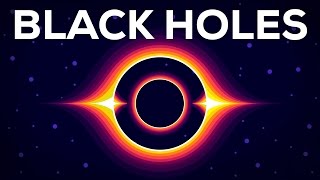

What Are Black Holes?
45sThe mystery and contradiction of black holes immediately hooks viewers with a fundamental question about the universe.
▶ Play Clip"The title accurately reflects the content: the video thoroughly explains black holes and what happens if you fall into one."
Black holes are among the strangest objects in the universe, formed from the collapse of massive stars. This video explains their origin, structure, and the bizarre effects they have on space and time, including what would happen if you fell into one.
Stars form from gas clouds and maintain stability through nuclear fusion, which pushes radiation outward against gravity.
When massive stars fuse elements up to iron, fusion no longer produces energy, causing the core to collapse and triggering a supernova.
If the star is massive enough, the core collapses into a black hole, with an event horizon beyond which nothing can escape.
At the center of a black hole is a singularity, a point of infinite density where our understanding of physics breaks down.
Black holes do not act like vacuum cleaners; replacing the Sun with a black hole of the same mass would not change Earth's orbit.
Near a black hole, time slows down for an outside observer, while the falling person sees the universe speed up.
Inside the event horizon, gravity varies so much that a person would be stretched into a thin stream of plasma.
Alternatively, a firewall at the event horizon might instantly incinerate anything that crosses it.
Supermassive black holes, like S50014+81 (40 billion solar masses), exist at the centers of galaxies.
Black holes slowly evaporate via Hawking radiation, where virtual particles near the event horizon cause energy loss.
The largest black holes may take a googol years to evaporate, long after the universe becomes uninhabitable.
Black holes are fascinating cosmic objects that challenge our understanding of physics, from their formation in supernovae to their eventual evaporation through Hawking radiation.
What force balances gravity in a star's core?
Radiation pressure from nuclear fusion.
00:30
Why does iron cause a star to collapse?
Fusion of iron does not generate energy, breaking the balance.
00:44
What is the event horizon?
The boundary beyond which nothing can escape, requiring speed faster than light.
01:35
What is a singularity?
A point of infinite density at the center of a black hole.
01:47
What happens to time near a black hole?
Time slows down for an outside observer; the falling person sees the universe speed up.
02:25
What is spaghettification?
The stretching of an object into a thin stream due to extreme tidal forces.
03:04
What is the firewall hypothesis?
A theory that a firewall at the event horizon instantly incinerates anything crossing it.
03:35
What is Hawking radiation?
Radiation caused by virtual particles near the event horizon, causing black holes to lose energy.
04:35
How long can the largest black holes take to evaporate?
Up to a googol years.
05:15
Supernova Creates Heavy Elements
Reveals that all heavy elements are forged in the dying moments of a star.
01:10Black Holes Don't Suck
Debunks the common misconception that black holes act like vacuum cleaners.
02:11Googol-Year Evaporation
Puts the immense timescale of black hole evaporation into perspective.
05:15[00:00] Black holes are one of the strangest things in existence. They don't seem to make any sense at all. Where do they come from? And what happens if you fall into one?
[00:16] Stars are incredibly massive collections of mostly hydrogen atoms that collapse from enormous gas clouds under their own gravity. In their core, nuclear fusion crushes hydrogen atoms into helium, releasing a tremendous amount of energy.
[00:30] This energy, in the form of radiation, pushes against gravity, maintaining a delicate balance between the two forces. As long as there is fusion in the core, a star remains stable enough. But for stars with way more mass than our own sun,
[00:44] the heat and pressure at the core allow them to fuse heavier elements until they reach iron. Unlike all the elements that went before, the fusion process that creates iron doesn't generate any energy.
[00:57] Iron builds up at the center of the star until it reaches a critical amount, and the balance between radiation and gravity is suddenly broken. The core collapses. Within a fraction of a second, the star implodes,
[01:10] moving at about a quarter of the speed of light, feeding even more mass into the core. It's at this very moment that all the heavier elements in the universe are created as the star dies in a supernova explosion.
[01:22] This produces either a neutron star or if the star is massive enough the entire mass of the core collapses into a black hole If you looked at a black hole what you really be seeing is the event horizon
[01:35] Anything that crosses the event horizon needs to be traveling faster than the speed of light to escape. In other words, it's impossible. So we just see a black sphere reflecting nothing.
[01:47] But if the event horizon is the black part, what is the whole part of the black hole? The singularity. We're not sure what it is exactly. A singularity may be infinitely dense,
[01:59] meaning all its mass is concentrated into a single point in space with no surface or volume, or something completely different. Right now, we just don't know. It's like a dividing by zero error.
[02:11] By the way, black holes do not suck things up like a vacuum cleaner. If we were to swap the sun for an equally massive black hole, nothing much would change for Earth, except that we would freeze to death, of course. What would happen to you if you fell into a black hole?
[02:25] The experience of time is different around black holes. From the outside, you seem to slow down as you approach the event horizon, so time passes slower for you. At some point, you would appear to freeze in time, slowly turn red, and disappear.
[02:39] While from your perspective, you can watch the rest of the universe in fast forward, kind of like seeing into the future. Right now, we don't know what happens next, but we think it could be one of two things. 1. You die a quick death.
[02:52] A black hole curves space so much that once you cross the event horizon there is only one possible direction You can take this literally inside the event horizon You can only go in one direction
[03:04] It's like being in a really tight alley that closes behind you after each step. The mass of a black hole is so concentrated, at some point even tiny distances of a few centimeters would mean that gravity acts with millions of times more force on different parts of your body.
[03:19] Your cells get torn apart as your body stretches more and more until you're a hot stream of plasma one atom wide. Two, you die a very quick death. Very soon after you cross the event horizon, you would hit a firewall and be terminated in an instant.
[03:35] Neither of these options are particularly pleasant. How soon you would die depends on the mass of the black hole. A smaller black hole would kill you before you even entered its event horizon, while you probably could travel inside a supermassive black hole for quite a while.
[03:49] As a rule of thumb, the further away from the singularity you are, the longer you live. Black holes come in different sizes. There are stellar mass black holes with a few times the mass of the sun and the diameter of an asteroid.
[04:02] And then there are these supermassive black holes, which are found at the heart of every galaxy and have been feeding for billions of years. Currently, the largest supermassive black hole known is S50014 plus 81, 40 billion times the mass of our sun.
[04:18] It is 236 billion kilometers in diameter which is 47 times the distance from the Sun to Pluto As powerful as black holes are they will eventually evaporate through a process called Hawking radiation To understand how this works we have to look at empty space
[04:35] Empty space is not really empty, but filled with virtual particles popping into existence and annihilating each other again. When this happens right on the edge of a black hole, one of the virtual particles will be drawn into the black hole,
[04:47] and the other will escape and become a real particle. So the black hole is losing energy. This happens incredibly slowly at first and gets faster as the black hole becomes smaller. When it arrives at the mass of a large asteroid, it's radiating at room temperature.
[05:02] When it has the mass of a mountain, it radiates with about the heat of our sun. And in the last second of its life, the black hole radiates away with the energy of billions of nuclear bombs in a huge explosion. But this process is incredibly slow.
[05:15] The biggest black holes we know might take up to a googol years to evaporate. This is so long that when the last black hole radiates away, nobody will be around to witness it. The universe will have become uninhabitable long before then.
[05:29] This is not the end of our story. There are loads more interesting ideas about black holes. We'll explore them in part two. A big thanks to Fraser Cain for help with this video. By the way, we've made some Kurzgesagt wallpapers in 4K for different screen sizes.
[05:45] You can get them on our Patreon page, which also helps us to make more videos. Like this December, the first month ever with three videos.

⚡ Saved you 0h 05m reading this? Transcribe any YouTube video for free — no signup needed.