
I Built a 1000-Gallon Rain Barrel System
45sThe impressive scale and DIY nature of the project hook viewers immediately, offering a satisfying before-and-after build.
▶ Play Clip"The title accurately reflects the content, but the video is short and lacks detailed explanations, making it slightly oversell the 'how-to' aspect."
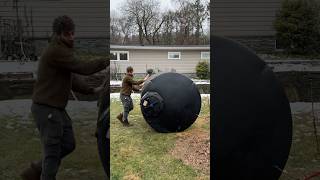
The video demonstrates a DIY installation of a 1,000-gallon rain barrel system for garden irrigation. The creator walks through the setup process, including leveling, gutter interception, PVC piping, and a first-flush system, and explains how the system works to collect clean rainwater.
A 1,000-gallon rain barrel is installed, similar to one installed three years ago. The first step is leveling the ground for the barrel to sit on.
The gutter is cut to intercept water, and PVC pieces are assembled to route water from the house to the barrel, navigating around an air conditioning unit. The PVC must slope downward for gravity flow.
A first flush system is installed halfway through the PVC pipe. It uses a plastic ball that seals off dirty water after the initial runoff, ensuring clean water enters the tank.
The dirty water from the first flush is diverted to a compost system, keeping it wet. A gauge shows the tank is already full after recent rain.
The collected rainwater is used for watering the garden, not for drinking. A tube runs underground to a greenhouse, filling a rain tank, and a pump delivers water to plants.
The video concludes by comparing rainwater to treated, chlorinated municipal water, implying rainwater is better for plants.
The video provides a practical, step-by-step guide to setting up a rain barrel system for garden irrigation, highlighting the importance of a first flush system and the benefits of rainwater over municipal water.
What is the capacity of the rain barrel?
1,000 gallons
00:01
What is the purpose of the first flush system?
It collects the initial dirty water and debris, sealing it off so clean water enters the tank.
00:42
How is the dirty water from the first flush used?
It is diverted to a compost system to keep it wet.
01:06
What is the rainwater used for in this video?
Watering the garden, not for drinking.
01:19
How does the water get to the greenhouse?
Through an underground tube that fills a rain tank, which is then pumped to plants.
01:34
First Flush System
Explains a key mechanism for ensuring water quality, which is a critical detail for any rain harvesting system.
00:42Practical Use
Shows a real-world application of rainwater for irrigation, making the content actionable.
01:19Rainwater vs. Municipal Water
Highlights the benefit of rainwater over treated water, a key selling point for the system.
01:48[00:01] garden so this is a 1,000 gallon rain barrel and I actually installed the same exact rain barrel three years ago which worked great but I'll be using this one the roof the first step for installation was leveling out the ground and I just
[00:15] rain barrel to sit on then I cut the gutter where I'll be intercepting the filter out de breeze coming from the gutter then I piece together some PVC the house and then once I figured out how to get around this air condition ing
[00:30] tubing I could cut some long PVC pieces and start making my way over to the rain barrel making sure to install the first flush system around halfway through and of course the PVC needs to be continuously moving in a downward flow
[00:42] so gravity can assist the water right into the rain barrel all right the system is set up and the way it works is rain hits the roof goes down into the gutter funnels through the leaf heater removing all the big debris down through
[00:54] this pipe over to the first flush and there's a plastic ball at the bottom of this so the initial dirty water and debris from the roof slowly fills this up pushing the ball up until the ball gets to the top creating a seal so the
[01:06] clean water and funnel right over to the tank and then every big rain I can empty this first flush the dirty water I have it going over to my compost system right here keeps the compost wet and then I installed this gauge right here that
[01:19] actually already filled up cuz we got a lot of rain so we have fresh rain water send this water through a proper filtration system to drink in their house or to use as the running water for me I just use it to water my guard so I
[01:34] turn that on there's a tube that goes under ground to the greenhouse which gets no rain and it fills up this rain tank right here and then this pump right here gives me the ability to just pump it right onto my plants and they're
[01:48] rain water versus the treated chlorinated Municipal Water




⚡ Saved you 0h 01m reading this? Transcribe any YouTube video for free — no signup needed.