
AI Summary
This video features an interview with a former illegal sportsbook operator who ran one of America's largest underground betting businesses from 2007 until his arrest in 2015. He details the mechanics of illegal sports betting, including credit systems, collection tactics, money laundering through gold and shell companies, and his eventual entanglement with a drug cartel, leading to a 21.5-year federal prison sentence.
Chapters
The illegal gambling industry generates close to $673 billion a year. The biggest wager taken was a quarter million dollars on a Super Bowl bet.
After playing football at USC and working in real estate, the recession of 2007 led to job loss. He used his father's connections to meet an Italian bookmaker, 'Uncle Tony,' and started as a runner.
He learned the business from Jan Portocarrero of Macho Sports, observing how they moved lines and answered phones. After Macho Sports was busted in 2013, he took over their customers and expanded.
He set up call centers in Costa Rica, paying $10 per customer. He used an 800 number and acted as the book, managing lines and VIP customers directly.
Legal sports betting involves regulated websites, credit card deposits, and taxes. Illegal betting operates offshore (Costa Rica, Panama) with 800 numbers or apps, offering lines of credit instead of upfront deposits.
He leveraged his USC football connections, showing photos with Reggie Bush and Matt Leinart, to attract customers. He even arranged signed footballs and meetings with players to win over bettors.
His biggest customer was a general contractor from his real estate days. He offered 10% off losses and 20% free play, leading to referrals and large bets.
Bets grew after Macho Sports was busted, including a quarter-million-dollar Super Bowl bet. He realized the house doesn't lose in the long run.
Customers paid in gold, watches (Rolex, AP), and even a catamaran sailboat worth $120,000. He accepted various forms to maintain cash flow.
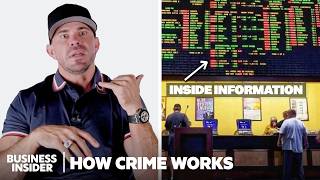
He used inside information, such as knowing a quarterback was out, to adjust odds. His mentor suggested fixing games, but he noted the difficulty in Division I sports.
He expanded into live dealer table games in Costa Rica, allowing customers to bet on blackjack with a real dealer via camera, without going to Las Vegas.
He had NFL stars (including a three-time Super Bowl winner) and celebrities like Paris Hilton betting with him. He maintained discretion to attract such clients.
His CFO sent emails detailing losses and payment options: PayPal, bank transfers, shell companies, or credit card charged as gold purchases. Winners were paid quickly to encourage reinvestment.
Unlike most bookies, he paid winners on Monday, which made them more likely to gamble and lose the money back quickly.
He increased credit lines for fast payers. He set up a gold company with private vaults in Beverly Hills, allowing customers to pay via gold purchases, which facilitated money laundering.
To move money out of Australia, he bought thousands of UGG boots and hid one-ounce gold rounds under the soles, selling them weekly.
He used ATM companies to deposit large cash sums without raising suspicion, as the tellers saw it as normal ATM servicing. He paid a 3% fee for this service.
He used the Bank of China with multiple aliases to wire money anywhere in the world, which was the fastest method for moving funds.
He spent $200,000 a month, bought Richard Mille watches, and had mansions in Costa Rica, Mexico, and Peru. His downfall included heavy drug use (eight ball of cocaine a day) and alcohol.
He started taking bets for a major cartel, which led to money laundering and international drug trafficking. He shipped cocaine, ecstasy, and heroin to Australia, Canada, Italy, and the US.
A sub-bookie's customer turned out to be a cartel member. He received an encrypted phone with three passwords, leading to requests to move money and drop off cash in San Diego for a 10% fee.
Once working for the cartel, gambling became secondary. He lived in constant fear, always looking over his shoulder, and slept with one eye open.
He refused to cooperate with the FBI against the cartel to save his life. He was sentenced to 21.5 years for racketeering and drug distribution, serving time in Victorville and Englewood.
He used intimidation, including sending a 350-pound collector to breakfast meetings. He also used private investigators to find family information and sent flowers to wives with messages like 'tell your husband it's time to pay up.'
He regretted sending a collector to a customer's door, which led to a threat and a violent activity enhancement, increasing his sentence.
He started smuggling steroids from Tijuana to USC after a volleyball injury, hiding vials in his compression shorts. He later sold them to teammates, expanding into Adderall and Xanax.
He lost cartel money, becoming indebted to them, which changed his life forever. This is a key turning point in his story.
He was sentenced to 21.5 years for racketeering and drug distribution. The government forfeited $5 million, three Range Rovers, a Porsche Panamera, and a catamaran sailboat.
He is now on supervised release, doing urine analyses, meeting with a probation officer weekly, and reporting all financial transactions. He emphasizes that it's easier to live legally.
He wrote a book, 'The California Kid,' and is working on a documentary with Mark Wahlberg's company, Unrealistic Ideas. He hopes to be a redemption story.
He explains how betting lines work, using the example of the Lakers at minus ten. He describes how technology has evolved from phone calls to apps with in-game wagering.
He believes Bitcoin is the number one currency for illegal sports betting. He initially rejected cryptocurrency but now sees it as the future.
He notes that sports gambling is an addiction and that legalization has led to aggressive marketing, making it more accessible and normalized.
Despite legal options, illegal bookmakers still exist because they offer lines of credit, which legal sportsbooks don't.
He reflects that if NIL (Name, Image, Likeness) deals existed during his college days, he might not have needed to become an illegal bookmaker, as athletes now get paid.
A wiseguy is a professional gambler who moves the line in his favor. A sharp is the same. Bookmakers avoid sharps because they win consistently.
The video provides a raw, first-hand account of the illegal sports betting underworld, from its operational mechanics to the personal and legal consequences. It underscores the allure of fast money and the inevitable downfall that follows, offering a cautionary tale about crime and redemption.
Mentioned in this Video
Study Flashcards (10)
What is the estimated annual revenue of the illegal gambling industry?
easy
Click to reveal answer
What is the estimated annual revenue of the illegal gambling industry?
Close to $673 billion a year.
00:17
What was the biggest single wager the bookmaker took?
easy
Click to reveal answer
What was the biggest single wager the bookmaker took?
A quarter million dollars on a Super Bowl bet.
00:17
What is the difference between legal and illegal sports betting?
medium
Click to reveal answer
What is the difference between legal and illegal sports betting?
Legal betting uses regulated websites, credit card deposits, and taxes. Illegal betting operates offshore with 800 numbers or apps, offering lines of credit instead of upfront deposits.
06:00
How did the bookmaker use his USC network to attract customers?
medium
Click to reveal answer
How did the bookmaker use his USC network to attract customers?
He showed photos with famous players like Reggie Bush and Matt Leinart, and arranged signed footballs and meetings with players.
07:53
What non-cash payments did the bookmaker accept?
medium
Click to reveal answer
What non-cash payments did the bookmaker accept?
Gold, watches (Rolex, AP), and even a catamaran sailboat worth $120,000.
11:20
How did the bookmaker launder money through UGG boots?
hard
Click to reveal answer
How did the bookmaker launder money through UGG boots?
He hid one-ounce gold rounds under the soles of UGG boots and sold them weekly.
18:39
What was the role of the ATM business in money laundering?
medium
Click to reveal answer
What was the role of the ATM business in money laundering?
It allowed depositing large cash sums without suspicion, as tellers saw it as normal ATM servicing. He paid a 3% fee.
20:01
What was the bookmaker's sentence and for what crimes?
easy
Click to reveal answer
What was the bookmaker's sentence and for what crimes?
21.5 years for racketeering and drug distribution.
42:45
What is a 'wiseguy' in gambling?
easy
Click to reveal answer
What is a 'wiseguy' in gambling?
A professional gambler who bets on sports and moves the line in his favor.
53:11
Why do illegal bookmakers still exist despite legal sports betting?
medium
Click to reveal answer
Why do illegal bookmakers still exist despite legal sports betting?
Because they offer lines of credit, which legal sportsbooks don't.
48:09
💡 Key Takeaways
Scale of Illegal Gambling
Provides a shocking statistic that frames the entire industry's size.
00:17Legal vs. Illegal Betting
Clearly contrasts the two systems, offering a key insight into the illegal market's appeal.
06:00Paying Winners Fast
Reveals a counterintuitive business strategy that increases customer gambling and losses.
16:24Laundering via UGG Boots
Illustrates the creative and extreme lengths taken to launder money.
18:39Refusing to Cooperate with FBI
Highlights the life-or-death stakes involved with cartel connections.
30:37Full Transcript
[00:00] one of the biggest illegal sports betting businesses in America. This is how crime works. betting back in the early 2007, all the way until my arrest in 2015.
[00:17] In the illegal gambling industry, there's close to $673 billion a year The biggest wager I took was a quarter million dollars on a Super Bowl bet. taking bets from the cartel, the bets became bigger and bigger.
[00:33] what the fuck was I doing? 2000 for volleyball, and I got offered a volleyball scholarship.
[00:50] I was a tight end for the 2003 and 2004 national championship team, and I was on special teams as well. and it was for a big real estate developer out of Los Angeles.
[01:04] I showed up with my national championship ring and he hired me on the spot. So, you know, right out of college, 2004-2005, I'm, you know, making almost six figures and I'm getting paid commissions on any deals I bring in.
[01:18] You go to USC for the networking. I had this Rolodex and I would keep their phone number, Dad's proud. Mom's proud.
[01:33] If he graduated, he's working for a developer. And then that recession hit 2007. And I remember I was like the first 1 or 2 guys to go.
[01:48] the great movies like Goodfellas and Casino and Scarface. I went to my Rolodex, and I remember my dad had a friend that was Italian, that was a bookmaker.
[02:03] the situation, that I lost my job. I kept begging my dad, and finally, I think after like the 15th time, We met at this, this underground bar, and it was like a basement.
[02:20] I walked in and I gave Uncle Tony a Italian kiss on each side. He says, man, listen, I'll see what you can do. I'm going to my friends that are, you know, working on Wall Street and,
[02:36] And, the first six months on one player this big, this big, big contractor, commercial contractor, he lost $1 million in cash. I got paid $200,000 commission, and I went back to Uncle Tony.
[02:50] I said, you got to let me. He goes, I can't do it. No problem.
[03:03] Jan Portocarrero, you know, was my mentor in the sports betting. He was with Macho Sports. I flew offshore, I'm watching, and I'm learning and everything that happens.
[03:19] Okay? This is how I'm going to build mine You got this guy moving the lines. You got Debbie and Tina answering the phones.
[03:35] And they got busted, I believe, in 2013 and under a macho sports Rico indictment for illegal bookmaking. And then as soon as they got taken down, my network expanded
[03:49] You know, I went to every customer he had and said, hey, And that's when my my company blew up. and I went to every office in San Jose.
[04:05] And I said, hey, I know you guys do call centers down here for sports betting. And, you know, I went to 20 different offices, and I found one that was in a town called Playa Hermosa that started to pay a service
[04:18] where I pay like $10 for each customer that gambled with me. My nickname was ODog in college. You get an 800 phone number and you can start acting as a bookie
[04:35] so one outfit can manage, you know, hundreds of different bookies. where I'm paying a weekly fee and now I'm the book.
[04:47] I'm only taking little bets like $1,000 here. I was like, okay, I got to figure out a better strategy. We ended up setting up our own office, where I had my own people that were under
[05:04] my payroll that moved the lines specifically to Las Vegas. all my VIP customers that would answer the phone directly. Oh, hi, Mr. Drew, what's your password?
[05:16] So it was more of a custom feeling, and they weren't betting with this I was able to start recruiting all over the United States,
[05:29] and, I started to become one of the biggest bookies to Florida, North Carolina. And I got pretty much in every state.
[05:47] you know, early 2007, all the way until my arrest in 2015. In 2018, it became legal on a state-by-state basis,
[06:00] The difference between legal sports betting and illegal sports betting is Has a website that's ran through usually Costa Rica Panama
[06:13] and you call an 800 number or you place your bet through an app that's offshore. Illegal sports betting website is, you know, you put your credit card down, there's a know your customers, form.
[06:27] and you pay taxes on that money. The sports betting world that I was in, It was offshore.
[06:41] it was like an American Express credit card. That's week to week. And come Monday, once the last Sunday Night Football game is
[06:55] is graded, you pay me, you know, Monday, Tuesday or Wednesday the following week. And if you don't pay me, then, whether it's, you know, making phone calls or sending someone to pick up the money.
[07:09] And, and that's what's different from today's, you know, legal sports betting when you you're gambling through, like the BetMGM or FanDuel or any of the big outfits you now you you put a credit card up
[07:22] or you deposit cash and that makes it you look legitimate. So the casinos or the sportsbooks nowadays never have to worry. So if you deposit $1 million, then you get $100,000 in free play
[07:39] You know, we offered the same thing, but we're giving you a line of credit. So you have to basically lose the money before we collect.
[07:53] So when I would go to a sports fan, whether, you know, So I'd be like, hey, I was part of the last two national championships at USC. I'd show them a picture of Reggie Bush and I met Matt Leinart and I,
[08:09] Carson Palmer, Troy Polamalu, and they'd be like, wow, you know, I would, I would use that, that network because everybody that that gambled So it was very easy to pull that card.
[08:24] I it always would start small. He played at USC. and they'd come into the like, man, I was a big Leinart fan.
[08:41] Who do you gamble with or you bet with Five Dimes? I'll introduce you to Leinart and I'll get you a signed football. So I called Matt up and I need a signed football.
[08:56] So I'd call my customer my future customer would be like, hey, And we would go meet him at the bar or at a restaurant and, and just these guys would be blown away because I had that kind of relationship
[09:10] and it was so easy for me and people to switch over to my site.
[09:23] that I pulled in was a general contractor, was extremely large in the commercial construction space. When I was working at the real estate developers office, that this contractor
[09:37] I went back to him and I told him, hey, I know you gamble. I said, what if I gave you 10% off your losses and 20% free play?
[09:49] And from there it was just was referral basis. You know, I ended up getting three guys that were project managers a year in construction and giving me about half of that in their paychecks.
[10:06] The bets started getting big right after Macho Sports got busted. on a Super Bowl bet. I was like, man, I'm gonna lose my whole nest egg, right?
[10:19] And then eventually you realize the house doesn't lose. and celebrities chose me because I was very discreet. you don't want to be known that you're betting.
[10:35] have a round of golf with me, and if you beat me the week before, And you wouldn't have to have a wire. saying, hey, you know, here's here's what you owe.
[10:52] so it was comfortable for them, you know, college athletes. You got to remember I went to USC, so they had daddy's I always tell people we can use that for anything.
[11:07] that they owed me on a Home Depot, charge. in material I have for, a real estate project I'm doing.
[11:20] So if a guy couldn't pay me in cash, I would say, pay me in gold or pay me with the watch. I can't remember how many watches I got paid, whether it was a Rolex or AP.
[11:33] You know, one guy owed me 120,000, and he ended up paying me in, a catamaran sailboat.
[11:46] You know, as a bookmaker, you're always trying to get an edge, whether, you know, you get inside information on on the team. Let's just say, for instance, that UNLV's quarterback's going to be out
[11:59] because he let's just say he had a cold and no one knew. But if I knew the wide receiver and he came and told me that information, I would be like, okay, let's change the odds real fast here.
[12:11] Let's let's put the odds in our favor now because we know the quarterback's So you get an edge and anytime you have an edge in as a bookmaker.
[12:25] my mentor told me, hey, why don't you see if, you know, your old quarterback will throw the game, we'll offer him $100,000. You know, it's just whether it can
[12:38] in the Division one sports, you got a lot of eyes on you. then it would be a lot easier to to pay someone off
[12:50] So it would be. Let's give an example. the proposition bet would be who's going to score the first touchdown?
[13:03] or the Philadelphia Eagles. Or another prop bet could be will the quarterback throw over under two and a half touchdowns.
[13:15] So you can have it for specific players. Basically you can even have a proposition who will become president
[13:27] of the United States will be Obama or will be President Trump. So that's what the prop bet is a proposition wager. Once the system was in place, I realized that
[13:39] I had so many gamblers betting on sports, I decided to expand my gambling empire, and I started to realize there was a niche for a live dealer. that were betting on sports now to bet on table games in Costa Rica.
[13:56] where I'd have a blackjack table and I would have the cameras on the dealer. So now I have my dealer in Costa Rica on camera, basically dealing the cards. because you're playing against a real dealer that's live.
[14:13] coming to me now, because now they didn't even have to go to Las Vegas. NFL star who got indicted on my case won three Super Bowls. Paris Hilton was one of my A-list celebrities that bet with me.
[14:29] There's definitely a lot more, but I'm not going to go into detail. like my my CFO, and he would call literally every every Sunday.
[14:44] If you lost, he would send out an email Sunday night. If they lost, it would be an email that says you lost $2,600.52,
[14:59] and you can pay any of these three options. They could pay by PayPal, through a banking system. And we had shell companies.
[15:14] So the way I did it back then, you know, you had Bank of America, So I had the shell companies for each bank. he could literally pay any way he wanted.
[15:27] or he could run his credit card and it would be charged to gold, fellas. saying that he purchased, you know, X amount of dollars of gold. Now, if a guy won, we would send the same exact email to the winner
[15:43] and we'd say, you won $32,000, how would you like to be paid? This was before the deposits of cash was a big deal, We could deposit in cash into your account.
[15:58] he could give me three accounts so I could go 99, 99, 99 A lot of people would want to meet up in person.
[16:12] So if a guy, like I said won $30,000, I'd say, hey, runner A, go ahead and take it to Tony P over there and give him 30,000.
[16:24] And that's what blew us up, because most bookies, what they do is they go collect from the losers and then they pay the winners, But I had a big enough bankroll at the time that I was able to pay
[16:38] my my winning customers on Monday because the reason I paid them on a When someone has some money in hand, they're more likely to gamble it away and lose it faster.
[16:55] have collected the winnings, the way I hid the money was gold and silver. My credit system was all based on how how fast and in So if if you were on a credit line of 20,000
[17:09] and in the first week you lost 10,000 and you pay me, you know. Right away without any excuses, I would bump that credit line up to 50,000. if you were a slow pay, like it took you a month to pay me a $5,000 marker,
[17:24] You know, I try to minimize the credit card transactions because You know, some people couldn't pay me with cash.
[17:36] And that's when I set up the gold company and I offered a gold service where I had, you know, private vaults in Beverly Hills. And if you purchase gold from me, I would store your your gold and silver
[17:48] And if, if you if you needed to be paid in cash or gold, I offered that option. So it made it simple for me, because a lot of guys in North Carolina that owed me, let's say 50,000, I'd just say, hey, hey to me,
[18:01] I'm going to run your credit card for for five days for right around 9000. for some gold that you purchased for me. Gold was the key to
[18:15] to the laundering system because you could purchase gold with cash, And you can give them any kind of bullion, whether it's one ounce or 100 pounds.
[18:27] And the bullion company will give you the spot value. So if gold is trading at whatever that value is, the gold company will collect it So that's how I would launder it.
[18:39] One of the ways I had to get money out of a country was who was through bullion. And one of the ways that I was going to get the gold out of Australia was to research what's the most popular thing.
[18:54] and I found out that boots are the most sold items in Australia. And so I purchased, you know, thousands and thousands of pairs of boots. And I have the one ounce rounds and I would take four,
[19:07] and I would tape it underneath the sole. At the time I want to say it was, you know, $1,500. $6,000 per UGG boot.
[19:21] And I was, you know, selling ten pairs of UGG boots every week. I'm laundering through UGG boots and gold weekly.
[19:34] from the U.S government. you avoid the U.S government finding the, the money obviously. So anytime you can get somewhere where
[19:49] associate with the government or cooperate with, any kind of illegal activity with the government, then that's the best place to, to launder it offshore.
[20:01] It was key for my business because when someone goes into a bank, So the guys that are working for me own the ATM companies, He was indicted on my case when he would go in and pull out.
[20:18] Let's say, $80,000 on a Monday and 100,000 on a Tuesday. The teller is not looking at him like he's some some drug dealer. It says ATM unlimited and he knows right away like that
[20:31] This is this cash is going into ATM machines that's servicing people It made it really easy to to launder the money
[20:44] through the ATM business because he was benefiting by making 3%. And now I'm getting bags of cash without any, eyes being raised in the beginning, you know, it was it was like $1 million a week.
[20:57] were taking in and $20 million of bets in a week. I was moving was, was the Bank of China.
[21:13] given time, they would transfer the money anywhere in the world. So I would come into the Bank of China with different IDs and I had, you know, ten different aliases between me and four other guys.
[21:27] Would it be our name? And they would wire anywhere in the world for us. And that that was the the key to my moving my money the fastest.
[21:42] Besides the casinos, you know, the casinos are the best and fastest way to launder money because there's never any any question, these clients that gamble in the casino, it's very common
[21:56] for them to have money either wired into the cage or cash brought in. Through through gambling, gambling methods.
[22:09] So, you know, I didn't really keep track of what I was paying myself, but, you know, I was I was spending, you know, $200,000 a month. And and traveling the world and my, my big thing
[22:23] was watches, you know, I, I was probably one of the first guys to, to have a Richard Mille watch back in in 20, 2011. I had mansions in Costa Rica, Mexico, Peru,
[22:37] my advice was, was that that luxury and it was it ended up being my downfall. What affected me the most was using drugs.
[22:52] I would go through an eight ball of cocaine a day. Purell hand sanitizer, which, hand sanitizer is two ounces.
[23:05] Which is, you know, terrible for you, I would drink alcohol on a daily basis, Wasn't partying.
[23:17] overlapped for VIP bettors because every VIP better likes to party. So when I would take, one of my, you know, whale customers on a private jet He wants to do an eight ball
[23:31] You know, Colombia is only an hour from from Costa Rica. So obviously we have the, you know, probably the best cocaine in the world So when I bring a VIP customer to Costa Rica,
[23:44] you know, and I give them, you know, the best Colombian cocaine he's ever had. And I just gave him the best VIP service of his life. When I think of betting and organized crime,
[23:58] I kind of kind of intertwine together because the betting world, The the mob, the Italian mob. when I started taking bets for the most infamous cartel in the world.
[24:14] And, obviously I can't speak on who it was, but I started taking bets. helping them launder money through their illegal activity as well.
[24:26] And I started, you know, working in the international drug trade.
[24:38] that worked underneath me, and he was Hispanic. And one day he he started to have this And, and he started paying me every week.
[24:52] And it was it was like bags of cash, like quarter million dollars at a time. And I remember telling this, this subkey, I said, man, you got a He goes, yeah, I got, I got a guy out of Mexico that bets with me.
[25:05] Whatever we need to do, keep that man happy. So I'm getting these duffel bags dropped off, like, man, whatever this guy wants, you just let him know we give him the VIP treatment.
[25:19] He bets with BetODog. I said, hey, whatever that guy needs if if he needs, if he wants to stay at the Four Seasons and have dinner on me, let him know.
[25:34] And then finally this, this customer of of my my my my sub bookie, he finally hit. And as a bookie, you always want your customer to win.
[25:47] I tell people, if your customer loses every day, He's not going to keep doing it because it's not fun. because when you give him something, then guess what? He's going to lose that back.
[26:02] sharp. because he's going to he's going to be expecting it. And, you know, a couple days go by, my sub bookie says, hey,
[26:16] my uncle really liked how you handled that payment. He's he lives in Mexico and he says, by the way, he wants to talk to you. And he slaps this encrypted phone on the table.
[26:29] and he gives me that encrypted phone. And he's like, there's there's no microphone, there's no GPS. He says there's three passwords to get into that encrypted phone.
[26:45] he writes me a message and I read it after I got in three three passwords deep. And I get in there and he says, well, I like the way you do business. and then responded back.
[27:02] throughout the United States. Do you think you could help me move some some money around and I'll pay you? And then he told me I need $100,000 dropped off in San Diego.
[27:15] He goes every time you try, every time you drop off money for me, So I make it 10% to drop off $100,000. That's $10,000 for a two hour drive. That's easy.
[27:29] So for me, I just call Tony my bookie, or Ryan my bookie, or Robert or Matt. I say, hey, Matt, can you drop off 100 grand in San Diego at National City? This guy sends me an encrypted message saying, hey, where do you want $110,000?
[27:45] I dropped off 100,000 cash, and now this guy will call him. El Jefe is taking 110 and putting it anywhere in the world. where I have a 20,000 square foot building.
[28:01] So it'd be really easy if he sends me the 110,000 to a Costa Rica bank account. Now I can pay my employees and I have money to pay for my rent. So now I'm helping this, this, this member that lives in Mexico
[28:17] clean his money, and he needs things done in North Carolina. He's paying me a fee, but unbeknownst to me, I still don't know that. And it gets bigger and bigger and it starts to snowball.
[28:33] And next thing you know, I'm moving all my moving money all over the world for him. Now at this point, because I was making so much money customer of mine became, you know, my number one focus.
[28:47] So once I started working for the cartel, the gambling was just like You know, I had the cartel's backing as far as betting wise. When you're dealing with the cartel, you know you can be killed at any time
[29:04] These guys called Sicario that are basically they're hitmen. you know, these celebrities are these professional athletes.
[29:17] you obviously got to stress and look over your shoulder all the time. I shipped drugs, internationally for obviously the cartel I work for to Australia, to Canada, to, Italy, to Amsterdam.
[29:33] And throughout the United States, my big focus was cocaine and obviously we did deal with, ecstasy,
[29:45] And towards the end, they were, shipping kilos of China white heroin. I tell people not one day did I not fall asleep with my eye open, like I would always have one eye open when I slept in.
[29:58] Any time I traveled with my my my security guards and my Sicarios. You're always on on pins and needles. You're always thinking that something bad could happen.
[30:12] But it it's it's the path that I chose, and I have to live with it forever. And I went to federal prison because I told people going to prison
[30:24] I can't really discuss, business on the cartel because that would be considered, And that would end up probably costing me my life.
[30:37] Obviously, the FBI gave me the opportunity to cooperate against the cartel, and I refused to just to save my life and my family's life. But but I think anybody that knows anything, the cartel obviously
[30:49] runs off of illegal drugs, and that's how they make their money. Common sense. as a book maker, obviously you never want to put hands on a customer
[31:04] to collect the money because that's when things that's when I say it's the fan. You want to put the fear of God in them. 350 pounds, that that's all their job was to do was to intimidate.
[31:21] I would show up to breakfast with with him and I would meet my customer, at that breakfast table waiting, and I would show up with this, And right away my customer would be like, okay,
[31:36] I used to take that ID and that ID would have the address. So with that ID and that address, I would able to give that to my private investigator that was on my payroll, and he was able to access that ID
[31:51] and give me everybody in the family's name that lived at that, that location. So with that information, I would take the wife's name and I'd have my private investigator run the wife's name, and the wife
[32:04] what kind of car she drives. to do a little more homework and, you know, send a bouquet of flowers. So one of my tactics was if the husband was refusing to pay me
[32:21] and just blowing me off, I would say, let's locate where the wife works. We'll send a bouquet of flowers to her work, And the message would read, tell your husband it's time to pay up.
[32:36] and they read, it's time to pay up, they would freak out. I just got a bouquet of flowers and it says it's time to pay up, don't ever send flowers to my wife again.
[32:50] and that's how I use my tactics. You know, I definitely say I regret, I do regret sending one of my collectors
[33:06] that was supposed to specifically put the intimidation factor into this client. and his only purpose was just to basically have someone collect the money and show up to his doorstep in Minnesota.
[33:25] I would send someone for a guy that owed me $2,000 and send the collector But it was principal because the guy had won,
[33:38] you know, $10,000 a week before, and now all of a sudden he loses $2,000. So to me, that's insulting, because now you're stealing. So I do regret that I sent a collector to the guy's door,
[33:56] he made a threat to my collector. And that guy got me an enhancement for, you know, violent activity, for illegal bookmaking,
[34:10] which in the federal guidelines, it raises your points. You know, I got 21.5 years for illegal bookmaking and distribution of cocaine. you know, the time would have been a lot less.
[34:24] because I never wanted anybody to get hurt in this business. the verbal threats or the bouquet of flowers
[34:36] Sometimes I had customers that that were in their 20s and they didn't want to pay. hey, your son has a gambling problem. He doesn't want to pay. And usually, like I said, 95% of the time, the family member
[34:54] or the father would pay the debt, the 5% chance that they didn't. You know, I can't I can't stop what my collectors are doing. You know, I put all these bad things on the streets
[35:08] And obviously, you know, it took it took me to sober up to realize, like, wow, what the fuck was I doing?
[35:25] of Spoiled Children raised from a father that was a construction worker. You you realize that you need to figure out
[35:37] As a volleyball player with an injury, my coach pulled me over hey, Hansen, I need you to work on your arm strength And when he told me that, he says, I'm going to redshirt you.
[35:53] it's basically saying you're you're put on the bench, Your injury recovers. So I came to us to play sports.
[36:09] to speed up this recovery? And I decided to go to Gold's Gym and talk to the biggest bodybuilder there. He says, you got to get steroids.
[36:24] these names for me. I suggest if you don't have money, you can go to the veterinarian in Tijuana. and I got in that car and I drove it into Tijuana border,
[36:41] because there's like six bodybuilders in there, just big dudes. And I go in there and I slap the the list of names on there
[36:53] We got that, we got that. how am I going to get these things back. They're going to stop me.
[37:08] I saw there was some some gauze and some medical tape And I said, do you mind if I use your restroom? And she's like, yeah, yeah, go ahead.
[37:21] and I got my compressor shorts on from, from my USC volleyball days. taping up all these steroids in the vials and making it, you know, long.
[37:35] Okay. And I wanted everything to look as small and compact as possible. And I remember putting my compression shorts on and going, all right, let's go.
[37:50] I walked across the bridge back to the US side and you get stopped by customs and they ask you, are you bringing anything back? And my heart drop like I'm the light of the sky, right?
[38:03] We were having some some drinks and some tacos. My heart just was like, wow, what a rash.
[38:15] I still get goosebumps thinking about that. That feeling you have that you just broke the law and you just beat the system. I'm going to do this for the rest of my life.
[38:29] until it got bigger and bigger and bigger, which led to my downfall.
[38:41] once I got back to USC from smuggling those steroids, I just started taking them I had guys on the football team asking me and I said, I'm taking
[38:53] And I'm taking and on 250 and I'm taking wind straw, I'm taking over. Okay, well, I got this bottle for 300. I got this HGH for a thousand.
[39:07] And I would I would go down to Mexico every week and smuggle more steroids back And that was that was my motivation to keep up with the Joneses,
[39:23] be able to afford, you know, dinner out with some cute sorority girls The demand was high, you know, it was it was a thing where every week I was
[39:35] I was taking that Toyota Camry and driving to the Tijuana border, And the bigger I got, the more baggy clothes I had to wear because I had to cover up the size I had.
[39:47] And I remember I had one one summer I had, and it was like a double XL, but it covered my muscles because at this point I was I was big, I was like 240 pounds.
[40:01] Any, any pass, any? but there was another officer that came around. and it was 100 degrees out, sort of looked weird.
[40:16] And my heart dropped because I was like, I'm like, if he goes any lower, he's going to feel the bulge in the bulge
[40:28] So he's like, all right, you're good. I started to use my my network of women that I was,
[40:40] And on our way back, we start, I'll give you a hundred bucks. And that started my my smuggling tactics.
[40:55] more of a demand, not only for the steroids, but there was. to swim, you know, complete their midterms or they have finals or papers to write.
[41:09] And, they're buying it from like, a local dealer And then I notice when they fell asleep, they would take Xanax or so I was like, okay, know I can probably get that down there.
[41:26] picking up the Adderall, the Xanax, the volumes, the summers. And now I became this, this black market concierge, enhancing drugs for the athletes to Xanax and Adderall for
[41:45] for the guys that were in the fraternity or the sort of girls that are staying up. And it was the market was ridiculous. for a Xanax two milligram, and we were selling them for $5.
[41:59] So it's 1,000% markup and it's something small and compact, And it's only a two hour drive from USC. So it would work well.
[42:15] far was the day. that I was working for the cartel, but I continued to work for them When I lost cartel money.
[42:30] It changed my life forever, because now I became indebted to the cartel. And that's where you have to watch the documentary, see what happens. I was sentenced to 21.5 years
[42:45] for racketeering and illegal drug distribution. Victorville, FCI, and FCI Englewood, Colorado.
[42:58] The United States government forfeited, asset forfeiture of $5 million, three Range Rovers, a Porsche Panamera and a catamaran sailboat.
[43:11] I'm checking in, doing a urine analysis, a UA, to meet up with my probation officer, weekly, and give them reports
[43:24] for every kind of transaction I do for banking, any kind of money I spend. because it's a lot easier when you're not doing anything illegal. You know, I was cutting corners because I wanted to make that fast cash
[43:40] and that fast cash and it costing me, you know, ten years of my life. You decide you want to go down that path and you want to be some, Gangsters belong in prison, and you're going to end up in prison
[43:54] My future goals is, What I was doing in the past. Right? And my new goal is to put a healthy streets on the streets.
[44:09] And the way I'm doing that is I've created this brand called California I wrote my book, The California Kid, while I was in federal prison, And, for the last six years, I've been working on the documentary
[44:25] And that's, with Mark Wahlberg's company, Unrealistic Ideas. He still is my best friend to this day. And,
[44:38] was was damaged when I went to federal prison because your your parents don't know that you were involved in organized crime. and she was very disappointed in my father as well,
[44:52] but I think they've accepted, the fact that I made the mistakes. And I believe they see that I'm not going down that path again. And, I hope everybody, you know believes in a second chance
[45:08] because, I'm a prime example of of a redemption story. But. So when you would, you would want to bet on a game,
[45:23] you'd call your bookie and you'd say, hey, I want to bet on the Lakers. And the bookmaker would say, okay, we get the Lakers at minus ten over So the player would would bet at based off the line,
[45:35] the bookmaker would give you off the phone and write it down on the paper. And eventually people started betting through the app online. Which technology has grown where it started with?
[45:49] apps where they can just bet directly off the app, So if you're watching a basketball game
[46:01] and you bet the game for, let's just say the total was, and you're like, man, my my total's not going to hit. So now you can you can literally place a wager at the time of the game.
[46:16] with two men and stuff, and you can still place a wager to chase and hopefully catch up to your bet that you're going to lose this day and era. I think Bitcoin is obviously the number one
[46:28] currency used for this illegal activity of sports betting. My my manager at the time was calling me and said, hey, This is like 2015.
[46:44] I'm like, man, I don't want anything to do with that cryptocurrency stuff, man. He's got to pay us in cash. But I truly believe that
[46:56] But I feel the future will have, at all sporting event arenas throughout the United States.
[47:09] it's an addiction. Now that sports gambling is legal, you see, you know, promotions everywhere, companies to, alcohol companies, and they're all collaborating together
[47:25] to create, a larger betting atmosphere for, for people that are involved with, sports, I mean, nowadays. commercial or bet MGM, it's it's obviously used to be taboo.
[47:40] And now you see you're watching a football game and, and you're watching, a bet MGM ad with Jamie Fox and you're like, wow, I'm going to bet with them. You know, I want to bet with with bet MGM because Jamie Fox bets with them.
[47:54] And I think it's so much easier now for these, these bigger brands they have that are, you know, the forefront of the commercials, and it just generates a lot more activity for for people to gamble.
[48:09] because they're giving the line of credit and the fan rules They have to take credit card or some form of payment
[48:21] and and there's always going to be that that illegal bookmaker, College football has changed drastically since since my days. You know, who would ever thought college players are getting paid
[48:37] I mean, if legal betting in nil it would have been a whole nother path for sure. No doubt I would have needed to be an illegal bookmaker.
[48:52] athletes, I wouldn't have needed to start the hustle, right? so definitely my life would have been extremely different. right, would still get a paycheck.
[49:08] I remember reading somewhere that like $80,000 through through nil deals. then to be able to, you know, take a girl to dinner or a drive,
[49:26] a nicer car, you know, I wouldn't be trying to fit in like I was, You know, you could come from that same family. I came from working class, and you're trying to fit in
[49:40] And, you know, I wouldn't want to see anyone jail or prison because it's it's no place anybody wants to be.
[49:52] It's hell. and you don't see the sunlight for more than an hour a day, and it's just a place that you never want to go to.
[50:11] If you enjoyed this video, then please subscribe and comment below with more ideas of topics you'd like us to cover in this series.
[53:11] So a wiseguy is another name for a professional gambler that bets on sports that moves the line in his favor.
[53:23] A sharp is the same thing as a wiseguy or a professional gambler. In the the it's a sharp is the same thing. So in the gambling world, you never want a sharp betting with you,
[53:37] So if a football lines at minus three and a sharp or y wise guy bets it and it moves, that means he got the better number. So for instance, if the Raiders are a minus three underdog
[53:53] So that would be when when someone's a underdog they're plus three. So if a sharp bet the Raiders plus three he got the number at plus three.
[54:07] Meaning the Raiders can lose by 2 or 2 or less. Now if someone like a sharp or wise guy bets that at plus three and all of a sudden the line goes to plus one, it drops two points.
[54:22] when he gambles and he bets on that plus run plus one. Loses by two. or the sharp wins the bet, so it's the best way I can describe it.