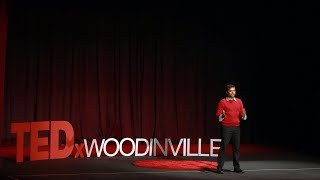
The kayak lesson that changed my negotiation mindset
48sPersonal story of failure perfectly illustrates a common misconception about negotiation being a battle.
▶ Play Clip"The title perfectly matches the talk's promise: the speaker delivers a clear framework for asking for more and getting it, using the kayak metaphor and five concrete lessons."
This talk reframes negotiation as 'steering' relationships rather than a battle over money. The speaker shares five lessons: (1) negotiation is simply steering a conversation or relationship, (2) curious people ask open questions and earn more, (3) internal preparation (negotiating with yourself) is critical, (4) silence (landing the plane) is a powerful tactic, and (5) treat your adversary as a partner to build long-term success. The core insight is that small, everyday steering leads to better outcomes in all negotiations.
While kayaking with her husband, the speaker tried to take over driving, causing them to flip three times. This experience led her to rethink negotiation as steering.
Their guide said 'negotiate these things to the left'—using the word to mean steering. The speaker realised negotiation is any conversation in which you steer a relationship.
Research shows 54% of people didn't negotiate their last salary, partly because they see it as a contest of wills.
Everyday steering includes getting to know your boss's priorities or asking clients what's new—before the money conversations happen.
A study found only 7% of negotiators achieved the optimal outcome; they asked open questions first. 'Tell me' is the most powerful question.
The 'mirror' – negotiate with yourself first. Think of a past successful negotiation to boost confidence and gather strategies. Example: May got a raise by recalling how she negotiated for the job.
Silence is powerful. Research shows leaving 3.5 seconds of silence leads to better deals and is seen as collaborative. Example: Sales executive Brody lost deals because he talked too much.
A diplomat facing a 3 a.m. crisis approached a feeling-disrespected counterpart, said 'We are on the same side,' and saved a peace deal. After a negotiation, the other person often becomes your partner.
By leading with curiosity about yourself and others, you create great deals and great relationships. The speaker and her husband have happily steered together 18 years.
Negotiation is not a battle over money but a continuous act of steering relationships. By being curious, preparing internally, using silence, and treating counterparts as partners, you can achieve better deals and stronger relationships.
What percentage of people did not negotiate their last salary, according to research mentioned?
54%
02:28
What is the most powerful first question to ask in any negotiation, according to the speaker?
'Tell me about...' (e.g., 'Tell me all about your vacation')
06:22
What percentage of participants in the negotiation study achieved the optimal outcome by asking open questions first?
7%
04:59
What is the recommended length of silence to leave after asking a question or making a proposal?
3.5 seconds
10:41
Name the five lessons of negotiation presented in the talk.
1. Negotiation is simply steering; 2. Curious people make more money; 3. The negotiation starts before the negotiation starts (the mirror); 4. Land the plane (use silence); 5. Make your adversary your partner.
03:27
Negotiate as Steering
The moment the speaker redefines 'negotiate' from a battle to steering a relationship—a paradigm shift.
01:44Curious People Earn More
Stat-backed claim that asking open questions leads to better outcomes (only 7% do it optimally).
04:33Negotiate With Yourself First
The 'mirror' concept—internal preparation is the most critical part of any negotiation.
06:563.5 Seconds of Silence
Specific, actionable tactic that increases deal value and perceived collaboration.
10:41Adversary as Partner
Real-world diplomat story demonstrating the power of reframing the other side as a co-conspirator.
11:20[00:00] The most important things I know about negotiation,
[00:29] I learned in a kayak on my honeymoon. Picture this, I arrive in Hawaii and I look adoring me at my brand new husband
[00:45] as we get in a two person kayak together for a river tour. Then things go wrong, fast. You see, in a two person kayak, the passenger in the back, usually the larger passenger,
[01:04] is supposed to drive using their paddles. Well, I didn't like how he was driving. So I decided to drive my own way.
[01:17] And exactly at the moment I thought I had taken over we flipped over three separate times.
[01:32] Apparently we set a record. So I get back in the kayak, now dripping wet, when our guide up ahead turns back and says,
[01:44] okay, folks, let's negotiate these things to the left because you're going to hit that beach up ahead. Negotiate the kayak.
[01:57] In that moment, I realized that although I had been teaching negotiation for a few years already, I had missed something important. And I was not alone.
[02:12] A lot of us have misconceptions about negotiation. We're taught that it's a battle over money, that it involves losing. So we either fear it or we avoid it altogether.
[02:28] In fact, 54% of us didn't negotiate our last salary. That's from research, by the way, I'm not actually seeing into your souls.
[02:43] The fact is that before that guide, I had never heard anyone use the word negotiate that way before. I too had absorbed this message that it was a contest of wills,
[02:58] you know, like five minutes earlier when I dumped us in the river. But there's another way to think about it, isn't there? When I negotiate my kayak toward a beach, what am I doing?
[03:12] I'm steering. Today, I want to share five lessons about negotiation that just might change your life.
[03:27] And the first is this. Negotiation is simply steering. It is any conversation in which you are steering a relationship.
[03:40] And it's so much more than the money conversations. You know, just like a kayak where we want to steer consistently to get to our goal, we can be steering our relationships almost every minute of the day.
[03:57] You know, when I got back from that honeymoon, I looked around and I saw opportunities to negotiate everywhere. I could be getting to know my bosses better so that I understood what they prioritized most.
[04:14] I could be calling my clients regularly and asking them what was new in their businesses. And I realized something powerful. If we intentionally focus on the everyday steering, what happens when we do get to the money conversations?
[04:33] We are more likely to be successful, which brings me to lesson two. Curious people make more money.
[04:47] There's one negotiation technique that most of us are not using. So years ago, a professor set people up to negotiate as part of a study.
[04:59] Only 7% of those people achieved the optimal outcome. What did they do? Well, they didn't lead with their points. They asked questions first.
[05:13] Bottom line in negotiation, you get more by asking questions than you do by arguing. But not just any questions. That's 7%.
[05:26] They asked open questions, questions that uncovered the other person's needs, concerns, and goals. And most of us aren't great at that.
[05:39] When I teach people about asking questions, I say, okay, I've just taken a trip. What can you ask me to get some good information? Top two questions they ask? I bet you could guess.
[05:53] Number one, where did you go? Reno. Did you have a good time? Yeah.
[06:05] Two closed questions, two one word answers. So what's the best question? Well, it's a little bit of a trick because technically, the best question of all doesn't end
[06:22] with a question mark. It's, tell me all about your vacation. Tell me is the biggest question you can ask and it is the most powerful first question in any negotiation at work or at home.
[06:40] With the hiring manager, tell me how the company sees the salary range for this position. With your teenager, tell me what's making you ask for a $50 a week allowance.
[06:56] Tell me gets you the most information but it also builds trust so it creates the best deals. Lesson three, the negotiation starts before the negotiation starts.
[07:15] Most people don't know that every negotiation actually comes in two parts. The second part we all know about. That's where we're sitting down with someone else.
[07:29] But that first part, that's what I call the mirror because we have to negotiate with ourselves first before we negotiate with anyone else.
[07:44] And it's the most critical part of the negotiation, too, because if we don't get this right, the negotiation stops there. We don't ask. We get confused about our priorities.
[08:00] We shut ourselves down before we give anybody else the chance. If you want to master the mirror, try asking yourself, how have I handled something like this successfully before?
[08:16] Did you know that research shows if we think about a time and write it down that we achieved great results before we go into negotiate, we are more likely to negotiate well.
[08:32] Why? Because we remind ourselves of who we are at our most powerful and we also gather data on strategies that are likely to work for us.
[08:45] I once counseled someone named May who was struggling to ask for a raise. You know, in May's family, they were taught that you should wait until something was offered to you.
[08:58] So I asked May about the last time she successfully advocated for herself. And she told me she actually felt really confident negotiating for the job in the first place.
[09:12] She really believed in the company's mission and she felt confident she could contribute. You know, as May wrote this down, I saw her face change and her confidence grow.
[09:26] May went in and she got that raise. Lesson four, land the plane.
[09:38] I worked with a brilliant sales executive named Brody who sometimes would lose deals because he talked too much. He'd ask a great question and then he would get scared of the silence so he would eat it up with his words.
[09:56] What do you need to get this done here today? Well, I know our price point might be a little bit higher than that of our competitors, but I think if you go ahead and look at our customer reviews,
[10:08] want to know the secret to great deals, shut up. Recent research found that leaving a period of silence in negotiation not only made it more likely that the other person would give you a high value move,
[10:28] but it also came across as collaborative. So, how much silence?
[10:41] I just did it three and a half seconds. See? You were nervous, but we all survived. That's what I call landing the plane. Ask your question, make your proposal, and then zip it.
[10:59] And finally, lesson five. Make your adversary your partner. It's 3 a.m. and you have five hours to go before the entire world is expecting you and several other countries to announce a peace deal.
[11:20] But right now, you have a problem because one of the other countries diplomats has left the building and is down in the parking lot threatening to drive away because he feels disrespected.
[11:36] This was the situation that one of the diplomats I work with faced, but a lot of us face things like this in our everyday negotiations. So much of the popular wisdom talks about our adversary, our opponent.
[11:54] Well, in most everyday negotiations, that adversary at the bargaining table becomes our partner once that deal is done.
[12:06] The boss who holds the keys to your raise, once you get it, you're working together or that home contractor you're negotiating with over your kitchen.
[12:19] Once you settle on a price, you're trusting her to build a room you're going to love for years to come. And even when your spouse might feel like an opponent, well, you're still sleeping in the same bed at the end of the day.
[12:40] The diplomat I worked with, he walked out of the building down to the parking lot and he approached the man who had left. He said to him, we are on the same side. He listened. Eventually the two men walked together back into that building and later they announced that peace deal.
[13:08] My negotiation motto is this, I never request. I recruit. I don't want to talk to someone across the table.
[13:22] I want to pull them around with questions to my side of the table so that we are now co-conspirators working toward the same goal.
[13:34] Negotiation is not about it. It is simply steering. And if we lead with curiosity about ourselves and about others, we won't just create great deals, we'll create great relationships along the way.
[13:57] Speaking of which, you might be wondering, what happened after the honeymoon? Well, I'm glad to report that my husband and I have been happily steering together for 18 years.
[14:21] Just not in a kayak. Thank you.
⚡ Saved you 0h 14m reading this? Transcribe any YouTube video for free — no signup needed.