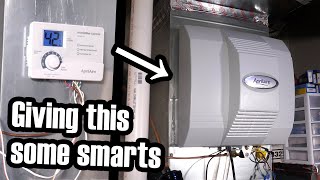

Hidden Dangers of Whole-Home Humidifiers
54sExplains shocking risks of a common household device that many overlook.
▶ Play Clip"The title accurately reflects the content: the creator made his humidifier less terrifying by adding a smart humidistat, but the video also covers risks and limitations."
This video discusses the risks and maintenance challenges of whole-home humidifiers, particularly their potential to cause catastrophic damage if left unattended. The creator shares his experience upgrading his humidifier with a smart humidistat that automatically adjusts based on outdoor temperature, making it safer and more efficient.
Whole-home humidifiers are great for cold climates but require significant attention to avoid damage to the heating system or home.
In 2021, a video on freestanding humidifiers led to questions about centrally ducted ones. Freestanding units are easier and cheaper, but ducted ones require a centrally ducted heating system and a water line.
The humidifier has a fan that blows air through a wet pad, absorbing moisture. Water comes from a solenoid valve that keeps the pad wet, with some water wasted.
The pad can deteriorate and block the fan, causing water to drip into the furnace. Regular checks are essential to prevent damage.
The humidifier should only run when the furnace blower is on. It is wired to the heat signal wire, but the creator changed it to the fan signal wire to increase runtime.
The humidistat has a note to lower the humidity set point as outdoor temperature drops to prevent condensation. The creator forgot this several times, leading to wet windows.
The creator wanted a humidistat that automatically adjusts based on outdoor temperature. He found the Aprilaire 60 model and installed it, running the outdoor sensor wire through the furnace's intake pipe.
The new humidistat can force the furnace fan to run. It requires connecting to R, C, W, G, and Gf terminals, plus the humidifier control wires and outdoor sensor.
The humidistat was designed for the automatic version, but the creator has the manual 700M model. He had to modify the wiring to make it work.
After modifications, the humidistat works as intended, automatically adjusting humidity based on outdoor temperature. The creator is happy but notes it's still not completely set-and-forget.
Upgrading to a smart humidistat with outdoor temperature sensing makes the humidifier safer and more convenient, but regular monitoring is still necessary to prevent leaks and other issues.
What is the main risk of a whole-home humidifier if left unattended?
It can cause catastrophic damage to the home's heating system or the home itself due to leaks or fan failure.
0:22
How does a whole-home humidifier work?
A fan blows air through a wet pad made of absorbent material, adding moisture to the air before it is distributed through the ductwork.
2:14
Why should the humidifier only run when the furnace blower is on?
To prevent the air in the ductwork from becoming extremely humid and causing condensation on surfaces that should not get wet.
5:34
What is the purpose of the humidistat?
It measures the humidity level and closes a switch when humidity is below the set point, allowing the humidifier to run.
7:04
Why did the creator change the humidifier wiring from the heat signal to the fan signal?
Because his furnace runs only 2-3 hours a day, which was not enough time for the humidifier to be effective. Wiring to the fan signal allowed it to run whenever the fan was on.
8:15
What is the recommended humidity set point adjustment based on outdoor temperature?
The set point should be lowered as the outdoor temperature falls to prevent condensation on cold surfaces.
9:42
How did the creator run the outdoor temperature sensor wire?
He ran it through the furnace's intake pipe, using a vacuum to pull a string and then the wire.
15:29
What was the compatibility issue with the Aprilaire 60 humidistat?
It was designed for the automatic version of the humidifier, but the creator had the manual 700M model, which requires external 24V AC power.
22:10
What additional feature does the new humidistat have compared to the old one?
It can force the furnace fan to run if it hasn't received a heating call in an hour, allowing it to check humidity and run the humidifier if needed.
19:49
What is the biggest disappointment with the new humidistat?
The highest humidity set point is 45%, even though the creator wanted 50% when outdoor temperatures are above freezing.
28:14
Risk of catastrophic damage
Highlights the serious risks of whole-home humidifiers, which many users may not be aware of.
0:22Pad deterioration causing fan failure
Illustrates a specific failure mode that can lead to water damage, emphasizing the need for regular checks.
4:12Wiring change to fan signal
Demonstrates a practical workaround for homes with oversized furnaces that run infrequently.
8:15Outdoor temperature and humidity adjustment
Explains the critical relationship between outdoor temperature and indoor humidity to prevent condensation and mold.
9:42Compatibility issue with manual humidifier
Reveals a frustrating lack of documentation from the manufacturer, requiring custom wiring modifications.
22:10[00:00] When you live in a cold place like I do, these
[00:06] Which is why it's such a shame that they're also so terrible.
[00:11] What do I mean by that?
[00:12] Well, if you've got one of these or you are looking into getting one,
[00:17] you should be aware that they need much more attention from you than you might expect.
[00:22] Not only can these rather easily fail in such a way that can cause catastrophic damage to your home's heating system,
[00:29] but they can also cause significant damage to your home itself if you simply let them run unattended.
[00:36] See, the thing that makes them great -
[00:38] the ability to add lots of moisture to the air
[00:43] - also makes them a problem
[00:49] But today, I am going to fix that problem
[00:56] First though, a little backstory.
[00:58] In 2021, I made a video on freestanding humidifiers,
[01:02] and the comments were filled with folks wondering why I didn't talk about centrally ducted humidifiers like this one
[01:08] beyond a basic mention.
[01:11] Well, partly that's because back then I was living in a different home and I didn't have one of these.
[01:16] But the bigger reason was that if you want to add a humidifier,
[01:21] it's a lot easier and cheaper to buy one that you
[01:27] Many of them are large enough
[01:32] Plus, freestanding units don't care
[01:37] So, if your home is heated with radiators
[01:41] like certain kinds of heat pump,
[01:43] those will work fine.
[01:45] The humidifier I'm talking about today
[01:51] and a plumbed connection to a water line.
[01:54] So, it's not universal and it's much more involved.
[01:57] And as I already said, these things come with significant risks that you really need to be aware of and monitoring.
[02:04] I'll explain those shortly, but let's start
[02:10] There are several types of these things on the market,
[02:14] Inside is simply a fan which blows air
[02:21] The whole thing is mounted to a giant hole
[02:26] And when it's running, the fan draws in some of the air coming up from the furnace through the sides here
[02:32] and then forces it through that wet pad where it will absorb moisture before rejoining the airstream
[02:37] and getting distributed throughout my home.
[02:40] It's quite a simple device.
[02:42] Where's the water coming from?
[02:44] It's coming from right here.
[02:46] When the humidifier is running, this solenoid valve opens
[02:53] and up to this nozzle where it's then distributed
[02:58] That makes the pad soaking wet.
[03:00] And in fact, once it's saturated,
[03:05] The valve is deliberately letting more water through
[03:10] So, you invariably end up with some wasted water.
[03:14] I couldn't tell you exactly how much water is being lost here,
[03:17] but I can tell you I have never noticed an increase
[03:23] So, it's not that much.
[03:25] But if you're concerned about that, there are water-saving models available which don't work like this one does.
[03:30] But, they have other considerations
[03:34] Since the pad is essentially always soaking wet,
[03:41] How often you'll need to do that depends largely on
[03:47] I have a fairly small home, so this thing doesn't run that much
[03:50] and I can usually get away with changing
[03:55] But even still, this is what last year's pad looks like.
[04:00] It used to be white and now it's pink and crunchy because of all the calcium it's filled with.
[04:06] Delicious!
[04:08] But it can be much worse than simply getting a little gross.
[04:12] Remember that thing I said about these needing much more attention than you might expect?
[04:16] Well, one day I heard the water valve open, but I didn't hear the fan start up.
[04:21] And that was because the pad had started to deteriorate and part of it fell forward and into the fan blades, holding them stationary.
[04:30] I'm honestly quite lucky that it didn't cause any damage to my furnace because the water valve was still open and getting it wet.
[04:36] So, the pad's detached section leaning at a wonky angle could easily have started dripping water down into the furnace.
[04:43] And when I was a little kid, my mom and dad had that exact thing happen which fried the furnace's control board.
[04:50] So, yeah, these are not set and forget -
[04:53] you really need to be cognizant of their operation and
[04:59] But anyway, you'll notice that the water line
[05:04] This style of humidifier generally works better when the water
[05:09] In fact, the manufacturer claims it needs hot water
[05:16] Well, hold on. That part comes later.
[05:19] Now, since this is just a fan that grabs some air from the duct, gets it moist, and then puts it back into the duct,
[05:26] it relies on the furnace pushing air through the duct work in order to distribute its work
[05:31] and actually increase the humidity in my home.
[05:34] And that means if it were for some reason
[05:41] well, it would pretty quickly cause a problem.
[05:44] The air in that duct work would get extremely humid and water would start condensing onto things which ought not get wet.
[05:52] Luckily, there's an easy solution to that:
[05:54] only power this thing up if the furnace is running
[06:00] That water valve is powered by 24 volts AC,
[06:03] the same power that your furnace or air handler produces to send through your thermostat wiring for control signaling.
[06:10] The humidifier is also plugged into
[06:15] but the fan is controlled via a current sensing relay which detects that the water valve is open.
[06:21] So if the water valve is open, the fan will run.
[06:25] This ultimately means if you wire that water valve across the common wire and the heat signal wire coming from the thermostat,
[06:34] then the humidifier will only be able to operate
[06:40] This setup not only ensures the blower
[06:45] but it also means the humidifier
[06:49] So, if you forget to switch it off at the end
[06:53] But the humidifier can't simply run whenever the heat's on.
[06:57] That would likely result in over-humidification, which could be uncomfortable or even cause mold issues.
[07:04] So rather than hook the water valve to the furnace directly,
[07:11] This is a fully analog doodad
[07:13] which sits in the return air stream and closes a switch when the humidity is lower than your desired set point.
[07:20] So long as that switch is closed and the thermostat
[07:27] But once the humidifier has elevated humidity
[07:32] and the humidifier will shut off
[07:36] It's a very simple control setup, but it works great!
[07:39] Except for when it doesn't.
[07:42] First of all, you may remember from a previous video of mine that my home's furnace is oversized by nearly a factor of four.
[07:50] This means on most days,
[07:54] And that's not enough time
[07:59] That's a problem specific to my home, but it was very annoying.
[08:04] I couldn't get the indoor humidity to even touch 40%
[08:12] However, there was a fix for this issue.
[08:15] Instead of hooking the humidifier's water valve
[08:22] This meant the humidifier was able
[08:27] And by setting a fan schedule on my thermostat,
[08:34] my humidifier was actually able to do its job.
[08:37] And for the last couple of years,
[08:43] nice and comfy and free of static shocks.
[08:46] This scenario is why the manufacturer
[08:51] If it's running during a heating call, the air the humidifier is taking from the furnace and blowing past the pad will be hot,
[08:59] which will help water to evaporate.
[09:02] But if it's running during a fan call, that air is only at room temperature and the water won't evaporate as quickly.
[09:10] Honestly though, I have a hunch it would actually work fine if it
[09:15] and the real reason they want it hooked to hot water is to minimize the cooling which would occur as water evaporates.
[09:22] This thing is basically a swamp cooler and it will
[09:28] But if the pad is soaked in hot water, that cooling effect is diminished somewhat and possibly even eliminated.
[09:35] But anyway, that's not important.
[09:37] What is important is this little
[09:42] This thing wants you to turn the humidity
[09:47] This is because the colder it is outside, the colder the inside surface of your walls and windows becomes
[09:54] and that will encourage condensation.
[09:57] This could simply be an inconvenience - maybe you'll have some water puddling on window sills.
[10:02] But it could also lead to mold growth
[10:07] And you don't want that,
[10:11] There's just one small problem with notes like this, though.
[10:14] You're lucky if people read them, and you're even luckier if people remember about them.
[10:20] I'm a people and I have forgotten about this several times.
[10:23] Usually what happens is the temperature plummets overnight and when I get up, the windows are soaking wet.
[10:29] So then I go downstairs to the furnace closet -
[10:32] quick reminder for you homebuilders out there,
[10:35] this can all just go in a closet!
[10:36] It never has to go in an attic.
[10:39] If you're doing that, you suck at planning!
[10:42] And I promise everybody out there, the 20 square feet
[10:48] is absolutely worth being able to get at it without a ladder.
[10:52] Priorities man.
[10:53] Get some!
[10:55] As I was saying, I go downstairs to the furnace closet,
[11:00] I'll wonder why it's not as
[11:03] "Oh right, I turned the humidistat down"
[11:07] Given all that hassle, it sure would be nice if there were humidistats out there that were aware of the outdoor temperature
[11:14] and could automatically adjust the indoor
[11:20] Oh, wait. Those exist!
[11:22] But, well gosh darn it, they're going to
[11:29] And this furnace closet is
[11:33] So, that's gonna be annoying.
[11:35] The easiest thing to do would be to run a wire across the garage and maybe slip it past the garage door seal,
[11:42] but I didn't like that idea, and I really didn't like the idea of drilling holes in walls or having random wires going all over the place.
[11:50] I've lived in my home for over three years now
[11:53] and have been lamenting the difficulty of installing an outdoor temp sensor for a better humidistat the whole time.
[11:59] And then about two weeks ago, I finally remembered about that
[12:05] Yeah, this pipe here, it goes all the way outside.
[12:09] The point of this is to allow the furnace to have combustion air without creating negative pressure in the building.
[12:15] When this panel is closed up,
[12:21] It draws in fresh air through here, which brings in
[12:27] and then pushes the exhaust gases out this other pipe.
[12:31] And uh well, I could have just run
[12:37] Yeah, better late than never!
[12:40] Now, quick note, some of the fancier
[12:46] I don't have one of those - I just have a basic Nest
[12:51] but mostly works and I somewhat begrudgingly put up with.
[12:55] Luckily, the people who built my home were kind enough to not cheap out and actually ran seven conductor thermostat wire
[13:01] between my furnace and the thermostat.
[13:04] And this means I could upgrade
[13:09] which knows the outside temperature
[13:15] But quite frankly, I am trusting
[13:20] So, I decided not to go that route.
[13:22] Instead, I searched for a new dedicated humidistat.
[13:26] And then I discovered, wow,
[13:31] I mean, in hindsight, I kind of get it.
[13:33] When you buy a humidifier, it's going to come with one of these.
[13:37] But my humidifier apparently came with
[13:42] And since apparently nobody but specialty supply houses stocks these things, off to Amazon I went.
[13:49] I found this Honeywell model as well as this Aprilaire model
[13:52] and this suspicious clone of the Aprilaire model.
[13:56] Since I have an Aprilaire 700 series
[14:02] I figured I'll just get the Aprilaire 60 humidity control.
[14:06] So I did.
[14:07] Annoyingly, the product listing gave no information on how long the outdoor air temperature sensor wire was.
[14:15] I'd need about 30 feet of wire and I figured it would be reasonable for them to include perhaps 50 feet of wire.
[14:22] But nope, it was about 2 feet long.
[14:25] No big deal. I have a soldering iron and I know how to use it.
[14:29] So, the first step was to run a wire through that pipe.
[14:32] I made a stop at everybody's favorite suspiciously cheap tool store and got myself a suspiciously cheap 50-ft fishtape.
[14:39] I'm sorry, no, it's a 50 Fish T ape.
[14:43] I tried to run the fishtape directly
[14:47] but I wasn't too hopeful that that would work
[14:53] And indeed, it didn't work.
[14:55] No big deal. I figured I'd just drill a hole in this last 90 here,
[15:00] which was probably the start of a straight shot
[15:05] After double and triple-checking that I was about
[15:11] I made my hole.
[15:13] And the fishtape went in nice and smooth
[15:19] I tried and tried and wiggled and wiggled,
[15:23] That was annoying.
[15:25] But then I remembered
[15:29] I took some lightweight twine and tied it to the end of a shopping bag, and then I stuffed it into the pipe.
[15:34] Then I went outside with my vacuum cleaner,
[15:40] and gave it a toot.
[15:42] I am terribly sorry that I left my mic kit plugged into the camera because there's no sound for this clip, \
[15:48] but I'll dub it with what I imagine it sounded like.
[15:51] [fwbbslrpptty-yoop]
[15:54] I honestly could not believe
[15:58] Too bad I already drilled that hole, I guess.
[16:00] With the bag and the twine now at the other end of the pipe, I pulled it out and tied a wire to the end of the twine.
[16:07] I wasn't planning to use speaker wire for this, but since
[16:14] I wanted something relatively thick and strong.
[16:17] Then I went back inside and started pulling on the twine.
[16:21] It was going so well, but then...
[16:25] But!
[16:26] A Christmas miracle!
[16:27] It made it past that hole I drilled,
[16:32] Good thing I already drilled that hole, I guess.
[16:34] I pulled out about 10 ft of wire from that hole,
[16:37] and then I went outside, cut it to length,
[16:43] Then I went back inside and pulled the wire back until the sensor was dangling down at the very end of the intake pipe.
[16:51] And that's where I decided to leave it.
[16:53] Then I taped the wire in place and made a
[17:00] Now, some of you,
[17:03] might be concerned about how close the intake pipe is to the exhaust pipe, but I am confident that this location is fine.
[17:11] For one, when the furnace is running, it will be drawing fresh air up and through the tube past the sensor,
[17:18] so the heat from the exhaust shouldn't matter.
[17:21] My water heater exhaust is also in this area,
[17:26] But unless I'm actually using hot water, the water heater only comes on for about 5 minutes every few hours or so.
[17:33] And one day, I want to get a heat pump water heater.
[17:36] I could have, of course, actually pulled the wire out of the bottom of that pipe and mounted the sensor somewhere if I were concerned,
[17:43] but I wasn't, so I didn't.
[17:45] All right, with the outdoor temp sensor in place,
[17:50] It needs a 3/4 inch hole
[17:56] And I was hopeful the existing
[18:00] but no, that one needed a big old hole cut in
[18:08] I elected to seal that hole with some
[18:13] I didn't have a 3/4 inch drill bit, so I simply abused my 1/2 inch drill bit and made this beautiful hole.
[18:20] But with it mounted here, it will now be able to know the humidity of the air which is entering my furnace.
[18:26] This is something that I don't quite love about this humidistat.
[18:30] For my home, it's perfect.
[18:32] I don't actually have any return ducting at all.
[18:36] The enclosed bedrooms upstairs have vents installed above the doors which pass air into the hallway.
[18:43] And the hallway leads to a switchback staircase which goes all the way down to the lower level where the furnace is.
[18:49] And since the main level is basically one big
[18:55] and all the furnace needs is one
[19:01] That's what's on the other side of the duct
[19:05] My home's setup means that whenever the furnace blower is running, the humidistat is going to get a pretty accurate reading.
[19:12] But I can think of plenty of cases where it would be better
[19:19] In those cases, you might be better off getting a
[19:26] But if your home's HVAC system was
[19:31] taking a reading of the air entering
[19:37] And with it now mounted, all that was left was the wiring.
[19:41] Here, things are drastically different than before.
[19:44] This humidistat has the capability
[19:49] If it hasn't gotten a heating call in an hour, it will kick on the blower so it can stir the air up for a while,
[19:55] get an accurate humidity reading, and then if it's too low, it will switch the humidifier on and keep the blower running
[20:02] regardless of what the thermostat's commanding.
[20:05] This is a pretty neat feature, and it means
[20:10] But it also means this now needs a way to control the furnace.
[20:15] But in addition to that, it also wants to
[20:20] So it needs some pretty significant wiring changes.
[20:23] In fact, it wants to be connected to R and C, giving it a 24 volt power source from the furnace,
[20:30] W so it can see a heating call in progress,
[20:33] and it wants me to disconnect the thermostat wire
[20:38] and instead connect it to the G terminal on the humidistat.
[20:42] Then I need to run a new G wire called Gf back from the humidistat and land it on the G terminal in the furnace.
[20:50] This setup is what allows the humidistat
[20:54] but it will still pass a fan call
[20:58] And finally, of course, I need to connect the humidifier's control wires to the two H terminals on the board
[21:05] and the outdoor temperature sensor.
[21:07] With that done, all that was needed
[21:12] Hope I didn't blow anything up.
[21:16] [blower noise in background]
[21:21] if I turn it to six, but we'll see.
[21:24] [click]
[21:26] Uhhh, so the board woke up and the relay definitely clicked
[21:30] and it's telling me the humidifier is running,
[21:36] Well...
[21:38] All right, with the help of a multimeter and some troubleshooting, I have figured out what's going on here.
[21:43] And now I'm mad!
[21:45] So, this thing comes with instructions for hooking it up to an Aprilaire 700 series humidifier, which is what I have.
[21:53] And it has a footnote about
[21:57] (apparently they've been making them like these forever)
[22:01] Well, this humidifier is definitely
[22:05] Well, it turns out I don't have a 700. I have a 700M.
[22:10] And you would think, right, the M stands for manual -
[22:13] the only difference between those models is you get the
[22:20] But in fact, the 700M
[22:27] And the 700 automatic version
[22:32] And all this is doing is bridging
[22:37] But the manual humidifier needs to get 24 volts AC,
[22:44] I have to do a little bit of sanity checking
[22:48] But I'm going to have to jump either
[22:55] and then basically have that relay send
[23:02] Now, why on earth does Aprilaire
[23:08] I don't know, but it's really frustrating.
[23:10] And they clearly don't want people figuring out how to wire this digital version to the manual one
[23:17] because they just don't even tell you it's possible.
[23:19] But it's totally possible. This is just a relay.
[23:21] One of these relays does the humidifier.
[23:27] But they do not give you a wiring diagram for how to use this with the manual model, even though it's completely possible.
[23:35] [sigh]
[23:39] This isn't quite part of that, but man.
[23:44] This is dumb.
[23:45] Okay, my modifications are complete.
[23:48] Now, this is going to look very confusing because I don't have - almost none of these wire colors are correct.
[23:53] I'm actually using garage door opener sensor wire.
[23:57] Uh, yeah, but it should work.
[23:59] Basically, I now have red and blue
[24:06] taken off of the input and then I have a separate lead for them.
[24:10] So now this thing and the humidifier are wired in parallel.
[24:17] But the humidifier's return -
[24:23] and then the other H terminal
[24:26] So basically the humidifier
[24:33] But when the relay is open it shouldn't run.
[24:38] Now, there's really nothing left to do except
[24:45] Now, uh I know it's safe to do this because the
[24:51] is I will blow the furnace's power supply fuse.
[24:55] And uh it's probably an automotive fuse,
[24:58] But it will be easy to get a replacement if I need it.
[25:02] It's part of how I know it's safe
[25:07] Here is the moment of truth, part two.
[25:16] Okay, it's on.
[25:18] We're going blower activation...
[25:23] I'm going to turn that to on.
[25:26] Crank this up all the way and hopefully the humidifier comes on.
[25:31] What is this test?
[25:33] [clack, hissing, whirring]
[25:37] And look at that! The humidifier is running!
[25:39] Now, is the blower actually running?
[25:41] It's hard to tell when the humidifier is on as well.
[25:44] Oh, for sure it is. So, that worked correctly.
[25:48] Want to make sure this actually shuts off now.
[25:50] [clunk]
[25:52] Awesome.
[25:53] With that rather ugly but functional wiring modification,
[26:01] The humidistat can now energize this relay,
[26:05] And that allows it to perform its own check
[26:10] If during that check it finds that it's lower than the set point, it will then energize this relay which,
[26:16] thanks to those horrible jumpers and wire nuts will now send power up to the humidifier's water valve, which will switch it on.
[26:23] And of course, that will increase the humidity in my home.
[26:27] But once it reaches the set point, the humidity sensor will detect that, at which point it will turn the humidifier off.
[26:33] That will all happen regardless of what my thermostat's doing.
[26:37] If though my thermostat is commanding the heat to run,
[26:40] the humidistat is now aware of that thanks to the fact that it's hooked up to the W terminal on the furnace board.
[26:47] So, as before, if the humidity is below the set point, it will close the relay and send power to the humidifier.
[26:54] And once it's satisfied, it shuts the humidifier off.
[26:58] Now, none of this is really new.
[27:01] My old setup with the humidifier connected to the fan terminal
[27:05] and with my thermostat forcing the fan to run for 15 minutes every hour accomplished the same thing.
[27:11] See, I also went into my thermostat's programming to make it command the fan during a heating call.
[27:17] Something that's not necessary for my heating system to work, but which allowed the humidifier to run during a heating call, too.
[27:25] So, when it comes to the basic functionality
[27:32] But now that this control knows what the outdoor air temperature is, I no longer have to think about that.
[27:38] It will automatically reduce the humidity set point as the ambient temperature outside falls.
[27:45] This chart here explains how the humidifier will adjust the set
[27:51] The recommended setting, five, will allow the humidity to get as high as 45%, but will start lowering it when the outdoor temp is 30° F,
[28:00] which is just a hair below freezing.
[28:03] I know that my home can handle 45%
[28:10] And actually, this is my biggest disappointment with this thing.
[28:14] I would like setting six to shoot for 50% humidity when it's above freezing outside, but the highest this will ever go is 45%.
[28:24] That's not a big difference, but I can notice it.
[28:27] Still, I will happily sacrifice that for the peace of mind that this will automatically reduce its output in those cold snaps.
[28:35] I haven't had this installed for very long,
[28:40] is telling me the indoor humidity is hovering around 45%.
[28:44] So, it's doing its job and seems to be accurate.
[28:47] Or I guess at least my thermostat agrees with it.
[28:51] The other thing I don't like about this?
[28:53] It won't tell me what it thinks the outdoor temperature is.
[28:58] It should throw an error code if the sensor goes bad,
[29:05] I'm not going to know that unless the drift is
[29:11] Since I've installed this,
[29:15] So, I'm not even sure yet that it's working as intended.
[29:19] That's cool since, you know,
[29:23] But, we're supposed to get a cold snap shortly after Christmas,
[29:26] and I'll do one of those community posts once we've gone through that. And I'll pin a comment here, too.
[29:32] Aside from the absolute ridiculousness that was
[29:35] having to figure out my own way to get this Aprilaire humidity controller to work with my Aprilaire humidifier,
[29:42] I am very happy to have made this upgrade.
[29:44] But to circle back to the beginning of this video,
[29:47] while the main point of doing this is to make my humidifier something closer to set-and-forget,
[29:53] it's still absolutely not set-and-forget.
[29:56] The potential for leaks is still there.
[29:59] The potential for a deteriorating water pad is still there.
[30:03] And while I hope its outdoor temperature sensor
[30:09] the potential for too much humidification
[30:15] I will absolutely still be monitoring
[30:21] And I suggest that anybody out there with one of these things check on it at least monthly and preferably weekly.
[30:28] That I think is the biggest argument for choosing a large freestanding humidifier over one of these things.
[30:35] Sure, it's annoying to fill those up with water every day or two,
[30:38] especially considering that you'll need to use a water treatment product with those fill-ups to prevent odors and mold growth.
[30:44] And of course, they take up space.
[30:48] But when you have to keep interacting with it in order for it to keep working, you'll be more likely to notice problems.
[30:55] Plus, if its tank were to start leaking, at most you'll have a few gallons of water on the floor.
[31:00] This thing's plumbed to full water pressure,
[31:07] I have a floor drain in this furnace closet,
[31:11] But still, it could cause
[31:17] But I must admit, it has been very nice
[31:23] without having to fill up a weird
[31:27] And now that the humidistat knows the outdoor air temperature,
[31:31] I'll be slightly more at peace
[31:35] I'm still going to be checking on the humidifier
[31:40] and that there isn't water where there shouldn't be.
[31:42] Plus, of course, I'll be checking that
[31:48] Assuming it does, though, this is as close to set-and-forget as you can reasonably make one of these,
[31:53] and that makes me happy.
[31:57] ♫ moistenedly smooth jazz ♫
[32:00] A few things I didn't mention in the main body of the video:
[32:03] First, like my old setup, I'll have to remember to turn this off when the weather gets warm.
[32:09] If I don't, it may try to add humidity when that's the last thing I want.
[32:14] Yay, Midwest.
[32:16] Second, at time of filming, I haven't yet verified whether or not it knows the thermostat is commanding the fan.
[32:23] It should, but I didn't think to actually test that before I got here and shot the talking head.
[32:28] Here's the answer:
[32:29] I just confirmed that yes, it does turn on the
[32:35] So, that is working as I expected.
[32:37] And third, this thing's humidity sensor does a reasonable job,
[32:41] but I have noticed that the displayed humidity falls quite
[32:48] It drops by about 5% even when the blower is running.
[32:52] This is a bit puzzling to me as it's in the same room
[32:58] And based on what my
[33:02] But clearly the sensor is being affected
[33:09] That makes complete sense based on this thing's design.
[33:12] And it would really be improved if it had some sort of remote sensor you could shove deep into the duct.
[33:18] Plus, that would mean you could mount this control
[33:24] I know there are plenty of climates out there where the idea of wanting to add moisture to the air is abhorrent,
[33:29] but I'm surprised how terrible the options seem to be
[33:37] They are simple things, yes,
[33:43] ...humidistat the whole time and then about 2 weeks later -
[33:47] oh shoot.
[33:48] Yeah, it used to be white and now it's pink and chunky fer-
[33:53] ah, it's crunchy!
[33:55] Crunchy, not chunky.
[33:57] Eurgh.
[33:58] This thing is basically a swamp cooler and will drop the temperature of the air leaving the vents if it's running.
[34:04] But the pad...
[34:09] I missed the word if.
[34:12] Then I taped the wire in place and made a...
[34:15] ah farts.
[34:16] That's what's on the other side of the duct of...
[34:19] Farts.
[34:20] Farts!!
[34:23] So those of you who were looking at that wiring diagram closely might have noticed that it was showing the transformer in the automatic version and how the relay breaks that circuit.
[34:30] I was so confused by the idea of the transformer not being in the furnace that it didn't even register what the diagram explained.
[34:35] Sometimes a multimeter brings a faster answer!


⚡ Saved you 0h 34m reading this? Transcribe any YouTube video for free — no signup needed.