
Why we're still obsessed with oil in 2026?
45sOpens with a relatable question about outdated technology that hooks viewers immediately.
▶ Play Clip"The title promises to reveal misinformation about renewables, and the video delivers a thorough technical and economic debunking of anti-renewable arguments."
The video argues that our continued reliance on petroleum is irrational in the modern age because it is a disposable, single-use energy source that requires constant extraction and expenditure, whereas renewable energy technologies like solar and batteries are durable, one-time investments that harvest free energy. The creator uses personal experience and detailed calculations, including a comparison between a gasoline-powered Nissan Cube and an electric Hyundai Ioniq 5, to show that renewable energy is economically and practically superior.
The creator finds it odd that in 2026 society is still excited about finding oil, a 19th-century technology.
Oil is refined into gasoline and diesel, which are burned once, requiring continuous extraction of more oil to keep using machines.
Oil dependency makes living standards reliant on intensive extraction, often in unfriendly nations; the US strategic reserve only lasts about a month.
Electric machines, including solar panels and batteries, offer a way to use energy without burning fuel; batteries can be recharged and recycled.
Modern batteries can last over a decade (5,000 cycles), making renewable energy paired with storage the best deal.
A 2010 Nissan Cube with 188,000 miles burned about 6,250 gallons of gas, costing approximately $19,500—more than the car's original price.
Electric cars are not limited by grid fuel; they can charge from solar, nuclear, or natural gas, providing national security benefits.
Despite upfront cost, solar panels generate free energy for decades; the cost per panel over its lifetime is pennies a day.
The $19,500 spent on gasoline for one car could buy 111 solar panels (55kW capacity) enough for six homes for decades.
Backup generators are not used as primary power due to high operating costs (fuel); solar farms have near-zero OpEx.
Photovoltaics are now the cheapest electricity source; grid-scale batteries make 24/7 renewable power feasible at lower cost than any other source.
Using corn for ethanol (e.g., E85) is wasteful: 120 acres of corn yield ~66,000 gallons vs 37,000 MWh (74 million miles for EVs) from the same area of solar panels.
If we stopped growing corn for ethanol (25 million acres), solar panels on that land could generate 84% more electricity than the entire US grid currently produces.
Most solar panels are glass and aluminum; silicon cells are thin and constitute only ~3% of panel mass. Lead (if used) can be recycled like car batteries.
Batteries do not disappear when used; they last 15+ years and all materials (lithium, cobalt) can be recovered and recycled.
Engineers are eliminating conflict minerals (e.g., LFP without cobalt) and developing sodium-ion batteries using table salt, which are safer and more sustainable.
Solar and storage are now the cheapest form of electricity; panels cost under $0.35 per watt, making the renewable future a present reality.
The creator states that renewable energy is controversial only because of partisan lies; Republican administrations have systematically undermined renewable progress.
The video concludes that renewable energy is not only environmentally beneficial but is the most economically rational choice, as it replaces disposable, costly fuels with a one-time investment in durable, free-energy harvesting infrastructure. The creator urges viewers to see through the political misinformation and act on the clear economic logic.
How much did it cost to fuel the Nissan Cube over 188,000 miles?
About $19,500.
12:50
How many gallons of gasoline did the Nissan Cube burn?
About 6,250 gallons.
12:10
How many 500W solar panels would be needed to charge an Ioniq 5 in December in Chicagoland?
Twelve.
20:26
What percentage of a solar panel's mass is typically silicon?
About 3%.
48:53
How long can modern batteries last before significant degradation?
Up to 15 years with daily cycling.
52:23
What is the US strategic petroleum reserve's capacity in days?
Slightly more than one month of consumption.
2:32
What is the main material in most modern solar panels?
Glass and aluminum; the silicon cells are very thin.
43:07
How much land would be freed if we stopped growing corn for ethanol?
About 25 million acres.
36:11
What is the core economic reason solar panels are now the cheapest electricity source?
They are durable (last decades) and harvest free energy from the sun with near-zero operating costs.
27:07
What is a major improvement of LFP batteries over older chemistries?
They contain no nickel, manganese, or cobalt, and are much more stable (less fire risk).
56:56
Petroleum is Disposable Energy
Fundamental insight that oil is burned once, requiring continuous extraction, unlike durable renewables.
1:23Solar Panels are a One-Time Investment
Post-installation, solar panels generate free electricity for decades, contrasting with endless fuel costs.
17:42Solar Energy is Economically Unstoppable
Present-day economics (lowest LCOE) make solar/storage the rational choice, regardless of environmental arguments.
27:52Solar Panel Materials are Recyclable
Dispels myth of toxic panels: mostly glass/aluminum, with very thin silicon cells; all materials can be recovered.
45:18Batteries Don't Disappear
Crucial point that battery materials remain after use and can be recycled, unlike burned fossil fuels.
52:12[00:00] You know I'm really puzzled by something.
[00:02] It's 2026, believe it or not,
[00:05] and even though we live in this modern digital world
[00:08] where we can ask our smart assistants to close the blinds for us,
[00:12] we're still excited about finding oil.
[00:16] That feels weird to me.
[00:18] Petroleum is a 19th century technology, and here in the 21st century,
[00:23] very few of the things we use are powered by petroleum products.
[00:27] So why are we still so obsessed with finding more oil?
[00:32] Well, there's a very simple reason.
[00:34] It just has to do with how oil as a technology works.
[00:39] Once we find new crude oil deposits and take some out of the ground,
[00:43] we then refine that oil into many useful products and things.
[00:47] However, by far the greatest portion of it is used to produce gasoline and diesel fuel,
[00:52] which power some of the machines we rely on.
[00:55] Now, those machines are great and have unlocked plenty of wonderful new possibilities for us,
[01:00] even whole new kinds of economies.
[01:03] While they've also come with some downsides that concern me
[01:10] you're not going to hear me tell you to stop using your machines.
[01:13] That is not at all what this video is about.
[01:16] But petroleum has an unavoidable issue, which is easy to ignore
[01:20] but I don't think you should.
[01:23] It's disposable energy.
[01:26] In order for our machines to do things for us
[01:31] they burn the fuels which power them.
[01:34] That makes those fuels single use:
[01:37] one and done.
[01:39] So to keep using those machines, which most of us would like to do,
[01:43] we have no choice but to keep finding more oil to make more fuel.
[01:49] Many of us have come to the conclusion that this is a serious problem for a long list of reasons.
[01:55] For one thing, it makes our standard of living dependent
[02:02] since what that process yields will be burned
[02:06] appears to have no end in sight.
[02:09] Additionally, because oil deposits inevitably run dry,
[02:13] we often rely on extraction efforts happening in other countries,
[02:16] which may or may not be friendly.
[02:19] And while oil is relatively easy to store,
[02:22] meaning we can build reserves of oil,
[02:24] we use it a lot faster than you may realize.
[02:27] Our 714 million barrel strategic oil reserve sounds huge,
[02:32] but it only holds enough to sustain slightly more than a month of our current use.
[02:38] That's not a very long time.
[02:40] And even when we know we have a healthy and secure supply of oil,
[02:45] that oil costs a lot of money to find, extract and refine into the fuels we buy to power our machines.
[02:52] That results in those fuels being fairly expensive to purchase as a consumer,
[02:57] And that results in a high and ongoing operating cost for any machines which use them.
[03:02] And that cost can change quite dramatically based on supply and demand.
[03:07] What's worse, since nearly every step in our economy
[03:10] currently involves something going on a truck which burns diesel fuel,
[03:14] spikes in oil prices make their way into virtually everything we buy.
[03:20] For those struggling to make ends meet,
[03:22] that can be the difference between well-fed and not, even if they don't drive a car.
[03:27] I truly believe that an honest assessment of the
[03:34] suggests that our situation is actually quite precarious.
[03:39] And if nothing else, it can really hurt the wallet sometimes.
[03:42] But on that note, there's good news.
[03:45] We've developed an enormous variety of electric machines which don't use fuels to function at all.
[03:52] For instance, the screen you're looking at right now,
[03:58] While today we still burn fuels to generate electricity,
[04:02] the even better news is that we don't have to do that anymore.
[04:06] We know how to build devices which generate electricity from nothing but sunlight,
[04:11] and though it has escaped the notice of many politicians,
[04:15] we also know how to build cost effective, rechargeable,
[04:22] to store that energy for use whenever you'd like.
[04:26] Even at night when the sun isn't shining.
[04:29] The bad news?
[04:31] There are a whole lot of people spending money and time trying to confuse everyone
[04:36] and convince us that everything I just said is a pie in the sky idea, which can never, ever work.
[04:42] But I have never believed those people.
[04:45] Why?
[04:46] Simple.
[04:47] I'm a midwesterner.
[04:49] Most of us that were born and raised here
[04:52] grew up learning the virtue of long term thinking -
[04:55] something that seems to be less and less popular these days.
[04:59] My upbringing taught me to value things like durability and resilience,
[05:03] and to consider those factors when making important life decisions.
[05:07] Midwesterners are also big believers in getting the
[05:14] And we have learned that in many cases,
[05:16] the best value comes from spending more money
[05:24] That old fashioned Midwestern wisdom of frugality
[05:27] is what makes me so confident that we should be installing much more renewable energy capacity and quickly.
[05:34] I didn't need scientific studies or lectures on climate change to form that opinion:
[05:39] I just know a good deal when I see one!
[05:42] The energy we capture from renewable sources
[05:48] And while the batteries we will use to support those sources are expensive to purchase,
[05:54] batteries can be used many, many more times than a gallon of gasoline can.
[05:59] Today's battery chemistries are pushing
[06:05] meaning they'll last well over a decade before they need to be recycled.
[06:09] And the future of batteries looks even brighter than that,
[06:12] with different chemistries extending lifespans, lowering costs,
[06:19] in the construction of battery cells.
[06:22] These factors combined tell a clear story to me
[06:25] which says renewable energy paired with long lasting
[06:32] and we'd be foolish to pass it up!
[06:35] I would even go so far as to say that at this point,
[06:38] anyone who says otherwise is either lying to you to protect their own interests,
[06:44] or simply hasn't been paying attention to what things look like today.
[06:48] In 2026, the levelized cost of solar and storage,
[06:57] is now lower than any other kind of energy production we know of.
[07:02] That seemed like the inevitable outcome to me for years because the sun is free.
[07:07] But for a long time, solar panels were very expensive.
[07:11] Today, solar panels and batteries are now cheap enough to make that outcome real.
[07:16] Now!
[07:17] And solar power is just one source of renewable energy.
[07:21] I believe that a renewable energy future should excite you
[07:24] because it allows us to harvest energy, not extract it.
[07:29] And once you really interrogate that difference,
[07:35] Before I really get started —
[07:37] and yes, this video was quite long, isn't it?
[07:39] — I have to make a few things clear.
[07:41] First, this video has two very distinct audiences in mind,
[07:45] and which one of those two I'm speaking to may not be entirely clear at any given moment.
[07:50] I'm telling you this because if you think you know
[07:57] For example, this video is not trying to sell you
[08:04] Whenever I'm talking about renewable energy, people seem to think that's where I'm leading.
[08:09] But as a matter of fact, I do not have solar panels on my roof.
[08:13] And for various reasons, I personally don't even want to add them.
[08:18] I don't think any of us should have to put more thought into how we use electricity than we do right now.
[08:23] But I do think we should be moving as much of our energy demand to the electric grid as we can,
[08:29] and we should be doing that more and faster.
[08:32] I hope by the end you'll understand why I feel that way.
[08:35] And again, it might not be what you think.
[08:38] Second, there are going to be lots of comments down below
[08:41] which say things like “but what about the batteries?”
[08:44] and a lot of them will be coming from a place of good faith.
[08:48] But lots of people ask that question in bad faith.
[08:52] And I would like you to know that anyone leaving those sorts of comments here
[08:56] probably didn't watch this video.
[08:59] “What about the batteries?” is one of the central questions I intend to address.
[09:03] There's a lot of people being told to worry about things, which I, for one,
[09:08] don't think you should be worrying much about,
[09:10] and I promise that I'll explain why I feel that way when we get there.
[09:14] And thirdly, I'm going to be talking a lot about cars
[09:18] since many people have a deep connection to them and they are the biggest reason we use so much oil.
[09:23] And well, since electric cars now exist in large numbers,
[09:28] we can easily compare what a battery powered world
[09:35] Cars are just kind of the perfect tool to understand this at this moment, at least in my view.
[09:42] But the logic of this video can,
[09:44] and I think should be applied to literally anything which burns any kind of fossil fuel.
[09:50] For instance, I still heat my home with natural gas,
[09:53] and natural gas has the exact same problems as oil.
[09:57] Since my furnace sets it on fire,
[09:59] It's a disposable, costly single use fuel we have to keep
[10:07] It just happens to be delivered to my home through a metered pipe
[10:10] rather than sold at fueling stations in a pay-as-you go scheme.
[10:14] But with those things out of the way, let's get back to oil.
[10:18] We use crude oil for lots of things,
[10:20] but the most significant thing we use it for in the US
[10:26] So let's talk about the pinnacle of motor cars,
[10:29] This 2010 Nissan Cube.
[10:32] - Hey isn’t that the car you bought to make videos on engine management technology?
[10:36] - Yes.
[10:38] - When is that happening?
[10:40] We’re getting there.
[10:41] - Oh, carry on then.
[10:45] Now if you were paying close attention to the intro, this section might feel a bit repetitive.
[10:49] And I apologize if it does.
[10:51] But there are two core facts about using this car
[10:58] The first fact is that as this car does its job of providing transportation,
[11:03] it burns the gasoline that's inside its fuel tank.
[11:06] This means you constantly have to replace that fuel if you want to keep driving the car.
[11:12] That's easy enough to do.
[11:13] But the second core fact about using this car is that it
[11:20] I know you already know both of those facts,
[11:23] but the reason I said I'd like you to confront them
[11:25] is because that's just a normal reality to lots of people.
[11:29] And it's so normal that we do a really bad job
[11:33] keeping those ongoing costs in mind when we make comparisons to new technologies.
[11:38] For example, have you ever thought about
[11:40] just how much gasoline a car like this will burn over its life?
[11:45] This little fella has traveled nearly 188,000 miles since it was built.
[11:49] Nissan Cubes with a manual transmission like this one
[11:52] have an EPA fuel economy rating that comes in at 25 city, 30 highway.
[11:57] And if we assume that all of those miles were highway miles,
[12:01] which I'm sure isn't true, but we'll give this fella all the benefits of doubt we can,
[12:05] then this car burned through a gallon of gas every 30 miles it went down the road.
[12:10] And so, 188,000 miles divided by 30 miles per gallon tells us that so far,
[12:16] this car has burned through about 6,250 gallons of gasoline.
[12:22] Here's a fun fact that's more than half of one of these.
[12:26] Yeah, those big trucks that actually deliver gasoline to fueling stations?
[12:30] The largest ones hold 11,600 gallons.
[12:33] So this one little car, assuming all highway miles, I remind you,
[12:38] has burned through about 54% of what the biggest tanker trucks can hold.
[12:44] And if you're thinking “buying half a tanker truck of gas sounds expensive,” you'd be right.
[12:50] Let's say those 6,250 gallons were burned evenly over the past 15 years spanning 2011 and 2025.
[12:58] Using the average historical monthly prices in the U.S. during that time
[13:02] tells us that it costs something like $19,500
[13:10] That's more than the car cost when it was new!
[13:13] Spending nearly 20 grand on gasoline certainly hurts the wallet,
[13:17] but the reason drivers of this car had to spend that much
[13:25] You can only use a gallon of gasoline once.
[13:30] Every 30 miles you go in this car means you have to buy another gallon of gas,
[13:36] and this will never, ever change.
[13:39] That fact is one of the reasons we started to look into the viability of electric cars.
[13:45] Now, I won't bother you with a history lesson here,
[13:48] so we'll just jump ahead to 2022, which is when I bought this one.
[13:52] This is a Hyundai Ioniq 5,
[13:54] and I've had a... mostly fantastic time with the car.
[13:59] Hyundai still doesn't seem to know what exactly is going on with the whole ICCU failure thing, which is very reassuring.
[14:05] And oh boy, they really need to release a software update
[14:08] which gives us a button to turn on battery preconditioning manually
[14:11] because until they do doing long distance drives in the winter
[14:15] will get increasingly annoying with its terrible navigation system.
[14:19] I'm not salty, it is.
[14:21] But aside from the ICCU and my bugbears,
[14:25] I've had four trouble free years with this car.
[14:28] In the time I've had it, it's gone nearly 50,000 miles
[14:31] and it hasn't burned a single drop of gasoline.
[14:35] It can't - ain’t got an engine.
[14:37] “Ahhaaa!” the comments erupt,
[14:40] “but you had to plug it into the power grid
[14:46] Now, folks, that's what we call a gotcha.
[14:49] People say that in conversation to undermine the point of
[14:55] However, something that's pretty nifty about electric cars
[14:59] is that they can be charged from any source of energy that generates electricity.
[15:04] That could be nuclear power,
[15:05] it could be hydroelectric power,
[15:07] or it could be all that natural gas we have here in the US.
[15:12] Hydraulic fracturing has freed up so much gas that we are now a net exporter.
[15:17] And with abundant cheap gas, some 40% of our
[15:25] This car, since it's electric, can make use of that abundant and cheap resource.
[15:31] If nothing else, it's using fuel we already have and control,
[15:35] which has national security benefits.
[15:37] But what excites me the most is that this car can also be charged with these.
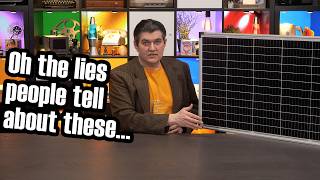
[15:44] This is a photovoltaic solar panel.
[15:46] You simply point it at the sun and then electricity
[15:54] Now many people quite understandably feel as if that's simply too good to be true
[15:59] and there's gotta be a catch.
[16:01] Of course, the biggest catch is that the sun doesn't shine at night.
[16:04] But you know, this electric car has headlights and taillights
[16:08] because, through the power of batteries, you can drive it at night.
[16:12] So I'm reasonably sure that's something we can figure out.
[16:16] But we'll be talking about batteries and the materials they're made from later on in this video.
[16:21] Ah materials.
[16:23] In many ways,
[16:23] that's what this video is really trying to get you to think about.
[16:27] And they're responsible for the second catch of solar energy.
[16:30] But no, not what those materials are.
[16:34] We'll get there.
[16:35] Instead, I mean simply that I can't really say this
[16:42] because the panel itself wasn't free.
[16:44] It's made of raw materials, which cost the manufacturer money to obtain.
[16:48] And of course, the manufacturer wanted to be paid for their work
[16:51] turning those materials into a functional product.
[16:54] And so did everyone else at every step of the
[16:56] “turn raw materials into a product and get it to
[17:01] process.
[17:02] That meant this solar panel cost a whole lot more than a gallon of gas.
[17:07] But unlike a gallon of gas,
[17:09] using this thing doesn't require destroying it.
[17:13] The useful life of gasoline is exactly once,
[17:17] but the useful life of a solar panel is on the order of decades.
[17:21] That is how solar energy became the least expensive form of electricity.
[17:26] Sure, the panels may be expensive to purchase,
[17:29] but we are using materials to build a durable thing.
[17:33] An object with no moving parts,
[17:35] and that which harvests energy from the sun - which is free! -
[17:39] and will do so for decades.
[17:42] When you average the cost of purchasing solar panels
[17:44] over the many thousands of days
[17:49] the apparently high upfront cost becomes pennies a day per panel.
[17:54] Now, as I've already said, I don't have any interest in putting these things on my rooftop.
[18:00] Our electricity here in Illinois is already pretty cheap,
[18:03] and I'm not looking to cut the cost of charging my car.
[18:07] With a bit of optimization,
[18:09] which really means by charging my car exclusively at night when the grid is quiet,
[18:14] today already it only costs about one third as much to drive my car
[18:19] as it does to buy gas for a car like the Cube.
[18:22] But thought experiments are pretty fun.
[18:24] So let's say for the moment, I was interested in installing a photovoltaic array on my roof
[18:29] to make my own energy for my own car.
[18:32] What would those costs look like?
[18:35] Well, in case you haven't noticed,
[18:37] the cost of manufacturing solar panels has been dropping like a rock.
[18:41] How do you think Harbor Freight gets their hands on them?
[18:44] It's pretty wild.
[18:46] Have you ever thought about how weirdly cheap big TVs are these days?
[18:50] A very similar thing has been happening in the land of photovoltaics,
[18:54] and new solar panels are miraculously cheap.
[18:58] Let's say that instead of spending $19,500 on gasoline for this weird little car,
[19:05] I spent that amount of money on solar panels.
[19:08] How many could I buy these days?
[19:10] Well, if I Google “solar panel wholesale”
[19:13] and click on various solar panel wholesaler websites,
[19:17] it's looking like I can buy a few pallets of ‘em!
[19:20] This website sells pallets with 32 of these 500 watt panels for $5,600.
[19:26] That's $175 per panel, and they have a 25 year warranty.
[19:31] That price means the $19,500 in this car's total fuel cost
[19:36] could today buy 111 of those panels:
[19:40] way more than I could possibly fit on my rooftop,
[19:43] and enough to generate a theoretical 55,000W of power.
[19:47] That many solar panels, incidentally, represents about 6 or 7 complete
[19:52] rooftop solar installations for an average single family home.
[19:56] Think about that.
[19:57] The same $19,500 in capital which got spent on gasoline,
[20:02] which this one small car burned through and will never be seen again
[20:06] could today purchase all the solar panels necessary to completely power a half dozen homes for decades.
[20:16] I don't know, the math doesn't seem to be mathing very well for gasoline!
[20:19] But let's compare apples to apples here.
[20:22] How many of those 500 watt panels would someone like me, who lives in Chicagoland
[20:26] and drives about 13,000 miles each year, need on their rooftop (in Chicagoland)
[20:31] to charge a Hyundai Ioniq 5 in the middle of December?
[20:36] Twelve.
[20:38] I'll need 12 of those panels.
[20:41] Which means if I spend some $2,100 on solar panels today,
[20:45] then I will have completely taken care of my car's lifetime energy costs!
[20:50] That right there, folks, is why I'm so confident renewable energy is the future.
[20:57] If I were to spend just a little bit more than I did on my last TV upgrade,
[21:02] I will have pre-purchased all of the fuel this car will ever need.
[21:08] Yes, of course, I'm skipping a whole bunch of details,
[21:11] like the labor to install those panels
[21:13] and the racking and the wires and stuff, but I'm also skipping
[21:17] the fact that once we're out of the winter months,
[21:20] those 12 panels will produce way more electricity than my car
[21:23] needs, and in fact, could power my entire home on most days.
[21:28] The essential and core fact to confront here,
[21:31] and this is a fact that often gets overlooked in debates,
[21:34] is that renewable energy capacity is not disposable!
[21:39] It is, in fact durable.
[21:41] And that makes it functionally a one time investment.
[21:45] You only have to buy and install these things once,
[21:48] and then they simply sit there generating free electricity for years to come.
[21:52] All they might need after installation is a bit of cleaning every once in a while.
[21:58] That stands in stark contrast to fossil fuels, which you have to keep buying forever.
[22:04] So going back to the example of the Cube and my Hyundai,
[22:08] the choice becomes do you spend $1,300 on fuel every single year,
[22:13] or do you spend an extra 800 bucks this year
[22:21] Choice seems pretty clear to me!
[22:23] So now you might be wondering why I said I don't want solar panels on my own personal roof.
[22:29] Well, the quickest way to answer that is to go on a field trip.
[22:33] Behind me is a 27 megawatt solar farm
[22:36] that was built here in the town of DePue, Illinois.
[22:40] Now, there's a couple notable things about that.
[22:42] First, Illinois is not exactly the solar power capital of the country.
[22:47] It's cloudy as I'm filming this, and we're kind of high up in the latitudes.
[22:51] And yet...
[22:53] there's a 27 megawatt solar farm that got built in DePue, Illinois!
[22:58] Why did that happen?
[23:00] Well, because people who like to make money
[23:03] understand the difference between CapEx and OpEx.
[23:07] And so do you, even if you don't know what those terms mean.
[23:10] I'll explain them shortly.
[23:11] But first, do you know anyone with a backup generator?
[23:16] That question might sound out of left field,
[23:18] but I promise you it's a perfect way to understand this.
[23:21] Some people live where the electricity grid
[23:23] isn't as reliable as they'd like it to be.
[23:26] Everyone hates power outages because electricity is extremely important to our lives at this point.
[23:31] And if grid reliability is poor enough where someone lives,
[23:35] they might elect to install a large backup generator powered by natural gas,
[23:40] which will automatically kick on and generate electricity during a power outage.
[23:45] When someone decides to spend their money that way,
[23:47] that's CapEx or capital expenditure.
[23:51] They are using their capital to buy a durable thing which will last them many years,
[23:56] and it becomes an investment in the future.
[23:59] Some folks install generators which are large enough to power their entire home,
[24:03] meaning power outages are nothing but an inconvenient blip.
[24:08] And that leads to what I think is an interesting and revealing question to ponder.
[24:14] If those people own a machine which can power everything in their home by itself,
[24:20] why don't they get their money's worth out of it and just use that machine all the time?
[24:24] Why stay connected to the power grid at all?
[24:27] Well, that's because that machine needs fuel to generate electricity.
[24:32] And that fuel costs money, which makes it part of OpEx,
[24:36] which is short for operating expenditure.
[24:39] The gas company will charge you for the gas that generator uses.
[24:42] And those fuel costs mean that using a backup generator
[24:46] is much more expensive than pulling energy directly from the power grid.
[24:51] Everyone with a backup generator knows this,
[24:54] and that's why it's a backup
[24:58] It is simply too expensive to use that machine all the time.
[25:03] The great big machines on the power grid,
[25:06] even when they're burning the same natural gas as a backup generator,
[25:10] can capture much more of the energy contained in the fuel they burn and turn it into electricity
[25:16] than the small engine inside a Generac can.
[25:20] That efficiency of scale is what makes generating electricity cheaper for grid scale power stations.
[25:26] And the fact that the wires which connect your house to the grid
[25:34] explains why distributing that energy through the power grid is very efficient,
[25:39] both economically and from an energy perspective.
[25:42] And what's really important to remember is that grid power is cheaper
[25:47] despite the fact that the people who operate natural gas plants are making a healthy profit.
[25:53] They're not just running a power plant for the fun of it,
[25:55] they're in business!
[25:57] But the smarter business critters out there know that even with the benefits of scale,
[26:02] a natural gas plant still has a very high OpEx.
[26:07] Each unit of electricity a gas plant generates
[26:15] So for those who have an eye on making money,
[26:18] when solar farms pop up and demonstrate that
[26:26] well, gas doesn't look so great anymore.
[26:29] See, all a solar farm operator needs to do is sell their electricity for slightly less
[26:37] And that's what they'll do.
[26:40] That's good for consumers because that makes electricity cheaper to use.
[26:43] But because the solar farm has next to zero OpEx,
[26:48] it still generates a healthy profit, even though it's cheaper.
[26:52] And savvy business people who think long term will use those profits to build more solar farms.
[26:59] The basic realities of economics mean that
[27:07] The sun doesn't cost any money to use, which means
[27:14] And that means whatever price you can sell that energy for on the power grid energy market
[27:19] is almost purely profit once the panels have been paid off.
[27:23] Best of all, grid scale energy storage in the form of
[27:29] that it is now possible — today — to build a solar farm
[27:36] and all the while doing that for a lower cost than any other source of electricity.
[27:41] And since both photovoltaic panels and batteries are manufactured in factories
[27:46] which can leverage economies of scale,
[27:52] The economics are already in favor of solar and storage,
[27:56] but they're going to keep looking better and better every year.
[28:00] Solar energy has put us on the cusp of a positive feedback loop,
[28:04] yet relatively few people seem to have realized this.
[28:07] And that's despite the fact that -
[28:09] there's another one not even five miles up the road here in Spring Valley, Illinois.
[28:15] Solar farms are starting to pop up everywhere, even in states like Illinois,
[28:19] because the business case simply makes so much sense.
[28:23] It's farming a crop, just like we do with land today.
[28:26] But that crop gets harvested every single day rather than once a year,
[28:31] and virtually no work is involved in harvesting that crop.
[28:35] Plus, the crop doesn't need inputs in the form of water or fertilizer or pesticide or seed.
[28:41] You just plop some panels on some land,
[28:44] angle them to get the most energy out of the sun as you can,
[28:46] and let the money roll in.
[28:49] This is a capitalist’s wet dream!
[28:52] People are always talking about passive income, as if that's a panacea.
[28:56] Well, there it is!
[28:57] You can become a farmer, and all you'll have to do
[29:00] is mow the grass between the panels a few times a year.
[29:03] The fact that there's this amazing business opportunity out there is why solar farms are happening in the first place.
[29:10] And they're leveraging the power grid we already have
[29:17] And that's why I'm not that interested in putting panels on my roof.
[29:21] Yes, there are good arguments for distributing energy resources,
[29:25] and we have a real problem right now with getting new transmission lines permitted.
[29:30] There are a ton of solar power projects which are already funded,
[29:35] but aren't happening because FERC can't get their act together
[29:38] and they're stuck in permitting hell.
[29:41] NIMBYs aren't helping either.
[29:43] Pushing individuals to install solar on their rooftop is one way to bypass some of these issues,
[29:49] and it does have some advantages,
[29:51] but many people don't have the agency to install solar on their roof,
[29:56] even if they wanted to and could afford it.
[29:58] Renters can't do that even if they're renting a house.
[30:02] And what's worse, apartment buildings don't have enough roof space to be self-sufficient.
[30:07] Cities will always be relying on solar farms.
[30:11] There are many more reasons I'm not a big fan of pushing people
[30:15] which I'll spare you for time.
[30:17] Bottom line, I will gladly pay these small businesses
[30:24] and think that's a far more efficient use of my money.
[30:27] But speaking of efficient uses of things,
[30:29] let's address some of the concerns I know many of you out there have about solar energy.
[30:34] Like land use.
[30:36] Solar farms do indeed require a lot of space.
[30:40] That 27 megawatt solar farm in DePue is on something like a 120 acre site.
[30:47] I used an online tool and drew a circle around the access road to come up with that figure,
[30:51] so I can't guarantee it's accurate,
[30:56] Now, 27 MW is a tremendous amount of power,
[31:00] but in the context of the power grid, it's pretty piddly.
[31:04] This is the three phase line that connects the solar farm to the substation in DePue,
[31:09] And it's, uh...
[31:11] well it ain't exactly a big transmission line now, is it?
[31:14] So, yeah, solar energy will use lots of land.
[31:18] However, since I'm from Illinois, I think I'm qualified to explain why
[31:23] you probably don't need to worry too much about land use.
[31:27] That is a corn field.
[31:30] It doesn't look like much right now because it's the middle of January.
[31:33] But corn used to be growing there and it was harvested in the fall.
[31:37] Now there's three very notable things about this reality:
[31:41] First of all, this land should not look like this.
[31:44] This is Illinois, where the Prairie State,
[31:46] the natural environment, is prairie.
[31:48] And now there's virtually none of that left because it has all been turned into farms.
[31:54] Secondly, we only get one harvest per year out of this land.
[31:59] We spend all the summer growing the corn.
[32:02] And then in the fall, it's harvested just once.
[32:05] If this was a solar farm, it could have a harvest every single day.
[32:09] And third, if you're thinking, “well, what if we stop growing corn there?
[32:13] We can't eat anymore!’
[32:15] Well, this corn is not the corn that you eat.
[32:18] Some of it does end up in lots of different food products,
[32:21] but a large portion of this corn gets used...
[32:24] for that.
[32:26] Yeah, those messages on gas pumps which say, may contain up to 10% ethanol?
[32:31] That came from corn.
[32:33] We have been using an astonishing amount of our rich agricultural land
[32:38] to grow corn to feed to cars.
[32:41] Maybe you remember the days of FlexFuel vehicles and E85 being relevant.
[32:46] Well, back in 2005, President George W Bush signed the Energy Policy Act of 2005,
[32:52] and in 2007, he signed the Energy Independence and Security Act of 2007.
[32:58] Those acts mandated a specific amount of ethanol in gallons
[33:02] which needs to be produced so it can be mixed with gasoline.
[33:06] The idea, as you might have gleaned from the independence and security part,
[33:10] was to start making our own energy for cars
[33:13] so that we'd be less dependent on foreign oil,
[33:16] a policy I wholeheartedly support!
[33:20] The only trouble is that doing it with corn ethanol is tremendously stupid.
[33:25] First of all, it's important to acknowledge that we only get one corn harvest per year.
[33:30] Now, an acre of corn field might be able to produce
[33:37] I'd like to note that it takes an awful lot of chemistry and energy to turn corn into ethanol,
[33:43] but we'll just ignore that and pretend it's easy and free.
[33:46] So let's go back to that solar farm.
[33:49] If this were a 120 acre corn field,
[33:52] then at the end of the year we can get maybe 66,000 gallons of ethanol out of it.
[33:58] That's about five tanker trucks worth.
[34:01] Now, if you didn't already know, this ethanol is less energy dense than gasoline.
[34:05] So E85 vehicles which run on E85 have a really poor fuel economy
[34:15] But I'll be generous.
[34:16] Let's say those 66,000 gallons of corn ethanol all make it into cars
[34:21] that can go 30 miles on a gallon of E85.
[34:24] How far can they drive?
[34:26] Well, 66,000 gallons times 30
[34:29] tells us that they can go just shy of 2 million miles.
[34:33] That might seem like a lot,
[34:35] but now let's consider how many miles electric cars
[34:38] that are being charged from the 27MW of solar panels
[34:45] The operator of that solar farm's website claims it generates
[34:53] Well, the website says “in year one,” so it's possible
[34:56] it wasn't yet complete when they came to that figure.
[34:58] But I'm just going to roll with it.
[35:01] Electric cars generally get something like 3 or 4 miles per kilowatt hour.
[35:06] But let's go ahead and make the picture worse for them and say they can only manage two,
[35:11] which is what my car can get down to in extreme cold.
[35:14] Well, 37,000 megawatt hours is 37,000,000 kilowatt hours.
[35:20] So every year these panels can push electric cars at least 74 million miles.
[35:28] That's 2 million miles of driving each year from corn,
[35:38] So do you really think we should still be growing corn to feed to cars?
[35:44] Here's the best part, though.
[35:46] Let's say you decided the answer is no
[35:48] and we stopped growing corn to feed to cars.
[35:52] How many acres of cornfields would that free up?
[35:55] Well, this website I found says we've got 96 million acres of land growing corn in this country.
[36:02] And depending on how you count, between 25 and 40% of all that acreage is devoted to ethanol.
[36:11] So let's just say we took a slightly fudged quarter of that land, 25 million acres,
[36:17] and covered it all in solar panels.
[36:19] How much energy would that harvest?
[36:22] Well, that's going to depend on where the panels are.
[36:25] And since we're going to do a thought experiment here where we put the panels in the corn belt,
[36:29] let's just keep using the numbers from the solar farm in DePue.
[36:33] Up here in Illinois, we can get 37,000 megawatt hours per year out of 120 acres.
[36:40] So let's see 25 million divided by 120 and then multiply by 37,000....
[36:47] That is 7,708,333,000 megawatt hours of energy.
[36:55] And why is that the best part?
[36:58] Because that's more energy than the entire U.S. electricity grid produces right now.
[37:03] And by a lot.
[37:05] In 2023, it all added up to 4.178 billion megawatt hours.
[37:11] So if all we did was decide to stop growing corn to turn into ethanol,
[37:17] and we used only that land for generating only solar power,
[37:21] we'd be able to generate 84% more electricity on an annual basis
[37:26] than we do today from all of our energy sources.
[37:30] I hope that helps you understand why I'm not that worried
[37:37] We've got a whole lot of it,
[37:39] and we're not exactly using it responsibly at the moment, anyway.
[37:43] And by the way, I used real world numbers
[37:45] from a real world solar installation to perform this thought experiment
[37:49] in the hopes that that would be more convincing.
[37:51] But just in case you doubt my numbers, which I understand
[37:54] because I used the numbers from the company's website,
[37:57] there have been plenty of studies which demonstrate this,
[38:00] and I'll link them below.
[38:02] What's most notable is that up here in the Corn Belt,
[38:05] we actually have a pretty bad capacity factor.
[38:09] Solar panels would be much more productive
[38:11] if they were somewhere farther south and sunnier.
[38:14] But even with our mediocre latitude and weather patterns,
[38:18] all the land we need to generate electricity
[38:21] with solar power alone can be freed up
[38:24] if we just stop growing corn to feed to cars.
[38:29] So far in this video I've been talking a lot about solar energy.
[38:32] But you know I also like those things.
[38:35] Yeah.
[38:38] Something interesting you can do with these is put them in fields alongside crops
[38:42] and farm the wind and some corn at the same time.
[38:46] You can actually also do that with solar panels,
[38:48] it's called agrivoltaics and it's a really exciting area of research.
[38:53] But we'll set that aside.
[38:54] This video is already quite long.
[38:56] Now some people look at a wind turbine
[38:59] and see a pointless boondoggle which clutters the landscape.
[39:02] But I, on the other hand, see a magnificent machine
[39:05] which turns wind into gasoline.
[39:09] Here's a fun thought experiment:
[39:10] Each one of these wind turbines can generate two megawatts of power.
[39:15] And on a windy day, like today,
[39:19] If this car could actually handle that much power,
[39:22] how long do you think it would take one of those wind turbines —
[39:25] just one! — to charge this car's battery?
[39:28] The answer is two and a half minutes.
[39:31] Seriously, not even 2.5 minutes.
[39:33] And if we consider that this car has a driving range of about 240 miles,
[39:38] and then equate that to a gasoline powered car that gets 40 miles per gallon,
[39:42] then you can very much imagine these machines as wind powered oil derricks
[39:47] that generate about three gallons of refined gasoline every single minute.
[39:53] If you're having a hard time imagining what that looks like,
[39:56] most showerheads run at something like two gallons per minute.
[40:00] So imagine you had a shower running all the time
[40:07] And that's what just one of those wind turbines does.
[40:11] And how much does the wind cost?
[40:14] Slightly more than the sun.
[40:15] But it's still free.
[40:17] Wind power is obviously quite useful.
[40:20] For one thing, these work
[40:25] But these are gigantic machines with moving parts
[40:32] In fact, while I was out at this wind farm,
[40:35] this one in the background was stopped because there was a crew performing maintenance.
[40:39] That's OpEx.
[40:41] So while a wind farm still has a very, very low OpEx
[40:48] wind turbines are not quite as cost competitive as solar panels.
[40:52] Photovoltaics are very much a kind of solid state energy generation.
[40:57] And a big machine like that is very much not.
[41:01] But let's pretend wind power doesn't exist.
[41:04] This is a silly thing to pretend because it does.
[41:07] But I want us to return to the purely solar powered thought experiment.
[41:11] Because in the room where that thought experiment takes place,
[41:15] there is an elephant.
[41:17] Covering 25 million acres in solar panels is going to require building many millions of solar panels.
[41:25] Billions, in fact.
[41:27] And that's going to require a whole heckuvalot of raw materials.
[41:31] Now, I do think it's worth pointing out that the fruit
[41:39] We use an even heckier heckuvalot of raw materials right now when we extract and refine oil
[41:45] and all the fruits of that process function exactly once.
[41:50] You don't notice all the mass you're burning through right now,
[41:52] because it mostly exists in your mind as nothing but numbers on a gas pump.
[41:57] Unless you're filling a jerry can, you don't even see it.
[42:00] But there's a reason those tanker trucks are constantly showing up and delivering more fuel to each and every gas station.
[42:07] Cars burn that fuel and it's constantly disappearing.
[42:12] I, for one, think we should spend our efforts extracting resources
[42:15] which will hang around for a while.
[42:18] Just seems a little wiser.
[42:20] Regardless, solar panels are large, fairly heavy things
[42:26] So it's worth talking about what the raw materials inside these things actually are.
[42:33] And that's why I bought this one.
[42:36] And that one.
[42:37] But we'll get back to that.
[42:39] So these slender black things with all the lines on them
[42:43] are the actual solar cells.
[42:45] These are what convert the photons from the sun that land on them into electrons
[42:50] which can be sent down a wire and harnessed as energy.
[42:53] Those cells are extremely thin.
[42:56] We're talking about as thin as a human hair.
[42:59] And that means the vast, vast majority of this panel's mass is simply...
[43:06] panel!
[43:07] Almost all of what makes up this thing is either aluminum, glass, or adhesives.
[43:13] 72 silicon cells were arranged and wired together and then glued to this sheet of glass.
[43:19] Once that was done, the backside of the glass gets coated in some kind of thermoplastic
[43:24] to seal it all up and make it watertight.
[43:27] A hole in that coating was left for lead wires
[43:29] to connect the solar cells to this junction box,
[43:32] and then the box was attached to the backside of the glass with sealant.
[43:36] Oh, and if you're wondering what's inside that junction box,
[43:39] sometimes it's a circuit board with a micro inverter to allow the panel
[43:46] But in this case, this is a DC solar panel,
[43:49] so all that's in there are a couple of beefy diodes.
[43:52] And well, the last major thing in here is aluminum.
[43:56] The aluminum frame gives some structure to the glass and provides an easy way to mount it.
[44:01] But that's really all it's there for.
[44:03] I'm not that well versed on all the ways these things are constructed,
[44:07] so I don't want to falsely assert that most of them are made like this one is.
[44:11] And a lot of panels now have solar cells on both sides:
[44:14] those are known as bifacial panels. But no matter how they're made,
[44:19] it's mostly just glass and aluminum.
[44:23] I think that's notable because those are both
[44:30] for food containers.
[44:34] And it's also notable because these food containers,
[44:37] mainly glass bottles and jars and aluminum cans,
[44:40] are something we already actively recycle.
[44:43] It would be better if we reused glass containers
[44:46] rather than ground them up and melted them,
[44:48] but that's an issue for another time.
[44:50] The important thing is we already know how to do that,
[44:53] and we already have industrial processes
[44:56] which turn used ground up glass into new glass,
[44:59] and which melt scrap aluminum into new aluminum.
[45:04] So at the end of this panel's useful life,
[45:07] which won't be for 25 years!
[45:10] ...almost all of its raw material mass can easily be recovered
[45:14] and turned into another panel, which is important.
[45:18] When it comes to the actual silicon cells,
[45:21] Well, you've probably heard (or heard someone say) that these things are full of toxic materials.
[45:28] That's misinformation.
[45:30] And let me explain why.
[45:32] There are some kinds of solar cell
[45:34] that we've been experimenting with, like thin film solar cells or perovskite cells,
[45:39] which require some less than great elements in their construction.
[45:42] But those represent only about 5% of panels made today.
[45:47] The vast majority are using monocrystalline silicon at this point,
[45:51] which is a material we derive from quartz.
[45:54] You know, rocks.
[45:57] There are some trace elements of phosphorous, boron and silver in here.
[46:02] But based on what I've researched,
[46:06] people might worry about in this is lead in the solder which makes electrical connections.
[46:13] You can see some of it right here.
[46:15] But I'm not actually sure that lead is even in this panel!
[46:19] We've had lead free solder for quite some time, though...
[46:22] as any electronics enthusiast will tell you,
[46:24] it can be annoying to work with because it
[46:29] I say that because it's possible
[46:34] to get a good bond with the silicon cells.
[46:37] But even if that's true,
[46:40] we know how to deal with lead.
[46:42] Did you know that new lead acid batteries are almost entirely made from old lead acid batteries?
[46:49] Every time you buy a car battery from a store,
[46:52] you're going to have to pay what's called a core charge,
[46:55] which you don't get refunded until you bring your old battery back to the store.
[46:59] And that's to encourage recycling.
[47:02] This system works so well that we capture about 99% of the material in dead car batteries.
[47:08] We have a nearly closed loop recycling stream already established for them.
[47:13] That's some foreshadowing for the “what about the batteries?” section,
[47:17] but I'm really saying it here to let you know we can
[47:24] We just have to want to.
[47:26] And speaking of recycling, there's absolutely no reason
[47:33] The worn out solar cells could be melted down and purified into new silicon
[47:37] to make new wafers, to make new cells at the end of a panels life.
[47:41] But even if for some reason we never figure that out or it's never economically viable,
[47:47] you have to remember two things:
[47:49] First, each panel will last a quarter of a century or longer!
[47:55] And second, those cells are extremely thin,
[47:58] usually less than 200 micrometers,
[48:01] and thus have almost no material in them at all.
[48:04] I wanted to remove the cells from this panel
[48:07] so I could actually weigh them and tell you just how much
[48:12] but they're so thin and fragile that I could not peel away the coating
[48:16] which seals them to the glass without destroying them.
[48:19] I tried several different solvents, hoping to dissolve
[48:25] The magic of buying two of them has unfortunately failed us.
[48:29] However, I has internet!
[48:32] Assuming a thickness of 200 micrometers,
[48:34] which appears to be on the thicker side these days,
[48:37] then if we stacked up all 72 of these cells, they'd make a stack which is just 1.4cm tall.
[48:44] The total volume would thus be about 94.5cm³,
[48:49] and the density of silicon is about 2.3g/cm³,
[48:53] meaning this solar panel has maybe 215g of silicon in it.
[48:59] That's about 3% of its total mass.
[49:03] Now, this is only a 100 watt panel, and most panels sold today are larger with more cells.
[49:09] But that still means we're looking at about a kilogram of silicon per 500 watt solar panel on the high end.
[49:17] Now, that's not a lot for an individual panel,
[49:19] but if we followed through with the Corn Belt thought experiment, we'd need about 10 billion panels.
[49:24] So, well, those panels are going to need something like 5 or 10 million metric tons of silicon.
[49:31] And that is certainly a lot.
[49:34] But it's probably not as much as you might think.
[49:37] For one thing, right now in the US,
[49:39] we put some 265 million metric tons of stuff in landfills every year.
[49:46] So if we simply landfilled all that silicon, which I will remind you
[49:50] represents the silicon necessary to completely power the entire
[49:59] we'd only be taking up less than a 10th of our yearly landfill capacity by mass.
[50:03] And we'd only need to do that every quarter of a century.
[50:07] Remember how I said I'd only need 12 of those
[50:14] That's what's really important to remember.
[50:16] The amount of silicon, or in fact,
[50:18] whatever material in a solar panel might concern you that
[50:28] And when you remember that each of the solar panels
[50:35] then the amount of material used per day is irrelevant.
[50:39] Anyone trying to get you to focus on that is fear mongering and deflecting your attention
[50:44] away from the fact that currently we burn through millions of barrels of oil every day.
[50:50] And now here we are.
[50:52] What about the batteries?
[50:54] If we actually live in this imagined future of nothing but solar energy
[50:59] which in case it's not clear, I don't think we will
[51:01] because we have many different sources of energy
[51:05] But if we actually live in this future,
[51:08] we have to deal with when the sun's not shining
[51:11] and we do that with batteries.
[51:13] We would be building much more solar power capacity
[51:20] and the excess we're not using will charge enormous banks of batteries
[51:24] so that when the sun sets and the panels stop producing any output,
[51:28] we have stored energy to get us through to sunrise.
[51:32] We're also going to have long term storage available to get us through periods of bad weather.
[51:37] But of course, we can also use this high tech idea
[51:44] There's a huge variety of ways we could solve this issue,
[51:47] and that's one of the cool things about electricity.
[51:51] But no matter what, we're going to need to build a whole heckuva lot of batteries.
[51:55] And those suckers absolutely do have some nasty chemicals in there.
[52:00] And we're going to need to extract a whole lot of raw
[52:02] material from mines and whatnot to get them.
[52:06] However, if you understand the logic of lifespan, you'll know what I'm about to say.
[52:12] Most people who say “but what about the batteries?” seem
[52:20] The first fact is that they last many years now.
[52:23] In fact, some of the latest batteries with a daily
[52:32] That's 15 years of daily use of the same battery pack
[52:36] as opposed to fossil fuels which can all be used, I remind you, once.
[52:42] And the second core fact
[52:43] is that when those batteries have degraded,
[52:46] they're still there!
[52:49] When battery cells degrade, it's not as if the material inside of them is disappearing.
[52:54] What's actually happening is that the physical arrangements of those materials is slowly changing.
[53:00] As the reversible chemical reaction which we call charging and discharging the battery occurs inside,
[53:06] little bits of material in the anodes and cathodes can start
[53:09] breaking off and moving around, creating structures inside
[53:13] that eventually start to block the chemical reaction from happening
[53:17] and reduce the battery cell’s ability to function.
[53:21] But that does not mean any of the materials have transformed into something else.
[53:27] You can't take a lithium atom for example, and turn it into iron.
[53:31] All the lithium that was in there when the battery was made is still there.
[53:37] So when the battery wears out,
[53:39] all of the lithium inside can be recovered.
[53:42] Let's talk about mining for a second.
[53:45] When we find new deposits of some substance we're looking for,
[53:49] it's not as if someone just happens
[53:51] upon a giant lump of pure cobalt, and we start cutting chunks out of it.
[53:56] No, we find a deposit of ore which is rich in that material.
[54:00] Then we'll dig up that ore and do lots of fancy processing
[54:04] to extract the cobalt or whatever from the rest of the rocks and purify it.
[54:09] Why am I telling you this?
[54:11] Because the richest ore for whatever material you need to build a battery...
[54:16] is used batteries!
[54:18] We are already starting up processes
[54:20] where we grind up used lithium ion batteries
[54:23] and turn them into a mineral rich paste,
[54:25] which, just like the raw ore we get out of the ground,
[54:28] can be processed into the raw material inputs that built that battery in the first place.
[54:34] Jerry Rig Everything has a two year old video about this process,
[54:40] Unlike fossil fuels where we toil away
[54:45] just so that we can sell them, put them in our gas tanks and set them on fire, when we're building a battery...
[54:52] we are *building* something!
[54:54] We're extracting and purifying resources to make a durable good,
[54:58] which will last many, many years.
[55:01] And because that durable good doesn't disappear once we've used it like fossil fuels do,
[55:07] everything inside that durable good can be recovered.
[55:11] That's kind of the whole point of renewable energy.
[55:14] It's called renewable because it's not disposable.
[55:17] It's a resource we can use again and again and again
[55:20] without worrying about running out.
[55:23] Now, a lot of people like to point out
[55:25] that we don't have a huge industry recycling lithium ion batteries yet,
[55:30] but that's mostly because we don't have a huge supply of dead lithium ion batteries yet.
[55:37] The biggest supply comes from electric cars with worn out battery packs.
[55:41] But again, modern battery chemistries in thermally controlled battery packs last decades.
[55:47] So aside from first gen Nissan Leafs,
[55:50] which had a uniquely terrible battery pack design,
[55:53] most electric cars that were built in the last 15 years still have their original battery packs.
[55:59] The biggest reason we end up with used packs is cars getting into collisions and becoming totaled.
[56:05] That happens way more often than a battery pack failure.
[56:09] So it's not like a recycling industry isn't going to happen,
[56:13] in fact, it's already happening!
[56:15] But it doesn't seem to be at a very large scale yet because most EV batteries are still in service
[56:21] and a lot of folks are buying used EV battery packs from totaled cars
[56:29] meaning they are still in use.
[56:31] They're just not in a car.
[56:33] But there's another rather enormous reason I think
[56:40] That reason?
[56:42] We’re still learning.
[56:44] We are constantly learning how to build better batteries.
[56:48] Name any material of concern inside a battery pack,
[56:51] and I can guarantee you there are engineers out there trying to eliminate it.
[56:56] Lithium iron phosphate cells, for example,
[56:59] don't contain nickel, manganese, or cobalt.
[57:02] And in addition to eliminating the need for conflict minerals,
[57:05] LFP battery chemistry is also much more stable,
[57:08] meaning the risks of battery fires have been reduced dramatically.
[57:13] And we're on the cusp of commercializing sodium ion batteries which don't use lithium at all.
[57:19] They use sodium.
[57:20] You know the stuff in ramen noodles?
[57:22] Table salt.
[57:23] The stuff we can get simply by filling a pot with seawater and waiting a while.
[57:28] Sodium ion batteries are not as energy dense,
[57:31] so they'll probably not be a great fit for electric cars,
[57:34] but they'll be a fantastic fit for the large grid scale energy storage facilities
[57:40] which are already being built all the time.
[57:43] And if you've read about battery fires at those facilities,
[57:46] that's a huge reason we're looking into sodium ion.
[57:49] That chemistry is far more stable
[57:51] and seems nearly immune from thermal runaway risks from what I understand.
[57:56] We are constantly learning new things as we try to crack this nut.
[58:01] I remind you,
[58:02] the energy we get from solar panels is free,
[58:06] so there is a huge incentive for us to figure out
[58:11] We are and have always been working on building better, cheaper, longer lasting, less dangerous batteries
[58:18] which use materials we can find in our own backyard.
[58:22] So whatever you've heard that might make you concerned
[58:25] is not guaranteed to be relevant in the next few years or even tomorrow.
[58:30] And because every single battery we build will
[58:37] we have the ability to reprocess those batteries
[58:45] That's the end game.
[58:47] I've seen a lot of people say things like,
[58:49] “well, lithium is just going to become the new oil!”
[58:51] but that completely misunderstands the realities here.
[58:55] We cannot stop extracting oil because we burn it as we use it.
[59:01] Yes, renewable energy technology will require lots of extraction to build,
[59:06] but we don't destroy what we extracted.
[59:10] That is what we do with fossil fuels.
[59:12] We burn them as we use them.
[59:14] And that's the problem.
[59:16] There's scarcity built into fossil fuels because it disappears.
[59:20] Each and every gallon of gasoline you've ever purchased,
[59:23] except for what's sitting in your gas tank right this moment, is gone.
[59:28] But the battery pack I purchased alongside my car is still with us.
[59:33] It's right there.
[59:34] All of the raw materials it's made from are still inside of it,
[59:38] and we are able to get to them.
[59:40] And so when it's no longer doing its job
[59:42] as I need it to, it will live another life.
[59:45] Just as the steel which makes up the rest of the car will be crushed
[59:48] and turned into new cars,
[59:50] The minerals inside that battery pack will be
[59:57] And even if we never figure out how to make better batteries and we're stuck
[1:00:04] eventually we'll have built enough of them to do everything we need to do.
[1:00:09] I'm not buying a new battery pack for my car because it's already got one! And it's still working.
[1:00:14] And once we've built enough batteries for grid scale energy storage,
[1:00:18] well, we'll have built enough batteries.
[1:00:21] There does come a day when we have built enough,
[1:00:24] because we only use energy when we choose to do things
[1:00:27] like cook food or drive a car.
[1:00:29] And there's only so many humans on this planet choosing to do stuff.
[1:00:33] And when they start wearing out then, yeah,
[1:00:34] those batteries will need replacement but that
[1:00:41] We'll have to find some new lithium to make up
[1:00:44] for whatever is lost in the recovery process.
[1:00:46] But if we can follow the example of lead acid battery recycling
[1:00:50] and all but completely closed the loop,
[1:00:52] then in a theoretical 50 years down the road scenario,
[1:00:55] perhaps 1 in 100 lithium mines will remain operational.
[1:00:59] The rest of them will have closed down
[1:01:01] because when we need to build new batteries, we'll get lithium from old batteries.
[1:01:07] But the best part is something I mentioned way back at the start.
[1:01:12] We're already here.
[1:01:14] Solar and storage is now the cheapest form of electricity generation we know of.
[1:01:20] For years, the barrier to making solar energy happen at scale was simply cost.
[1:01:25] We had functional solar panels decades ago,
[1:01:28] but they were ludicrously expensive to manufacture.
[1:01:31] And that's why the only places you tended to find them were on,
[1:01:34] like the International Space Station and satellites and junk.
[1:01:38] But now we are way under $1 per watt.
[1:01:41] Random websites will sell me, a random schmuck,
[1:01:45] solar panels which go for just $0.35 a watt, and they'll certainly get cheaper than that.
[1:01:51] They already are when you have a contract for 27 MW worth.
[1:01:55] Of course, I care deeply about the materials angle
[1:01:58] and appreciate the fact that unlike all fossil fuels,
[1:02:02] nearly everything we extract out of the ground
[1:02:04] to build solar panels and batteries can be recaptured at the end of their life
[1:02:09] to make new solar panels and batteries.
[1:02:12] I like that a lot.
[1:02:14] But even if you don't care about that,
[1:02:17] the sun is free!
[1:02:19] And both solar panels and batteries are now cheap enough
[1:02:23] to make practical use of that free source of energy.
[1:02:27] We are here.
[1:02:29] We made it and the future looks quite bright.
[1:02:34] ♫ anomalously smooth jazz ♫
[1:02:40] Oh sorry.
[1:02:41] Yeah, this isn't the actual end.
[1:02:43] If you watch until the actual end,
[1:02:47] But for now,
[1:02:49] I want to ask you something.
[1:02:51] Did this video make sense to you?
[1:02:55] A while ago, I put a quick talking to camera thing
[1:02:57] together on my second channel, where I basically just
[1:03:01] explained the whole situation here and asked,
[1:03:03] why does the logic of pay more upfront to save more later
[1:03:08] break down whenever we're talking about renewable energy?
[1:03:12] It was a pretty snarky video and very off the cuff.
[1:03:16] I don't even remember what prompted me to make it.
[1:03:19] But at last year's Open Sauce,
[1:03:21] which, by the way, I'll be headed to again this year,
[1:03:24] I had a wonderful conversation with someone who told me
[1:03:27] that video changed their mind.
[1:03:30] I have to apologize because I don't remember your name.
[1:03:32] But I very much remember that conversation.
[1:03:35] And it's been stuck in my head ever since.
[1:03:38] See, the logic of renewable energy
[1:03:41] seemed self-evident to me.
[1:03:43] And that's why the video was as snarky as it was.
[1:03:47] Frankly, and I don't want this to sound like I think I'm full of myself,
[1:03:51] but it probably comes across that way, so I apologize in advance.
[1:03:54] But as soon as I was old enough to understand what photovoltaics did
[1:03:59] and that like almost every technology we've ever dealt with,
[1:04:03] eventually we'd figure out how to make solar panels cheaply.
[1:04:07] I immediately thought, oh, cool.
[1:04:10] So eventually we'll be able to stop burning
[1:04:12] expensive stuff to generate electricity.
[1:04:15] And that mental reality has been in my head
[1:04:19] so long that I never thought to explain it.
[1:04:22] I kind of assumed everyone already knew what we were trying to do
[1:04:26] by commercializing solar and storage technologies.
[1:04:30] So when I discovered it's
[1:04:32] not as self-evident to everyone as it was to me,
[1:04:36] well, that's when I started thinking about making this video.
[1:04:39] And in the process of making this one,
[1:04:42] I've been reflecting on some of the other videos I've made.
[1:04:45] For instance, the videos I've done on heat pumps and electrification, etc.
[1:04:50] I made those videos assuming that everyone who watched
[1:04:53] them was on the same page as me,
[1:04:56] and that comments which were perplexed by my desire
[1:04:58] to stop paying for things we set on fire,
[1:05:01] were coming from a place of malice.
[1:05:04] I'm sure some were.
[1:05:06] But I also know that not everyone is really thinking about resilience
[1:05:10] and the value of permanent infrastructure in the way that I am.
[1:05:15] Lots of those comments were probably honest,
[1:05:17] especially when I made arguments couched in my own internalized reality
[1:05:21] which understands that natural gas is very cheap today,
[1:05:25] but it is likely to become more expensive in the future.
[1:05:28] While electricity is almost certainly going to get cheaper.
[1:05:34] That is, of course, once we decide to cut it out with this weird aberration
[1:05:42] But I digress.
[1:05:44] I am always thinking both through lens of history and opportunity.
[1:05:49] And that's why when I look at an electrical panel,
[1:05:52] I don't see a boring piece of infrastructure
[1:05:56] I see an endless variety of new opportunities.
[1:06:00] If you've got a natural gas connection,
[1:06:02] then you probably have at most four appliances
[1:06:06] Meanwhile, literally everything else you own is powered by the wires that are in your house.
[1:06:12] Everything we've invented in the last
[1:06:14] what, century? Is electric.
[1:06:17] All the innovation we've been doing to make our lives better relies on electricity.
[1:06:22] And all the innovation which happens in the realm of fossil fuels
[1:06:25] is how to use them slightly more efficiently.
[1:06:29] That's it.
[1:06:29] And we're already damn near perfectly optimized in a lot of cases.
[1:06:33] There's very little room left to innovate,
[1:06:36] But we are always innovating with electric technologies.
[1:06:40] And since your house already has wires in it,
[1:06:43] you can add new things and new technologies
[1:06:46] to your home with very little effort.
[1:06:49] When the personal computer hit the scene,
[1:06:51] nobody needed to do an engineering study
[1:06:53] or get permits to get one because you just plug it in.
[1:06:57] Some things, like installing an electric car charger,
[1:07:00] are a little more difficult, but they still utilize the feed wires
[1:07:04] you already have and the power grid which already exists.
[1:07:08] Electrification seems like the most rational thing we should be doing.
[1:07:12] We can leverage infrastructure
[1:07:14] which is already in place to distribute
[1:07:17] and utilize the free energy we can harvest from the sun, the wind,
[1:07:21] or maybe even the hot rocks beneath our feet.
[1:07:24] And we can bulk up that infrastructure if and when we need to support new demand down the road,
[1:07:30] in many cases, simply by replacing wires and transformers.
[1:07:34] That's how the grid went from not existing, to
[1:07:38] existing basically just for electric lights, to everyone has air conditioning now.
[1:07:43] And that's a perfect segway...
[1:07:45] Oh, those were also electric.
[1:07:47] Anyway, that's the perfect segue to addressing the “misled” in the video title.
[1:07:53] And well,
[1:07:56] now the snark levels are going to go up a bit.
[1:07:59] Let's just, uhhh, roll some clips.
[1:08:01] You know, I also just want to point out I drove my electric car out here.
[1:08:05] I'm 134 miles from Millennium Park in downtown Chicago which is a pretty rural area.
[1:08:12] And yet there's a lot of people who think you can't drive electric cars out in the country.
[1:08:15] I don't know what that's about.
[1:08:17] Something else I should point out.
[1:08:19] I didn't spend any time charging the car
[1:08:21] because I spent the night at a friend's house and her house,
[1:08:24] believe it or not, has electricity.
[1:08:26] So I just plugged the car into her house, and then it charged overnight.
[1:08:29] It's wild.
[1:08:30] Did you know homes have electricity?
[1:08:32] You know, I should also point out that I parked my car right next to one of these
[1:08:36] because I wanted to find out if they really make that RRRER RRRER RRRER
[1:08:39] noise that some people say they make.
[1:08:41] And, you know, I can hear some whooshing from the blades every time it goes past,
[1:08:45] but it's not that loud.
[1:08:47] Standing right beneath it,
[1:08:49] and I can hear the blade whooshing by, but, I don't know.
[1:08:53] Just take a listen for yourself.
[1:08:55] [faint repeating whoosh sounds with an even fainter 60 Hz hum from the transformer]
[1:08:59] Are these are these really that loud?
[1:09:01] Let me just let me just walk around this way.
[1:09:03] By the way, I'm also taking a look on the ground
[1:09:05] to see if there's a bunch of dead birds around here.
[1:09:08] I hear that these things are just murder factories for birds.
[1:09:12] But I don't know. I'm not.
[1:09:13] I'm not seeing any.
[1:09:16] It's a really windy day out.
[1:09:17] Honestly, just the wind is kind of louder than the whooshing of the blades.
[1:09:22] Yeah, if it's not clear yet, I'm going there.
[1:09:26] But before I do, it's important to me that you understand
[1:09:29] and grasp the difference between small p politics and capital P Partisanship.
[1:09:36] A lot of people in the United States right now confuse those two,
[1:09:39] and think any discussion of a political issue
[1:09:42] must have been bought and paid for by the other team.
[1:09:46] That's just not how any of this works.
[1:09:49] If you've been watching my channel for any length of time,
[1:09:52] then you should already have a pretty clear understanding
[1:09:55] of what my personal politics are.
[1:09:58] If you've been under the impression that I've not been political,
[1:10:01] you simply don't understand what politics means.
[1:10:05] I have indeed stayed out of partisan politics and electoral politics,
[1:10:09] but I've been wearing my personal politics on my sleeve this whole time,
[1:10:14] and they've not been that subtle.
[1:10:16] Remember that thing I said about getting the most value
[1:10:18] out of how we spend our money and time?
[1:10:21] The money part is obvious,
[1:10:23] but the time part might be less so.
[1:10:26] I have a tremendous respect
[1:10:28] for the working people of this country.
[1:10:31] I certainly have a cushy job these days,
[1:10:33] but I used to work in the hotel industry,
[1:10:36] and I have not forgotten what it's like
[1:10:38] to make ends meet on $14 an hour.
[1:10:41] Nor have I forgotten the amazing
[1:10:45] who were the only reason we could even be in business.
[1:10:49] My connection to those women and their families
[1:10:53] is absolutely part of my personal politics.
[1:10:56] And if the foreshadowing of that isn't clear enough, my God,
[1:11:00] have you not been paying attention.
[1:11:02] I believe in the value of labor,
[1:11:04] and I also respect the purpose of labor.
[1:11:07] Our housekeeping staff was there to do
[1:11:09] the grunt work of cleaning rooms and doing laundry,
[1:11:12] a sort of domestic labor we have never truly valued.
[1:11:17] Front desk me was there to help people
[1:11:19] with whatever problems they might be having.
[1:11:22] Did you know businesses used to put their real phone numbers
[1:11:25] on their websites? When you called my hotel,
[1:11:28] the front desk phone rang and it was my job to say hello and ask what you needed.
[1:11:35] It was old fashioned, but it worked and way
[1:11:37] better than every single customer service chat bot
[1:11:40] I have been forced to interact with lately.
[1:11:44] When I think about the laborers who work on, say, oil rigs,
[1:11:47] I respect what they're doing immensely.
[1:11:51] Those people toil day in and day out
[1:11:53] to make our lives possible, which is noble work.
[1:11:57] But I also think there's a
[1:11:58] crassness to that work, because if we must toil,
[1:12:02] why should we toil as Sisyphus on drilling platforms,
[1:12:05] doing work that brings us fuel to spin our wheels,
[1:12:08] but which moves us nowhere?
[1:12:11] We should build with what we extract.
[1:12:13] We should not just set it on fire.
[1:12:17] And when we build things which make our lives easier,
[1:12:20] we improve the human condition.
[1:12:23] Basically, I just want us to learn stuff and grow our bag of tricks.
[1:12:28] And that's what I've been preaching from this channel the whole time.
[1:12:32] Sometimes that's through looking at interesting pieces
[1:12:38] There are a lot of lessons we've already learned as a species,
[1:12:42] but which can easily be forgotten if folks aren't sharing those stories.
[1:12:47] Other times,
[1:12:48] that's through teaching things
[1:12:49] like the difference between power and energy.
[1:12:52] Basic facts of our world that if you can learn to intuit,
[1:12:55] are very helpful for understanding your energy bills or indeed
[1:13:00] just how much opportunity solar panels unlock.
[1:13:03] Everything I do here is rooted in my belief
[1:13:07] that all of us should have some basic understanding
[1:13:10] of how the stuff we use in our lives works,
[1:13:13] and what the impact of using that stuff is both on ourselves
[1:13:17] and our fellow humans.
[1:13:20] It is very empowering and protects
[1:13:22] you from people who would otherwise leverage your ignorance
[1:13:25] and scam you into things you don't actually need.
[1:13:29] And another core piece of my personal politics
[1:13:32] comes from something we know deep in our hearts,
[1:13:35] even if we sometimes like to pretend it isn't true.
[1:13:38] We accomplish more when we work together and collaborate.
[1:13:42] The power grid is the ultimate example of that.
[1:13:46] I believe the power grid is the most miraculous machine
[1:13:49] our species has ever created.
[1:13:51] Once we figured out how useful this whole electricity business was,
[1:13:54] we took great efforts to run wires
[1:13:57] to almost every structure in this country.
[1:14:00] Even remote farmhouses, which a traditional view of capital would tell
[1:14:03] you could never recoup that infrastructure investment.
[1:14:07] If you've never spent time amongst the cornfields,
[1:14:11] the poles and wires that run for miles, sometimes to serve just a single house.
[1:14:17] We decided it was so important that everyone have access to electricity,
[1:14:22] that our government made that happen.
[1:14:24] When the private sector certainly would not.
[1:14:27] But somewhere along the line, we lost the will to do that.
[1:14:31] If you don't know anyone who lives in a rural area,
[1:14:34] you might not know how horrible it can be
[1:14:36] to get reliable internet access out there.
[1:14:39] Even though it's totally possible to get networking anywhere with wireless technologies,
[1:14:44] internet service providers are doing the math and realizing,
[1:14:47] oh, they're just not going to make very much money
[1:14:49] getting broadband out to the boonies.
[1:14:51] So they didn't.
[1:14:53] And somehow the most rational response to this reality
[1:14:57] is a constellation of satellites in low Earth orbit?
[1:15:01] As impressive as that is technologically,
[1:15:04] it's kind of crazy making that we're fawning over that solution
[1:15:08] rather than just like blanketing
[1:15:10] the country in 4G a little bit better.
[1:15:14] We've got countless point to point networking options,
[1:15:17] which don't involve launching rockets into space,
[1:15:20] but we dragged our feet so long
[1:15:23] that satellite constellations somehow seem rational.
[1:15:27] Don't get me wrong.
[1:15:28] I used to rely on Starlink,
[1:15:30] and as someone dealing with either a six megabit DSL line
[1:15:34] megabit upload speed, great for a YouTuber,
[1:15:37] or a flaky 4G connection
[1:15:39] that would get overwhelmed to the point of becoming useless
[1:15:42] if too many people were in the area at the same time.
[1:15:45] Starlink was a miracle.
[1:15:47] but if AT&T could just get a better trunk line to that tower
[1:15:51] and maybe put some extra radio equipment there if needed,
[1:15:55] well, then I would never have needed Starlink.
[1:15:57] And what really makes me pull my hair out
[1:15:59] is that AT&T absolutely knows that tower is getting overwhelmed.
[1:16:04] Or at least they should if they're running analytics.
[1:16:06] But they just don't care.
[1:16:10] It's not a big enough problem for them.
[1:16:12] Launching satellites into space to make rural broadband
[1:16:15] happen is an admission of laziness and defeat
[1:16:19] from both Big Telecom and the government.
[1:16:22] It's a solution a billionaire could provide and happily monetize.
[1:16:26] But it's not necessarily the best solution now is it?
[1:16:30] That's called
[1:16:33] Not everything is black and white.
[1:16:35] But the truth is.
[1:16:39] And here are some true facts I'd like you to know.
[1:16:42] And now we are getting into partisan politics.
[1:16:45] Go ahead and click away if you don't want to hear any of this.
[1:16:48] But did you know that President Jimmy Carter
[1:16:50] put solar panels on the White House?
[1:16:52] No, they were not photovoltaic panels, though those did exist at the time.
[1:16:57] They were instead solar water heating panels.
[1:16:59] Those are still common today in sunny climates.
[1:17:01] They're effectively just boxes with black pipes
[1:17:04] zigging and zagging back and forth and solar radiation
[1:17:07] heats the water inside the pipes for free
[1:17:10] and without using any electricity or fuel.
[1:17:12] Carter did this to promote
[1:17:14] the idea of alternative sources of energy,
[1:17:17] something that was very much on our mind
[1:17:19] during the energy crisis of the 1970s.
[1:17:22] And then in 1986,
[1:17:24] President Ronald Reagan took them down.
[1:17:28] Supposedly, the white House was getting its roof resurfaced,
[1:17:31] so they were taken off, which is understandable.
[1:17:34] But what's less understandable
[1:17:39] Now, President Carter was a Democrat
[1:17:41] and President Reagan was a Republican.
[1:17:44] And in the years since, there has been a repeating pattern
[1:17:48] where Democratic administrations attempt to usher
[1:17:50] in new energy technologies to free us from endless extraction.
[1:17:55] And then Republican administrations swiftly undo that.
[1:17:59] We just went through this when President Biden
[1:18:01] signed the Inflation Reduction Act,
[1:18:03] a weirdly named piece of legislation
[1:18:04] which included a lot of spending for renewable
[1:18:07] energy and electrification investment in this country
[1:18:09] to make panels and batteries here,
[1:18:13] investments that I hope by now,
[1:18:14] you understand, were to lower our costs in the future,
[1:18:17] improve our national security and make our lives better.
[1:18:21] But then President Trump got into power
[1:18:23] and told his Republican Congress critters to repeal
[1:18:26] that law almost immediately.
[1:18:28] Except, no, that's not actually what happened.
[1:18:31] President Trump signed some executive orders
[1:18:33] which froze much of the funding,
[1:18:35] bypassing the very structure of our Constitution,
[1:18:38] which explicitly gives Congress the power of the purse.
[1:18:42] We actually have a whole law, the Congressional Budget
[1:18:45] and Impoundment Control Act of 1974,
[1:18:48] which explicitly makes what Trump did illegal.
[1:18:51] But Republicans currently control
[1:18:53] both houses of Congress, and they've made it very clear
[1:18:56] they do not care to provide
[1:18:57] the checks and balances they're constitutionally obligated to do.
[1:19:02] They are desecrating our Constitution
[1:19:04] because they happen to be on the same team
[1:19:06] as the guy in the white House.
[1:19:07] And as we all know, the primary objective
[1:19:10] of this administration is to own the libs.
[1:19:13] Or is it kidnaping brown people?
[1:19:15] It's getting kind of hard to tell.
[1:19:18] I didn't think masked cowards with guns going around
[1:19:20] demanding papers, please was on the bingo card of my 30s,
[1:19:23] but apparently it was.
[1:19:25] And having looked at that card a little more closely,
[1:19:28] I mean, I've almost got a bingo without even using a free space.
[1:19:31] I've already crossed off,
[1:19:32] threatened to invade Greenland and destroy NATO, threaten
[1:19:35] to annex Canada and papers, please.
[1:19:37] So all I need now is a few murders of U.S. citizens
[1:19:43] What's that?
[1:19:45] Cross that off too?
[1:19:47] Well, surely I'm not going to be able
[1:19:49] to cross off “government officials telling us our eyes didn't see what we saw.”
[1:19:55] Oh.
[1:19:57] Bingo.
[1:19:59] Folks, you need to wake up and smell the fascism.
[1:20:03] I don't know what imaginary lines
[1:20:05] you might have drawn which could be crossed,
[1:20:07] but if you can't agree we've crossed a very bad one
[1:20:10] you need to get off Twitter and stop watching Fox News or
[1:20:17] Or, I'm so sad to say, CBS news.
[1:20:22] It's bad.
[1:20:24] We are clearly living under leaders
[1:20:25] who have a completely different
[1:20:26] understanding of reality than the rest of us do,
[1:20:29] and they are so high on their own supply
[1:20:32] that their followers will believe abject lies.
[1:20:36] Renewable energy is only
[1:20:38] controversial because they made it so.
[1:20:41] And they don't want you thinking through the reality
[1:20:43] which is free energy from reusable materials, as I've just explained.
[1:20:48] They have donors who still make money selling you fossil fuels,
[1:20:52] and so they do not want you thinking about how much you're spending
[1:20:55] and how we have the opportunity to stop.
[1:20:59] Even worse,
[1:21:01] they'll artificially lower the cost of fossil fuels through subsidies,
[1:21:04] even though they're supposedly the party against that sort of thing.
[1:21:08] I am very scared of what
[1:21:10] the future of this country looks like.
[1:21:13] The Bill of Rights looks to be effectively dead.
[1:21:15] Our First Amendment right
[1:21:16] to protest is being challenged through intimidation,
[1:21:19] and the press that dares to tell the truth
[1:21:21] is being declared an enemy of the people.
[1:21:24] Our Fourth Amendment right to be free of unreasonable
[1:21:26] searches and seizures
[1:21:27] is being gleefully violated, and nobody seems to care.
[1:21:32] Even the Second Amendment might as well be lost.
[1:21:35] Our government used the fact that Alex Pretti,
[1:21:38] a legal firearm holder with a concealed carry permit,
[1:21:41] had a gun on him to justify his murder.
[1:21:46] So do we have a right to bear arms or not?
[1:21:49] Sure doesn't seem like it!
[1:21:52] If you're upset that a tech creator like myself
[1:21:54] is suddenly being explicit about politics,
[1:21:57] then you're not paying enough attention and are part of the problem.
[1:22:02] I should not have to do this.
[1:22:04] I never thought I'd be making a video where I said,
[1:22:07] hey guys, remember that whole Constitution thing?
[1:22:11] I figured our leaders would always uphold it, but they're clearly not.
[1:22:16] The document does not enforce itself, and so it is up to us.
[1:22:21] We had a revolution in
[1:22:22] 1776 to escape the tyranny of British rule.
[1:22:26] And the Declaration of Independence describes
[1:22:28] what's going on right now with distressing clarity.
[1:22:32] Let me quote it for you.
[1:22:33] “He has kept among us, in times of peace,
[1:22:36] standing armies without the consent of our legislatures.
[1:22:39] He has affected to render the military
[1:22:41] independent of and superior to the civil power.
[1:22:45] He has combined with others to subject us
[1:22:47] to a jurisdiction foreign to our Constitution
[1:22:49] and unacknowledged by our laws.
[1:22:52] Giving his assent to their acts of pretended legislation.
[1:22:56] For quartering large bodies of armed troops among us.
[1:22:59] For protecting them by a mock trial from punishment for any murders
[1:23:03] which they should commit on the inhabitants of these states.
[1:23:07] For cutting off our trade with all parts of the world.
[1:23:11] For imposing taxes on us without our consent.
[1:23:14] For depriving us in many cases of the benefit of trial by jury.
[1:23:18] For transporting us beyond seas
[1:23:21] to be tried for pretended offenses.
[1:23:25] Those words were written about King George,
[1:23:27] but they might as well describe Donald Trump.
[1:23:34] We fought the Revolutionary War to be free of tyrannical kings,
[1:23:38] but it looks like we're under tyranny again,
[1:23:40] inflicted on ourselves.
[1:23:43] You may have been one of those people who likes to stay out of politics,
[1:23:46] but politics eventually comes for everyone.
[1:23:49] Here we are,
[1:23:51] for the love of God.
[1:23:53] Please learn from this
[1:23:55] and remember what happens when you stop paying attention
[1:23:58] and let other people think for you.
[1:24:01] It doesn't end well.
[1:24:03] Now, as scared as I am,
[1:24:05] I am still going to vote in the midterms
[1:24:07] and I will be voting against Republicans.
[1:24:11] I think you should too.
[1:24:13] And yes, because the realities of our terrible
[1:24:16] two party system don't always sink in to everyone.
[1:24:19] I am saying I think you should vote for Democrats in November.
[1:24:23] I am not a huge fan
[1:24:25] of a lot of what the Democratic Party is up to these days.
[1:24:28] They seem, unfortunately, to be far more beholden
[1:24:31] to corporate interests
[1:24:33] than they're concerned with the lives of their constituents.
[1:24:35] Universal health care still hasn't happened.
[1:24:38] And the best reason I can think that's the case
[1:24:40] is that the for profit health care lobby is very influential.
[1:24:44] Meanwhile, constituents such as myself
[1:24:47] haven't even been able to leave a voicemail
[1:24:49] at any of Senator Durbin's offices
[1:24:50] because there all all the inboxes are full.
[1:24:54] They've been very disappointing.
[1:24:57] But right now, we are heading into a primary season,
[1:25:00] and you'll have the opportunity to vote in those primaries very soon
[1:25:04] to tell Democrats how you want them to act.
[1:25:09] Please make sure you are registered to vote in general
[1:25:11] and in the Democratic primary if that's required in your state.
[1:25:15] If you don't know how to do that, call
[1:25:17] or walk into your local library.
[1:25:20] The people there have the same mission I do
[1:25:22] to share knowledge and be helpful, and they'll guide you.
[1:25:27] Be sure you ask them how the primary process works in your state,
[1:25:30] and whether you need to declare a party affiliation to vote in it.
[1:25:33] And by the way, just throwing this out there,
[1:25:36] the process of registering to vote is
[1:25:38] how we verify the citizenship of voters.
[1:25:40] You have to be on the voter rolls before you can cast a vote.
[1:25:45] But it's a lot easier for Republicans
[1:25:47] to ignore that fact and lie by omission to make
[1:25:50] you think massive voter fraud from non-citizens keeps happening.
[1:25:54] They lie all the time,
[1:25:56] and people need to stop listening to them.
[1:25:59] This isn't just normal “politicians always lie” stuff.
[1:26:01] This is active propaganda designed
[1:26:04] to make you distrustful of your fellow human beings.
[1:26:07] It's disgusting and shameful.
[1:26:10] How did we get to a place where the president can say
[1:26:13] other countries pay for tariffs and literally nobody cares that he's lying?
[1:26:18] He's counting on his base not understanding
[1:26:20] that you can't just charge someone extra money
[1:26:23] when you buy something from them, because
[1:26:27] that's just not how trade works.
[1:26:30] Hell, that's not even how commerce works.
[1:26:32] I can't walk into Menards and demand
[1:26:34] they pay me to buy their products,
[1:26:37] but the only people who are willing to say that plainly
[1:26:41] were independent journalists and freaking YouTubers.
[1:26:45] The stalwarts of the press
[1:26:46] just kept writing headlines as if reality was up for debate.
[1:26:50] And they still haven't cut that shit out.
[1:26:53] It is terrifying
[1:26:54] how nobody is interested in holding anyone accountable
[1:26:57] for anything these days.
[1:26:59] But while I am terrified,
[1:27:02] I am also increasingly hopeful.
[1:27:04] The people of Minnesota are demonstrating what we have to do.
[1:27:08] We have to care for each other.
[1:27:11] Don't wait for someone to lend a helping hand.
[1:27:13] Be that helping hand.
[1:27:16] Organizing networks are popping up everywhere
[1:27:18] because those of us who managed to grow up into adults,
[1:27:22] who care about people other than ourselves,
[1:27:25] are not going to stand by
[1:27:27] and let this illegitimate government run by petulant toddlers,
[1:27:30] violate the Constitution
[1:27:35] My fellow Midwesterners in Minnesota have made me so proud.
[1:27:40] Stay strong
[1:27:42] and keep teaching us how to be brave and resist
[1:27:44] this horrible chapter of our history with steadfast,
[1:27:47] nonviolent defiance.
[1:27:50] Immigration and Customs Enforcement is a lawless group
[1:27:54] of masked thugs terrorizing our cities and neighbors
[1:27:57] for daring to look not quite white.
[1:28:01] Anyone who has any understanding of history
[1:28:05] will know that it is happening here.
[1:28:08] And if you believe that to be true, then
[1:28:10] you should also believe that ICE must be abolished.
[1:28:15] And if that freaks you out, I'm going to guess
[1:28:17] you've been told the people who say that want completely open borders.
[1:28:21] Some people do, but most people simply
[1:28:24] took the poem on the Statue of Liberty as meaningful
[1:28:28] and think this country should open its arms
[1:28:30] wide and provide a legal pathway to immigration.
[1:28:32] Just as our ancestors did on the storied Ellis Island.
[1:28:37] It is our decades long
[1:28:38] inability to have true immigration reform occur
[1:28:41] which put us in this place and what we're doing today to fix
[1:28:45] it is clearly wrong.
[1:28:48] It is a racist ethnic cleansing operation
[1:28:51] happening on the pretext of childcare fraud,
[1:28:54] which was already being investigated and dealt
[1:28:56] with by the state of Minnesota, but which some terminally online weirdos
[1:29:00] somehow got wind of and spun into this madness.
[1:29:05] And that madness
[1:29:06] is being perpetrated by agents of the state
[1:29:09] and endorsed by Republicans.
[1:29:12] Republicans could stop this now,
[1:29:15] but they won't.
[1:29:17] and the reason I know we absolutely can abolish ICE?
[1:29:21] I am older than ICE.
[1:29:23] In fact, I'm older than the entire Department of Homeland Security.
[1:29:27] That agency was created post 9/11.
[1:29:29] And in retrospect, the folks who thought “Homeland” Security
[1:29:33] sounds kind of ominous were apparently correct.
[1:29:36] We need to throw this system out and start over.
[1:29:39] And so, yes, I believe ICE must be abolished.
[1:29:42] There is no reforming that agency of thugs.
[1:29:45] It has to go.
[1:29:46] And the lawless criminals hiding behind
[1:29:49] masks who are violating the Fourth Amendment day
[1:29:51] in and day out, need to be prosecuted
[1:29:55] for each and every one of their crimes.
[1:29:59] I will be voting in the primaries
[1:30:00] and I sure as well hope my representative, Sean Casten, starts
[1:30:04] saying that with clarity and conviction.
[1:30:07] Sean has been one of the people who understand
[1:30:09] the realities of renewable energy,
[1:30:11] and has been a long time advocate of it, so we've been pretty aligned,
[1:30:14] but we're not aligned on everything.
[1:30:15] And my patience is starting to break.
[1:30:18] So if you made it here.
[1:30:21] Thank you for watching.
[1:30:23] I hope we can bring some sanity back to this country
[1:30:25] and that we can start calling lies what they are.
[1:30:29] And you will have to be a part of that.
[1:30:31] Talk to your neighbors.
[1:30:33] Talk to your family.
[1:30:34] And if you don't know where to start the conversation.
[1:30:37] That's why there's that fake ending.
[1:30:40] If you think it might get some gears turning,
[1:30:42] go ahead and watch this video with someone and stop it there.
[1:30:46] See how it goes.
[1:30:47] And if you want to send it to someone with a link,
[1:30:49] there's an unlisted version of this video on my second channel,
[1:30:52] which actually stops at the fake ending.
[1:30:56] The link is in the description
[1:30:57] and a card should be popping up now.
[1:31:00] I would pin a comment too, but I am not interested
[1:31:04] in knowing just what sort of replies that will get.
[1:31:07] I am all but certain it will be depressing.
[1:31:10] The future has always been in our collective hands,
[1:31:14] but we need to stop tolerating lies.
[1:31:17] We need to stop tolerating greed.
[1:31:19] And we need to stop tolerating politicians
[1:31:22] who care more about their corporate donors than
[1:31:25] they do their constituents.
[1:31:28] We need to care about
[1:31:29] our future more than we care about the price of eggs,
[1:31:32] or the price of gas.
[1:31:34] And most importantly,
[1:31:36] we need to care for each other.
[1:31:39] There is a duty of care in everything we do,
[1:31:43] and that's the simplest way to put my personal politics.
[1:31:47] Start acting like you take that duty seriously.
[1:31:50] A free future depends on it.
[1:31:53] A future with liberty
[1:31:55] and justice for all.


⚡ Saved you 1h 32m reading this? Transcribe any YouTube video for free — no signup needed.