
Microphone Evolution: $3,657 to $30
45sShocking price comparison between historical and modern microphones grabs attention instantly.
▶ Play Clip"The title is accurate; the video thoroughly tests many budget microphones and delivers clear recommendations."
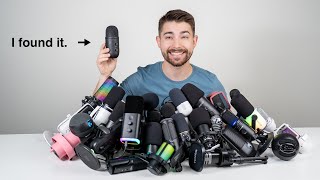
This video tests a wide range of budget microphones, from under $30 to $80, to find the best options for different use cases like voiceover, gaming, and singing. The host compares audio quality, build, rejection, and features, ultimately recommending top picks in each price tier.
The first microphone was invented in the late 1800s; the first mass-produced mic cost $175 ($3,657 today). In 2025, you can buy a better mic for under $30, so the host tests budget options.
Mics tested: Moo UM700, Mayano DM20, Samsung Meteor, Fifine A6V. The Fifine A6V sounded best for talking, but the Moo needed EQ for singing.
Moo and Fifine were best for singing; Fifine was sharp on upper end, better for voiceover. Samsung and Mayano handled yelling well.
Rejection tests: keyboard typing, vacuuming, background conversation. Samsung fell short on keyboard rejection; Fifine was the clear winner.
Mics tested: Feduch SL40, Pseudotac ST800, Fifine AM8, Logitech Orb, Razer Siren Mini, Feduch D20, HyperX SoloCast, Tonor TD510. Feduch D20 and Fifine AM8 were disqualified due to poor quality or buzzing.
Pseudotac ST800 ($43.54) is recommended for voiceovers due to good quality and rejection. Others had issues: Razer Siren Mini needs pop filter and has poor rejection; HyperX SoloCast has clear quality but poor rejection; Tonor TD510 is bassy; Feduch SL40 is too expensive at $54.99.
Five mics tested: Samsung Q2U, Elgato Wave Neo, Fifine K658, Fifine Amplitank Tank 3, Maono PD200X. Scored on build quality, travelability, controls/software, and audio quality.
Maono PD200X scored 9.8-10 for audio quality (best overall). Elgato Wave Neo scored 9.6 (great for streamers due to rejection). Samsung Q2U scored 9.4-9.5 (great for singing). Fifine K658 scored 7.7, Tank 3 scored 4.4-5.
Best overall audio: Maono PD200X. Best for gamers/streamers: Elgato Wave Neo (great rejection). Best for singers/musicians: Samsung Q2U.
For under $30, the Fifine A6V is the best value. In the $30-$60 range, the Pseudotac ST800 is a solid choice. For $60-$80, the Maono PD200X offers the best audio quality, while the Elgato Wave Neo excels for streamers and the Samsung Q2U for singers.
What was the first mass-produced microphone and its inflation-adjusted price?
Western Electric 618, costing $3,657.40 in today's money.
Which under-$30 microphone was best for talking?
Fifine A6V.
01:47
Which microphone was disqualified due to a buzzing noise floor?
A refined microphone (likely the Fifine AM8) was disqualified.
00:55
What is 'rejection' in microphone testing?
How well a microphone picks up intended sound while rejecting background noise.
03:24
Which microphone won the rejection test in the under-$30 category?
Fifine A6V.
05:20
What was the price of the Pseudotac ST800 at the time of filming?
$43.54.
09:37
Which $60-$80 microphone scored highest for build quality?
Fifine Amplitank Tank 3 (score 9.5).
11:10
Which microphone scored 10/10 for controls and software?
Maono PD200X.
14:53
What is the best microphone for overall audio quality in the $60-$80 range?
Maono PD200X.
17:17
Which microphone is recommended for gamers and streamers?
Elgato Wave Neo.
17:35
Which microphone is recommended for singers and musicians?
Samsung Q2U.
18:01
Historical cost of first mass-produced mic
Puts modern budget mic prices into perspective.
Fifine A6V wins under $30
Demonstrates that very cheap mics can sound good.
01:47Definition of rejection
Key concept for choosing a mic for noisy environments.
03:24Maono PD200X software control
Shows the value of software for fine-tuning audio.
14:53Final recommendations
Provides clear, actionable advice for different use cases.
17:17[00:00] The very first microphone was invented
[00:02] in the late 1800s. Fast forward 56
[00:05] years, and the first mass-produced,
[00:06] publicly available microphone was the
[00:08] Western Electric 618 that at the time
[00:11] cost
[00:12] $175, which adjusted for inflation today
[00:15] is a whopping
[00:19] $3,657.40. Now, in 2025, well, you can
[00:22] buy a microphone that is even better for
[00:24] less than 30 bucks and have it delivered
[00:26] to your door overnight without you
[00:28] having to do a thing except press one
[00:30] button. So, the logical thing to do is
[00:33] get all of the budget ones and then well
[00:35] figure out which one is the best. And
[00:37] that's what I did. And really quickly,
[00:38] we figured out some were just uh not the
[00:41] best. This mic under 30 bucks is just
[00:44] way too sensitive. Revive me, bro. Eric,
[00:46] revive me. Revive me, bro. The D20 from
[00:49] Pedu may look cool, but it just sounds
[00:52] awful. Check, check, check. 1 2 3. And
[00:55] this refined microphone was immediately
[00:57] disqualified having a terrible buzzing
[00:59] noise floor. It's really annoying. Just
[01:02] listen. Now, with some of the bad ones
[01:04] out of the way, we were actually very
[01:06] surprised at how good some of the
[01:07] extremely inexpensive ones were. All of
[01:09] these you're about to listen to are
[01:11] under 30 bucks. Let's take a listen
[01:13] together to see which one is best.
[01:14] Gordon Ramsay makes good food. Check.
[01:17] Check. Check. One, two, three. Gordon
[01:19] Ramsay makes good food. Check, check,
[01:22] check. One, two, three. Gordon Ramsay
[01:25] makes good food. Check, check, check.
[01:28] One, two, three. Gordon Ramsay makes
[01:30] good food. Check, check, check. 1, two,
[01:33] 3. The first one was the Moo UM700. Then
[01:36] the Mayano DM20, the Samsung Meteor, and
[01:38] then finally the Fine Amplame A6V. Oh,
[01:41] and all of the mics I test in this video
[01:43] will have Amazon links in the
[01:44] description. So, if you want to go check
[01:45] those out, they're down there. Of all of
[01:47] those, I think it's clear that the VFine
[01:49] took the cake. I mean, it just sounds so
[01:52] good for the price. However, just normal
[01:54] talking isn't the only test that we need
[01:56] to really assess the mic's quality and
[01:58] what it's good at overall. So, let's
[02:00] listen to the singing test.
[02:05] Rainbow, skies are blue.
[02:11] We're over the
[02:13] rainbow. Skies are blue.
[02:17] The Moo and Fine were definitely the
[02:20] best for singing, though the Moo needs
[02:21] to be tuned a bit in post. And here is
[02:23] what that sounds like after some EQ
[02:34] adjustments.Where. Now, clearly the
[02:36] Fifine sounds better than the Moo, but
[02:38] it still is a little bit sharp on the
[02:40] upper end. So, not great for singing.
[02:42] So, I would say this is more suited for
[02:43] voiceover commentary, like gaming,
[02:45] things like that. But since we're
[02:47] talking about that, in contrast to the
[02:49] singing test, what about a test for all
[02:51] of the ragy gamers and streamers? Well,
[02:53] we did a test for you guys, too. Revive
[02:56] me, Eric. Revive me, bro. Revive me,
[02:59] Eric. Revive me. Revive me, bro. Revive
[03:02] me, Eric. Revive me, bro. Revive me,
[03:05] bro. Eric, revive me, bro. Revive me.
[03:09] Again, the Moo and Fine taking the W
[03:12] here, handling yelling quite well. But
[03:14] honestly, the Mayano and the Samsung did
[03:16] very well here. Trust me, some of the
[03:18] other mics just cannot handle it. But
[03:20] audio quality is not the only thing that
[03:22] determines how good a mic is. Rejection
[03:24] can be equally as important depending on
[03:27] your environment. Rejection is how good
[03:29] a microphone is at picking up the
[03:30] intended voice or sound while not
[03:32] picking up or rejecting the sound
[03:35] outside of the intended voice or sound.
[03:37] This could be sounds right behind the
[03:39] microphone like typing on a keyboard or
[03:41] the sides like someone vacuuming the
[03:43] hallway or just your family being way
[03:45] too loud outside your room or inside for
[03:48] that matter. We're going to test this
[03:49] with three different tests. The first me
[03:52] typing on a mechanical keyboard right
[03:54] under the microphone like it would be on
[03:56] your desk. The second, someone vacuuming
[03:58] in the hallway with my door open. And
[04:01] the third, my girlfriend having a full
[04:03] conversation on the phone in my doorway.
[04:07] So
[04:19] [Music]
[04:21] inconsiderate in the background.
[04:34] some
[04:36] people. All right, guys. Now for the
[04:38] ambient test of someone talking in the
[04:39] background. What's going on? It's been a
[04:41] while since I've talked to you, buddy.
[04:44] How are the kids? Hey, Jared. How's the
[04:46] kids? You got a new dog. This is someone
[04:48] talking in the background. So, yeah.
[04:51] That dog is the cutest thing in the
[04:53] world. No, it's not. That dog is so
[04:56] freaking cute. That is like the cutest
[04:59] dog that I've ever seen. Rudest person
[05:01] I've ever met. Did you hear the massive
[05:03] difference with the keyboard test? The
[05:05] Samsung completely fell short. You're
[05:07] having so many of those bassy hits. If
[05:09] you can't hear those bassy hits, make
[05:11] sure to put on headphones so you can
[05:12] listen to the sound test again to really
[05:14] get an idea of what it's going to sound
[05:15] like. Now, the Mayano wasn't great
[05:17] either, making those not best suited for
[05:19] gamers and streamers. I think it's
[05:20] obvious that the Fine is the clear
[05:22] winner here. But even with how good the
[05:24] quality is for under 30 bucks, it's good
[05:27] for the price. You just can't get
[05:29] amazing detail and clarity at this price
[05:32] point. So, let's bump it up just a
[05:34] little bit cuz obviously this is a full
[05:36] budget video. Raising the price from $30
[05:38] up to a max of $60 gives you a lot more
[05:41] options while still staying comfortably
[05:43] low for the benefit of your bank
[05:45] account. However, this is also where we
[05:48] found the most, well, just unimpressive
[05:50] mics. We're testing the Feduch SL40, the
[05:53] Pseudotac ST800, the Papine Amplame AM8,
[05:56] the Logitech orb, the Razer Siren Mini,
[05:58] the Feduch D20, the HyperX SoloCast, and
[06:01] the Toner TD510. Now, we already know
[06:04] the Feduch D20 is awful, but for fun,
[06:07] this is the D20 versus the previous
[06:09] Fifine A6V. Keep in mind that the D20 is
[06:12] the more expensive mic, not the cheaper
[06:14] one. Check, check, check. 1 2 3. Check,
[06:17] check, check. 1 2 3. We can also rule
[06:20] out the Afine Ample game AM8 because
[06:22] one, it just doesn't sound good. Gordon
[06:25] Ramsay makes good food. Gordon Ramsay
[06:28] makes good food. And two, it had a
[06:31] buzzing sound that by itself would
[06:33] disqualify it. All right, so this one's
[06:36] having a weird buzzing thing. I don't
[06:38] know. It It's not happening all the
[06:40] time. It's weirdly going in and
[06:42] out. I don't know, guys. That leaves six
[06:46] mics. Take a listen. Gordon Ramsay makes
[06:49] good food. Gordon Ramsay makes good
[06:53] food. Gordon Ramsay makes good food.
[06:56] Gordon Ramsay makes good food. Gordon
[06:59] Ramsay makes good food. Gordon Ramsay
[07:03] makes good food. Now, most of those
[07:06] sounded pretty good. Logitech orb. But
[07:10] there's actually only one that I think
[07:11] is actually worth it. To show you what
[07:13] makes me think that, you need to know
[07:15] their price.
[07:21] Now that you know their price, listen to
[07:23] these sound tests.Where
[07:26] the
[07:28] rainbow.
[07:29] Somewhere over the
[07:33] rainbow.
[07:34] Somewhere over the
[07:38] rainbow.
[07:39] Somewhere over the rainbow.
[07:44] Somewhere over the
[07:47] rainbow.
[07:49] Somewhere over the
[07:52] rainbow. Revive me, Eric. Revive me,
[07:55] bro. Revive me, Eric. Revive me, bro.
[07:58] Revive me, Eric. Revive me, bro. Revive
[08:02] me, Eric. Revive me, bro. Revive me.
[08:05] Revive me, Eric. Revive me, bro. But
[08:07] now, the one that I recommend, well, the
[08:09] Razer Siren Mini is the cheapest and its
[08:12] quality is actually pretty good, but it
[08:15] does need a
[08:16] popular as well as its rejection with a
[08:18] keyboard is pretty
[08:22] awful. It's also not compatible with
[08:25] Mac. Now, the HyperX SoloCast, on the
[08:27] other hand, has even clearer quality
[08:29] than the Razer. It's also basically the
[08:32] same price and it is compatible with
[08:34] Mac, but it's plagued with the same
[08:36] issue having horrible rejection with a
[08:38] keyboard. Take a
[08:42] listen. The Toner TD510, on the other
[08:45] hand, does a great job with rejection
[08:46] both with a keyboard and environmental
[08:49] sounds. However, the sound profile is
[08:51] very bassy and not true to life, as well
[08:54] as having issues with pllosives. Now,
[08:56] the sound profile isn't necessarily a
[08:58] bad thing, as some people may prefer
[09:00] this sound profile, but I think most
[09:01] people will prefer a true-to-life sound.
[09:03] So, then the Feduch SL40, right? It has
[09:07] great audio quality, handles rejection
[09:08] of a keyboard very well, has fantastic
[09:11] build quality, and even has an XLR
[09:13] connection if you prefer that over USB.
[09:16] Well, it's actually not this one either,
[09:18] because it's just too expensive at
[09:20] $54.99. Comparing this to the mics we're
[09:22] about to test in the $60 to $80 price
[09:24] point, which is just a little bit more,
[09:26] literally 510 bucks more than this one,
[09:28] they're in an entire level above
[09:30] something like this Feduch D20. So then
[09:33] that leaves the Pseudotac ST800. It's
[09:36] well priced at
[09:37] $43.54 at the time of filming. Has
[09:39] really nice quality. Does great with
[09:41] rejection of a keyboard. Didn't do
[09:43] amazing on the Yel test, but for singers
[09:45] or using this for voiceovers, this is a
[09:47] great mic at a really good price point.
[09:49] Otherwise though, I would bump it up to
[09:51] the next price category because you get
[09:52] a lot more for your money. Now, jumping
[09:55] to the highest tier of mics that we're
[09:57] testing today, only bumping up the price
[10:00] $20 to an $80 max. This gives us five
[10:04] big competitors. Now, this time we're
[10:06] not just going to test them like we've
[10:07] tested the previous ones. We're actually
[10:09] going to test for three different
[10:10] categories. We're trying to find just
[10:12] the overall best audio quality for the
[10:15] mic itself. Then we're trying to find
[10:17] the best mic that's suited for gamers
[10:18] and streamers. And then thirdly, we're
[10:20] trying to find the best microphone for
[10:22] singing or music. These five mics are
[10:25] going through five major tests and
[10:27] receiving points 1 through 10 for each
[10:30] test. The first test, build quality. The
[10:33] Samsung Q2U's build is almost entirely
[10:35] metal, including the grill, and comes
[10:37] with a nice quality stand. Overall
[10:39] rating of 8.5. The Elgato Wave Neo is
[10:42] made entirely of plastic and is quite
[10:44] small and light. The stand is mostly
[10:46] metal with a greatl looking design, but
[10:47] does wiggle around a little bit. Overall
[10:49] rating of 4.75. The Fifine K658 is made
[10:53] almost entirely of metal. Includes a
[10:55] cool looking plastic shock mount.
[10:56] However, had a loose, cheap feeling foam
[10:58] windscreen, bringing the rating down to
[10:59] a 6.5. The Fine Amplitank Tank 3 is
[11:03] built well like a tank being literally
[11:05] entirely metal except for the buttons
[11:08] and controls bringing its rating to a
[11:10] 9.5. The Mo PD200X is made completely of
[11:13] metal aside from its RGB ring and
[11:15] windscreen and includes a nice shock
[11:17] mount with a metal screw point bringing
[11:19] its rating to an 8.2. So for build
[11:22] quality, the Tank 3 came in first,
[11:23] closely followed by the Q2U and
[11:27] PD200X. This is how long each microphone
[11:30] takes to be built completely from being
[11:32] broken down. Now, first the Samsung
[11:34] takes the first place for the quickest.
[11:36] The Tank 3 comes in next and then the
[11:39] K658 and PD200X with the Elgato coming
[11:42] in last because of the more intensive
[11:45] stand building process. Now in your bag,
[11:47] this is going to come in at about 10.5
[11:49] in by a width of about 4 in.
[11:52] Travelability here is excellent. I would
[11:54] say this gets a 9.5. For the Elgato Wave
[11:57] Neo, this thing can really break down
[11:59] into a very tiny package. It measures 6x
[12:02] 5 1/2 in with the stand, but this really
[12:05] travels the best if you leave the stand
[12:07] being extremely light and small. You
[12:10] just have to be a little bit more
[12:11] careful with it as it's made of plastic,
[12:13] but this thing comes in at a solid 7.1.
[12:15] Now, the K658 comes in at 8 by 7 1/4 in
[12:19] with the shock mount not installed. The
[12:21] thing that I don't like is this coming
[12:22] off, but I would say it's durable.
[12:24] Because of that, I think I would give
[12:25] this a 7.3. The Tank 3 is super durable
[12:29] and pretty small at 6 1/2 by 3 in if you
[12:32] leave the mount installed. Though it is
[12:34] quite heavy, it's super durable, making
[12:36] for a score of 8.8. Now, the Mo PD200X.
[12:40] The shock mount is quite timely to
[12:42] remove and install because you need a
[12:43] Phillips head screwdriver. But if you
[12:45] travel with it while leaving the shock
[12:47] mount installed, it will take up a
[12:49] little bit more space, but it's still
[12:50] very, very durable, making for a score
[12:53] of 6.4. Travelability is close here, but
[12:56] the Q2U definitely takes the dub. For
[12:59] controls and software with the Q2U,
[13:01] well, this doesn't have a software. It
[13:02] has an on andoff switch, and it's got
[13:04] these headphone volume adjustment
[13:06] buttons. But since it doesn't have any
[13:08] special features, I'm just going to give
[13:09] it a 5.5. Now, for the Elgato Wave Neo,
[13:12] well, this doesn't really have any
[13:14] controls on it except a mic mute switch
[13:16] right there. However, it's also very
[13:17] good out of the box, but it does have a
[13:19] software. In the Wavelink software, you
[13:22] can adjust everything from monitor mix
[13:24] to headphone volume, mute and unmute,
[13:26] and there's also a mode called voice
[13:28] focus that is basically a background
[13:29] noise cancelling mode. However, the
[13:32] coolest thing is having the ability to
[13:34] adjust a fully custom EQ. Even though
[13:37] this doesn't have a bunch of controls on
[13:38] it itself, I still think because that
[13:40] software is so freaking useful, I'm
[13:43] going 8.5. The controls for the K658,
[13:46] well, it has a volume wheel right here.
[13:48] You have a meat switch right there, as
[13:50] well as a touch sensitive button to
[13:51] adjust the RGB on the bottom of the
[13:54] stand. While I really like the way the
[13:55] wheel feels, there still isn't a
[13:57] dedicated gain knob or any software,
[13:59] bringing this to a score of 6.0. The
[14:02] VFine Ample Tank Tank 3. On this one,
[14:05] we've got the actual gain adjustment on
[14:06] a knob, which is super nice, and a
[14:08] headphone adjustment plus a mic mute
[14:10] there. Now, this is pretty much as good
[14:12] as it gets for your controls, but
[14:14] because it doesn't have a software, this
[14:16] comes in at a 6.5. Now, the Mo
[14:20] PD200X, this one is excellent. There is
[14:22] a mic mute button, a knob that switches
[14:24] between your gain control and headphone
[14:26] volume, as well as a button on the
[14:28] bottom of the mic to change RGB. Now,
[14:30] not just that, but this microphone also
[14:32] has a software. As you can see, it's the
[14:34] Mono Link app. Then, in the software,
[14:36] you can adjust almost everything on this
[14:38] mic from gain to headphone volume.
[14:40] turning on and off your mic monitoring,
[14:42] different EQ settings for recording, a
[14:45] limiter, and even a compressor. You can
[14:47] even change the RGB brightness, and dial
[14:49] in the exact color you want with a color
[14:51] wheel. And because of that, this gets a
[14:53] 10 out of 10 for its controls and
[14:55] software. Both the PD200X and Elgato
[14:58] Wave Neo far excel over the others
[15:00] because of their software, allowing for
[15:02] so much more
[15:04] control. Gordon Ramsay makes good food.
[15:08] Excellent sound quality here. Nice
[15:10] trebles, nice mid-range, great for
[15:11] singing and vocals like that. This has
[15:14] been a staple for so long now. It's such
[15:16] a great microphone. You really can't go
[15:18] wrong with it. I would give this a
[15:22] 9.5, maybe a 9.4. It has a slight noise
[15:25] floor, but overall it's really quite
[15:27] impressive. Gordon Ramsay makes good
[15:30] food. The audio quality on the Wave Neo
[15:32] is really impressive. It's very true to
[15:34] life. It's got nice deep rich bass
[15:37] frequencies from your mouth, from your
[15:38] vocals. This microphone also by far did
[15:41] the best with the rejection test, both
[15:42] with yelling and with the keyboard test.
[15:45] Take a listen to
[15:47] this. The trebles are nice and crisp,
[15:49] but they're not overbearing. It's really
[15:51] quite impressive. I'm going as high as a
[15:54] 9.6 here. It's really good. Gordon
[15:57] Ramsay makes good food. Not bad here,
[16:01] but the trebles are just a bit muffled
[16:03] and they don't really have that upper
[16:05] end. Uh, and in this price category with
[16:07] all the other microphones, it's just
[16:08] doesn't compete well enough. It's still
[16:10] a good microphone, but I'm giving it a
[16:13] 7.7. Gordon Ramsay makes good food. Now,
[16:17] this one's not really that great. It
[16:19] sounds a bit muffled, especially
[16:20] compared to the other ones on the list.
[16:22] I just don't really like the audio
[16:24] quality. The trebles are not crisp. the
[16:26] mid-range is it's just not a great
[16:29] microphone. Because of those reasons,
[16:30] I'm going to give the Amplitank Tank 3
[16:33] probably only a 4.4, maybe a five. And
[16:36] that's just because compared to these
[16:37] other microphones, it just doesn't even
[16:39] sound close to as good. Gordon Ramsay
[16:42] makes good food. This one is so
[16:45] impressive. Ultra low noise floor.
[16:48] You're basically hear nothing here. The
[16:50] trebles are so crisp, but not
[16:52] overbearing. Just sounds very true to
[16:54] life. It's got great bass frequencies.
[16:55] It sounds really impressively true to
[16:57] life. This one is excellent. Definitely
[17:00] the best one on the list. This comes in
[17:02] at a 9.8. Maybe just make it a 10
[17:06] because it is the best on the list. Now,
[17:08] totaling up all the scores, these are
[17:10] the best for overall quality, best for
[17:12] streamers and gamers, and the best for
[17:15] singers and musicians. For the overall
[17:17] best audio quality, the Mayano PD200X is
[17:21] absolutely the best. It's very true to
[17:23] life, has a fantastic low noise floor,
[17:26] and it looks pretty dang good. However,
[17:28] it didn't do great on the yell test. So,
[17:30] if you are a gamer or streamer who kind
[17:31] of does rage though, there is a better
[17:33] microphone for that. And that award goes
[17:35] to the extremely impressive Elgato Wave
[17:38] Neo. I love this mic. Now, while the
[17:41] build quality of the mic itself is
[17:43] mainly plastic, the amazing ability to
[17:46] have fantastic rejection both of
[17:48] keyboards as well as doing extremely
[17:50] well on the yell test, but it also has
[17:53] audio quality that is very close to the
[17:56] PD200X. This is a very, very good
[17:59] microphone for singers and musicians.
[18:01] Well, it's the Samsung Q2U. This thing
[18:04] has been a staple and it continues to be
[18:06] a staple. This is a hair away from both
[18:09] the Elgato Wave Neo and the PD200X in
[18:11] terms of quality, but just a little bit
[18:13] more noise floor. But oh my gosh, all
[18:16] three of these mics are fantastic. And
[18:17] if you want to check out any of them or
[18:19] any of the mics I have in this video,
[18:20] there's Amazon links below 40 US, UK,
[18:22] Canada, and international links. And let
[18:24] me know if you like this new style. But
[18:26] this is a consumer tech review and I'll
[18:27] see you guys in the next
⚡ Saved you 0h 18m reading this? Transcribe any YouTube video for free — no signup needed.