
Failed My First Channel
30sRelatable failure story hooks viewers who fear burnout.
▶ Play Clip"The title accurately promises a roadmap for starting content creation with a full-time job, and the video delivers exactly that."
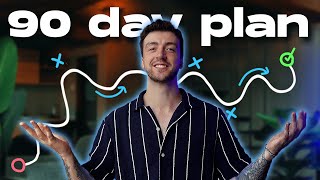
The video provides a practical roadmap for building an audience as a content creator while working a full-time job, focusing on sustainability and profitability. The creator shares personal experiences from a failed YouTube channel due to burnout and self-imposed pressure, then outlines three key steps: creating a realistic schedule, applying the Pareto principle to focus on high-leverage tasks, and streamlining content creation processes.
The video addresses creators who want to build an audience sustainably while working full-time and making good money.
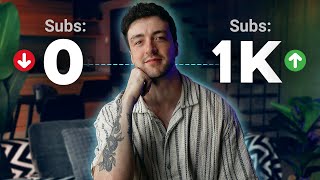
The creator's first channel failed due to burnout from self-imposed pressure to grow quickly and make perfect videos.
The main problem is not lack of time but comparing oneself to creators with years of experience and teams.
Commit to a minimum upload schedule you can stick to even during bad weeks to avoid burnout and maintain consistency.
Focus on the 20% of efforts that yield 80% of results, such as scripting, filming, and improving hooks, while avoiding low-leverage tasks like obsessing over channel banners.
Streamline high-leverage tasks by using bullet-point scripting instead of word-for-word scripts, and stick to one content format initially.
Sacrifice low-value activities like binge-watching or drinking, but never sacrifice mental health, well-being, or enjoyment of the process.
The key to successful content creation while working full-time is to set a realistic schedule, focus on high-impact tasks, and streamline processes to avoid burnout. Prioritize your well-being and enjoy the journey.
What is the Pareto principle in content creation?
Roughly 80% of your results come from 20% of your efforts; focus on high-leverage tasks like scripting and filming.
04:21
What is the recommended minimum upload schedule for a creator with a full-time job?
Determine the minimum number of videos you can post per week even on your worst weeks.
02:34
What is an example of a low-leverage task in content creation?
Updating your profile picture for the fifth time or refreshing YouTube analytics every 5 minutes.
04:21
What is the recommended scripting method to save time?
Use bullet-point scripting instead of writing word-for-word scripts.
06:36
What should you not sacrifice when building a content creation side hustle?
Your mental health, well-being, exercise routine, and enjoyment of the process.
08:33
Failed Channel Due to Burnout
Illustrates the common pitfall of self-imposed pressure leading to burnout.
00:24Comparison Trap
Identifies comparing to full-time creators as a core issue for new creators.
01:29Realistic Schedule
Provides a practical method to avoid overcommitment and maintain consistency.
02:34Pareto Principle Application
Teaches how to focus on high-leverage tasks for maximum progress with limited time.
04:21Sacrifice Sanity? No
Emphasizes the importance of mental health over hustle culture.
08:33[00:00] So, if you clicked onto this video, it
[00:01] means you want to build an audience as a
[00:03] content creator while working a
[00:05] full-time job. But I'm also going to
[00:07] assume two things. So, I'm going to
[00:09] assume that you want to do it in a way
[00:10] that is sustainable and doesn't take
[00:12] over your entire life. And number two,
[00:14] you also want to actually make some good
[00:16] money from your content. Well, I've been
[00:18] a full-time content creator for 2 years
[00:21] now, and I've built my audience to
[00:23] 420,000.
[00:24] And in this video, I'm going to break
[00:26] down exactly how I would do that again
[00:28] if I was starting from scratch with a
[00:30] full-time job. So, back in 2021, I was
[00:32] working full-time and I had a 9 toive
[00:34] job. I was on the phones selling home
[00:36] insurance. It was the most boring thing
[00:38] imaginable. And at that time, I was also
[00:40] trying to make money online. So, I was
[00:42] trying to build up an online business.
[00:44] And one of the things I tried was a
[00:46] YouTube channel. So, I tried to get into
[00:48] content creation. And I would love to
[00:50] sit here and tell you that I had this
[00:51] all figured out from day one and that it
[00:53] was a huge success, but unfortunately
[00:55] that channel failed miserably. Like I
[00:57] just completely burnt out. But the
[00:59] interesting part is that it wasn't the
[01:01] filming that burnt me out or it wasn't
[01:02] the editing. The thing that burnt me out
[01:04] was the pressure I was putting on
[01:06] myself. I was putting this pressure on
[01:07] myself to grow as quickly as possible
[01:09] and to get as many subscribers as
[01:11] possible. And I had all this pressure to
[01:12] make my videos perfect like all the
[01:14] famous YouTubers. And that self-imposed
[01:17] pressure just completely sucked the life
[01:19] out of me. And like I said, I just
[01:21] completely burnt out. But the good news
[01:22] is that this is a very solvable issue.
[01:25] And it's a trap that can be very easily
[01:27] avoided if you play it right. Because
[01:29] it's not like you don't have enough time
[01:30] to become a content creator if you have
[01:32] a full-time job. I mean, there are
[01:34] endless examples of creators who started
[01:36] their journey while working a 9 to-5.
[01:38] The actual issue is that you're
[01:40] comparing yourself to creators who have
[01:42] been doing this for years. And these
[01:44] full-time creators might even have a
[01:46] team of people to help them. And I'll be
[01:48] honest with you, you're probably being a
[01:49] little bit unfair on yourself by
[01:51] comparing your situation to these
[01:53] successful creators. And you're beating
[01:55] yourself up for not moving as fast as
[01:57] the creators who have been doing this
[01:58] full-time for years. And I kind of want
[02:01] to start this video by giving you
[02:02] permission to maybe lighten that
[02:04] pressure that I know you're putting onto
[02:05] yourself to grow as quickly as possible
[02:08] and to make your videos as perfect as
[02:10] possible. because I believe this
[02:11] self-imposed pressure is one of the
[02:13] biggest reasons why new creators waste
[02:16] years trying to grow on social media,
[02:18] especially when they have a full-time
[02:20] job. So, with that in mind, what I want
[02:22] to give you right now is a very
[02:23] realistic, practical road map that you
[02:25] can follow to help you stay consistent,
[02:28] stay sane, and to start growing a real
[02:30] audience without sacrificing everything
[02:32] else in your life. So, step number one
[02:34] is to create a schedule that you can
[02:35] actually stick to long term. So, I'm
[02:38] sure you understand the importance of
[02:39] consistency when it comes to content
[02:41] creation, and it's definitely one of the
[02:43] most commonly given pieces of advice,
[02:44] you know, to be consistent. And there is
[02:46] a reason for that. You know, if you're
[02:47] consistent, that tells the algorithm
[02:49] that you are reliable and that you're
[02:51] going to show up for your audience. So,
[02:52] of course, it's going to push your
[02:53] content harder. But this is especially
[02:55] important if you're a creator working a
[02:57] full-time job. Because one of the worst
[02:59] things that you can do is overcommit to
[03:01] an uploading schedule that you're just
[03:03] not going to be able to stick to long
[03:05] term. For example, you don't want to
[03:06] think, right, I'm going to get home from
[03:07] work every day. I'm going to film a
[03:09] video every single evening and edit it
[03:11] until 2:00 a.m. just so that I can post
[03:13] every single day. Like, obviously,
[03:14] you're just going to burn out because,
[03:15] as we all know, life is unpredictable.
[03:17] Life throws us curveballs. You know, we
[03:19] all have personal struggles that we deal
[03:21] with sometimes. And that's just how life
[03:23] works. And that is why we need to create
[03:25] a content schedule that you can actually
[03:26] stick to come rain or shine. And this is
[03:29] so interesting because it means that
[03:30] avoiding that dreaded burnout is
[03:32] actually not that difficult because I
[03:34] think that all burnout is is just
[03:36] overcommitting to an unrealistic level
[03:38] of output and then just not being able
[03:40] to maintain that output. Whereas if you
[03:42] commit to an uploading schedule that you
[03:44] know that you can maintain, then the
[03:45] chances of you burning out become way
[03:48] smaller. So let's get specific here
[03:49] because this applies to YouTube,
[03:51] Instagram, Tik Tok, you know, whatever
[03:53] platform you're trying to get into. We
[03:54] want to ask ourselves, what is the
[03:56] minimum amount of videos I could post
[03:58] per week, even on my worst weeks? And
[04:01] I'm not saying that you can't post more
[04:02] than that if you have some free time.
[04:04] But what I'm saying is you need a
[04:05] minimum amount that you can actually
[04:07] stick to if you're having a bad week.
[04:09] Because the harsh truth is that if your
[04:10] schedule only works when life is perfect
[04:13] and everything is stress-free, then you
[04:15] don't really have a schedule and you're
[04:17] probably not going to get consistent.
[04:19] Okay, so step number two is that now we
[04:21] have a realistic schedule that we can
[04:23] actually stick to. We need to understand
[04:24] the importance of the Parto principle.
[04:27] And this is where things get interesting
[04:28] because if you're juggling a full-time
[04:30] job and you're trying to get into
[04:32] content creation, your first instinct is
[04:34] to assume that you need more time. But
[04:36] that's not necessarily true because your
[04:38] biggest problem isn't that you need more
[04:40] time. It's how you're using the limited
[04:42] time that you already have. And this is
[04:44] where the Pareto principle comes in. So
[04:46] if you don't know what this principle
[04:47] is, it's that roughly 80% of your
[04:49] results come from about 20% of your
[04:52] efforts. So when it comes to content
[04:53] creation, we need to figure out which
[04:55] 20% of our efforts are giving us the
[04:57] most leverage and actually moving us
[04:59] forward and basically just do more of
[05:01] that. So I'll give you a personal
[05:03] example. So back in the day when I had
[05:04] that, you know, that failed YouTube
[05:06] channel that I was telling you about, I
[05:07] spent so long obsessing over the channel
[05:10] banner, my profile picture, and even all
[05:13] these little fancy editing tricks that
[05:15] nobody was ever going to notice. And
[05:16] like I said, I had a full-time job, so I
[05:19] didn't have, you know, hours and hours
[05:20] to be worrying about these low-lever
[05:22] tasks. And I actually think that's
[05:24] probably the main reason why that
[05:26] channel failed and why I ended up
[05:27] burning out. But we can actually take
[05:29] this one step further because we can
[05:30] start to identify what I call asymmetric
[05:33] inputs. So these are things that don't
[05:35] really require a massive amount of time,
[05:37] but they give you a huge amount of
[05:39] progress and momentum towards your
[05:41] goals. And let's get really specific
[05:42] here. So I'll give you some examples. So
[05:44] we have bulletoint scripting a video. So
[05:46] that's very high leverage, very
[05:48] important. And then we have filming. So
[05:50] that's obviously very high leverage, you
[05:51] know, a very good use of your time. And
[05:53] even things like improving the hook of
[05:55] your video. So, you know, that intro
[05:56] section of the video that you use to
[05:58] captivate your audience, making
[05:59] improvements to that is also very high
[06:01] leverage. But when it comes to, you
[06:03] know, updating your profile picture for
[06:04] the fifth time, that's obviously very
[06:06] low leverage. Or refilming an entire
[06:08] video because you don't like the way
[06:10] your voice sounds, obviously, again,
[06:11] that's very low leverage. or even, you
[06:13] know, refreshing your YouTube analytics
[06:15] every 5 minutes. That is extremely low
[06:18] leverage. And by the way, I'm using
[06:19] these examples because these are things
[06:21] that I've wasted so much time on on my
[06:23] own journey. So, I would say if you take
[06:25] one thing from this video, it's to
[06:27] prioritize the tasks that actually give
[06:29] you momentum. And that is how you're
[06:31] going to start to see results really
[06:32] early on, even if you're working a
[06:34] full-time job. So, step number three is
[06:36] finding the path of least resistance.
[06:39] And I absolutely love this concept
[06:40] because now that we've identified the
[06:42] tasks that matter the most, now we need
[06:44] to make those tasks as easy, as
[06:46] streamlined, and as headache-free as
[06:49] possible. So, how do we actually do this
[06:50] then? How do we make these high lever
[06:52] tasks as effortless as possible? Now,
[06:55] this kind of depends on your setup and
[06:57] your lifestyle, but I'll give you a few
[06:59] ideas that you might find valuable. So,
[07:01] the first idea to make your life a lot
[07:02] easier when you're creating content is
[07:04] to not script your videos literally word
[07:06] for word. And I actually mentioned this
[07:08] in a previous video and a lot of people
[07:10] seem to resonate with it. You know, I
[07:11] got quite a few comments on the video
[07:12] about this idea specifically, because if
[07:14] you wanted to script a 15-minute video,
[07:17] let's say, you would probably have to
[07:18] write about 2,000, maybe even 2,500
[07:22] words, and you got to ask yourself, do I
[07:23] want to write a 2,500word essay every
[07:26] time that I want to film a YouTube
[07:28] video? And again, you have a full-time
[07:29] job, so we don't have all the time in
[07:31] the world to write these, you know,
[07:33] very, very long scripts. Now, I will be
[07:35] honest, it's a little bit more difficult
[07:36] at first to film a video from bullet
[07:38] points because you need to become a
[07:40] little bit more fluid and a little bit
[07:41] more conversational, but you do get used
[07:43] to it very quickly and it just saves you
[07:45] so much time and so much energy as well.
[07:48] Okay, so another way to make your life
[07:49] way easier when it comes to making the
[07:51] most of your time is to stick to just
[07:53] one format. So if you're trying to make
[07:55] reals and Tik Toks and long- form
[07:57] YouTube videos and you're also writing a
[07:59] newsletter, trying to do all that at
[08:01] once is very timeconuming and it also
[08:04] takes a lot of energy to figure out all
[08:06] of these different platforms. Now if
[08:08] you're a bit stuck on what platform to
[08:10] get started on, I generally recommend
[08:12] YouTube because while it is harder to
[08:14] grow at first, it's much easier to build
[08:16] trust with your audience when you do
[08:18] start to get views and it's also much
[08:20] easier to build a business in the long
[08:22] term. But of course, it's completely up
[08:24] to you. I first started to get results
[08:25] on social media with Instagram reels,
[08:28] but it's just about whatever platform or
[08:30] whatever style of content resonates with
[08:32] you the most. Now, the last thing I want
[08:33] to say isn't really part of the road
[08:35] map, but it's definitely a tip that I
[08:37] wish someone had told me when I was
[08:39] first getting started, and that is that
[08:41] you are going to have to make
[08:42] sacrifices, but do not make sacrifices
[08:44] at the expense of your sanity. Now, yes,
[08:47] we did talk about the fact that finding
[08:49] more time isn't going to be your biggest
[08:51] issue, but I can guarantee that there
[08:54] are certain things that you're doing
[08:55] throughout the week that you could
[08:57] sacrifice if you're taking this journey
[08:59] seriously. Now, this might be something
[09:01] like binging Netflix or binging YouTube
[09:03] or going out drinking at the weekend.
[09:05] There is definitely something that you
[09:07] can get rid of that you're doing
[09:08] regularly in order to pursue this dream.
[09:10] But what you can't give up is your
[09:12] well-being, your mental health, your
[09:14] exercise routine. You can't give up your
[09:16] capacity to actually enjoy the process
[09:18] of building this thing that you care
[09:20] about because at the end of the day,
[09:21] you're not building this new life so
[09:22] that you can be more stressed than you
[09:24] were when you were just working a 9 to5.
[09:26] So yeah, make sacrifices, but just don't
[09:29] sacrifice the parts of yourself that
[09:31] matter the most. As as cliche as that
[09:33] sounds. And if this video helped you
[09:35] even just a little bit, then you're
[09:36] going to get a lot from this next one.
[09:38] So, in this video right here, I'm going
[09:40] to give you eight brutally honest pieces
[09:42] of advice about becoming a content
[09:44] creator. So, yeah, click onto that video
[09:46] and I will see you there.
⚡ Saved you 0h 09m reading this? Transcribe any YouTube video for free — no signup needed.