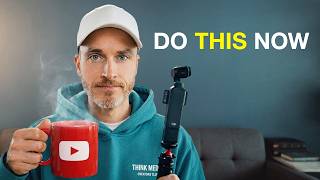

Stop Overproducing Your YouTube Videos
53sIdentifies a common creator mistake that leads to burnout, making viewers realize they are doing too much.
▶ Play Clip"Delivers on the promise of explaining why YouTube feels impossible and offers solid solutions, though some repetition and a sponsor break slightly dilute the value."
This podcast episode discusses the common struggle of maintaining consistency on YouTube and avoiding burnout. The hosts identify four main reasons for inconsistency and provide practical, no-fluff solutions to help creators streamline their workflow and regain focus.
Creators commit to too many things at once, leading to slow output and burnout. Solution: lower production bar and release a minimum viable product.
Starting from scratch every week causes decision fatigue. A repeatable format reduces cognitive load and provides momentum.
Perfectionism leads to delays and mental drain. George Lucas quote: 'No film is ever finished. It's only abandoned.' Publish and move on.
Relying on willpower is unsustainable. Need to schedule YouTube time and build a system (e.g., Side Hustle Saturday).
Simplify content: one take, fewer angles. Get videos out faster.
Film multiple videos in one session to reduce setup friction and brain calorie expenditure.
Celebrate publishing and other inputs rather than views. This hacks the brain's reward system and sustains motivation.
Consistency on YouTube requires designing systems and routines rather than relying solely on willpower. By simplifying production, batching work, and tracking inputs, creators can sustain long-term growth without burnout.
What is the first reason creators struggle with consistency?
Over-producing - committing to too many things at once.
02:23
What does 'no content cadence' mean?
Starting from scratch every week with no system, causing decision fatigue.
04:43
What is the famous quote from George Lucas about film?
'No film is ever finished. It's only abandoned.'
12:43
What is the fourth reason for burnout according to the podcast?
Not having a system, so everything runs on willpower.
14:54
What is one practical fix for over-producing?
Lower the production bar and release a minimum viable product.
20:10
What is batching in the context of YouTube?
Filming or working on multiple videos in one session to reduce setup friction.
22:27
Why should creators track inputs instead of outcomes?
To hack the brain's reward system and celebrate small wins like publishing, rather than relying on viral views.
24:53
No Film Is Ever Finished
Shifts mindset from perfectionism to progress, encouraging creators to publish and move on.
12:43Track Inputs Not Outcomes
Practical psychological hack to maintain motivation by celebrating actions like publishing rather than waiting for viral success.
24:53Reduce Production Standard
Counterintuitive advice to do less for more consistency, lowering the barrier to regular output.
20:10Batch Your Work
Effective time management strategy that reduces setup friction and leverages focused energy.
22:27System Over Willpower
Foundational principle that consistency comes from designed routines, not sheer discipline.
14:54[00:01] because you just can't stay consistent, you're not alone. In a recent poll, a said that their biggest struggle right now is actually staying consistent and avoiding burnout. Biggest challenge is consistently putting out video content.
[00:14] Being focused on recording and editing with ADHD. So, in this episode, Sean and I are taking this head-on. We're going to uncover four big reasons why you just YouTube channel, and then some practical no-fluff solutions to help you focus,
[00:28] dial in, and actually bring some sanity back into your YouTube life. started YouTube on the side. It's actually easy to relate with our conversation, what do you make of YouTube consistency these days?
[00:43] >> Yeah, I think the big problem here is most people are trying to be consistent >> Hm. >> And so, what do I mean? The truth is, levels. We got kids, we got work, we have a limited amount of time. We have
[00:59] different, maybe, challenges. We've got different, um, you know, neuro, uh, styles. We've got different, uh, learning styles. And things that could be advantages or disadvantages, but the bottom line is, where most creators are
[01:13] system. And what I mean is, the week's chaotic, there's no plan, there's no routine. What are the habits? What are the routines? And not only just to set confidence that you've identified the video you want to film, and then you've
[01:28] outlined it in a particular way, and you're confident to deliver it. This is think the power of this episode is is to think through that. And then we can cover the practical stuff, too. I mean, sometimes it is a practical tool like,
[01:41] you know, text your spouse and schedule Saturday morning. The bottom line, it of a broken system. It's It's that most people are overloaded, they're overwhelmed, there's too much chaos in
[01:55] to do. We need to simplify down, say no to some things, re-look at our calendar, these four reasons cuz these are the reasons why people, and individuals, and I thanks for the you know, Think Media Podcast feedback on the community tab on
[02:10] >> Um the these are some of the biggest reasons though, and you can hit number YouTube. >> For sure. And I think you hit the nail on the head. The first big reason here is, fellow creator, you are over
[02:23] producing. You have committed yourself to doing way too many things all at the same time and most likely at the beginning. Like while figure out, which is like the worst time to be trying to do everything is right
[02:35] this could cut This takes, you know, many shapes and forms. You could be having your editing standards are far too high right now. You could actually be posting on too many platforms. Here's a hot take, you could be actually doing
[02:48] too much on YouTube itself. You're trying to do long form, people are live streaming, you just start as your video podcast, and you make sure to have what I mean? Like you're just trying to do too much. And so the result is slow
[03:03] output burnout. You always feel like you're behind because you've simply given yourself too much to produce in any given week. How do you see this play >> Yeah, I it's it's lower the production bar at the start. Like um you know, the
[03:18] people want to start vlogging or travel vlogging. And I've travel vloggers in our community that we've coached. Is they're like, they got a GoPro or their phone or some kind of point shoot camera, action camera,
[03:33] drone, and they go, "I'm so pumped. I just got back from our Hawaii trip. drive." And and I'm and I like think ahead and one of our community meetings a couple weeks later. I just am stuck. I'm still
[03:47] was like, "That was your problem. You were like doomed from the start. You had too much footage. Which is a system about how you shot. workflow, it was over you're over producing. Now, that's part of the
[04:01] too I've had I've been too ambitious with a project and so I've got, you know, abandoned projects on hard drives. B-roll that was shot that never made it in. So, that just speaks to like simplifying down, especially at the
[04:17] start, for something that's repeatable. Lower the production bar of your content. Get out the minimum viable product. Be okay with putting something out, getting it to market. Because a video that's published on
[04:30] Because a video that's published on YouTube is infinitely more powerful than files on your hard drive that was never published. Like you got to publish it before it's done. So, that's the first one. Reason number two is there's no
[04:43] content cadence. Break this down. >> 100%. So, this can destroy your week. When every video you're starting from a blank slate, the startup cost that you just keep paying every single week starts to mount
[04:59] it's this overhead tax. I've heard it call it because anytime you take on a project, YouTube videos goodness in an enormous project, you we overestimate or we underestimate all the little tasks that go along with the project of making
[05:14] a YouTube video. And so, if you're starting from scratch every single time, Because you're always or you are repeating it, but you're repeating it pretty poorly. You're repeating it in a way that doesn't give you momentum. And
[05:26] mount up. I totally suffered from this when I was starting with my YouTube channel. Like I just kept making the same decisions over and over and over content cadence, that just means like what's the send them the system
[05:40] pre-decided when a video is going to come out. Therefore, you can reverse-engineer, okay, video drops on Friday, which means video needs to be done by what? Thursday, which means for it to be done, it has to be on my
[05:53] computer by what you know what I mean? You just like really trace it back so you actually have a system to plug to, but just to keep it real because this is also can be my style is I just love to be the artist and show up and feel my
[06:05] way through my YouTube week. And that I had to stop that so quick, Sean. Actually for me, my the way that I solved this and gave myself a better content cadence was I switched to live streaming, which isn't just saying, "Oh,
[06:17] >> Yes. >> because it was a scheduled thing. moment, ready or not. >> I had no choice. And so all of a sudden >> I had to reverse I had to be ready for that. You know, it it helped me stop
[06:31] winging it and reacting and trying to fit and squeeze time and help me step when am I choosing? Before it even gets time to go based on what's coming up?" So there's a little bit there, but how
[06:45] comes to content cadence? >> Yeah, I think the other thing here is you want repeatable formats. And what I mean, I'm so glad you brought up this decision fatigue because a repeatable format becomes a template that actually
[06:58] reduces the cognitive load. So if you're like um you know, one of the repeatable formats you're doing on the Think Media channel is walking through how to like set up a YouTube channel in a multi-video series. I would argue that
[07:11] >> Yeah. >> and not that it's easy cuz you're already have your knowledge, but what's the newest stuff? >> So as you approach the next one, there's almost nowhere you can get stuck.
[07:24] screen share. You know that it's going to be whatever. And it's going to go it's a repeatable format. So it is actually not decision fatigue when you you go um what video do I shoot next? Only have
[07:39] >> Just happens. >> And if there's a format for it and thus consistency is on the other side. Where people get stuck in consistency, is it's not a bad thing to have this blank canvas as an artist, but where might
[07:52] product. >> It'll lead to shooting and some ideas and setting things up and maybe add this in. product? And just to give one more other point on this, every creator, every
[08:07] business owner needs to understand decision fatigue. One of the best illustrations of this was Steve Jobs was famous for wearing like the same black tank top and the same black jeans.
[08:21] >> Which meant he just had a closet full because he cared so much about his brainpower being devoted to Apple that he didn't want to waste time walking into the closet in the morning and even picking out what to wear.
[08:35] And so, what people need to know is that might sound crazy and it kind of is. But it it goes into even all day long we're making decisions. What do I want to eat for lunch? What do I want to wear? What What's even the studio going to be? How
[08:48] do I set this up? Decision fatigue is very real. And then what happens is, the get, but also the more overwhelmed you get. to shoot. This thing's going to suck. Tired eyes rarely see a bright future.
[09:02] So it's like if you can simplify your life and less decisions, period, more mental toughness, more mental optimism. Plus have repeatable formats, you're like sitting down with better energy. And again, we're we're speaking to the
[09:15] like basically at least one out of four people are really struggling with >> Yes. 100%. >> You're fractured, you're overwhelmed, your decision bank is zero by the time you sit down to film.
[09:30] other decisions. Plug into a repeatable format, even if it feels boring. Some seasons it'll keep you consistent. There's the day you wake up on a day off on summer break and spring break and are like so inspired and it hits you and you
[09:45] a vlog and you went around the city and the way it turned out, that's amazing. And so like publish that, but also if you're always trying to like catch magic, if this is also the writer who just says, I sit down every morning I
[09:59] minutes. Good or bad and I I make myself write 5,000 words. It It's so and then they're also you write? Every day at 5:00 a.m. I sit down at my computer and I write at least
[10:13] 5,000 words, whether I feel like it or not, whether I would ever. That's a >> Yes. >> So, it's kind of a lot there. We could speed up, but but that's a big deal. If you master decision fatigue, you're
[10:25] going to be a lot more consistent. >> 100%. I think of this Well, you'd that's actually really helped me as we get into reason number three, is people often overestimate the event and underestimate the process. And I
[10:39] this is what happens to a lot of creators who are kind of feeling it right now, is we got so excited. All the momentum was there. Yeah, the overestimated the event of starting YouTube and we like usually it's like a
[10:53] did my first video, which is huge, which should be celebrated. But the other side of that is underestimating the process. Like, okay, I did it, but how do I do it again? You know, then and then how do I do it again after that? And now we have
[11:06] >> Hey, quick pause before we get back into the podcast. If you're posting on YouTube, but not getting the views or subscribers you want, this will help. Go to mycreatorquiz.com. It's a free 2-minute assessment that
[11:18] reveals what type of creator you are, where you're stuck, and what to do next to grow. You'll get instant clarity, a simple plan, and it's totally free. So, just go to mycreatorquiz.com to take the free 2-minute assessment or
[11:34] right, let's jump back into the episode. >> Reason number three is you could be chasing perfection. I don't know about you, Sean. This I am I like to say I'm a was definitely me. I just it's easy for me to overthink. I want things to be
[11:48] dialed in. I want things to be perfect. There's a certain standard that I've set for myself, but this can absolutely kill burnout because if you or kill your your content cadence and lead to burnout because with the decision bank being as
[12:01] low as it probably is, you see how these can all compound on each other. As you're chasing perfection, you just drain it even more because all your all perfectionism is is decision after decision after decision. You keep
[12:13] rethinking. It's never good enough. And so you're continuously are trying to find this moving target of what's perfect, what made the video good enough to actually post. And so this results in delays, missing uploads, mental drain,
[12:27] and a channel that just doesn't grow. You can't pilot your channel on the whims of these emotions or on what you think is like subjective. Like, "Oh, >> Yeah, one of my favorite quotes is from George Lucas, the creator of Star Wars.
[12:43] And he was famous for saying, "No film is ever finished. It's only >> Ooh, yeah. Yeah. >> And what's fascinating is you could look up on YouTube, let's say like Easter eggs in Star Wars: A New Hope, you know,
[12:58] or those first three movies that came out. And what you'll find is like maybe 50, 100, 150, a scene where a stormtrooper wasn't even wearing their helmet. Like it could It's obviously subtle cuz we didn't even notice, but in
[13:11] camera crew is shut down, everyone's home from the film. Now we're just in the edit. And then you're like, "What the heck was Ralph doing?" >> Yeah. >> Yeah, Ralph is not wearing a
[13:24] >> Yeah, that's right. >> And so but no finishes no film is ever finished. It's abandoned. Okay, well, then publish it anyways. Put it out there anyways. So, like obviously, too, a future film like Star Wars is of a
[13:38] level of quality, but you should take that exact framework and apply it all the way down to your channel. You could have uh the opposite extreme of not chasing high-quality. Like you should chase high-quality content.
[13:51] may never be done. You just need to abandon it. Meaning, you've done a decent enough job. You have thought about it. You've You have Don't think about your titles. And maybe you're using our Think Media AI tool
[14:04] That's programmed with all the psychological triggers and stuff. psychological triggers and stuff. The problem with our tool is actually it's so good. It'll give you so many great like 10 out of 10 titles. Now
[14:18] So, now you're And and maybe your channel's not big enough to split test yet, or maybe you could split test the three-point Bottom line, though, is you you are overthinking, and it's like you got to eventually pick one. If
[14:30] if a proven AI tool from Think Media is giving you feedback, and you've been following our stuff, and they're all 10 out of 10, I don't know, pick one. You got to You got to get the the video out there. So, yeah, I think that's an
[14:42] interesting No YouTube video is ever done. It's abandoned. Publish it. Move on. Ultimately, progress beats perfect every time. Which brings us to number four, you don't have a system, so everything runs on willpower. We've hit
[14:54] perspective. Obviously, we have our seven-step system. That's a YouTube system, but systems are more macro of like how did you build a YouTube channel that ended up making thousands of dollars while being busy
[15:08] with family, work, and everything else? Man, no lie, took some time. So, that's accelerators for me. So, there's the how you called that out, and that that itself was a game changer, which was
[15:20] like the seven hours, and like that's what I followed. So, I knew when I had one and two today. All right, next day I'm doing three and four. Like I there was a system to process when I do YouTube time, but I think the reason for
[15:32] burnout is we don't have a system for the YouTube time. Right? Like it's You try to figure out, okay, how to do the video, but how do I make time to do the hits most people. Because we can have a lot of things. You got a job, you got
[15:44] family, responsibilities, respect. For me in my season, was married, had a full-time job. And so, the way that I started to build a system that was actually conducive to my life, just started with conversations. Like real
[15:56] talk. And the first person for me I had to talk to was my wife, which was like, "Hey, and I wish more creators would do this." I I unders- I I absolutely know and fully own that not everyone supports this YouTube thing, right? And like you
[16:10] significant other. It could just be like your roommate, your like siblings, or just whatever. People you're around, your circle, don't get this. But in my situation, it was the flip. So, for me, my wife was just all in, and she was so
[16:23] of stress, Sean, to be like, "No, go buy the gear." >> You wanted to like hide on I don't know if I'm ready yet, and she's like, "No, >> 100%. She gave me no opportunity to hide. She's like, "When is that live
[16:36] what the freak." You know, it was just crazy, right? Um and so, it with her, that conversation did go well, though I understand it can be difficult. But people in your life, and trying to organize, "Hey, here's what's important
[16:49] not trying to overstep with whatever. I want to keep my respons- You just like talk." And I wish people more people would do this. Um and so, anyway, that that uh gave me a day a week. It was side hustle Saturday. And that was like
[17:01] YouTube thing, because it was predetermined, it's on the calendar, everyone who uh in my life that I cared about that should know about, that did question. Let's talk about a system, it just happened on autopilot. And then in
[17:16] the days, it was also trying to identify, "Okay, when is the best time of day amidst my full-time job and responsibilities to be able to work on this thing?" And I think if you could just cover those, identify the time that
[17:28] you're going to spend making videos, and put those times on autopilot, and everyone that needs to be on board is on board, you're cooking. You know what I also the seven-step system. We're not
[17:40] free class, thinkmasterclass.com, goes through all seven steps of our YouTube growth system. What I love about that is what you mentioned. The missing piece is scheduling the time
[17:54] how you could do that. But then when you sit down, even that there's like transition costs. Okay, so now what do I do? What am I going to All right, I today? Should I film today? Should I whatever? And that's why we've put that
[18:08] kind of just gave people the full map. Like we have the seven-step system, even for our VRA students listening. And but like make sure to block the YouTube time on your calendar, keep that repeatable. And then when you sit down,
[18:21] go back to, you know, the resources, our community, and like which R are you on? Which R which which R are you on next? And keep going through all seven step means. If you're new here, again, got a free one-hour class,
[18:36] thinkmasterclass.com, you can watch it on demand. I go through our seven-step system, which we keep running that same play here at Think Media. We keep improving it. That's the most updated class, and we'll link that
[18:48] in the show notes, um, as well as, uh, you can go to the URL. But listen, we got to talk about how to fix this briefly as we land the plane today, because really again, consistency isn't just about discipline.
[19:03] It needs to be about that. You actually have to show up to the calendar blocks. like design. You've architected your week. calendar. You maybe also not being realistic. There's some days when you
[19:18] forget your feelings and just do the work. >> That's a real thing, but also sometimes where I think we're unrealistic. Like, what are you saying no to? If it's on the calendar, even the rest around it.
[19:30] right. I'm going to be a little more intentional about like not eating, you know, 200 g of sugar the night before tomorrow I have something planned. And so then it's you design that. And then
[19:44] you showed up and Side Hustle Saturday lead to led to thousands of dollars from >> over 30 grand or something. >> Yeah, it was about at its height 30k a year, like 10 hours a week. >> Yeah. And so Side Hustle Saturday could
[19:56] discipline. That's also design, but we're going to talk about five practical steps for how to fix this. And we'll hit these as kind of a a lightning round cuz number two in a second. Number one, reduce your production standard. We
[20:10] mentioned that. But what's the simplest version of your content that still stream. You still prepared, but it forced you to hit record with no editing and you turn it off and there was the replay.
[20:23] >> Yes. >> Reduce your production standard. Do you need multiple angles? Can you do it in one take? Can you simplify the standard so you can get more videos out. Number two, go for it.
[20:36] pick a realistic cadence like we talked about. Now, this cadence actually should be determined by you and your life before you're thinking about what's best want you to be consistent and something comes out ideally every week? Of course.
[20:51] you're the reason that something comes out on YouTube. And so the best thing is actually, hey, match it to your life, what's actually happening in your reality, not necessarily your ambition levels right now.
[21:04] accomplish. Even if that's one time a week, that's going to be way better than >> Third thing. >> Third thing is build repeatable formats. So, the same structure every time means less thinking, more doing. Not everybody
[21:17] thing of doing a video podcast on an interview show is like schedule person, >> That's right. >> Good or bad, like it's a repeatable love interviews, you're letting the guest do the heavy lifting.
[21:31] >> If you're good interviewer, you're also doing heavy lifting, but like they're certainly the expert coming in there. But the repeatable format, you know, uh consider studying like late night comedy.
[21:44] don't even think are very good or maybe have had ups and downs. If you take like SNL, there's formats. Little musical break, there's the intro person, that of those skits are repeatable. Take something else. Today, welcome to a
[21:59] segment of our show, Regis and Kelly Lee. Now, you know, Kelly Ripa doing other Like their show, she covers the news, she covers So, all the way down to even if it's this week in tech, this week in finance, but the
[22:12] in tech, this week in finance, but the point is a repeat- repeatable format. Why? To reduce decision fatigue. So, there's less thinking, more doing, more >> Number four, this could be powerful, but this is actually batching your work.
[22:27] This is the concept of filming multiple videos at one time. Or actually, doing for YouTube, if you're already going to be burning the brain calories think about the next two or three. You're already in that head space. If
[22:41] you're going to burn brain calories designing a thumbnail, requires you having those videos planned out, but the same thing for filming. And Sean, full disclosure. I don't know if this is like day two, I don't even know.
[22:53] like we're we will have done like 10 episodes or something by the time we fly back, you know? And so, we're we're condensing the time and we're trying to put together the same brain activities, right, in the same session to get a
[23:06] higher return instead of the setup friction that comes from just starting thing. It's a new thing. So, I think batching your work could be pretty >> And I want to hit an objection. Number one disclaimer, it is a blessing that
[23:18] you and I get to do this full-time. So, you know, does that make it easier to batch? Yes. But number two, listen, I full-time? >> when I when I stopped live streaming and
[23:30] like two >> Like when I'm full church, I was batch producing. That was the way I stayed. So, I just want to encourage, not only can anybody do this, but as hard as this is, I was just
[23:44] morning. I was like, our future depends on this. Cuz again, we get to do this full-time, but also, you got kids, I got kids, we're busy. Like batching these could give us some time to like rest and whatnot, but there's even just
[24:00] >> Yeah. >> So, whether batching is very leverageable. Respect to people, too. Like sometimes they're like, yeah, it's much, you get too far ahead. There's that extreme, but I just think, well,
[24:14] it's kind of hard. That seems like a lot of work. The ROI of batching is worth >> When you get into a cadence where you're buying back your time to make this whole >> 100% and actually I think this is this is why the Side Hustle Saturday for me
[24:27] of hard to batch a couple videos during the work week. And so, I you know, but whatever day of the week that is you might have off, just to have half of it set aside. Like now that's plenty of time I think to be
[24:41] videos done. So, I'm a big fan of that. But number five is tracking inputs, not just outcomes. Can you break this down, Sean? Like tracking inputs, what
[24:53] >> You know, I actually want to do a whole episode about this, so make sure people are subscribed to this, but one of the things that's interesting is that our brains work off reward loops. And one of the things that happens as humans
[25:09] is why social media or like video games become addictive is because there's a connected to those. Um you you know, you play a little bit, upgrade, you defeat a boss. Even if you're frustrated for a while, if the
[25:23] the you know, mobile games really understand these reward loops. What's especially for beginners or people of all stages, is also it's like the anti-reward loop. Like when you open up a mobile game, you
[25:39] ding ding and coins are coming to you and then your farm expa- expands and like Okay, you open up YouTube, you're overwhelmed, you shoot a video, you upload it, you edit it for 7 hours, only get seven views. That's the anti-reward.
[25:53] >> Why would I keep going? When you like like I don't know about if anybody else to film- I start sweating, I'm setting up uh things and I start getting frustrated. I'm like my garage is dirty.
[26:07] Where is that battery? I can't find that power supply. And and you're like and and you're very aware that like you've got back pain just because you started filming. It's like phantom. >> It shows up every time, yeah.
[26:20] >> You're hungry, you're whatever. Like it's actually interesting. It's in a way >> Yeah. That's right. >> It's it's it's giving you and then you're you're not getting I didn't go viral. I didn't even get a comment. I
[26:32] didn't get a like. So when This is a big one when people are saying I'm not being awareness of being at least honest with your emotions. Hey, you're in a season >> Mhm. >> You got to motivate yourself. Your brain
[26:45] chemistry is not optimized to like do this YouTube thing. You need the future. This is practice. I'm I'm leveling up. But here's how you hack it but trust me, subscribe because I want to talk about that at length.
[27:01] You track it by not measuring the dopamine hit because you got new armor, gold coins, things exploded, you got an award, you got confetti. You might not have had the viral video. You didn't have cuz you're not tracking
[27:14] the outcomes. What you track is the inputs. What's an input? Did you publish a video? If you did, celebrate and hack your brain and go, "There's the win." >> That was it. >> That was my I did a I up I got a couple
[27:27] experience points. I just got some experience points there. >> Yes. >> I'm leveling up Final Fantasy remake. I'm leveling up your favorite game. My weapons just got stronger. So, did you
[27:40] weapons just got stronger. So, did you publish? That's an input. Even if it didn't get views. Did I improve the hook of my video? I know I've been studying Think Media. I used some AI. Um you want to celebrate and track you you reach 10
[27:54] uploads. Go to your favorite restaurant, get a milkshake. >> You know, and be like, "Hey, that's a huge milestone." Those are input milestones. And and by removing yourself because if we're honest, especially kind
[28:07] a lot of times the reason we're not consistent is cuz we lose that fire. And fire. You got to figure out how to generate that. The power plant does not receive energy, it generates energy. As the creator, yeah, you you might be
[28:23] looking and and actually, you know, thank God for this podcast. I think this me go." >> Let's go. Yeah. we'll be we'll we'll ship you some power, we'll ship you some AI token
[28:36] >> We're here to give that to you, but like you yourself you got to wake up and figure out a way to generate that that fire within. Like I'm I'm going to do it. I'm pressing record today. And and not It's not because I went
[28:49] viral cuz I didn't. It's not It's not If I would have played lot more rewards and and like more dopamine. I'm not going to like live as a victim to that. I'm creating that energy. I've got a clear vision for the
[29:04] future. I'm going to track my inputs, not just the outcomes, because if I do the right inputs over a long enough time horizon, then the outcomes will come. >> There it is. That's so strong. I love that. And and I think too that that's
[29:17] just redefining how you're measuring success. And I actually wish I would started. And thinking about, okay, what are the things I'm actually going to measure that are going to enable me to show up next week. And so I love that
[29:29] especially when you're beginning, you should be counting uploads, not views. what does success look like for the season that I'm currently in? >> Yeah, and if actually individuals listening to this want some help, we
[29:43] listening to this want some help, we have a really cool free quiz assessment at mycreatorquiz.com. And it's all about the five stages of consistent, which stage you're on actually is different. Cuz the side
[29:56] hustle season when you're you're getting started as a creator versus like the versus the video pro, content pro, stage three. Each stage has different habits, different things you could be doing to
[30:10] coming in, and you also got more money, more problems. So like, all that to say you haven't checked out this resource, go to mycreatorquiz.com.
[30:22] It takes like 3 minutes. And it's not just going to give you fierce clarity about where you are on your YouTube journey. Immediately on that page, you're going to have some specific resources tailored for you that
[30:34] to help you get more views, get more subscribers, and make more progress on your YouTube journey. So mycreatorquiz.com the show notes where people can check that out. Nathan Lan de Plane.
[30:49] >> 100%. I sure wish that existed actually, to be honest, because after coaching biggest ways we clog up our YouTube work week is we don't even know what we're >> Yes. >> We're trying to execute stage five
[31:02] >> It's a good word. >> why we're just on loop, right? So, mycreatorquiz.com get your free results today. But podcast, hey, like, rate, share, review wherever you watch or listen. This is the Think Media podcast.
[31:17] I'm Nathan S. Wine and I can't wait to connect with you in a future episode.


⚡ Saved you 0h 31m reading this? Transcribe any YouTube video for free — no signup needed.