
AI Summary
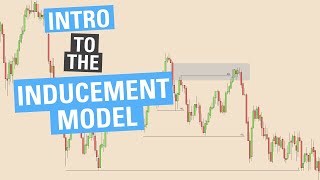
This video explains the inducement model in trading, contrasting it with the 2022 mentorship model. It demonstrates how internal range liquidity is used to trigger false breakouts and stop runs before the real market move.
Chapters
The inducement model is similar to the 2022 mentorship model but focuses on internal range liquidity that is run before a move down.
An entry into a fair value gap induces traders to go short, then stops are moved to break even and run before the real move.
A low, lower high, and liquidity sweep create a high that breaks structure, inducing long positions before the low is run.
The presenter prefers to see a fair value gap within the inducement setup, as shown in a five-minute example.
On the hourly chart, a fair value gap triggers long entries with stops below, which are then run after breaking structure with displacement.
A one-minute example shows a fair value gap entry, equal lows, and a stop run into the gap before the real move down.
The inducement model is essentially internal range liquidity that is run before the actual market move, and traders should experiment with it to understand its application.
Tutorial Checklist
💡 Key Takeaways
Inducement Model Definition
Provides a clear definition of the inducement model, setting the foundation for the entire video.
Stop Run Mechanism
Explains how stops are moved to break even and run, a key concept for understanding market manipulation.
00:25Fair Value Gap Preference
Highlights the importance of fair value gaps in the inducement model, a practical tip for traders.
01:21Lower Timeframe Application
Shows how the model applies on lower timeframes, demonstrating its versatility.
02:08Full Transcript
[00:00] How's it going everyone? This video is going to be over the inducement model and how it is similar
[00:12] and different to the 2022 mentorship model. So starting off, you have some sort of high put in liquidity resting above, you run that liquidity, break structure, and you have some sort of
[00:25] internal range liquidity right here that is then ran before a move down. Fitting in with the 2022 mentorship model, and you have some sort of entry into the fair value gap that induces people to go
[00:39] short. It then starts to go short. People move their stops to break even. It runs those stops before the real move happens. So here's an example of an inducement model. We put in a low,
[00:51] lower high. We run this low, sweeping the liquidity and grabbing it, put in a high breaking structure, put in a low that induces people to go long, right? We then run this low
[01:06] before the actual move occurs. Looking at this right here, right? Where would our break a structure be? Right here. Our inducement right here. And our liquidity grab is right here.
[01:21] here. And like I said, I do like to see some sort of fair value gap in there. So if you look right in here is where the fair value gap was this five minute fair value gap that got touched So that what I like to see So here is a higher timeframe example And if you can see right here
[01:40] we have a fair value gap right here or on the hourly, it would be right here. Right. And so when we reach into here, people go long, put their stops below. And you can see, once again, people go long here, put their stops there. So what is resting their liquidity,
[01:56] or that would be our inducement. You have your inducement, you break this structure up here with displacement, an aggressive move up, then you run, you deviate from this range here,
[02:08] right? So this is where you want to be looking to go long. Here is a one minute example. And so you can see we reach into this fair value gap right here, actually run whoever got short right in in there. And then we get a move down making equal lows. So you expect these to be taken,
[02:25] right? Have relative equal lows there. And right there, we get an entry into this fair value gap, right to go short. So that is what induces people to go short. So they have their stops
[02:38] now resting there. Now before the real move, what happens? Well, we have equal lows here, right? Never went for these lows down here yet. And what happens is we run these stops right here
[02:50] into the fair value gap before the real move occurs. I hope this gives you an intro into the inducement model. I would go experiment for yourself, but really it's just internal liquidity in a range that is ran before the actual move. Thanks for watching.