
How to Take Profits Without Losing Money
45sExplains the crucial concept of securing position to eliminate risk, which is a common pain point for traders.
▶ Play Clip"Delivers practical profit-taking strategies as promised, though brief and lacking depth."
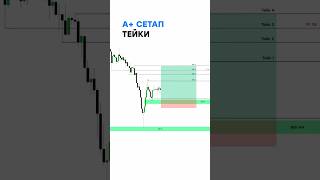
The video discusses strategies for profit-taking in trading, emphasizing a balanced approach to distributing position volume across multiple targets. The speaker explains how to secure positions early and adjust volume distribution based on market scenarios, with a focus on mathematical consistency and risk management.
The speaker uses equal parts of 25% for profit-taking, which works well with high initial probability of profit (PP).
An alternative distribution of 15%, 25%, 30%, and 30% can provide a greater final result, but requires more aggressive position holding.
There are no rigid universal rules for profit-taking; the speaker acts situationally based on the specific trade.
The first take aims to completely secure the position, covering potential loss even without moving the stop-loss to breakeven.
When distributing volume to subsequent goals, the fixation must meet the mathematical criteria of the trading system, e.g., achieving +3% to the deposit with an initial risk of 1%.
Effective profit-taking requires a flexible, situation-based approach that balances risk and reward, ensuring that the first take secures the position and subsequent takes align with the system's mathematical expectations.
What is the balanced volume distribution for profit-taking mentioned in the video?
Equal parts of 25%.
00:02
What is the purpose of the first take in profit-taking?
To completely secure the position, covering potential loss even without moving stop-loss to breakeven.
00:30
What is an example of a mathematical criterion for fixation?
Achieving +3% to the deposit with an initial risk of 1%.
00:58
Balanced Distribution
Provides a simple, effective method for profit-taking that works well with high PP.
00:02Aggressive Distribution
Shows a more aggressive approach that can yield greater results, appealing to risk-tolerant traders.
00:16Situational Flexibility
Emphasizes that there are no rigid rules, highlighting the importance of adaptability in trading.
00:30Mathematical Consistency
Stresses that profit-taking must align with the system's mathematical criteria, ensuring long-term profitability.
00:58[00:02] case, I did it in equal parts of 25%. This is a balanced method that works well with high initial PP. You can consider holding the position more aggressively by distributing the volume in
[00:16] holding the position more aggressively by distributing the volume in proportions of 15, 25, 30 and 30%, which will provide an even greater final result. There are no rigid universal fixing cartridges. I always act situationally. When starting
[00:30] from a specific two-day trade, it is important to understand the fundamental purpose of the first take: to completely secure the position. To do this, I try to fix a volume that will cover the potential loss even without moving [music]
[00:44] stop-loss to bu. At this stage, you can no longer lose anything and are working exclusively to increase your overall profit. When distributing volume to subsequent goals, I follow a simple rule. When the scenario is fully worked out,
[00:58] I should get a minimum system result, for example, plus [music] 3% to the deposit with an initial risk of 1%. Your fixation must strictly meet the mathematical criteria of the trading system. M.
⚡ Saved you 0h 01m reading this? Transcribe any YouTube video for free — no signup needed.