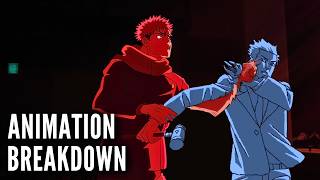

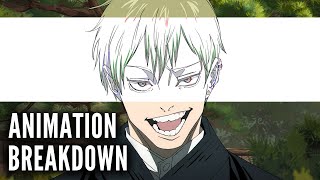
JJK S3E9: Goshizono Cinema Returns
46sFans love breakdowns of their favorite anime's animation quality and behind-the-scenes production details.
▶ Play Clip"Title accurately promises peak action and animation breakdown; the video delivers exactly that."
This video provides an in-depth animation breakdown of Jujutsu Kaisen Season 3 Episode 9, focusing on the staff, storyboarding, and key animated sequences. The episode features a major fight between Yuji and Higuruma, with standout animation from Chinese animator Neon 41 and other key staff.
Episode 9 is praised as a strong entry, showcasing directorial brilliance, studio animation muscle, and minor visual cracks, adapting the second most important fight of the season.
Directed by Teppei Okuda, storyboarded by series director Shota Goshizono. The episode required 3 chief animation directors, 9 animation directors, 4 assistant animation directors, and 43 second key animators, indicating end-of-season production crunch.
The A part relied on compositing, storyboards, and drawing quality. Highlights include hand-drawn light flares by Sang-yong Song, water reflection compositing, and a smooth action scene by Zalman.
The domain features a strong yellow glow with paint-like god rays. Drawings are fantastic, with one frame noted for subtle jaw curvature, bold facial features, and three-tone shading.
The start of the fight is stiff and lacks energy, with jumpy frame spacing and a gavel hit that feels clumsy. However, some shots convey decent weight.
Neon 41's Japanese anime debut features an 80-second sequence with constant motion, excellent pacing, and varied tempo. The animation is heavily corrected to fit Japanese anime style while preserving Neon's distinct style.
The sequence includes buttery smooth strike exchanges, lifelike rag-dolling, acrobatics, and consistent 3D gavel animation. Long shots and quick cuts are used effectively to convey intensity.
Includes Madi Bengodifa's sequence with liquid effects and weighty fabric animation, followed by a second domain scene with animation-heavy zoom and decent acting.
Features acrobatics, though Yuji's jump seems unrealistic and CGI chairs look funky. Slow, consistently animated turns and rotations are impressive, with effective use of 3D backgrounds.
The climax is animated by Daniel Kim, with long lanky limbs, classic shading, and slow-motion shots. The punch has immense impact, and background animation by Tadayadam ends the fight.
Cool acting shots include a difficult basic action and a somewhat broken but cool stair climbing animation.
Episode 9 is one of the best of the season, with amazing animation, storyboards, and drawings, particularly the Neon 41 sequence. The remaining episodes are expected to be action-heavy, building anticipation for the finale.
Who directed Jujutsu Kaisen Season 3 Episode 9?
Teppei Okuda
01:16
Who storyboarded the episode?
Shota Goshizono
01:18
How many chief animation directors were needed for this episode?
Three
02:05
What is the name of the Chinese animator who made his Japanese anime debut in this episode?
Neon 41
05:18
What was the duration of Neon 41's animated sequence?
Around 80 seconds
07:30
Which animator animated the climax of the fight?
Daniel Kim
11:29
What criticism did the video have about Neon 41's previous work on Super Cube?
His work felt too 'animation for the sake of animation' with poor timing and flow.
05:38
Neon 41's Debut Sequence
This 80-second sequence is considered one of the best in JJK, showcasing constant motion, excellent pacing, and a blend of Chinese and Japanese animation styles.
05:12Exceptional Drawing Quality
A specific frame is highlighted for its subtle jaw curvature, bold facial features, and three-tone shading, exemplifying the high drawing quality in the domain section.
03:50Daniel Kim's Climax Animation
The climax features long lanky limbs, classic shading, and slow-motion shots, with immense impact in the punch, demonstrating Kim's distinctive style.
11:27Production Crunch Indicators
The large number of animation directors and second key animators suggests the show is nearing end-of-season production crunch, a notable behind-the-scenes insight.
02:00[00:00] Jujutsu Kaisen season 3 episode 9 was
[00:02] very good to the surprise of absolutely
[00:04] no one. As per usual, it was an
[00:07] incredible display of directorial
[00:08] brilliance, studio animation muscle,
[00:11] minor visual cracks, and a consistently
[00:13] put together, albeit slightly
[00:14] inconsistent aesthetic. What's the
[00:16] technical term again? Goshizono cinema.
[00:19] The episode adapted what is arguably the
[00:21] second most important fight from the
[00:23] season in terms of narrative
[00:25] significance, and naturally the team
[00:26] went off gathering many of the usual
[00:29] guys as well as brand new exciting names
[00:31] to create a visual spectacle of a fight
[00:33] despite the fact that behind the scenes,
[00:36] the show is probably nearing that end of
[00:37] season crunch production stage as
[00:39] evident by the staff list. To sum things
[00:42] up, episode 9 looked amazing for the
[00:44] most part, and as such, let's break down
[00:46] the visuals. Make sure to subscribe,
[00:49] that would be very cool. That's it,
[00:51] that's my pitch. It would be a very nice
[00:52] thing to do. Subscribe, it takes a
[00:54] second. You can also become a member of
[00:57] this channel. Members get at least two
[00:58] exclusive videos per month, custom
[01:00] patches and emojis, shout-outs, and
[01:02] more. Just go down there and press the
[01:04] join button.
[01:06] So, I've made like five of these now.
[01:08] You know how these work. Let's start
[01:10] with the staff list and then go over the
[01:11] actual episode scene by scene. The
[01:14] episode was directed by JJK regular
[01:16] Teppei Okuda and storyboarded by series
[01:18] director Shota Goshizono, which means
[01:20] yes, he's back on storyboarding duties.
[01:22] If I had to guess, I'd say the previous
[01:24] episode 8 was in the oven for so long
[01:26] being solo key animated and all that it
[01:29] wasn't feasible for its production to be
[01:31] on hold while Goshizono storyboarded the
[01:32] previous seven episodes, and as such, it
[01:34] was handed over to assistant director
[01:36] Yusuke Takada instead. Anyway, you know
[01:39] what Goshizono storyboards are like.
[01:41] They're either the greatest you'll ever
[01:42] see or really, really good, but somewhat
[01:44] tame by his standards, and this episode
[01:46] was a bit of the latter. Complex
[01:48] compositions, really solid action
[01:50] storyboarding eye-catching meaningful
[01:52] framing, the whole nine yards, but not
[01:54] the best I've seen from him.
[01:57] Over on the animation side of things,
[01:58] the staff list was a bit messy. Like I
[02:00] said, I think the show is nearing that
[02:02] end of season crunch and it's starting
[02:04] to show. The episode needed three chief
[02:06] animation directors, nine animation
[02:08] directors, four assistant animation
[02:10] directors, and 43 second key animators,
[02:13] or in other words, it needed lots of
[02:15] people for roles that should ideally
[02:17] either be limited to a small number of
[02:19] people or not exist altogether. Not the
[02:21] end of the world for a major production
[02:23] like JJK, but definitely not ideal
[02:25] either and worth mentioning. [music]
[02:27] Anyway, with all that boring stuff out
[02:29] of the way, let's finally go through
[02:31] this episode.
[02:32] The first half of this episode wasn't
[02:34] the most animation heavy thing in the
[02:36] world. We had a few impressive shots,
[02:37] but overall the A part let the
[02:39] compositing, storyboards, and drawing
[02:41] quality do most of the heavy lifting.
[02:43] >> [music]
[02:44] >> We started with some cool effects and
[02:45] hand-drawn light flares animated by
[02:47] Sang-yong Song. This cool water
[02:49] reflection-like compositing texture and
[02:51] a fairly nifty technically action scene
[02:53] drawn by Zalman complete with a few
[02:55] smooth run cycles, background animation
[02:57] with tons of individual shapes and
[02:59] lines, and this really smooth flowy
[03:01] punch. The camera work did a fantastic
[03:03] job of adding to the momentum.
[03:05] Following that exchange, we entered
[03:07] Higuruma's domain, and like I said, the
[03:09] star of the show here was the drawing
[03:10] quality, storyboards, and compositing.
[03:13] The screen had a strong yellow glow
[03:15] brought forth not just by plain old
[03:17] lighting, but also by these paint-like
[03:19] god rays. I'm not entirely sure if they
[03:22] are background assets composited to look
[03:24] like lighting or actual lighting effects
[03:26] added by the compositing team, but
[03:27] either way, they looked great. Yellow is
[03:30] one of the hardest colors to execute
[03:31] properly. It's up there with green.
[03:33] Poorly implemented yellows and greens
[03:35] tend to look like piss and uranium 235.
[03:38] Just ask Tananadad for both.
[03:40] Compositing aside, the drawings
[03:42] throughout this section were fantastic
[03:44] with tons of eye-catching frames. I
[03:46] believe this section was directed by CAD
[03:48] Hiromi Niwa, and some of the drawings
[03:50] were genuinely out of this world. This
[03:52] one, for example, the subtle curvature
[03:54] of the jaw and bold facial features
[03:56] visible thanks to the confident lines,
[03:58] the richly detailed hair, and three-tone
[04:00] shading make this one of the best
[04:01] drawings across the entirety of season
[04:03] 3, in my opinion. Besides that stuff,
[04:06] the storyboarding here was really well
[04:08] done with complex wide shots, aspect
[04:10] ratio changes, multiple changes, and
[04:12] unorthodox angles. Not the best I've
[04:14] seen from Go-Shono, but definitely
[04:16] eye-catching and then some.
[04:19] Of course, this section wasn't devoid of
[04:20] animation. We had a serviceable amount
[04:22] of subtle movement as well as a few
[04:24] particularly impressive shots. This
[04:26] meticulously drawn thread unraveling
[04:28] animation [music] and this complex
[04:29] low-angle cut, for example, cool stuff.
[04:32] All of that then brought us to Yuji
[04:35] versus Higuruma round one, and I'd be
[04:37] lying if I said the start of it was well
[04:39] executed. Don't get me wrong, we had a
[04:41] few cool ideas, but the actual animation
[04:43] was quite stiff. The drawings and
[04:45] motions simply didn't have the energy
[04:47] needed, and the frame spacing was on the
[04:49] jumpier side. This sequence, for
[04:51] example, looked slow and clumsy and
[04:52] didn't have that flow and energy
[04:54] Go-Shono was probably going for.
[04:56] Similarly, this gavel hit was a bit
[04:58] stiff. This shot melted quite a bit, and
[05:00] the red lighting came off as a bit
[05:02] excessive and uninspired. I did like
[05:04] this shot, though. Definitely on the
[05:06] economical side as far as animation
[05:08] goes, but a decent amount of weight.
[05:10] Anyway, this was then followed by the
[05:12] highlight scene, the scene that will
[05:14] undoubtedly be talked about the most
[05:15] online, and for good reason, the scene
[05:18] animated by Neon 41. Now, Neon, as some
[05:21] of you may know, is a Yutaka
[05:22] Nakamura-inspired Chinese animator best
[05:24] known for his work on shows like Super
[05:26] Cube. Yes, the fight you're thinking of,
[05:28] and this was his Japanese anime debut,
[05:30] [music]
[05:30] and what a debut it was.
[05:33] Before we talk about his sequence,
[05:34] though, let me yap for a second. It's
[05:36] relevant, I promise. Back when his Super
[05:38] Cube episode aired, I was one of the
[05:40] people who was very impressed by his raw
[05:42] animation skills, but took issue with
[05:44] his sense of timing and flow. I won't go
[05:46] into detail, but basically his work felt
[05:48] a bit too animation for the sake of
[05:50] animation if that makes sense. There
[05:52] wasn't much directorial intent behind
[05:54] many of his shots. Controversial, I
[05:56] know, but that's just the way I felt.
[05:59] Anyway, with all that in mind, this was
[06:01] my favorite work from him ever. I loved
[06:03] it. I thought it was brilliant, and yes,
[06:05] I will elaborate. From a storyboarding
[06:08] point of view, the framing and some of
[06:09] the poses looked similar to his previous
[06:11] works, which leads me to believe he was
[06:13] allowed to modify the storyboards if
[06:15] fair bit. And like I said, it was
[06:16] amazing, better than his previous works,
[06:18] especially when it comes to action
[06:20] structure and storyboarding.
[06:22] The tempo felt exciting. The pacing
[06:24] wasn't mundane, which was one of my
[06:26] biggest issues with the Super Cube
[06:27] episode. The action would speed up and
[06:29] then slow down and then speed up again
[06:31] and then slow down again. There was
[06:33] variation. The pacing wasn't one note.
[06:35] Plus, the character animation was more
[06:37] focused with less wasted motion and
[06:39] unnecessary flailing around of limbs.
[06:42] Also worth mentioning, the sequence was
[06:44] pretty heavily corrected and extensively
[06:46] cleaned up, which helped avoid that boxy
[06:48] Chinese animation look, which there
[06:50] isn't anything explicitly wrong about
[06:52] it, but I'm not the biggest fan. Now,
[06:55] just to clarify, what I just described
[06:56] isn't as simple as let's just redraw it,
[06:59] lol. There's a lot more to it than that.
[07:01] Modifying the drawings to fit a Japanese
[07:04] anime without compromising Neon's
[07:05] distinct style and animation quirks is a
[07:08] Herculean task that probably [music]
[07:09] took a lot of work. Hats off to the
[07:11] animation direction and cleanup teams.
[07:14] Anyway, storyboards and drawings aside,
[07:16] let's finally talk about the animation.
[07:18] Holy
[07:20] Here's the thing, Neon loves to make
[07:22] things move. His characters are always
[07:24] in motion, always doing something, an
[07:26] effect accentuated by his liberal smear
[07:28] use. The sequence was around 80 seconds
[07:31] long, and there was maybe 8 to 10
[07:33] seconds where the characters weren't
[07:34] explicitly in motion. Again, Neon packed
[07:37] a tremendous amount of animation power
[07:39] into the sequence, and I'm glad he did.
[07:42] We started with this buttery smooth
[07:43] exchange of strikes with two constantly
[07:46] animated characters approaching the
[07:47] camera followed by a series of quick
[07:49] fluid cuts that they did fantastic job
[07:51] of preserving the sense of flow between
[07:53] them. This section for example, Higuruma
[07:56] hit the gavel and the energy of the
[07:57] strike was paid off by the next three
[07:59] cuts. This close-up and these two wide
[08:01] shots are all three used this shot as
[08:03] the build-up. As these gavel throws got
[08:06] more intense, the number of cuts went up
[08:08] and the poses became more energetic
[08:10] giving it that sense of build-up and
[08:12] thankfully those quick shots were
[08:13] buffered by these slow-motion shots
[08:15] helping the viewer fully comprehend what
[08:17] was happening giving their eyes an
[08:18] opportunity to rest and making the sense
[08:21] of impact stronger. I loved this
[08:23] sequence. The kick had so much energy.
[08:26] It started with a side profile of
[08:28] Higuruma's legs as he jumped and the
[08:29] energy of it was transferred to and
[08:31] enhanced by the next cut. Higuruma
[08:34] occupied a tiny part of the screen here,
[08:36] but a few frames and one and a half
[08:37] battle rolls later he was all up close
[08:39] and personal giving the strike a
[08:40] tremendous amount of energy which was
[08:42] then paid off by this wide shot. Amazing
[08:45] stuff.
[08:46] Again, the characters never stopped
[08:48] moving. The strike exchanges, the really
[08:50] lifelike rag-dolling, the acrobatics,
[08:52] even the subtle bits of acting, highly
[08:54] consistent three-dimensional gavel
[08:56] animation and bits of 2D background
[08:58] work, the whole thing was animated
[09:00] flawlessly. Plus Nyan and Orgoch Shono,
[09:02] whoever was in charge did a fantastic
[09:04] job of using both long shots and quick
[09:07] successive cuts. The timing on both was
[09:09] perfect conveying a raw, visceral,
[09:11] uncontrolled sense of intensity that the
[09:13] series hasn't seen since its Songo Park
[09:15] days. Insane work. Also, I'm glad some
[09:18] of Nyan's animation mannerisms made it
[09:20] to the final product. His distinct sharp
[09:23] shading, though somewhat Lego block-like
[09:25] debris, and that classic partially
[09:27] clenched open hand, it was all there.
[09:30] Like I said, there was so much energy
[09:31] packed into the sequence. The kicks, the
[09:34] rag-dolls, the the thing felt alive.
[09:36] Plus some of the visual ideas were
[09:38] brilliant. The tracking shot of Yuji's
[09:40] feet, the almost comedic rapid-fire
[09:42] attacks, the spotlight providing some
[09:44] much-needed color contrast, amazing
[09:46] stuff.
[09:47] I won't go over every shot, but to sum
[09:49] it up, this was one of the best
[09:50] sequences across the entirety of JJK in
[09:53] my opinion, although that might just be
[09:55] recency bias talking. Neon's incredible
[09:57] layouts and the animation directors and
[09:59] second key animators translating them to
[10:02] anime without compromising its visual
[10:04] identity made the scene one for the
[10:06] history books.
[10:07] The episode wasn't done, though. Some
[10:09] decent acting, including this impressive
[10:11] bit of gavel twirling, then brought us
[10:13] to Madi Bengodifa sequence. I probably
[10:16] butchered that, which started with some
[10:17] slightly stiff rag-dolling, followed by
[10:19] smooth, stylish liquid effects and a
[10:21] tremendous amount of weight conveyed via
[10:23] energetic effects and fabric animation.
[10:26] This was then followed by these amazing
[10:27] close-ups with tons of lines and
[10:29] effects, and then by the second domain
[10:31] scene, which was more animation-heavy.
[10:33] [music] We had some decent acting and a
[10:35] solid animated zoom.
[10:37] After all that, we got a few beautiful
[10:39] drawings and a solid bit of acting,
[10:41] complete with intricate shading used to
[10:43] visualize the depth of Higuruma's facial
[10:45] features. These shots, besides looking
[10:47] good, served as the entryway to Yuji
[10:49] versus Higuruma round two, which, while
[10:51] not as ridiculous as Neon's sequence,
[10:53] was quite impressive.
[10:55] We started with a cool bit of
[10:56] acrobatics, although it was a bit
[10:58] awkward when Yuji just straight-up
[11:00] disappeared. I don't think he jumped
[11:01] that high. Plus, the CGI chairs did look
[11:04] a bit funky, and Higuruma floating
[11:05] through them looked a bit iffy, but it
[11:07] is what it is. Anyway, these slow,
[11:10] consistently animated turns and
[11:11] rotations were incredibly impressive,
[11:13] and this shot was one of my favorites
[11:15] from this episode. Goshozono did a
[11:17] fantastic job of utilizing the 3D
[11:19] background to make the staging feel
[11:21] grand and, buzzword alert, cinematic.
[11:24] Also, the spotlights were the cherry on
[11:26] top.
[11:27] The big climax was mostly animated by
[11:29] Daniel Kim, and it was amazing. The
[11:32] easily recognizable long lanky limbs,
[11:34] that classic shading, and the highly
[11:36] consistent for the most part slow motion
[11:38] shots. It was insane. I loved how you
[11:40] could feel the bounce in Yuji drawing
[11:42] back before the punch. The shot was so
[11:44] volumetric. Also, the shading and the
[11:46] drawing's hair looked gorgeous and the
[11:47] sheer amount of impact in the punch was
[11:49] insane. Also, also quick bit of
[11:51] background animation drawn by Tadayadam
[11:53] to end the fight. Really cool stuff.
[11:56] After the fight, we got some cool
[11:58] acting. I was particularly fond of this
[12:00] shot. Basic actions like these are
[12:01] incredibly difficult to animate. Also,
[12:04] cool bit of stair climbing animation
[12:06] near the [music] end. Somewhat broken,
[12:07] but cool regardless.
[12:09] And that was the episode. One of the
[12:12] better ones from this season. Amazing
[12:14] animation, amazing storyboards, solid
[12:16] drawings. This episode had it all.
[12:18] Really impressive.
[12:20] Based on what I can remember, pretty
[12:21] much every episode from this point on
[12:23] should be action-heavy. So, I'm really
[12:25] looking forward to all of them,
[12:26] especially the last one. And that's
[12:28] about it. A special thanks to Nozawa03,
[12:31] AhmedTheGallus90, and Shikisan for
[12:33] becoming tier three members. And until
[12:35] next time.
⚡ Saved you 0h 12m reading this? Transcribe any YouTube video for free — no signup needed.