
Smart Money Buying Manipulative Move
44sReveals how smart money exploits manipulative moves, offering a contrarian trading insight that sparks curiosity.
▶ Play Clip"Delivers a concrete trading setup as promised, though the 'smart money' angle is more branding than deep insight."
This video demonstrates a smart money trading strategy for entering long positions in an upward market using range boundaries, imbalances, and order blocks. The presenter walks through a specific trade setup, highlighting key levels and risk management techniques.
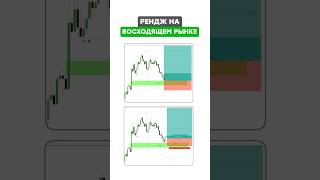
In an upward market, the range is determined from top to bottom, establishing key boundaries for the trade.
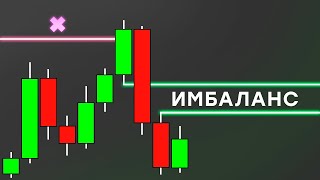
The local liquidity pool is removed when the lower limit of the range forms, and an unfilled imbalance exists below the lower boundary.
Choose a long position, place limit orders at the beginning of the imbalance, set stoploss below the minimum of the second candle, and take profit at the FTA level.
It is advisable to fix at least 50% of the position volume at the upper boundary of the range.
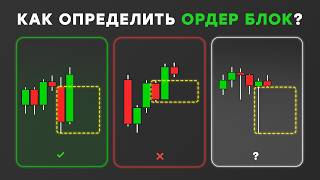
An order block forms during deviations, offering an alternative entry point. The deal from the newly formed order block is also viable.
You should open either the original or the alternative deal, not both, to avoid increasing risk on the same idea.
Both scenarios closed successfully with RR 3.7 and 4.1 respectively. The choice of entry point may depend on the risk-reward ratio.
The video illustrates a systematic approach to trading ranges in an uptrend, emphasizing the importance of key levels, order blocks, and risk management. The strategy proved profitable in the example, with both entry points yielding favorable risk-reward ratios.
What is the first step in the trading strategy?
Identify the range in an upward market, marking the top and bottom boundaries.
00:01
Where is the limit order placed?
At the beginning of the imbalance below the lower boundary of the range.
00:30
What is the recommended stoploss placement?
Below the minimum of the second candle.
00:30
What is the take profit target?
The FTA (First Trade Area) level.
00:44
Why should you avoid opening both the original and alternative deals?
To avoid increasing risk on the same idea.
01:10
What were the risk-reward ratios for the two scenarios?
3.7 and 4.1.
01:25
Limit Order Placement
Provides a concrete entry strategy based on imbalance, a key smart money concept.
00:30Partial Profit Taking
Emphasizes risk management by securing profits at range boundaries.
00:44Avoid Duplicate Entries
Highlights a common mistake of averaging into the same idea, increasing risk.
01:10[00:01] smart money is buying into this manipulative move . We will strive to do the same . And now I will show you the simplest way to enter a trade. Considering that the price is rising, the range is determined from top to bottom. These are our key boundaries.
[00:15] Please note that the local liquidity pool is removed when the lower limit of the range is formed. Below the lower boundary of the range we see an unfilled imbalance. The FTA First Trable Area level is marked above the upper boundary . The first problem
[00:30] area is an easily achievable target for future growth. We choose a long position. We place limit orders at the beginning of the imbalance. Stoploss below the minimum of the second candle. He tries to cancel the setup. Take profit at
[00:44] FA level. In this case, it is advisable to fix at least 50% of the advisable to fix at least 50% of the position volume at the upper boundary of the range. Well, let's watch the development. The lower range boundary is successfully updated and our limit order
[00:57] is filled. Please note that an order block has formed here. This happens in almost every deviation. A photo from him could be an alternative to our original scenario. And here is our deal from the newly formed order block. Let
[01:10] me clarify right away that you need to open either this deal or this one. There is no point in duplicating inputs and averaging. It's just increasing the risk on the same idea. After two candles, the order block is tested and receives a strong reaction. The deal
[01:25] is open. Let's see how both scenarios worked out. Both the first and second deals were closed successfully. In the first case RR 3.7, in the second 4.1. Depending on the situation, the difference may be more significant. In
[01:41] this case, the choice of which entry point to use may depend on the risk-reward ratio of the trade. M.
⚡ Saved you 0h 01m reading this? Transcribe any YouTube video for free — no signup needed.