
The Optimal Risk Percentage for Trading (Hint: It's Not 100%)
30sReveals the 'optimal risk' that leaves huge margin for error, directly countering common risky trading behavior and providing actionable advice.
▶ Play Clip"Delivers a clear, concise lesson on risk management with a useful table, though it's brief and lacks depth."
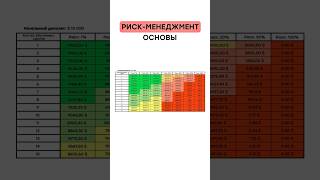
The video explains the critical importance of risk management in trading, using a table that shows how consecutive stop-losses at various risk levels can wipe out a deposit. It emphasizes that using a small risk percentage (like 1%) per trade provides a huge margin for error and protects both financial and emotional well-being, while risking 100% (no stop-loss) guarantees total loss on a single bad trade.
A table shows how many consecutive stop-losses are needed to lose the entire deposit at different risk levels, calculated using the compound interest formula.
Trading with 100% risk means no stop-loss; one wrong trade results in losing the entire deposit, regardless of previous profitable trades.
The first two columns represent optimal risk levels because they leave a huge margin for error, preventing losing trades from critically impacting financial and emotional well-being.
With 1% risk per trade, you would need 460 consecutive losing trades to reduce the deposit from 100% to 1%, and 70 consecutive losses to lose half the deposit.
It's nearly impossible to lose even half your deposit if you open trades based on any kind of analysis, given the low risk per trade.
The key takeaway is that disciplined risk management, specifically risking a small percentage per trade, is essential for long-term trading survival and success.
What is the effect of risking 100% of your deposit on a single trade?
One wrong trade results in the loss of your entire deposit, regardless of previous profitable trades.
00:14
How many consecutive losing trades are needed to reduce a 100% deposit to 1% with 1% risk per trade?
460 losing trades in a row.
00:56
How many consecutive losing trades are needed to lose half your deposit with 1% risk per trade?
70 losing trades in a row.
00:56
What is the optimal risk per trade according to the video?
The first two columns of the table, which leave a huge margin for error.
00:27
100% Risk = No Stop-Loss
Emphasizes that trading without a stop-loss guarantees total loss on a single bad trade, a fundamental risk management principle.
00:14Optimal Risk Leaves Margin for Error
Highlights that low risk per trade protects both financial and emotional well-being, enabling long-term consistency.
00:271% Risk: 460 Losses to Wipe Out
Provides a concrete number that illustrates the power of low risk in surviving losing streaks.
00:56[00:02] Look at this table. This shows how many consecutive stop-losses you need to get with a certain risk to completely lose your deposit. The calculations were carried out using the compound
[00:14] The calculations were carried out using the compound interest formula. 100% risk is trading without stop loss. One wrong trade will result in the loss of your entire deposit. And here it will no longer matter how many profitable trades you have opened
[00:27] before. you will still lose 100%. Now look at the first two columns. This is the optimal risk to take when entering positions because it leaves a huge margin for error. Losing trades won't have a critical
[00:42] impact on your financial and emotional well-being, which will help you achieve positive results over time or at least remain break-even. If you open trades with a 1% risk, you will
[00:56] open trades with a 1% risk, you will need 460 losing trades in a row to get 1% of your 100% deposit down to just 1%. And to lose half, you will need to open 70 losing trades in a row. I can't
[01:11] imagine a scenario where you could lose even half of your deposit if you open trades based on any kind of analysis. y
⚡ Saved you 0h 01m reading this? Transcribe any YouTube video for free — no signup needed.