
AI Summary
The video discusses a new scientific paper that applies 'assembly theory' to the search for alien life, proposing a method to quantify the complexity of molecules found on exoplanets. The creator, Sabine Hossenfelder, explains the theory, its potential application, and offers a critical assessment of its validity.
Chapters
Physics has an unresolved problem: defining complexity. The video uses the example of assembling an IKEA smart lamp to illustrate how complexity is intuitively measured by the number of assembly steps.
Proposed by biologists in 2023, assembly theory quantifies complexity by finding the shortest possible assembly path for an object, accounting for the need to build smaller components first, which introduces history-dependence and selection.
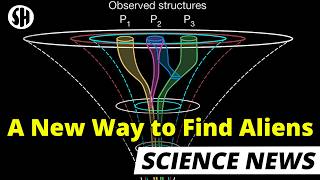
The same group proposes using assembly theory to quantify the likelihood of life on exoplanets. Current methods look for molecules like dimethyl sulphide, but these can also be produced geologically, creating ambiguity. The new method calculates the assembly steps required for observed molecule combinations.
The authors conclude that molecule combinations requiring more than about 15 assembly steps are unlikely to arise without biological selection, making them a strong target for life detection.
Sabine gives the paper a 3 out of 10. She appreciates its demonstration of what understanding complexity could achieve, but criticizes the assembly index as a general measure of complexity.
The main issue is that assembly theory never defines what constitutes a 'thing' or an 'assembly'. Sabine argues that complexity should be approached by examining the governing equations of a system and seeing how they can be simplified by identifying 'assembled things', essentially applying effective field theory.
Mentioned in this Video
💡 Key Takeaways
Assembly Theory's Core Idea
Provides a concrete, testable definition of complexity based on assembly steps, which is a novel approach.
01:37The 15-Step Threshold
Offers a specific, actionable criterion for identifying potential biosignatures.
03:17The Definitional Flaw
Highlights a fundamental philosophical and scientific problem with the theory, showing critical thinking.
04:12Effective Field Theory as a Better Approach
Proposes a more rigorous, physics-based alternative for understanding complexity.
04:25Full Transcript
[00:00] Every scientific discipline has an elephant in the room that no one’s talking about. In physics that elephant is complexity. We all know what we mean by it: plants, people, IKEA manuals. But just what is complexity? I think that answering this question is a precondition for
[00:17] understanding life and consciousness. A few years ago we saw the first serious attempt at quantifying complexity, called “assembly theory” and today I have an update. The same group argued, quite convincingly I think, that their method offers an unbiased way to look for life on other
[00:34] planets that sidesteps most of the problems that astrophysicists currently have. Let’s have a look. My joke about IKEA manuals didn’t come from nowhere, I recently tried to, ugh, add an IKEA lamp to an IKEA shelf. You’d think that shouldn’t be so difficult,
[00:50] but it turned out that it wasn’t just a lamp but a “smart lamp”. The lamp was so smart, it didn’t come with a power cable. So I had to order that. Then it turned out it doesn’t have a switch, it needs a remote control. Which needs a battery. So I had to order
[01:04] that. Then the remote needs to be paired to the lamp which wasn’t in the manual, so I had to watch several YouTube videos just to learn that the US-version works differently. It took me a full hour to simply get the lamp to turn on and off. I’m not telling
[01:20] you this to complain about IKEA. Or maybe not just. But as an example for how the complexity of life is increasing. And how we naturally measure this complexity by how many steps the assembly takes. And this, in a nutshell, is the idea behind “assembly theory”.
[01:37] The idea was proposed by a group of biologists in 2023. Basically, they take all the possible ways you can assemble an object and then ask what’s the shortest way to do it.
[01:49] They also take into account that to assemble big things you need to make the smaller things first, so that gives you a history-dependence that induces a selection. As a physicist I’d say, well, I’d have done it differently. Because complex objects like humans
[02:07] assemble less complex objects like lamps. I’ll tell you how I’d go about this in a moment, but first let me tell you the interesting development, which is that the same group that came up with
[02:19] assembly theory has said, look, we can use this to quantify how likely an exoplanet is to have life. You see, the current searches for alien life have a big problem. They usually look at the
[02:31] atmosphere of the planet and search for molecules that are associated with life on earth. But there is always the question of whether the same molecules could have come about instead by geological or chemical processes that do not require any complex
[02:47] intermediate steps. This has been the major reason why astrophysicists have not yet agreed that we have found life on other planets. Dimethyl sulphide is a good example. Yes, on earth it’s a by-effect of life. But it can also be produced geologically.
[03:02] As I said in an earlier video, I think if you look at the data, they have pretty much found life on other planets. They just can’t agree on how to quantify their discoveries. The authors of the new paper now say look, this is the perfect application for our theory of
[03:17] complexity. They calculate the probability of how difficult certain observed combinations of molecules are to assemble and conclude that molecule combinations requiring more than about 15 assembly steps are unlikely to arise without biological selection. So,
[03:32] they say, this is what we should look for. The combined appearance in certain ratios. The big benefit of this method is that it does not require assumptions that life on other planets must be in any way similar to life on earth.
[03:46] our science news on Substack at sciencewtg.substack.com. I give this a 3 out of 10 on the bullshit meter. I like it because it shows just what
[04:00] understanding complexity would be good for. It’s a 3 because while it might work for molecules, I don’t think that in general this assembly index is a good way to quantify complexity.
[04:12] The basic issue with this measure of complexity is that it starts with things assembling other things without ever defining what a thing or an assembly is. This is why personally I think one needs to
[04:25] start by looking at the equations that govern a system and see how much they can be simplified by identifying “assembled things”. Basically I think that complexity in the end is just effective field theory applied. As a corollary, biology will eventually be reduced to physics.
[04:43] Stay tuned while I broadcast how physicists take over science. I read a lot of news to keep you well informed and the most useful and time-saving way I found to do this is with Ground News,
[04:56] who've been sponsoring this video. Ground News is a news platform that collects news from all over the world. It really saves me a lot of time because I don't have to sort through a dozen headlines on the same story. I can just get a quick summary of all the coverage
[05:12] and ground news also gives you a lot of extra information at one glance. Let me show you an example. This recent story about the expansion of NASA's moon mission basically wasn't covered
[05:24] on the political left. In the bias comparison, you can see that the few left-leaning sources focused on the mission while the right-leaning ones emphasized President Trump pushing the
[05:36] moon program forward. Ground News also gives you factuality check for each news item. Shows you who owns the media outlets and tells you where the news has appeared. I found this to be super useful
[05:48] for checking whether stories being blown out of proportion, ignored or distorted. And of course, I have a special offer for you. That's a 40% discount on the Vantage plan, which gives you access to all their features. All you need to do is use my link ground.news/sabine
[06:06] or use the QR code so they'll know I sent you. Thanks for watching. See you tomorrow.