
Why Can't We Regrow Teeth?
40sCuriosity about why humans can't regrow teeth like sharks is instantly engaging and clear.
▶ Play Clip"Delivers exactly what it promises — a clear, evidence-based breakdown of the tooth-regrowth breakthrough, with zero fluff."
A Japanese biotech has developed a drug that blocks a protein preventing tooth regrowth, showing promise in early trials. The video breaks down the science, current limitations, and the timeline for market availability.
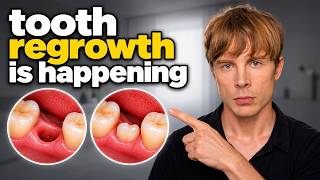
A protein called USAG1 acts as a brake on tooth development. A drug, TRG035, blocks this protein to potentially allow new teeth to grow.
In 2021, researchers tested both genetic and antibody approaches in mice, successfully enabling tooth growth. Additional tooth formation was also reported in ferrets, which have a dental pattern similar to humans.
The treatment does not address all forms of missing teeth. It works best for congenital tooth agenesis (missing teeth from birth) but not yet for adult tooth loss from decay or gum disease.
Phase 1 trials in Japan were completed, and regulatory review is underway, opening the path to Phase 2A. The initial focus is on congenital tooth agenesis.
While some articles claim 2030 as the launch year, researchers need to first demonstrate safety, reliable tooth formation, and long-term outcomes. A 2026 study used AI on MRI scans to measure tooth bud growth, addressing this challenge.
Enamel cannot regenerate once lost, but early mineral loss can be reversed with nano-hydroxyapatite toothpaste. The video emphasizes the link between oral health and overall health, including neuroinflammation.
A Drug That Blocks the Tooth-Development Brake
Explains the core mechanism of how a protein called USAG1 prevents tooth regrowth and how a drug can inhibit it.
[00:13]Ferret Success — A Key Advance Over Mice
Shows efficacy in an animal with a dental pattern similar to humans, boosting confidence in the approach.
[01:51]AI-Driven Tooth-Bud Monitoring
Introduces a novel MRI-based AI method to measure early tooth growth, addressing a key challenge in clinical trials.
[03:37]Oral Health Is Systemic Health
Connects dental problems to neuroinflammation and Alzheimer's, reinforcing the broader importance of oral care.
[04:43][00:01] can't regrow your teeth. You get two sets in your lifetime. Your baby teeth and your adult teeth. And once your adult teeth are gone, that's it. In fact, that's why sharks can regrow their teeth endlessly. And we can't because we
[00:13] have this break protein called USA1 that shuts off tooth development. But now, a Japanese company called Torm Bioarma has made a drug called TRG035 that blocks this USA break. and they've just completed phase 1 in humans with
[00:29] going to break down the science of how this technology works, what it can do, what it can't do, and when it's expected to reach the market. Let's start with how the scientists found this break in the first place. When you grow your
[00:42] controlled process between different cells and signaling molecules. Two signals called BMP and W NT control tooth development, while other proteins put restrictions on that growth process. Because if it didn't happen, you would
[00:56] situation, except it's going on in your mouth. Instead of extra muscles, you'd potentially grow extra teeth, which is great if you're missing one tooth, but fully booked. One of these restraining proteins is called USA1. It helps to
[01:11] keep extra teeth from developing, similar to mastatin, preventing you from you wouldn't accidentally unlock shark mode. Now, the Japanese researchers asks, "What happens if you remove this brake?" In their 2021 study published in
[01:25] Science Advances, they tested both genetic approaches and antibodies that blocked US AG1. Some of the antibodies reduced its inhibition of BMP signaling, kind of like a mouse at an inhibitor. In certain mouse models, a single systemic
[01:38] that would otherwise have been stopped. The researchers also reported additional tooth formation in ferrets, which like humans normally have baby teeth followed by permanent teeth. So they didn't just make the enamel harder or gave it a
[01:51] shinier mineral coating. They were influencing the actual development of a limitations to this. This treatment didn't restore all forms of missing mutations that can interrupt tooth development at different stages.
[02:05] Releasing the USAG1 brake can help with some of the machinery needed to form a but it won't necessarily fix every underlying defect. So when can people get this? The clinical drug candidate is called TRG035
[02:18] and it's developed by the Japanese company Torajen Biioharma. In 2026, the company reported that its Japanese phase 1 trial has been completed. In August, it also announced a completion of the Japanese regulators required review of
[02:31] the clinical trial, which opens up the pathway to a phase 2 A study. Now, these are still early steps, but they are meaningful steps. The initial program focuses on congenital tooth aenesis which is a condition where a person is
[02:44] born without one or more teeth because the tooth buds never developed. This is different from a 65year-old who lost the mer through decay or gum disease. The this treatment to tooth loss that happened later in life but is not there
[02:57] yet completely. So the first trial has been finished. It hasn't been proven to necessarily regrow teeth that you lost in adulthood and we don't know all the possible to regrow teeth that never developed because of some genetic
[03:11] technology be available to the market? We don't necessarily know. Online you can find articles that say that 2030 is the year, which isn't that far away, but Before this technology becomes routine dentistry, the researchers need to
[03:24] demonstrate safety, reliable tooth formation and whether the new tooth big challenge is that would you have to wait many years to see if the tooth is regrowing? Well, in June 2026, the Japanese team published a study
[03:37] addressing exactly this issue. The researchers combined MRI with CT and X-ray imaging and they developed an AI tool using MRI scans from 23 children aged 2 to six. It helped to identify developing tooth buds and measure their
[03:50] volume. This study didn't demonstrate that drug regrow teeth in humans, but it did develop a way to measure these early changes of detecting the tooth growth. distinction between regrowing the tooth and regrowing the enamel on an existing
[04:04] tooth. Once the tooth erupts, those enamel producing cells are lost. Mature enamel, the mineral coating on your tooth doesn't have a living repair crew that can simply rebuild the lost enamel. That's why a cavity or a chipped tooth
[04:17] doesn't heal like a cut on your skin would. But early mineral loss on the enamel can be reversed. There is research about nanohydroxy appetite remineralization and you can already buy it as a toothpaste. And here's why this
[04:30] matters in the context of your broader longevity and overall health. Your mouth connected to the rest of your body through the nervous system. An unhealthy mouth and chronic disease in your gums will also promote disease in the rest of
[04:43] your brain and nervous system and problems with your teeth carry over to problems elsewhere through inflammation. Inflammation of the gums and periodontal pathogens are now recognized as contributors to neuroinflammation and
[04:55] Alzheimer's disease pathogenesis. Over time, inflammation can destroy the tissues and bone that supports the teeth. Inflamed gum tissue can also allow bacteria and bacterial products to enter the bloodstream which activates an
[05:07] inflammatory response. So it is quite important to take care of your oral if you're able to regrow the teeth in the future, if they keep getting right? Why are the teeth being destroyed? And if you don't fix that
[05:20] underlying issue, you'll still have other issues in your overall health. But again, regrowing the teeth is obviously a major breakthrough in not only dentistry, but overall anti-aging. For now, the highest value steps are quite
[05:32] a day, perhaps with nanohydroxy appetite toothpaste. Clean between your teeth with a floss. Limit frequent sugary and acidic snacks and drinks. Get persistent bleeding gums and other dental problems checked. If you want to know how I
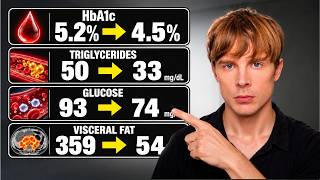
[05:45] achieved top 1% health across 100 biomarkers, included taking my V2 max from 53 to 66 and dropped my visceral fat from 359 g to 54 g, then check out fat from 359 g to 54 g, then check out this video next.
⚡ Saved you 0h 05m reading this? Transcribe any YouTube video for free — no signup needed.