
SpaceX's Starship to Launch Blue Origin's Blue Moon?
42sThe irony of SpaceX launching a competitor's lander, combined with NASA's urgency, creates a compelling and buzzworthy hook.
▶ Play Clip"Delivers a detailed, technically sound analysis that matches the title's promise, though some speculation is presented as fact."
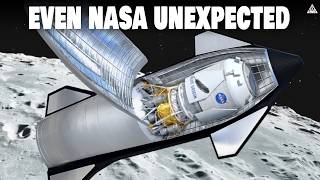
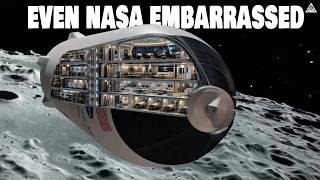
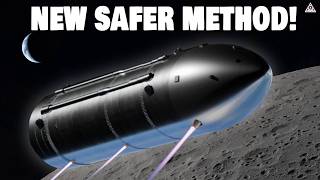
The video discusses the potential use of SpaceX's Starship to launch Blue Origin's Blue Moon lunar lander after New Glenn's explosion, presenting a detailed technical analysis of why this is the only viable option and how it could be executed using a Centaur 5 upper stage as an Earth Departure Stage.
New Glenn exploded on the pad on May 28th, grounding the rocket. The cause is unknown, and the pad is badly damaged. CEO Dave Limp aims for another launch before year-end, but the rocket is currently idle.
Blue Moon, NASA's backup lunar lander, only has New Glenn as a launch vehicle. Falcon Heavy is ruled out due to fairing width (5.2m vs 7m) and fuel incompatibility (RP-1 vs hydrolox). Vulcan Centaur is also unsuitable due to fairing width and shared BE-4 engines under investigation.
Starship's 9m payload bay can accommodate Blue Moon without redesign. Even a single-use Starship can lift over 100 tons to LEO, with expendable versions exceeding 200 tons. Blue Moon Mark II weighs 45-54 tons.
Starship uses methalox, Blue Moon uses hydrolox. They cannot mix. The original Artemis plan requires 10-15 tanker flights for Starship HLS. Adding Blue Moon would require a separate cis-lunar tanker for hydrolox, creating two overlapping logistics campaigns.
Use Starship to lift Blue Moon and a Centaur 5 upper stage to orbit. Centaur 5, burning hydrolox, performs the translunar injection. It can be pre-fueled at ULA facilities, avoiding hydrogen at SpaceX's site. Centaur's RL10 engines have high efficiency (ISP ~465s vs Raptor's 363s). Centaur V can deliver 3.1-3.3 km/s delta V, pushing 47-48 tons toward the Moon.
Blue Moon is slightly overweight for Centaur V's capacity, requiring mass reduction. Starship's vibration environment is harsher, needing custom adapter and testing. Hydrogen boil-off is a concern. Coordination among SpaceX, ULA, and Blue Origin is complex. Blue Moon still needs refueling in lunar orbit, but simpler than original plan.
NASA decided to use Centaur 5 to replace the Exploration Upper Stage for Artemis 4 and 5, which was over budget and delayed. This supports the logic of using Centaur 5 for Blue Moon. Also, Starship is considered ideal for launching large space telescopes like LUVOIR, similar to Blue Moon in size and weight.
The video concludes that while the Starship + Centaur 5 architecture is technically feasible, it faces significant engineering and logistical hurdles. However, NASA's recent decisions and Starship's capabilities make it a plausible path to save the moon mission.
What is the main reason Falcon Heavy cannot launch Blue Moon?
Falcon Heavy's payload fairing is only 5.2m wide, while Blue Moon was built for New Glenn's 7m fairing, so it doesn't fit without redesign.
01:53
What fuel does Blue Moon use?
Liquid hydrogen and liquid oxygen (hydrolox).
02:53
What is the specific impulse of Centaur's RL10 engines?
Around 465 seconds.
07:12
How much delta V can a fully loaded Centaur V deliver for translunar injection?
Roughly 3.1 to 3.3 km/s.
07:55
What is the estimated mass of a fully loaded Blue Moon Mark II?
Between 45 to 54 tons.
04:04
Why is Starship's payload bay advantageous for Blue Moon?
It is about 9m wide, larger than New Glenn's 7m fairing, allowing Blue Moon to fit without major structural changes.
03:37
What is the main challenge with using Starship to launch Blue Moon?
Fuel incompatibility: Starship uses methalox, Blue Moon uses hydrolox, requiring separate logistics and refueling.
04:32
What is the role of Centaur 5 in the proposed architecture?
It serves as an Earth Departure Stage, performing the translunar injection burn to send Blue Moon toward the Moon.
06:12
What is the approximate total mass Starship needs to lift in the proposed architecture?
Roughly 105 to 110 tons, including Centaur V, Blue Moon, and adapters.
08:24
What is one of the hurdles mentioned for the Starship + Centaur architecture?
Blue Moon is slightly overweight for Centaur V's capacity, requiring mass reduction.
09:02
Blue Moon's Launch Dilemma
Highlights the critical dependency on New Glenn and the lack of alternatives due to fairing size and fuel type.
01:39Starship as the Only Option
Presents a clear technical reason why Starship is the only viable launcher for Blue Moon without redesign.
03:37Centaur 5 as Earth Departure Stage
Introduces a proven mission design concept to solve the fuel incompatibility problem.
05:59NASA's Centaur 5 Decision
Connects NASA's recent choice to use Centaur 5 for SLS as supporting evidence for the proposed architecture.
10:54[00:01] decoupling the lander from the launch vehicle and the pad itself. What does laser-focused on the lander. Cuz see, we're laser-focused on our mission to return uh astronauts to the surface of the moon before 2028.
[00:14] >> Using SpaceX's Starship to launch Blue Origin's Blue Moon is the craziest and most ironic plan in the space industry right now. However, this is also the only choice left to save NASA's moon mission. So, why is that? Is this
[00:28] mission. So, why is that? Is this actually feasible? Let's dive in. It's been over 3 weeks since New Glenn exploded on the pad at launch complex 36 on May 28th, and we still don't know exactly why. It's not that Blue Origin
[00:41] is hiding anything. Even their own engineers don't have a clear answer yet. Was it the BE-4 engines? The high-pressure COPV tanks? A leaking fuel valve? They're investigating every possibility. What we do know is this:
[00:56] The launch pad is badly damaged. New Glenn is grounded. Sure, CEO Dave Limp says they're aiming for another launch before the end of the year, but right now, that rocket isn't going anywhere. Now, let me paint you a picture. Imagine
[01:11] NASA has a real emergency on the moon. The Artemis crew needs urgent supplies The Artemis crew needs urgent supplies or, God forbid, a rescue. They call Blue Origin and ask, "How soon can you launch?" The answer right now,
[01:23] "Not today." That's the quiet problem nobody wants to say out loud. Blue Moon, Blue Origin's lunar lander, NASA's backup plan to SpaceX's Starship, only has one rocket that can carry it, New Glenn. And New Glenn is sitting idle. In
[01:39] space flight, you never rely on just one plan A. So, here's the real question: What's plan B for Blue Moon? Is there any other rocket out there strong enough to launch it? You'd think Falcon Heavy would be the obvious choice. It's got a
[01:53] perfect 100% success rate, and it's currently the most powerful rocket flying commercially. But, here's the catch. Falcon Heavy's payload fairing is only 5.2 m wide. Blue Moon was custom-built for New Glenn's big 7-m
[02:07] fairing. That's nearly a 2-m difference. You can't just squeeze it in there. It's refrigerator through a standard kitchen doorway. It physically doesn't fit without redesigning the entire lander from the ground up. As NASA's admin
[02:22] Jared Isaacman said, >> Uh you know, the the Mark 1, uh there's getting that in a fairing of a vehicle, and then being able to send it to the you're you're in you're in Falcon Heavy land. You're you could potentially be in
[02:37] >> And even if you could make it fit, there's the fuel problem. Falcon Heavy runs on RP-1, kerosene and liquid oxygen. Blue Moon needs liquid hydrogen, stored at -253° C. Converting SpaceX's launch
[02:53] infrastructure to handle liquid hydrogen would take years and hundreds of millions of dollars. So, Falcon Heavy is out. Next up is Vulcan Centaur. It's a little more promising because its upper stage already uses hydrolox, same fuel
[03:08] as Blue Moon. But, here's the kicker. Its payload fairing still isn't wide enough for Blue Moon's base. And worse, Vulcan's main engines are the BE-4, the investigation after the New Glenn explosion. If they find a fundamental
[03:23] problem with the BE-4, Vulcan gets grounded, too. So, right now, when you look at the whole picture, Starship is starting to look like the only realistic ride for Blue Moon. It's not because Starship is perfect, it's because right
[03:37] now, it's the only vehicle that can actually carry Blue Moon without forcing a complete redesign of the lander. Starship's payload bay is about 9 m wide, bigger than New Glenn's 7-m fairing. That means it can swallow the
[03:49] whole Blue Moon, wide base and all, with room to spare and no major structural changes needed. On top of that, even a single-use Starship can haul over 100 tons to low Earth orbit. Some estimates put the expendable version north of 200
[04:04] put the expendable version north of 200 tons. A fully loaded Blue Moon Mark II weighs somewhere between 45 to 54 tons. here's where a lot of people stop and think the problem is solved. Starship's
[04:18] big, it's powerful, it can fit Blue Moon. Done. Not quite. The real challenge isn't just getting Blue Moon into orbit. The real question is, once it's up there, how does Blue Moon actually get to the Moon? You see,
[04:32] Starship and Blue Moon run on completely different fuels, and that creates a serious headache. Starship burns methalox, liquid methane and liquid oxygen. Blue Moon uses hydrolux, liquid hydrogen and liquid oxygen. Those two
[04:48] don't mix. The plumbing, the tanks, the temperatures, everything is different. In the current Artemis plan, Starship HLS needs somewhere between 10 to 15 tanker flights just to fill up with enough
[05:01] methalox in orbit before heading to the Moon. That's already one of the most complex logistics operations in human spaceflight history. Now, throw Blue Moon into that picture. Blue Moon can't use methane. It needs its own hydrolux.
[05:15] they planned to launch a separate cis-lunar tanker, built by Lockheed Martin, slowly stockpile hydrolux over multiple flights, then refuel Blue Moon near lunar orbit. That's not one mission anymore. That's two giant overlapping
[05:31] logistics campaigns running at the same time in deep space, something nobody has ever done. That's the most complicated path, but it's not the only one. Let's flip the question. What is Starship really good at? It's not flying all all
[05:45] way to the Moon. It's real superpower is lifting massive payloads to low Earth orbit in a single launch with a payload bay big enough to carry almost anything you can design. So, why not let Starship do what it does best? Let it carry Blue
[05:59] Moon up to orbit, drop it off, and let Blue Moon handle the rest of the journey with its own systems. To make that work cleanly, we introduce a third piece, a cleanly, we introduce a third piece, a dedicated Earth Departure Stage, or EDS.
[06:12] This is actually a very old and proven idea in mission design. Instead of making the main rocket do all the work, you attach a separate upper stage to the payload. That stage rides along quietly in orbit, then fires to perform the
[06:26] translunar injection burn that sends the payload toward the moon. In this case, that stage would be the Centaur 5, ULA's hydrolox upper stage that currently flies on Vulcan Centaur. But remember, Centaur isn't the star of the show here.
[06:42] It's just a tool. Its only job is to push Blue Moon out of Earth orbit. Why Centaur 5? Three solid technical reasons. First, it burns hydrolox, the same fuel as Blue Moon. That means you can fully load it at Blue Origin or
[06:57] ULA's facilities, where they already have the hydrogen infrastructure, seal it up, and slide the whole thing into Starship's payload bay. No liquid hydrogen ever touches SpaceX's launch site. Second, the RL10 engines on
[07:12] Centaur are some of the most efficient ever built for deep space. Their ever built for deep space. Their specific impulse is around 465 seconds compared to Starship's Raptor at about 363 seconds in vacuum. That difference
[07:25] matters, a lot. It gives you way more delta V for the same amount of propellant. And since Starship already did the heavy lifting to orbit, every drop of Centaur's fuel is used for the trip to the moon. Third, Centaur's
[07:39] pressure stabilized thin wall design means over 90% of its mass is actual propellant. It's extremely optimized for deep space performance. When you run the numbers using the Tsiolkovsky rocket equation, a fully loaded Centaur V
[07:55] departing from LEO can deliver roughly 3.1 to 3.3 km/s of delta V for translunar injection, enough to send a payload of about 47 to
[08:07] 48 tons toward the moon. That lines up almost perfectly with the optimized Blue Moon Mark 2 total mass Starship would need to lift to orbit in this setup. A fueled Centaur V at around 60 tons, Blue Moon at 45 to 47 tons, plus adapters and
[08:24] Moon at 45 to 47 tons, plus adapters and structure, roughly 105 to 110 tons. That's well within what a reusable Starship can handle comfortably. So, what do you think? Do you believe Starship can pull this off? Drop your
[08:36] thoughts in the comments below. If you're enjoying these deep dives, don't forget to subscribe. But, let me be straight with you. I'm not here to sugarcoat it. Yes, this architecture is technically feasible, but feasible
[08:48] doesn't mean easy. There are some real hurdles we'd have to clear before this could actually happen. First off, Blue Moon is still a bit too heavy. Centaur V can push about 47 to 48 tons toward the moon. The current Blue Moon Mark 2 is a
[09:02] little over that limit. So, Blue Origin will need to put it on a diet. Cut every kilogram they can without hurting the important stuff. It's not a full redesign, but it's real engineering work. Like packing for a flight with a
[09:15] strict baggage weight limit, every single pound has to earn its ticket. Second, Starship and Blue Moon have never worked together before. Blue Moon was built for New Glenn's quieter ride. Starship is a lot louder and more
[09:28] violent with those 33 Raptor engines. They'll need a custom adapter, and Blue Moon will have to go through a whole new round of vibration and acoustic testing. That takes time and costs serious money. Third, there's the liquid hydrogen
[09:43] boil-off problem. Hydrogen likes to evaporate even when it's well insulated. If Starship has any delays and the stack has to sit in orbit longer than planned, you start losing fuel you can't get back. So, they'll either need very tight
[09:56] launch windows or some active cooling system on the Centaur. Fourth, you've got three very different companies, SpaceX, ULA, and Blue Origin, that would have to work extremely closely together. Different cultures, different ways of
[10:10] doing things, and a history that isn't always friendly. Figuring out who's in responsible if something goes wrong between systems is going to be interesting. And finally, even after all that, Blue Moon still needs enough fuel
[10:26] in its own tanks to land safely. Centaur gets it to the moon, but Blue Origin tanker from Lockheed Martin to top it off in lunar orbit. The silver lining, this refueling operation would be much smaller and simpler than their original
[10:41] plan because Centaur already did the hardest part of the trip. Of course, there's no need to get overly worried. There's actually a quiet signal from NASA that most people haven't connected to this story yet. But when you look at
[10:54] it from the right angle, it strongly supports the exact logic behind this Starship plus Centaur architecture. NASA recently decided to use Centaur 5 to replace the Exploration Upper Stage for Artemis 4 and 5. That EUS was a
[11:09] custom-designed upper stage for the upgraded SLS, nearly two decades in development, over $4 billion dollars spent, and it still hasn't flown once. It's also tied to the painfully delayed mobile launcher 2. Instead of waiting,
[11:24] NASA turned to something that already exists, has flown many times, and can be integrated with minimal changes, the Centaur 5. It's RL10 engines have a decades-long track record of reliability, hundreds of flights, and
[11:38] it's a direct evolution of the ICPS stage already flying on current SLS missions. On top of that, when NASA and the astronomy community talked about launching the next generation of giant space telescopes, like the LUVOIR with
[11:53] its 15-m mirror or the Habitable Worlds Observatory, Starship was identified as the ideal launch vehicle. The reason is simple. It's 9-m payload bay lets you launch a large monolithic mirror instead of folding it up like the James Webb.
[12:08] Fewer moving parts, fewer things that can go wrong. At its core, Blue Moon those big telescopes when it comes to the launch problem. Similar size, similar weight, and no complex mechanical deployments after launch. In
[12:23] some ways, Blue Moon is actually easier. It doesn't need extreme optical precision, and it was already designed to handle launch vibrations. So, if Starship is considered good enough to launch a multi-billion-dollar,
[12:35] ultra-delicate scientific instrument that can't be touched after deployment, then it's more than capable of launching a lunar lander.

⚡ Saved you 0h 12m reading this? Transcribe any YouTube video for free — no signup needed.