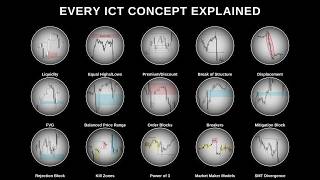

Why Most ICT Traders Fail (The Loop)
44sOpens with a relatable problem—being stuck in an education loop—that hooks aspiring traders seeking a clear path.
▶ Play Clip"The title promises an easy way to learn ICT concepts, and the video delivers a clear, simplified guide focusing on the essentials."
This video provides a simplified guide to learning ICT (Inner Circle Trader) concepts, focusing on the essential basics that traders need to master before moving on to more complex theories. The creator, a million-dollar day trader, emphasizes that most traders fail because they get stuck in an endless loop of education without grasping foundational concepts like market structure, liquidity, and inefficiencies. The guide outlines a structured study plan to build a strong technical edge.
There is so much information on ICT concepts that beginners easily get lost in technical jargon and complex theories without understanding the basics. The truth is, you only need the basics to have a better read on the markets.
Most ICT traders get stuck at the start, never reaching the markets to improve. They think more knowledge will improve their trading, but they lack a grasp of the basics. The creator spent 4-6 years in this loop.
The video outlines a proper study plan focusing on essential concepts before diving into complex models. Without understanding these basics, it's impossible to get past the starting point.
Market structure is about determining the trend and institutional order flow: higher highs, lower highs, etc. Start with a higher time frame (daily) then move to 4-hour or 1-hour. A swing point is a three-bar pattern.
Liquidity involves understanding the draw on liquidity—high resistance or low resistance liquidity runs. Focus on equal highs and lows, and how the market moves to those levels.
Inefficiencies include fair value gaps, buy-side and sell-side imbalances, and volume imbalances. The market moves too quickly away from a level, leaving orders unfilled, so it rebalances.
Study each concept separately on its own chart. For market structure, plot long-term, intermediate-term, and short-term highs and lows. Do not mix concepts in one session.
A line chart is a great way to visually understand market structure. Plot short-term highs and lows, and identify breaks of structure.
For liquidity, plot old highs and lows to identify liquidity raids. Understand where orders are offset and how the market reacts to these levels.
Practice spotting fair value gaps manually without indicators. Use the rectangle tool to mark them and observe how price reacts when retested.
Learning trading is like training for the NBA: you need to practice specific skills (like free throws) repeatedly. Focus on one concept at a time until proficient.
Past price action gives the narrative; live price action requires forward testing. Combining tape reading with narrative helps predict market moves confidently.
Advanced concepts like breakers require understanding liquidity raids and market structure shifts. Without these basics, advanced theories are useless.
Mastering the three core concepts—market structure, liquidity, and inefficiencies—is sufficient for effective trading. Focus on one concept at a time, get plenty of reps through chart study, and avoid the trap of constantly seeking new information.
What are the three essential ICT concepts to master first?
Market structure, liquidity, and inefficiencies (fair value gaps).
05:27
What is a swing point in market structure?
A three-bar pattern: for a high, a lower high on either side; for a low, a higher low on either side.
06:05
Why does the market rebalance?
Because it moves too quickly away from a level, leaving orders unfilled, so it needs to return to pick up those orders.
08:29
What is the recommended approach to studying ICT concepts?
Study each concept separately on its own chart, focusing on one at a time until proficient.
10:05
What tool can be used to visually understand market structure?
A line chart.
14:04
What is a liquidity raid?
A run on old highs or old lows to offset orders at specific levels.
16:13
How should fair value gaps be studied?
Manually spot them using a rectangle tool without indicators, and observe how price reacts when retested.
20:41
What analogy does the creator use for skill development?
Learning trading is like training for the NBA: you practice specific skills (e.g., free throws) repeatedly.
25:09
What is required to understand advanced concepts like breakers?
Understanding liquidity raids and market structure shifts as prerequisites.
29:00
What is the difference between past price action and live price action?
Past price action gives the narrative; live price action requires forward testing to predict moves in real time.
30:01
The Learning Loop Trap
Identifies the common pitfall of endlessly consuming information without practical application.
01:14Three Core ICT Essentials
Defines the foundational concepts that are sufficient for effective trading.
05:27Focused Chart Study Method
Provides a practical homework strategy to build skill through repetition.
10:05Sports Analogy for Skill Development
Relates trading practice to athletic training, emphasizing deliberate practice.
25:09Prerequisites for Advanced Concepts
Explains why mastering basics is necessary before moving to complex theories.
29:00[00:02] gaps 2022 mentorship 2016 core content silver bullets Reapers Turtle soups let's be honest if you want to get into trading and learn ICT Concepts it here to make things simple for you if you're new to the channel and don't know
[00:18] day trader who's made over $1 million trading ICT Concepts if you want full out the link in the description the problem with learning ICT nowadays is there's so much information that it's easy to get lost in the technical jargon
[00:32] and complex theories without first understanding the basics and the truth is you really only need the basics to have a better read on the markets in the fluffs so you can get right to work on improving your Technical Edge so go
[00:44] on improving your Technical Edge so go ahead and grab a notebook and let's get to be a simplified guide to ICT now I know that maybe some of you guys are
[00:58] already too deep in the grab a hole at which point you can't be saved but if beginning or if you're just getting into ICT Concepts this is in my opinion some of the most essential Concepts to learn before we even dive into some of the
[01:14] more complex models or theories um but just as a visual representation this is where most ICT Traders get stuck is the start and they never actually get to the
[01:27] markets where they can start improving the trading and actually see that growth curve so basically this is a representation of people that are just stuck in the loop of Education they're they're they think that more and
[01:43] more knowledge and More and More Concept that they add to their system is going to improve their trading when really they don't even have a grasp of the basics and this is what this video is going to be focused on for people that
[01:56] that are struggling with just some of the Basics and they they can't kind of get their foothold in the markets or they just are pretty much running in
[02:08] they just are pretty much running in place now I will say that for the first four to six years of my trading career this is where I was I was kind of searching for the Holy Grail uh for 46 years and this was back in 2011 I I've
[02:25] been trading since 2011 and if you guys you know don't know much don't know about what trading was like back then we didn't have YouTube um I mean YouTube was around right but there wasn't a lot of content creators or barely any
[02:41] content creators uploading trading education to the YouTube platform so I was stuck on text based Forum based um online platforms to try and the stream of information that you're getting it's extremely slow so by the
[02:57] time I saw somebody post their analysis it could have been four to 6 hours later uh I was trying to hop on that same idea and the move might have already you know and the move might have already you know moved away from that level or you know
[03:10] there wasn't as much credibility in the space you couldn't really vet out which another because when you're looking at a forum right you just assume that the people with the most posts have the most credibility and that's really not the
[03:23] credibility and that's really not the case so you know I got stuck in this learning loophole for a very long time and I think the problem with ICT Concepts is that there's so much information out there that people don't
[03:36] really know where to start and where to where to stop like when do I stop trying to find the next thing to add to my system when I can't even stick to one system when I can't even stick to one thing and study that thoroughly okay so
[03:50] basically you know the structure of this video is video is outlining a proper study plan um proper Concepts to focus on before you dive into the other things because if you
[04:03] don't understand these Concepts that I'm about to outline it doesn't matter how Concepts you're going to get into quarterly Theory um you know Reapers fair value gaps Breakers if you can't even understand the premise behind the
[04:18] market there's no way that you're even going to get past this starting point right you're just going to be kind of in this circle of trying to find the next best thing let me try try to find the next best thing and it's a fruitless
[04:33] Endeavor I'm telling you right now just find a couple Concepts and this is what find a couple Concepts and study the hell out of them you want to like really
[04:45] WR until the wheels fall off and then at that point when you have a deeper understanding of the basics then you can possibly go into the other uh areas and avenues of trying to possibly refine system but I think this
[05:00] is where a lot of Traders get stuck they don't know what to focus on because they're trying to find that one thing that will just click for them and it it may never come okay and you're just going to waste tons of time tons of
[05:14] energy uh emotionally and you might waste a lot of account Capital going down that route so let's dive into it like what are my ICT Essentials and it's very basic right we
[05:27] have Market structure so basically we're just is trying to determine the trend the institutional order flow are we making higher Highs are we making lower highs um you know you can incorporate different time frames we're going to
[05:40] start with the higher time frame whatever that higher time frame is for you guys you don't have to start with the one that I'm would start with right going to the Daily and then I'm going to either 4 hour or 1 hour and that's my
[05:53] either 4 hour or 1 hour and that's my short term so going into your charts all understanding what is even a swing Point what is a swing point right and I don't need to cover it in this but a
[06:05] swing point is basically a three bar pattern where you have for a high you pattern where you have for a high you have a lower high on either side of that high and then for a swing low we have a higher low on either side of the either
[06:19] side of the low all right so Marcus structure obviously is going to give us the overall trend um you know which levels are being respected uh are these stop losses are are are these specific levels being respected as the market is
[06:33] trending higher or lower or are we in a consolidation okay so understanding Market structure is going to be obviously Point number one liquidity is the next point is understanding what is the draw on liquidity okay is it high
[06:47] resistance or low resistance liquidity run um again I'm not going to go through everything in here I'm just going to outline you guys how I was able to start studying and and actually in and focus on these specific topics because if you
[07:03] on what you're following you're just going to be completely lost you're going to look at all these new videos that are popping up and you're not going to get anywhere I'm telling you right now you have to make sure that you're going to
[07:16] sit down and actually turn all turn off all the noise and just sit down and study these Concepts like understand their ins and outs and how they move okay how they move the markets you know calling out a liquidity level and
[07:31] watching it actually trade to that level that's experience that a lot of people just don't get you know they don't uh put the time in to understand that you testing has a long-term effect on their overall experience if they're not if
[07:48] you're not properly journaling you're not properly analyzing the charts and having the patience to see your analysis pan out then you are lacking a ton of experience or you're missing out on all that experience so again High High
[08:01] understanding what those are and then High equal highs or lows very very simple okay so we have equal highs and lows you know maybe calling this Market down here and then seeing it possibly trade up to that level okay that's
[08:15] that's all we're really focused on is liquidity Market structure and then inefficiencies so really the market is only seeking about it we only have buyers and sellers in the market there's you know it's very
[08:29] when you break everything down right we have pending orders in the market and then we have Market orders so that liquidity uh that's all we have is market moves too quickly away from a specific level they're not filling a lot
[08:43] of those orders so the market will need to rebalance pick up those orders and then continue to the next level of liquidity right the market is only going to the level that's going to facilitate the most trade okay so with inefficiency
[08:56] we have fair value gaps Buy side inbalance sell side imbalance sell side imbalance buy side imbalance so byy siy and then volume imbalances okay and we will get more into you know what do we do with all
[09:10] into you know what do we do with all this okay it's up to you guys to to understand what these concepts are and actually go into your charts and study them and I'll go through a couple examples of how I actually got my reps
[09:23] in okay because you can't focus on one thing and then when you get to your charts now you're focused on everything okay that's not the proper way to study get caught up in that I got caught up in it as well that's just from my my
[09:38] personal experience um you have to have focus when you're studying you have to focus when you're studying you have to understand what you're weak at okay and once I'm trying to multitask everything all at once it's going to be really
[09:51] difficult and slow when it comes to my growth my growth curve all right once we learn all these Concepts we need to get we need loads of reps in the charts to build our narration and anticipatory skill set
[10:05] which I'll I'll go over in this this next tree so for the homework homework charts for each specific technical concept on its own okay don't do Market
[10:17] structure and liquidity in the same chart that's that's definitely not to just sit down and focus for one session and only plot out different things Okay so I'm going to pull up the charts real quick so we need at least
[10:32] this is something that I did for years on end and let me just remove my drawings real quick and let's go to I don't know Euro so if I was only going
[10:44] to study Market structure this is exactly what I would do I would go in exactly what I would do I would go in here and plot out my long-term
[11:20] going to want to do but I'm telling you this is going to be absolutely vital to how you guys read the markets cuz if you can't do it on previous price action you
[11:32] on the previous price action to understand the narrative right and then watching it form real time is going to build your anticipatory skill set so we have two different things going on yes this is all previous historic price
[11:47] action but previous historic price action gives us the narrative okay how do you have a narrative if you're trying to predict the future all right the previous price action is telling us the narrative then we have our intermediate
[12:00] narrative then we have our intermediate term highs and
[12:13] and low right we have inmediate term highs and right like I'll I'll typically use lth for long-term High LTL for long-term low
[12:28] it for intermediate term high itl for intermediate term low right and then inside there we have intermed term
[12:50] intermediate term and long-term highs we can drop down into like our hourly and then plot out all of our short shortterm RS okay so this is just giving you guys an idea of how I sat down and studied for the longest time
[13:06] I'm not in here plotting um you know fair value gaps whatever the case was I just want you guys to understand that this is how I learned how to understand Market structure was what dictated a long-term
[13:20] High what dictated a long-term low where would an intermediate term high or low form right um what is this overall structure and yes this is like a wedge pattern if you guys you know think that normal technical analysis doesn't play a
[13:35] factor it absolutely does um that's not what we're trading but um understanding that this is a stage of reaccumulation right that's kind of your flag pattern right and then on for bearish Flags
[13:49] that's our redistribution okay the very very simple things but understanding that we're we're coming to the charts with a specific goal in mind understand that we are only coming in here to learn Market structure and that's it I'm
[14:04] literally doing this and printing this out so I'm going to download this image out so I'm going to download this image save it to my save it to my um journal and write notes in it okay so I would literally do that for
[14:18] the longest time and you can even do it with a line chart like line chart I think is is a great way to just see Market structure visually understanding Market structure okay so know we have short-term lows in here we have
[14:30] short-term highs we're running out short-term highs here uh we're putting in a lower high here running out short-term highs here and this is our low so when we break that we have Market
[14:44] structure shift and essentially you know even if you wanted to do it on a line chart you you definitely could all right so we have breaks of structure uh we only this is what we're focused on okay we're not focused on Fair value caps we
[14:59] don't care about going online trying to figure out what the next best thing figure out what the next best thing is this is Mastery right you have to understand that these are all skill sets if you only understand one skill set you
[15:14] have a plethora of other skills that you have to learn but we're not trying to learn everything all at once so yes I think you everybody out there short period of time so they can come into the markets and just crush it and
[15:29] you know it's not it's not realistic okay give your give you got give yourself enough time to learn all these Concepts you know I think if you do this for the next three months three months from now you are going to be extremely
[15:41] from now you are going to be extremely happy with your results okay so Market structure out of the way you know and maybe just maybe to alternate one day structure next day I'm going to focus on doing something else all right um and
[15:58] and on and on etc etc so we're coming to them we're coming to the charts with a with a plan with a an understanding that I only want to stay focused you know I only want to stay focused you know focused hyper focused study on one
[16:13] Market structure and then liquidity um understanding that liquidity is just a runon old lows or old highs right and they're going to offset their order at specific levels okay let me
[16:31] turn my magnet off just so I can draw these out um so again even doing this you're going to you know kind of understand Market structure but this is essentially just
[16:45] liquidity right we're just plotting liquidity liquidity raids from previous uh previous price action trying to understand you know once we get above because that's where they're going to rebalance Okay so once these orders are
[17:00] into the range they pick up more orders and then go and take out the uh previous and then go and take out the uh previous High liquidity all
[17:16] and be like oh this guy's so boring well this is how you get good at reading price is going in plotting the highs and lows and trying to understand the narrative behind the Market okay who's getting
[17:30] trapped on what side of the market um you know where where are they where are they pairing their orders right where are they accumulating so offset accumulation where are they accumulating below
[17:43] lows okay all right so we're just going in trying to find liquidity rates okay so once I have my my chart marked up what
[17:55] am I going to do I'm just going to download and save okay and this is how you get reps in the market all right we're not focused on doing all these different things at once okay we have to be able to
[18:09] understand the tool and again um I didn't mention this but this is about training your eyes okay it's really about training your eyes to see structure in the market because when I first came to the market my eyes were it
[18:23] just felt like the lens is blurry okay and then if you've ever had an eye exam right it's basically your taking that lens and putting it over the market and being able to read what's in front of you if you don't have the skill set
[18:40] you okay you have to be able to train your eyes to specific things um before you can get a read on the market all right and that's part of getting a narrative skill set which I will cover in the next couple minutes
[18:55] will cover in the next couple minutes but again we are just coming in and sitting down and just finding liquidity rates so being able to spot old highs and old lows okay and seeing how the market reacts to
[19:11] those specific levels okay so here we have equal highs right being ran out and trading away from it so once that happens right we have some somewhat that happens right we have some somewhat of a narrative
[19:32] Okay so seeing this from previous price action okay again is going to build our Nar narrative skill set so you know there's nothing wrong with being able to to see things on High Sight okay it's giving you
[19:45] information to where the market might go in the future okay that's all it's doing is we're just plotting old highs and old lows and just seeing what the market does after we take out those old highs and old lows
[19:59] okay very simple so this is what my this is what my chart would look like if I was only studying liquidity and I'm telling you I would do this for months on end and just hours on hours upon hours on end is just
[20:14] finding these levels of liquidity that way it's training your eyes to say oh I've seen that in the past I think this level is going to get rated okay now we have a higher probability of Market trading to this
[20:26] direction all right so I would go in save that and all right so I would go in save that and then when we get to inefficiencies right you have to spot fair value gaps or volume imbalances so if I was going to
[20:41] spend a session only trading or only trying to spot fair value gaps that's trying to spot fair value gaps that's literally all I would be doing is getting my rectangle tool wherever it is okay I turn the weak magnet on and
[20:58] just studying fair value gaps okay and watching how price reacts at those watching how price reacts at those specific fair value gaps when they get
[21:15] retested all right seeing how price maybe is bouncing around in here um you know we're kind of at equilibri equilibrium of the range
[21:32] okay so this is building our narrative skill set again just understanding you know which which fair value gaps are being them you know sometimes we're running above them and running out liquidity but
[21:47] that's not the purpose of this the purpose is to just come into the markets and just train our eyes to spot fair value gaps all right without using an there will plot the fair value gaps for you but that's not what we're trying to
[22:01] do here okay we're trying to plot fair value gaps so we can train them uh train our eyes to see them all right without the right without the need of an indicator okay
[22:16] so you know if your eyes can't see that small fair value Gap then you just don't small fair value Gap then you just don't understand fair value gaps going to go through every single one of them but this is basically what this is
[22:31] all I would do for a very very long time is just finding fair value gaps and just constantly going through my charts trying to plot them just so when a new up I'm not going to miss that opportunity or or I just understand that
[22:47] um the market might be you know gearing up for a leg higher or lower depending on how the market is responding at that fair value fair value Gap Okay so
[23:04] but this is really all you should be focusing on is liquidity raids uh or liquidity pools Market structure fair value gaps okay those are the three before you start adding more and more
[23:19] because if you don't know how to trade with just these three things what makes trade with 10 things or 11 things or trying to keep adding and adding and adding more things to your system making more things convoluted and it's just
[23:32] going to be overall a really poor process and a really poor um outcome I think you're going to have um outcome I think you're going to have a really poor outcome just from you know
[23:44] I guess over complicating everything that you're doing all right so we have inverted FIB Val gaps here right building our narrative skill right building our narrative skill set so once we have you know all these
[23:58] fair value gaps marked out extremely small one in small one in here all right these are all uh basically training training our eyes to spot the fair value gaps and then seeing
[24:11] how they react at those specific fair value gaps okay this a shortterm here running out this
[24:27] seeing the ones then you're going to get more comfortable taking losses because they're not you know we're not just coming in the markets and saying this is a fair value Gap let me you know bet the house on it bet my bet the farm on it no
[24:40] like there is a probability of these failing okay as with any other system out in the world okay there's no system out there that can provide you a 100% strike rate I just it's not possible so this is essentially what I
[24:56] would be doing for my homework um coming in finding all the fair value gaps again in finding all the fair value gaps again just one specific thing all right just one specific thing all right and I always relate this this craft to
[25:09] professional sports okay if we are going to relate it to any sport right we're we have a skill set that we need to achieve
[25:21] right let's just say that we're trying to play in an need to play in the NBA we can't just have one skill right like what good does
[25:33] have one skill right like what good does it do us as a talent uh upcoming Talent if I only know how to shoot free throws nobody's going to uh you know right we need to be able to do free throws but what does it take to do free
[25:48] throws it takes you going to the gym and shooting a thousand free throws in a day all right it's the same thing when I'm trying to convey to you guys as a Trader getting these reps in just studying one specific concept before you go on to the
[26:05] next one okay um and when you get proficient at it then maybe we start going into I don't know
[26:17] there's a laundry list of things that we can possibly figure out right we have uh you know crossovers all these different things that we can work on um maybe we have you know jump shots jump shots you got like floaters
[26:33] you got mid-ranges uh fadeaways like there's so many different things that you can work on doing but I hope you guys kind of understand the analogy that I'm trying to put out there is like we need to be able to build a skill set but
[26:49] if if somebody's really bad at free throws they're not going into the gym and just shooting jump shots okay uh in between free throws they're going to the free throw line and only shooting free throw for hours on end that's how you
[27:02] good at reading liquidity you're only studying liquidity if you want to get only studying fair value gaps we're not doing everything all at once all right and that's kind of where a lot of people get caught up is they're trying to do
[27:16] add new things when they don't even understand the basic thing that they understand the basic thing that they started out with okay and maybe it's not exciting but this is a reason why 90% of Traders will fail is they just don't
[27:31] have the capacity to stay focused for long periods of time and I'm trying to make things easy for you guys by providing this guide right this is the easy way to learn ICT is focusing on just a couple things and getting really
[27:46] really good at them because if you if you just found a way to only understand going to be light years ahead of people that are jumping all over the place with no uh with no reason motive behind what they're doing all right no there's no
[28:02] magic pill to trading all right so once we are comfortable doing all these homework assignments right and we just are working on our skill set um
[28:15] do for our trading okay so past price action again gives us the ability to narrate the market and when it comes to narrative it's understanding you know right but I'm not going to go into all the PD Rays right because you don't know
[28:32] liquidity you don't even need to be looking at Breakers right all right um breaker is made out of it's It's a Purge on liquidity and then a market structure
[28:44] shift but if you don't know how to read the liquidity and you don't know how to read the market structure how do you know what the breaker is right cuz you need both but uh I guess I guess let me let me
[29:00] draw out you know what a breaker is G add a mind map here in order to understand a breaker right we need to understand a liquidity raid and we need to understand a market
[29:15] raid and we need to understand a market structure all right this these two things I just noted over here
[29:34] for when it comes to a liquidity raid or a market structure shift why are you even trying to study the breaker okay these are like prerequisites these are like one1 classes before you get to the 2011 all right or mitigation whatever
[29:46] you know whatever it is those are all necessary pieces for you to understand those Concepts okay you don't just understand the breaker and not understand Market structure so again the the ability to narrate the
[30:01] market is you know which PD rays are being respected old highs old lows etc etc uh fair value gaps it's telling us you know that's information that we're Gathering from the market on which direction it's most likely to go all
[30:16] right so that's past price action when it comes to live price action it's our ability to to see them to see them forming real time but this is where the shortcut you know there's no shortcut for this is live price action is we're
[30:32] for this is live price action is we're taking our skill set and then we have to forward test it in time okay you can do this while you're back testing or this while you're back testing or whatever but it's it's the ability to
[30:44] predict the next move in the market and being confident with that okay is you know studying fair value gaps is great when it when it comes to going back in time but it's a whole different type of homework assignment to plot the
[30:59] fair value gaps happening real time and then seeing how they respond okay so we need to have both we I don't think you can trade without both okay there's tape reading and then there's Nar narrative and I think narrative is just as
[31:14] if the narrative is telling you the Market's going up or you're trying to Market's going up or you're trying to trade a you know sell side imbalance you know what is it really doing for you you're reading the tape as
[31:28] this Market is poised to go lower but the rest of the narrative is telling you the market should go higher all right so this is just kind of like a right so this is just kind of like a overall guide on how I approached ICT
[31:43] Concepts when I was struggling because when I was in ict's mentorship he was all these new different concepts and terms and um I guess it was really hard to get traction just because I felt so
[31:59] traction just because I felt so overwhelmed um so I highly recommend that you guys follow this guide um keep things simple and just really hammer things simple and just really hammer away at a couple different concepts
[32:12] before you get into all the other you know technical uh complex theories because those are more of a refinement to your system if you can understand these three things you almost don't need anything
[32:26] else okay it's just how are you reading the market and then hope you guys enjoyed this video and learn how to set yourselves up for the and strategies I outlined I encourage you all to go through your charts as a
[32:39] examples of the concepts outlined for your study Journal so you can improve and stay up to date for future videos make sure you subscribe to the channel leave a like drop a comment and I'll see you guys in the next video
⚡ Saved you 0h 32m reading this? Transcribe any YouTube video for free — no signup needed.