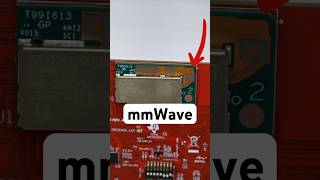

The Future of mmWave Sensors at CES
44sHigh-tech innovation with practical applications, appealing to tech enthusiasts and smart home users.
▶ Play Clip"Title promises the future of mmWave and delivers a solid demo, though it's essentially a promotional booth tour."
This video, filmed at CES, showcases Texas Instruments' millimeter wave (mmWave) sensors, highlighting their capabilities in detecting subtle movements, vital signs, and gestures while preserving privacy. The presenter demonstrates how these pre-certified modules are easy to integrate into products and discusses the technology's advantages over cameras.
Millimeter wave sensors can detect the slightest movements like a deep breath, previously seen in smart home applications.
Texas Instruments provides pre-certified modules, eliminating the need for RF expertise or FCC certification, making it easy for companies to integrate radar into products.
The necessary green part of the module is small enough to fit in the bezels of small TVs, thermostats, or light switches.
Sensors can have different numbers of transmitters and receivers (e.g., 2TX/3RX for mid-to-low end, up to 4TX/4RX), affecting the dimensions measured and resolution.
More antennas allow finer angular resolution, distinguishing between people sitting close together, like on a couch.
Radar can be placed behind plastic, without a special lens, and hidden behind thermostats or light switches, detecting presence without identifying individuals or invading privacy.
The sensor visualizes data points as dots, enabling fall detection for elderly monitoring and alerts.
AI enables accurate vital sign detection (heart rate, breath rate), gesture recognition, and touchless interaction.
Texas Instruments designs and implements mmWave sensors, with more information available at ti.com/ces.
Texas Instruments' mmWave sensors offer a privacy-preserving, easy-to-integrate solution for presence detection, vital sign monitoring, and gesture recognition, positioning TI as a key player in shaping future smart environments.
What can millimeter wave sensors detect?
They can detect the slightest movements like a deep breath.
00:01
What does Texas Instruments provide to simplify radar integration?
Pre-certified modules that eliminate the need for RF expertise or FCC certification.
00:16
What is the benefit of having more antennas in a mmWave sensor?
It allows finer angular resolution, distinguishing between people sitting close together.
00:57
How can radar be hidden in a home?
It can be placed behind plastic, without a special lens, and hidden behind thermostats or light switches.
01:09
What AI-enabled use cases are mentioned for mmWave sensors?
Accurate vital sign detection (heart rate, breath rate) and gesture recognition.
01:46
Pre-certified modules lower barriers
This is a key selling point that makes radar accessible to companies without RF expertise.
00:16Privacy-preserving detection
Radar can detect presence without identifying individuals, a significant advantage over cameras.
01:09Fall detection for elderly care
This demonstrates a practical, life-saving application of the technology.
01:33AI enables touchless interaction
Gesture recognition without physical contact opens new user interface possibilities.
01:46[00:01] this video here at CES. And do you want to see the future? Well, it starts at check this out. Like millimeter wave sensors, they can detect the slightest movements like a deep breath. We've seen these before in the smart home. And
[00:16] Texas Instruments makes these, and they make it extremely easy for companies and Traditionally, people think of radar as you may need some RF expertise. You may People would need some kind of FCC certification or whatnot. And we've
[00:30] pre-certified module. If you look at this, really only the green part is necessary to put in a product. It can fit in bezels of small TVs. It can fit >> And one thing I found really interesting that I was learning about here at the
[00:43] sensors can have a different number of transmitters and receivers, and it can >> We call it like a two transmit, three receive is what we call kind of our mid to low end. As you go further up, you can have three key, four R or four T,
[00:57] dimensions you can measure and also more resolution. When people are standing very close to each other, sometimes radar can confuse that as one person. If you have more antenna, you're able to see more fine angular resolution. It can
[01:09] sitting on a couch instead of one. And the beauty of this compared to other technologies out there like camera, which still has a place, the radar you can put it behind plastic. You don't need a special lens always. You can hide
[01:21] it behind your thermostats or light switches, and it can subtly detect without identifying or invading privacy in a home. You can get the information many people are out there. >> And what I found fascinating here at the
[01:33] booth was being able to see how a millimeter wave sensor visualizes data points. So, you see all these little dots, and it can tell if someone has fallen over. So, if you're monitoring an elderly person, you'd be alerted about
[01:46] to detect if someone's sitting down at a >> And AI can also enable new use cases in accurate vital sign detection, heart rate monitoring, breath rate monitoring,
[01:59] and also gesture recognition. So, we're able to kind of do some futuristic waving of a hand to to move that and able to tell us stuff very tactile. You don't need to touch anything. You don't need to be close to
[02:12] it for it to recognize these scenarios. >> It's been interesting to hear how Texas Instruments designs and implements millimeter wave sensors here. To learn more, go to ti.com/ces. You'll be surprised at how much Texas
[02:25] Instruments is involved in shaping our future.

⚡ Saved you 0h 02m reading this? Transcribe any YouTube video for free — no signup needed.