
The Science of Smash Burgers
44sEducational and visually descriptive explanation of the Maillard reaction and cooking temperatures appeals to food science enthusiasts.
▶ Play Clip"The title promises a checklist and delivers a concise, science-backed guide, though it could have been more detailed."
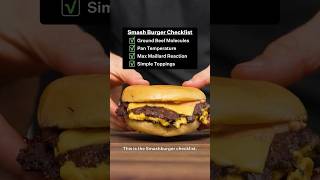
This video breaks down the science behind making perfect smash burgers at home, focusing on the molecular reactions of beef mince and the key techniques to maximize flavor. It emphasizes the importance of high heat, the Maillard reaction, and simple additions to enhance the burger's taste.
Beef mince is primarily composed of water, fat, and protein. Understanding these components is crucial for cooking.
Water evaporates at 212°F (100°C), fat melts at 130°F (54°C), and protein darkens via the Maillard reaction at 300-350°C.
Preheat the pan to 450°F (232°C) to ensure enough thermal energy for water evaporation, fat melting, and protein browning.
Pressing the beef against the pan creates more contact points, enhancing the Maillard reaction and flavor.
The flavor of a smash burger comes from the browned crust. Pairing it with a bun, cheese, and burger sauce lets the flavor shine.
The key to a perfect smash burger lies in understanding the science of cooking beef mince—managing heat and reactions—and using simple ingredients to highlight the crust's flavor.
What are the three main components of beef mince?
Water, fat, and protein.
00:02
At what temperature does water evaporate in cooking?
212°F (100°C).
00:16
What temperature is recommended for preheating the pan?
450°F (232°C).
00:30
What reaction causes protein to darken?
The Maillard reaction.
00:30
Why does pressing the beef against the pan enhance flavor?
It creates more contact points, maximizing the Maillard reaction.
00:44
Molecular Composition
Explains the fundamental science behind beef mince, setting the stage for cooking techniques.
00:02Cooking Temperatures
Provides specific temperatures for key reactions, enabling precise cooking.
00:16Pan Preheating
Emphasizes the importance of high heat for successful browning.
00:30Maillard Maximization
Reveals a simple technique to enhance flavor through contact.
00:44Simple Additions
Highlights that simplicity lets the crust flavor shine, a key principle.
00:57[00:02] научные основы приготовления отличных бургеров в домашних условиях. Во-первых, молекулы говяжьего фарша. Весь говяжий фарш состоит преимущественно из воды, жира и белка. А вот что происходит, когда мы его разбиваем. Во-первых, вода на
[00:16] поверхности начнет испаряться и превращаться в пар при температуре 212°F (100°C). Во-вторых, жир начнет плавиться при температуре 130°F (54°C), что создаст небольшие карманы и отверстия для кружевного теплопроводник, продолжая нагревать белок. И наконец, белок
[00:30] начнет темнеть в результате реакции MAR при температуре от 300 до 350°C. Второй важный параметр — бы рекомендовал предварительно разогреть сковороду до 450°F или 232°C, чтобы у вас было достаточно тепловой энергии для
[00:44] испарения воды, плавления жира и подрумянивания белка. В-третьих, необходимо максимально усилить реакцию майонеза. Вы можете сделать котлету очень тонкой или немного толще, но, прижимая говядину к сковороде, вы создаете больше
[00:57] точек соприкосновения по сравнению с готовой котлетой. И в-четвертых, простые добавки. Прелесть бургера «смаш» заключается в том вкусе, который создается благодаря подрумяненной корочке. булочкой, сыром и соусом для бургеров — вы сможете по- настоящему
[01:11] really let the flavor of the smash burger shine.
⚡ Saved you 0h 01m reading this? Transcribe any YouTube video for free — no signup needed.