
The Salt Experiment That Will Change Your Cooking
42sIt introduces a unique, practical cooking hack that promises to transform viewers' skills, making it highly shareable.
▶ Play Clip"A clever, engaging hook that delivers on its promise of a simple, actionable experiment, even if the core idea is straightforward."
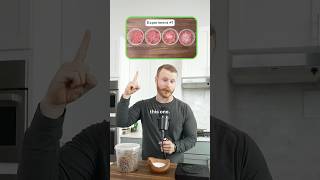
This video presents a simple, scientific experiment to master the art of salting food. By preparing four identical portions with varying salt percentages (0%, 0.5%, 1%, 2%), viewers can calibrate their palate and build a personal reference point for future cooking. The method emphasizes precision and sensory learning over guesswork.
The video posits that properly salting food is the most important skill in the kitchen, yet it is rarely taught directly.
The experiment requires a base ingredient (like vegetables or ground meat), salt, and a kitchen scale that measures to at least 0.1 grams for accuracy.
The core of the experiment is to divide the food into four equal portions and season them with 0%, 0.5%, 1%, and 2% salt by weight, respectively.
By tasting each portion, you learn to identify the taste of underseasoned, properly seasoned, and overseasoned food, creating a lasting reference point for future cooking.
The video presents a simple, repeatable experiment to calibrate your palate to salt levels, turning a vague instruction into a personal, measurable reference point.
Why is a kitchen scale essential for this experiment?
To measure the amount of salt by weight, allowing for precise percentage-based seasoning.
00:16
What are the four salt percentages used in the experiment?
0%, 0.5%, 1%, and 2%
00:42
What is the ultimate goal of the salt experiment?
To create a personal reference point for how different salt levels taste, improving future cooking intuition.
00:57
The 4-Plate Salt Calibration
This is a practical, repeatable method for building a personal sensory reference, a core principle in culinary training.
00:16From Guesswork to Reference Point
The core value proposition is replacing vague instruction ('season to taste') with a concrete, personal learning experience.
00:57[00:01] один эксперимент, это был бы именно этот. Потому что умение правильно солить еду, пожалуй, самый важный навык на кухне. Но проблема в том, что никто никогда не учит вас, каков на
[00:16] нужно испытать на собственном опыте. Итак, вот как это работает. овощей, немного соли и кухонные весы, позволяющие измерять количество продукта с точностью не менее десятой потому что он даёт возможность соединить три вещи, которые
[00:30] никто никогда намеренно не соединяет. Во-первых, сколько соли вы добавили. Во-вторых, это то, какие ощущения вызывает это количество, когда вы сжимаете его пальцами. И наконец, какой вкус у этого количества . Итак, разделите еду на четыре равные
[00:42] порции и приправьте каждую по- разному. 0% соли, 0,5%, 1% и 2%. Затем приготовьте их, попробуйте на вкус и задайте себе следующие вопросы. Какой вкус у говядины без соли? Какой из них на вкус недосолен? Какой из них имеет
[00:57] правильный вкус соли? А какой вкус у пересоленного блюда? И после того, как вы проведете этот эксперимент хотя бы один раз, вы перестанете гадать, сколько соли you're going to have a reference point you can use every time you cook.
⚡ Saved you 0h 01m reading this? Transcribe any YouTube video for free — no signup needed.