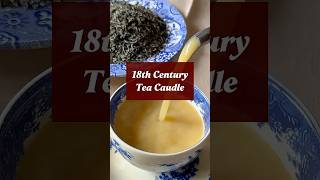

Weirdest 1700s Drink Ever?
45sThe bizarre combination of green tea, eggs, wine, and nutmeg immediately piques curiosity and challenges viewers' expectations.
▶ Play Clip"Delivers exactly what the title promises — a historical drink, but with minimal depth beyond the initial description."
The video explores a historical beverage called tea caudle from 1734, a warm drink thickened with eggs, oats, or breadcrumbs. The host uses young Heisen green tea, a variety with historical significance, and describes the unique flavor and texture of the drink.
Caudle is a warm drink thickened with eggs, oats, or breadcrumbs, popular since the Middle Ages.
The recipe uses young Heisen green tea, one of the fancier teas in the 18th century and one of the five types tossed overboard at the Boston Tea Party.
The drink includes a half bottle of wine and is sweetened with sugar, though it is not as thick as other caudles, resembling a thin eggnog.
The flavor is unique, with green tea and a lemon-like note despite no lemon, and the texture is silky smooth, slightly thicker than tea.
Tea caudle is a historical curiosity that offers a unique taste of the 18th century, blending green tea with wine and spices for a surprisingly pleasant experience.
What is a caudle?
A warm drink thickened with eggs, oats, or breadcrumbs, popular since the Middle Ages.
What are the main ingredients in this tea caudle recipe?
Green tea, wine, sugar, and nutmeg.
00:16
What is the historical significance of the young Heisen green tea used?
It was one of the five types of tea tossed overboard at the Boston Tea Party.
00:16
What is the texture of the tea caudle?
Silky smooth and just a little thicker than tea ought to be.
01:10
Historical Beverage
Provides a direct link to 18th-century culinary practices, showing how common ingredients were used in unexpected ways.
Tea's Historical Significance
The mention of the Boston Tea Party connects the recipe to a major historical event, adding depth to the beverage's story.
00:16Texture as a Key Element
The focus on the silky texture highlights how important mouthfeel is in culinary experiences, even in historical recipes.
01:10[00:00] This is a drink from 1734 called tea caudle. Caudle refers to a warm drink that is usually thickened with either eggs, oats, or breadcrumbs, and it was a very popular beverage in the 18th century, really going all the way back to the middle ages. Now most caudles are made with wine or ale,
[00:16] but this one calls for green tea as the main ingredient. I opted to use young Heisen green tea, which was one of the fancier teas in the 18th century, and it was one of the five types of tea that was tossed overboard at the Boston Tea Party. Now like most caudles, this one is also sweetened
[00:30] with sugar, and while the tea is the main ingredient, it does include a half bottle of wine because, well, why not? Unlike most coddles, this version is not that thick. Some can get as thick as a custard, but this one is more like a thin eggnog, but with green
[00:43] tea. Now I know what you're thinking, green tea, eggs, wine, nutmeg, sounds like a weird combo, and you'd be absolutely correct. The flavor is really unlike anything I've tasted before, and I've tasted some pretty weird stuff on this channel.
[00:56] The thing is, it's not bad, it's just different. It definitely has that green tea flavor, but then it also has like a lemon flavor to it, even though there's no lemon in it. But what I really actually love is the texture. It is silky smooth and just a little thicker than tea ought to be.
[01:10] It's definitely worth a try, something to impress your friends at your next dinner party perhaps. So the full video is up on YouTube, and the recipe is at tastinghistory.com.


⚡ Saved you 0h 01m reading this? Transcribe any YouTube video for free — no signup needed.