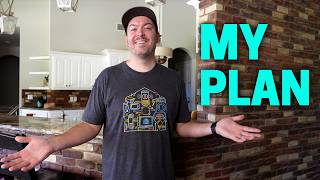

I'm Replacing My ADT Security System!
45sChallenging a mainstream security brand sparks curiosity and debate among smart home enthusiasts.
▶ Play Clip"Delivers a genuine walkthrough of the new house and smart home plans, though the 'turning into' promise is mostly future-oriented."
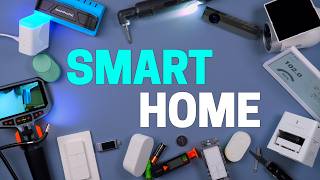
The video documents the creator's move into a new 13-year-old house and their ambitious plan to transform it into a smart home. They identify various existing features and challenges, from a hardwired ADT security system to a detached shop with poor Wi-Fi, and outline their priorities and rules for building a cohesive, local-first smart home ecosystem.
The creator introduces the new house, acknowledging it's not smart yet but has big goals. They plan to share five home automation rules at the end and apply past learnings to make it the best smart home ever.
The house has a hardwired ADT system. The creator plans to replace the controller to integrate with their smart home, using existing hardwired sensors, and notes the wall panel is dangling and easy to remove.
The main reason for moving is the detached shop for filming and testing. However, Wi-Fi signal is terrible there, so they plan to use UniFi wireless devices to extend the network instead of digging a trench.
The house has Honeywell thermostats, which lack temperature sensors and occupancy detection, unlike Ecobee. They are not automated, leading to wasted energy, so they will be one of the first things to fix.
The front door lock is built into the handle, limiting smart lock options. The back door has a standard deadbolt, which is easier to make smart and is used more often, so automating it is a priority.
Making the garage door smart is a high priority. The controllers are older, so they can use Rat GDO, which has a laser parking assist and can run automations based on car presence.
The creator confesses to swearing off Ring doorbells but the house came with one. They plan to replace it with a UniFi doorbell for 24/7 local recording and better privacy, integrating with their smart home.
They want to add PoE cameras for hardwired connections, but will need to add Ethernet drops themselves since the house wasn't pre-wired. They mention the challenge and ask for luck.
The creator responds to comments questioning the move from a smarter house, explaining the dedicated shop will help grow the channel and provide more content.
The backyard has real grass, which means higher water bills but also the opportunity to test robot lawn mowers, which they are excited about.
The old irrigation control is frustrating; Ali asked to make it smart after a bad experience. The creator plans to automate it.
They need to add wiring for access points, currently sitting on a shelf. They plan to mount it on the ceiling for better signal and hide the cord, possibly covering it on a second channel.
The home theater room is bigger than before but echoey, so acoustic treatment is needed. They plan to use a long-throw projector mounted high to avoid kids bumping into it, and will paint over red stains.
After moving in, they discovered random speakers built into the wall with wires in built-ins. They are unsure if they will use them and ask for suggestions.
The previous owners installed permanent holiday lights that connect to Wi-Fi. The schedule feature didn't work, but they plan to integrate them into Home Assistant for automation.
Ceiling fans are everywhere, but the can lights above them cause a strobe effect when both are on. They plan to automate them to avoid simultaneous operation.
The shop has fluorescent lights, which they plan to replace with LEDs.
None of the shades are smart or motorized, which is a hassle. They plan to make them smart.
There are no dimmers, making lighting either blinding or too dark. They plan to add smart dimmers and smart bulbs, and note inconsistent color temperatures, especially in the garage.
The central vac is broken, turning on when plugged in. They consider adding a smart outlet to fix it, but acknowledge robot vacuums may make it obsolete.
Everything must work locally, no exceptions. Devices requiring internet are rejected. They will use Matter, Zigbee, Z-Wave, and ESPHome.
The smart home must be usable without a phone or dashboard. Every light should have a physical switch or button, so guests can control things easily.
Only automations that are needed, not just wanted. Automations should not disrupt normal life if they fail.
Use Home Assistant and a bit of HomeKit as the main control systems. Other systems will be tested only in the shop. Amazon Echo devices are reluctantly allowed but won't have access to the smart home.
Prefer wired millimeter wave sensors over PIR motion sensors for speed and accuracy. If batteries are necessary, they must be rechargeable.
The shop will follow the same rules for testing devices, but only devices that comply will be permanently integrated into the home. The creator is excited to build the smart home the right way.
The creator outlines a comprehensive plan to turn their new house into a smart home, prioritizing local control, usability, and simplicity. They set five clear rules to guide their choices and ensure the result is better than their previous smart home.
What is the first rule for the smart home?
Everything must work locally, no exceptions.
10:08
What does 'grandma-proof' mean in the context of the smart home?
You shouldn't have to use your phone or dashboard to turn something on or off; physical controls should be available.
10:37
What is the rule about automations?
No unnecessary automations; only automations that are needed, not just wanted.
11:01
Which two main systems will be used to control the smart home?
Home Assistant and a little bit of HomeKit.
11:30
Why does the creator prefer millimeter wave sensors over PIR motion sensors?
They are really fast at detecting people and way more accurate.
11:58
What is the issue with the Honeywell thermostats?
They lack temperature sensors and occupancy detection, and are not automated.
01:45
What is the creator's plan for the ADT security system?
Replace the controller with something else to make it work with the smart home, using existing hardwired sensors.
00:34
Why does the creator want to replace the Ring doorbell?
For privacy reasons and to keep recordings local with a UniFi doorbell.
03:32
What is the problem with the ceiling fans and can lights?
They cause a strobe effect when both are on.
07:58
What is the creator's approach to batteries?
Limit batteries wherever possible; if needed, they must be rechargeable.
11:58
Local Control Rule
Establishes a core principle for reliability and privacy in smart home design.
10:08Grandma-Proof Concept
Highlights the importance of user-friendly interfaces for non-tech-savvy users.
10:37No Unnecessary Automations
A practical lesson in avoiding over-engineering and maintaining simplicity.
11:01Battery Limitation Strategy
Shows a preference for wired sensors to reduce maintenance and improve reliability.
11:58Privacy with UniFi Doorbell
Demonstrates a shift towards local recording for privacy concerns.
03:32[00:05] should say dumb home since it's actually not smart yet. I can't wait to show you around. Some spots need some serious help, but I have big goals for turning this into an amazing smart home. Near the end, I'll share five home automation
[00:20] rules I set for myself. I want to apply everything I've learned over the years to make this the best smart home ever. So, hopefully this video gives you ideas for building your ideal smart home, too. When moving into a new home, a top
[00:34] priority is a security system, but this one won't be like our last house. This house is 13 years old and it already has a hardwired security system from ADT. this before, so I guess I could just activate it with ADT. Yeah, right. No
[00:50] way. I'm pretty sure I can replace the controller with something else to make it work great with my smart home. I'll be able to use all the hardwired sensors already installed, like the ones hidden in the doors, which is nice since I
[01:03] also have to figure out how to replace this wall panel. Oh, wait. It's dangling off the wall and not even screwed in. I guess this will be easy to rip off. Now, the main reason why I moved to this house is because of this detached shop.
[01:17] going to be a dedicated place for filming content, testing out smart home tech, and I'm so excited about it. But, there's a problem. The Wi-Fi signal But, there's a problem. The Wi-Fi signal out here is terrible. Yeah, that's not
[01:32] going to be okay when I'm testing out smart home devices. So, I need a bridge the network to the shop. I could dig a trench to have a cable run directly to it, but UniFi makes some pretty cool wireless devices that can extend my
[01:45] network out here that seem fast and reliable. So, hopefully it's not too difficult and it works well. Okay, so one of the few smart home devices that did come with the house were these Honeywell thermostats. I connected them
[01:58] to the network and they're fine. Definitely some limitations compared to Ecobee, which I'm used to. First, there's no actual temperature sensors, so it's only going off the reading of the temperature on the thermostat. And
[02:11] it can't tell if there's anybody in the area. So, I think the combination of more than they need to. Also, they're not automated yet. So, when we leave the house, I forget to change them, so they just stick to the schedule. It's costing
[02:25] me and it's adding up. So, this will be one of the first things I get dialed in for my smart home. We really like our new front doors, but this lock is built into the handle, so it's not your standard deadbolt. I think I've seen
[02:39] smart locks for this type of handle design at CES before, but I'm guessing my options are going to be limited. So, yeah. I'm still not sure what I'm going to do here, but the back door lock, now this is what I'm talking about. It's
[02:52] less beautiful, but I can easily make this smart, so maybe it's more beautiful. We use this door more than the front door, like when I'm going back to the house from the shop, and being locked out is not fun. So, it'll be nice
[03:06] to automate it. And speaking of the doors, making the garage door smart is actually a way higher priority for me right now. Not being able to control the garage doors phone or knowing if I left them open is so annoying. Luckily, the
[03:20] garage door controllers are a little bit older, so I think I can use Rat GDO on all of them. They even have disco version that has a laser on it to help you park, and you can run automations based on if the car is there or not. So,
[03:32] yeah. Sounds fun. All right, I have a confession. I swore off Ring doorbells years ago, but look what this house came with. I know, I know, it's embarrassing. I haven't swapped it out yet, but I will. I plan to replace it with a Unifi
[03:46] doorbell, the same one that I used in my previous house. The reason I choose that is because I can record 24/7 to a hard drive in my house. Now Ring isn't that bad unless you haven't seen the Super Bowl commercial, then you will know that
[04:01] privacy is an issue, and that's why I like Unify keeping everything local in my own house. Plus it integrates really well into my smart home. I've shown how the doorbell can pop up on my TV and other cool automations in the past. I'll
[04:14] everything up, so make sure you're following the channel. Okay, so what about security cameras? Well, I really want to add PoE cameras again like we had before. That way we'll have a hardwired connection and I don't have to
[04:27] worry about batteries. Last time I was able to pre-wire that during the new build process, but with this house, I'll have to add Ethernet drops myself. So, yeah, wish me luck. I've seen comments saying, "Why did you move? Your last
[04:40] house was smarter." I hear you and sometimes I'm thinking the same thing. We're only halfway through this list, but I think it'll be worth it in the long run to have this dedicated shop for growing the channel. And hopefully that
[04:52] means more helpful content ideas for you guys. And while we're here in the backyard, you can see we have real grass instead of artificial turf. And this was a dog. We've been out here every day enjoying
[05:05] it. And you know what real grass means? Higher water bills, yes, but robot lawn mowers. I've been out of the loop since we haven't had real grass for years. So, I'm super excited to test them out. Hey, more robots doing chores around here,
[05:21] the better. And this old-school irrigation control is so frustrating to use. Ali wanted to adjust the watering time, so I walked out there with her and showed her how to use it. She came back into the house later and said, "Please
[05:34] just make that smart. That was horrible." Goal accomplished. Another thing I need to add is wiring for wireless access points. These are dedicated devices purely for Wi-Fi, and they're usually
[05:47] mounted on the ceiling. But, you know where mine is right now? I don't even know if I can show you because it's so offensive. Fine, it's just sitting on the shelf. But, hey, it's actually working pretty decent.
[05:59] Yes, I'm going to properly mount it on the ceiling for a better signal and to hide the cord, and I'll probably cover that on my second channel. I also made a video over there how I got my server rack into this room, even though all the
[06:11] Ethernet went to the garage. So, you can go check that out later if you want. All right, I'm super excited for this room. It's going to be our home theater, and it's bigger than the room that we had before. It's very echoey right now, so
[06:24] I'll obviously need to acoustically treat the room. There's also this cool-looking fireplace in here that I love, but why are there three outlets on it? One right in front of the fire. What in the world? As far
[06:38] to a long-throw projector instead of the short-throw one. I really like the short-throw projector, but the kids were almost always bumping into it with their WWE wrestling matches. So, a long-throw projector that's mounted up high means
[06:52] less people messing with it. And uh don't mind the red stains on the wall. I'm sure nothing died over there. But, for real, we're going to paint in here it looks a little rough around the edges, but I can see the potential. And
[07:06] for running speaker wires, it might be a little tricky since a couple of these walls are exterior, but I have a plan and I hope that it works. What's interesting is after we bought the house and we moved in, I looked up and I saw
[07:18] that there were random speakers built into the wall. I found these here in the the wires for these speakers are actually over here in these built-ins. to use these at all, but if you guys have any suggestions about these or
[07:33] in the comments. Now, when it comes to outdoor lighting, hats off to the previous owners who had permanent holiday lights installed. These will be way easier than climbing a ladder to hang lights every December. The lights
[07:46] actually connect to Wi-Fi, so I tried out the schedule feature in the app. It didn't work, but I'm pretty sure I can pull these into Home Assistant and automate the lights that way, but either way, I'm happy to have these. Other than
[07:58] air conditioners, the next must-have thing here in Arizona are ceiling fans, and luckily, these are all over our new house, even in the bathroom. But, I realized there's a big problem. You see, the way these can lights are installed
[08:13] directly above the fans causes strobe effect. If both the fan and ceiling lights are on, it looks very intense. Hey, I know I have a history of making my house look like a nightclub with RGB light strips, but I'm trying to improve
[08:27] myself here. For real though, these give me an instant headache, and some of these fans are controlled by a wall switch, while others use a remote. But regardless, I'm going to have to automate these ASAP so they aren't on at
[08:39] the same time. Out here in the shop, we have fluorescent ceiling lights, yikes, too. They're okay, but I'm definitely LEDs. Now, when it comes to window shades, none of these are smart or even
[08:53] motorized. They're all manual. Man, I guess I really took for granted having smart shades the past few years. It feels like a part-time job always opening or closing the shades because they're never in the right position. So,
[09:06] I'm going to make these smart for sure. Another big project will be lighting in here. There are no dimmers, and it always feels blindingly bright or so dark we can barely see. So, I'll be adding smart dimmers for the ceiling
[09:18] lights and actual lamps with smart bulbs like this one. But, you want to know the lights are warm, and some of the lights are cool, even in the same room. The worst offender is the garage light on the opener. It's almost hilarious how
[09:31] much this sticks out like a sore thumb. Maybe I should just keep it like this to teach my kids what color temperature is. One feature this house has that our last one didn't it is a central vac. It's kind of broken right now. For some
[09:43] reason it turns on right when it's plugged in and it won't turn off. I think I could add a smart outlet here to solve that problem. But I know these are kind of outdated with robot vacuums taking over so we'll see if I use this
[09:55] or not. All right, you can see I have a lot of work to do to make my home smart. But like I said at the beginning, I want this to be the best smart home ever. So I set a few rules for myself to make sure this smart home is better than our
[10:08] last one. First, everything has to work locally, no exceptions. If it needs an internet connection to work, get out of here. I've seen enough internet outages and companies going out of business to know if a device doesn't work locally,
[10:22] headaches. So I'll be mainly using devices that are Matter compatible, use Zigbee or Z-Wave protocols, and lots of other options like ESPHome. Rule number two, my smart home must be grandma- proof. Okay, I stole this one from Joel.
[10:37] I toured a smart home in Colorado and I love the concept. Basically, you shouldn't have to use your phone or dashboard to turn something on or off. That way if grandma comes over to watch the kids, she's not throwing out curse
[10:49] words because she can't turn something off. So if there's any kind of light, it better have a switch or button by the light switches to control it. Like this lamp has a smart bulb that can only be controlled by my phone or automation
[11:01] right now. Unacceptable. The third rule is really important. No unnecessary automations. I'm humbling myself here and admitting where I've gone wrong in the past with too many automations. Basically, I only want automations we
[11:16] need, not ones we want. Just because I can't automate something doesn't mean I should. And if the automation stops working, it shouldn't disrupt normal life. So yeah, no unnecessary automations. Let's see if I can stick to
[11:30] using two main systems to control my smart home, Home Assistant and a little bit of HomeKit. Now, that doesn't mean I won't test other systems, but that will be limited to the shop. We're done having our home be a test tube for our
[11:44] own sanity. The only exception here is that I have to reluctantly allow Amazon Echo devices so my family members don't disown me, but they won't have access to our smart home. And the last rule might seem silly, but it will help me stay
[11:58] sane. Limit batteries wherever possible. I want to use wired millimeter wave sensors over PIR motion sensors. Millimeter wave sensors are really fast at detecting people now and way more accurate. And I hate when a sensor goes
[12:12] offline because of a dead battery. But, obviously I can't eliminate all batteries, so if I have to use a sensor that needs batteries, it needs to take rechargeable ones. So, those are my five smart home rules. And in the shop, I'm
[12:26] rules, that way I can test more smart home devices for you guys. But, for a device to go permanently into our smart home, it has to follow those rules. I'm home the right way and add a bunch of tech and automations. Thanks for
[12:41] watching. >> Dad, I thought you were mowing the lawn. >> Oh, the robot lawn mower's doing it. >> I'm not a robot.


⚡ Saved you 0h 12m reading this? Transcribe any YouTube video for free — no signup needed.