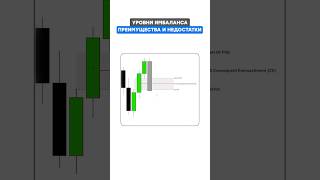

Imbalance Entry Levels: Which One Wins?
45sBreaks down the trade-off between entry frequency and risk-reward ratio in a clear, actionable way that traders crave.
▶ Play Clip"Delivers on the promise of explaining imbalance levels, but lacks depth and is quite short."
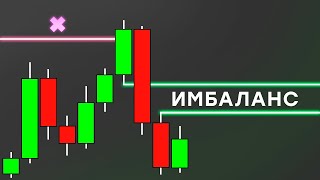
This video explains the concept of order flow imbalances (FVG) in trading, focusing on how to identify and trade them. It discusses the trade-offs between entering at the beginning of an imbalance versus waiting for a 50% fill or a complete fill, using a real example to illustrate the risk-reward ratios.
The beginning of an imbalance offers the most entry points but with the lowest profit potential (PP) ratio. The 50% level is a balanced option, while a complete fill gives the least entry opportunities but the best PP ratio.
In a downward order flow, a bearish imbalance acts as a magnet and resistance zone, from which a short position can be considered.
A bullish imbalance that is not filled to 50% retains its properties as support and a magnet. A weekly imbalance confirmed from the week's opening becomes a key target.
The first short position is opened from the beginning of the imbalance with an RR of 1:2.17.
Entering at the 50% level increases the RR to 2.5, which is more balanced.
Entering on a complete fill gives the best RR. The price shows a strong reaction after the imbalance is completely filled, and a candle shadow can be used for a conservative short entry.
Trading imbalances involves a trade-off between entry frequency and risk-reward ratio. The beginning offers more entries but lower RR, while full fills offer fewer entries but higher RR. Understanding these dynamics helps traders choose optimal entry points.
What is the trade-off when entering at the beginning of an imbalance?
It gives the greatest number of entry points but the lowest profit potential (PP) ratio.
00:02
What is the RR when entering from the beginning of the imbalance in the example?
1:2.17
00:54
What is the RR when entering from the 50% level?
1:2.5
01:06
What does a complete fill of an imbalance provide?
The least opportunity to enter but the best ratio of PPs.
00:14
What does an unfilled bullish imbalance (not filled to 50%) indicate?
It retains its properties as a support zone and a magnet.
00:39
Imbalance Entry Trade-off
Explains the fundamental trade-off between entry frequency and profit potential.
00:02Bearish Imbalance as Resistance
Shows how imbalances act as magnets and resistance/support zones.
00:27Full Fill Reaction
Demonstrates a strong price reaction after a complete fill, indicating smart money behavior.
01:18[00:02] within the imbalance that you should pay attention to first. The beginning of imbalance gives the greatest number of entry points, but with the lowest number of entry points, but with the lowest PP ratio. The 50% level is considered a
[00:14] balanced option, and completely filling the imbalance gives the least opportunity to enter, but provides the best ratio of PPs, which compensates for their rarity. Now a real example. The price moves within the
[00:27] downward order flow. The emerging bearish imbalance acts both as a strong magnet for the price and as a resistance zone, from which we consider opening a short position. Below is a highlighted bullish imbalance that was not
[00:39] filled to 50%. This means that it retains its properties and remains both a support zone and a magnet. In addition, the weekly imbalance was confirmed from the opening of the week . Its initiation will be our key goal. The first short position
[00:54] is opened from the beginning of the imbalance. ratio RR 1 2.17. suitable, so we move on to considering entry from the 50% level,
[01:06] where the RR already increases to 2.5, which looks more balanced. Well, the third option is to enter the fullfill. R here obviously turns out to be the best.
[01:18] The price shows a strong reaction after the imbalance is completely filled. The body of the glow was able to consolidate higher, which indicates the desire of smart money. continue to depreciate the asset. The resulting candle shadow is an upperbull on a lower
[01:30] timeframe, and from it one can consider a conservative short entry with a stoploss conservative short entry with a stoploss for this hay.
⚡ Saved you 0h 01m reading this? Transcribe any YouTube video for free — no signup needed.