
Two Types of Market Structure Revealed
44sThis segment breaks down the core concept of substructure vs. main structure, offering a clear educational hook for traders seeking to understand market dynamics.
▶ Play Clip"Delivers a concise, on-topic explanation of internal market structure, though it lacks depth and examples."
This video explains the concept of internal market structure in trading, focusing on how secondary trends (substructures) form within the main trend. It details how traders use swing structures, imbalances, and specific entry setups to trade corrections and reversals, emphasizing the importance of context.
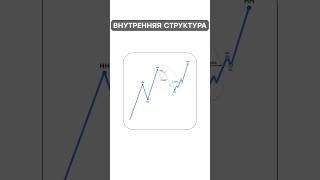
A secondary trend forms within the main structure, distinguishing between a substructure that develops against the main trend and one that moves in the same direction as the primary structure.
The swing structure reflects the key trading range. A marbus (market structure shift) signals the emergence of a substructure, aiming to form a swing structure high or low.
Trading within a correction of the external structure identifies the first significant support zone. Until reached, a bearish trading range is defined from the last high, and a short position is taken using a standard setup based on breaking the structure.
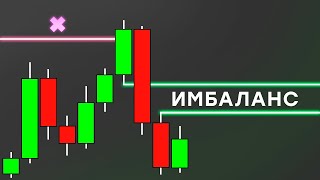
A limit order is placed at the beginning of the median imbalance, with a stop loss behind the overhigh and a take profit at level F, where the fall can end.
A decline continues to the logical reversal zone. The newly formed low may become a future swing structure high, but reversal confirmation only occurs after the confirmed low is updated, an event called a marbus.
To enter a long position, define the range from the last low to the high, and on the correction to the bullish imbalance, open a position from its beginning. Place a stop under the key take on the structural high-high swing.
The most important aspect is the ability to take into account the context in which you work, as rules for internal structure mirror those for external structure.
The video emphasizes that understanding internal market structure, including substructures and marbus events, is crucial for identifying trading opportunities. The key takeaway is to always consider the broader context when applying these structural rules.
What is a substructure in market structure?
A secondary trend that develops against the main trend or in the same direction as the primary structure.
00:01
What is a marbus?
A market structure shift that signals the emergence of a substructure, marking the beginning of a new structure.
00:15
Where is a limit order placed for a short position?
At the beginning of the median imbalance.
00:45
What is the take profit level for a short position?
Level F, where the fall can end.
00:45
When is a reversal confirmed?
After the confirmed low is updated, an event called a marbus.
00:57
Substructure Definition
Clarifies the concept of substructures, which is fundamental to understanding internal market structure.
00:01Marbus as Reversal Signal
Introduces the marbus event as a key confirmation of trend reversal, a core concept in smart money trading.
00:15Short Entry Setup
Provides a concrete, actionable setup for short entries using imbalances and specific stop/take levels.
00:45Context is Key
Emphasizes that structural rules must be applied within the broader market context, a principle often overlooked.
01:36[00:01] which a secondary trend is formed within the main structure. It distinguishes two types: a substructure, which develops against the main trend, and a same direction as the pig structure. Thus, in our work we use
[00:15] substructure and mair structure. The swing structure reflects the key basis, the trading range within which swing occurs and then a marbus occurs, this is a signal of the emergence of a substructure of an
[00:30] goal of which is the formation of a swing-structure high-low. Trading within its of correction of the external structure, and this is the first significant support zone. Until it is reached, we define a bearish trading range from the last high and
[00:45] short position. For this we use a standard setup based on breaking the structure. A limit order is placed at the beginning of the median imbalance. The suplos is placed behind the overhigh, and the take is at level F, where the fall can end. A
[00:57] decline continued right up to the logical reversal zone. The newly formed low may become a future swing structure high. However, at this stage it cannot be Previously, confirmation of a reversal occurs only after the confirmed lubhai is updated
[01:11] . This event is referred to as a mayrbost and marks the beginning of the development of a mayr structure, which always moves in the direction of a pig structure. To enter a moon position, we define the range from the last to the high and, on the correction to the
[01:23] bullish imbalance, we open a position from its beginning. We put a stop under the key take on the structural high-high swing. When the price updates it, the development of the internal formed during the correction is confirmed. The rules for working with the
[01:36] external one. The most important thing remains the ability to take into account the context in which you to take into account the context in which you work.
⚡ Saved you 0h 01m reading this? Transcribe any YouTube video for free — no signup needed.