
Every death is an ATP failure
45sA bold, counterintuitive claim that challenges common understanding and sparks curiosity.
▶ Play Clip"The title is accurate and intriguing, but the content is more educational than shocking — it delivers on the promise without exaggeration."
This video explains that every cause of death ultimately disrupts ATP production, the body's energy source. It breaks down the two essential ingredients—fuel and oxygen—and shows how various conditions, from pneumonia to heart disease to cyanide poisoning, interfere with this process. The core message is that regardless of the specific cause, the final result is the same: the body cannot produce enough energy to sustain life.
ATP is the body's energy source, and all causes of death interfere with its production.
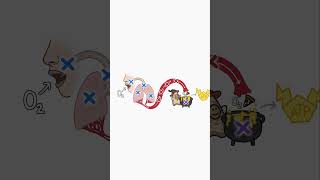
ATP requires fuel and oxygen; starvation is a fuel deficiency, but most deaths involve oxygen issues.
Pneumonia, lung cancer, anaphylaxis, and drowning prevent oxygen from entering the bloodstream.
Heart disease, electrocution, strokes, and trauma disrupt oxygen transport to cells.
Cyanide poisons the cellular machinery, preventing oxygen from being used to make ATP.
What is ATP and what does it do?
ATP (adenosine triphosphate) is the body's energy source, produced from fuel and oxygen.
What is starvation a result of?
Starvation is caused by a lack of fuel to convert into ATP.
00:12
How does pneumonia interfere with ATP production?
Pneumonia fills the lungs with fluid, preventing oxygen from entering the bloodstream.
00:52
How does heart disease disrupt the oxygen pathway?
Heart disease narrows arteries, restricting blood flow and oxygen transport to cells.
01:06
How does cyanide cause death at the cellular level?
Cyanide poisons the cellular machinery that makes ATP, preventing cells from using oxygen.
01:58
ATP is the universal link in all deaths
This central insight reframes every cause of death as a failure of energy production.
Two ingredients for ATP: fuel and oxygen
This simple framework explains why starvation and oxygen deprivation are both fatal.
00:12Oxygen's journey: lungs to bloodstream to cells
Understanding this pathway clarifies how different diseases disrupt ATP production at different stages.
00:40Heart disease is the most common cause of death
This statistic highlights the global impact of circulatory failures.
01:06Cyanide blocks ATP production at the cellular level
This example shows that even with oxygen present, cells can be unable to use it.
01:58[00:03] нашу способность вырабатывать АТФ, источник энергии нашего организма, подавляя те самые процессы, которые поддерживают нашу жизнь. Для образования АТФ необходимы два компонента жизнь. Для образования АТФ необходимы два компонента : топливо и кислород. Без достаточного количества того или иного из этих веществ
[00:17] ваши клетки не смогут производить достаточно АТФ для поддержания вашей жизни. Голодание, например, — это нехватка топлива для его преобразования в Но клетки очень хорошо умеют использовать запасы жиров, белков и углеводов в нашем организме
[00:30] . Таким образом, в большинстве случаев причиной смерти топливо не является ограничивающим фактором. Кислород есть. В норме наша дыхательная система получает кровеносная система доставляет его в различные органы, где клетки используют его для
[00:43] производства АТФ. Большинство причин смерти так или иначе прерывают этот путь. Некоторые вмешиваются в начальный этап получения кислорода. [музыка] Как и пневмония, пневмония наполняет легкие в кровоток . [музыка] Другие респираторные
[00:58] заболевания, такие как рак легких, анафилаксия и утопление, также препятствуют усвоению кислорода из воздуха дыхательной системой. [музыка] Однако большинство причин смерти связаны с нарушением второй части кислородного обмена. Подобно сердечным заболеваниям, самой
[01:13] артерии, ограничивая приток крови ко всему остальному телу. Поражение электрическим током нарушает электрические сигналы, регулирующие сердца, в результате чего они не могут эффективно перекачивать кровь. Инсульты, еще одна
[01:28] [музыка] А внезапная травма может вызвать такую сильную кровопотерю, что давление в кровеносной системе падает, и она не может перекачивать кровь по организму. В каждом из этих случаев, даже
[01:41] несмотря на то, что в организм поступило достаточное количество кислорода , этот кислород не [музыка] А в некоторых особенно странных случаях смерти много кислорода поступает в организм и доставляется туда, куда нужно
[01:55] но клетки не могут его использовать. Цианид, например, нарушает работу клеточного механизма, вырабатывающего АТФ, [музыка] лишая его возможности использовать кислород для завершения реакции. Существует множество способов вмешаться в
[02:09] процесс производства АТФ с помощью музыки. Вот почему существует так много так называемых причин смерти. Но независимо от того, где и как этот путь прерывается, [музыка] конечный результат один и тот же . Ваш организм не способен вырабатывать достаточно энергии для осуществления процессов, необходимых
[02:22] your body can’t produce enough energy to carry out the processes needed to actually maintain life.
⚡ Saved you 0h 02m reading this? Transcribe any YouTube video for free — no signup needed.