
What If We Cool Down the Sun?
50sThe shocking premise of dimming the sun and its immediate effects sparks curiosity and fear, making it highly shareable.
▶ Play Clip"Delivers a vivid, scientifically grounded thought experiment that matches the title's promise, though it's more of a narrative than a deep dive."
This video explores a hypothetical scenario where the Sun's heat is reduced by 75%, examining the catastrophic consequences for Earth. It details how the dimmer, redder Sun would lead to plant extinction, rapid global cooling, and the freezing of the oceans, ultimately making Earth uninhabitable except for geothermal hotspots.
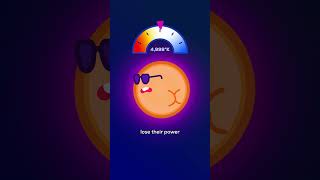
Reducing the Sun's heat makes it 75% dimmer because hot objects lose power faster than temperature. The Sun emits fewer photons with longer wavelengths and less energy, turning it orangey-red.
Plants rely on red and blue light, but the weaker visible light and dominant infrared light bounce off vegetation, causing plants to cease to exist. This has severe consequences for insects and crops.
Humans could survive for a year or two on stockpiles, but freezing would occur much sooner. Within a week, surface temperatures drop by about 10 degrees Celsius.
After a year, average temperatures fall well below zero. Ice spreads from the poles and mountain ranges as the entire ocean surface freezes over.
Ice and snow reflect more sunlight back into space than soil, causing further cooling. Geothermal areas like Iceland with 38°C thermal springs become the only safe spots on a snowball Earth.
Cooling the Sun would trigger a cascade of catastrophic effects, from plant extinction to a frozen Earth, leaving only geothermal refuges habitable. The scenario underscores the delicate balance of our climate and the Sun's critical role in sustaining life.
Sun's Dimming Physics
Explains the non-linear relationship between temperature and luminosity, a key astrophysical principle.
00:04Plant Extinction Cascade
Shows how a single change in light spectrum can collapse entire ecosystems.
00:18Rapid Freezing Timeline
Provides concrete numbers (10°C drop in a week) that make the scenario tangible.
00:31Runaway Albedo Effect
Illustrates a positive feedback loop that accelerates global cooling.
01:01[00:04] down the sun's heat makes it 75% dimmer. That's because hot objects lose their power much faster than temperature. As it cools, the sun emits fewer photons. These have longer wavelengths [music] and less energy, turning our sun orangey
[00:18] red. The drop in solar power would be the least of our worries. Plants usually feed on red and blue light, but this visible light gets weaker and the now dominant infrared light tends to bounce [music] off. Vegetation as we know it
[00:31] ceases to exist with severe consequences for everything from insects to crops. We could probably survive for a year or two before stock piles ran out, but we'd freeze [music] long before that. Within a week, temperatures on the surface drop
[00:45] by around 10°, but the oceans hold on to some stored heat. But after a year, the average temperature [music] falls well below zero. Ice spreads from the poles every mountain range [music] as the entire ocean surface freezes over. And
[01:01] as ice and snow reflect more sunlight back into space [music] than soil, it gets even colder. Geothermal areas like Iceland with 38° thermal springs are now the only safe spots on this snowball Earth. On the bright side, you'll never
[01:16] Earth. On the bright side, you'll never need another pair of shades.


⚡ Saved you 0h 01m reading this? Transcribe any YouTube video for free — no signup needed.