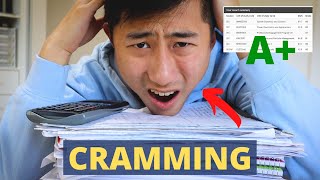

Cramming Got Me Straight A's
60sChallenges the common belief that cramming is ineffective, sparking curiosity and debate.
▶ Play Clip"Delivers on its promise with a practical guide, but the 'straight A's' claim is anecdotal and the intro is a bit long."
The video presents a defense of cramming as a legitimate and effective study strategy, particularly for university exams. The creator, Shane, explains his motivation for cramming, which is rooted in the belief that most academic content is not practically useful, and then provides a detailed, step-by-step guide on how to cram effectively to achieve high grades.
The creator argues that cramming is effective because it forces efficiency and focus due to the pressure of an imminent deadline. He claims to have achieved good grades by using this method.
The core motivation for cramming is the belief that nearly all classroom content, even in a specific degree like engineering, will never be used again in the future. Therefore, studying is only for the purpose of getting good grades, not for practical application.
Cramming is presented as more time-efficient than methods like active recall or spaced repetition, which require revisiting concepts multiple times. Cramming requires learning the material only once, just before the exam.
By not studying during the semester, the creator had more free time to work on other things. This is a key benefit of the strategy.
The stress of an upcoming exam within 24 hours drives intense focus and efficiency, preventing procrastination that is common when an exam is a month away.
The first step to effective cramming is to find out all available information about the exam: what will be assessed, which weeks of material are included, the format (e.g., short answer, calculations), if it's open or closed book, and the time limit.
Create a comprehensive list of all tasks (e.g., reading lecture slides, doing tutorial questions, reviewing assignments, attempting past papers). Then, timebox these tasks by allocating specific time slots for each on each revision day.
When far behind schedule, you must discipline yourself to work without breaks for entertainment or social media. Only take short breaks for essentials like toilet, exercise, or fresh air. Use noise-cancelling headphones to maximize focus.
Be prepared to re-plan and reassess your timeboxes if you fall behind. This may involve cutting out low-value tasks, such as not doing all questions or skipping required readings that are unlikely to be tested.
It is crucial to not sacrifice sleep for more study time. Adequate sleep is necessary for absorbing information and maintaining energy for the next day of cramming.
Cramming is a viable strategy for exam success when executed with discipline and a clear plan. The key is to gather exam info, timebox tasks, maintain focus, adapt your plan, and crucially, prioritize sleep to ensure you retain the information you've studied.
What is the primary motivation for cramming according to the video?
The belief that most academic content will never be used again, so studying is only for getting good grades.
00:58
What are the two study methods mentioned as alternatives to cramming?
Active recall and spaced repetition.
01:53
What is the first step to effective cramming?
Gather all available information about the exam, including what will be assessed, the format, and if it's open or closed book.
04:17
What is the purpose of timeboxing tasks during cramming?
To allocate specific time slots for each task, ensuring you are fair with your time and don't go overboard or underboard.
05:58
What is a suggested trick to learn content faster?
Read through the lecture slides by themselves and skim through them instead of watching the whole lecture.
07:17
What should you do if you are very far behind in your study schedule?
Become an 'absolute machine' by disciplining yourself to work without entertainment breaks, only taking short breaks for essentials.
07:55
What is the key final tip for effective cramming?
Do not sacrifice sleep for more study time, as it is essential for absorbing information and maintaining energy.
10:19
Cramming Works
Directly challenges the common belief that cramming is ineffective, setting the premise for the entire video.
00:4590% of Content is Useless
A provocative claim that most academic content, even in engineering, is not practically useful, justifying the cramming approach.
01:10Pressure Drives Efficiency
Explains the psychological mechanism behind why cramming works: the pressure of an imminent deadline forces focus and prevents procrastination.
02:58Gather Exam Info First
Provides a concrete, actionable first step for effective cramming, emphasizing the importance of understanding the exam's scope and format.
04:17Sleep is Non-Negotiable
A crucial counter-intuitive tip that prioritizes sleep over extra study time, highlighting its importance for memory consolidation.
10:19[00:02] content for each of my four subjects so that's 104 hours of lecture materials and then all the tutorial sheets labs and past papers on top of that and i was time one week before my final exams let's go
[00:18] okay maybe i wasn't that extreme i actually went to the first lecture for starting from week one i was starting from week two so i only had 12 weeks of lecture material for each of these four subjects but nevertheless cramming was
[00:32] still something i absolutely employed last semester contrary to what people might think with all this cramming i didn't fail in fact i would say i did quite well so why does it actually work is it because diamonds are made under
[00:45] pressure hey guys my name is shane and in today's video firstly i'll explain why i cram and then in the second part of the video i'll explain how i cram so that it actually is an effective studying strategy so firstly why did i
[00:58] crap basically it comes down to my motivation behind studying pretty much nearly all of the content that you learn in the classroom whether at high school or in university you won't ever be using again in the future even for a specific
[01:10] degree like engineering ninety percent of what you learn in the engineering degree even if you become an engineer later on ninety percent of that content you will not actually ever need so then why bother studying for all this this is
[01:24] because everyone the educational system universities your parents employers all though learning all this material doesn't mean success in the future so since you can't get past this belief because if you don't pass you won't get
[01:39] degree you don't get the job that means you still have to study for the purposes of just getting good grades and i think there's only one way to achieving good grades by spending as little time as possible and that answer is cramming
[01:53] other studying techniques out there like active recoil and space repetition but these although effective take up a lot more time than if you were to just spend your time cramming for an exam very close to when the exams actually work
[02:06] this is because with methods such as space repetition or active recall it requires you to revisit a concept or topic many many times over during the semester whereas for cramming you only need to visit it once so as i said in
[02:19] the intro for the first 13 weeks of the semester i pretty much didn't do anything except for assignments and therefore i didn't need to spend any first 13 weeks because i could learn them for the first time just before my
[02:33] exams during study vacation week my reasoning was and still is why learn you're going to have to learn it again so why not just learn it once at the very end this meant for the first 13 weeks of semester instead of studying i
[02:46] had a lot more free time to work on other things such as being a degenerate gambler another way that criming actually forces you to be more efficient like a month away you would think to yourself i don't really need to study
[02:58] now there's no pressure for me to do so i might watch a bit of netflix and then watch one lecture and then you just be procrastinating your way through and might just have one lecture and one problem set for the weekend but somehow
[03:11] this little amount of work will fill up the entire time you might also decide after 10 minutes of watching a lecture you want to take an anime break then you find yourself watching and binging an anime all the way until you realize you
[03:23] did nothing productive for the day anyways however with cramming you will be under a lot of stress and pressure because you know whether you pass or will be determined by your actions in the next 24 hours or so before your exam
[03:37] and this will just absolutely drive you to be more focused and efficient for me consistently during the few days leading up to exams i was able to blitz through six to eight weeks of content in one day i was consciously taking a lot less
[03:49] breaks especially when it came to watching videos and relaxing and i was back doing past paper sets one after the other and doing problem sets checking solutions and watching feedback many many times over which overall definitely
[04:03] my studies now you might be losing a little bit in your depth of doesn't impact your exams too much and you'll definitely still remember most of the material you do need to know for the next week or so so now on to how to cram
[04:17] effectively this is very important as leaving things last minute can be very dangerous especially if you do not employ the correct climbing techniques so the first thing you want to do is find out all the information there is
[04:29] includes things like what will actually be assessed which weeks of material will be in the test and if there's certain content that won't actually be assessed want to know the format of the test is it going to be a lot of extended
[04:43] responses is it going to be short answers is it going to be calculations you want to know if there's a qualitative or quantitative focus and means you'll be able to access your notes or if it's going to be a closed
[04:57] book exam in which case you have to prepare a different way ideally you also want to know the time limit and what other resources you might be allowed in the exam these all help you to deduct what you need to focus on what things
[05:09] you actually need to study and what studying methods to actually use now information you want to create a list of all the things you need to do and you each of these subjects since i was pretty much starting from the very
[05:22] beginning i knew i'd have to learn all the content which meant reading through all the lecture slides and if there was a particular part i didn't understand then i would go and watch the actual lecture for that particular section this
[05:34] way i can learn it faster and save a little bit of time then i need to do the tutorial questions for each single week to consolidate my learning and also because i expected similar questions to pop up in the final exam because they
[05:46] were the same format i also needed to review the code for my first three assignments on the different modules and read through the discussion forums to see if there were any important things i might have missed i will also go through
[05:58] and attempt three past papers for each subject and review the solutions for them once this is all done you want to time box these for example i will set myself to finish lectures one to five for finance go through tutorial sheets
[06:10] one to four on day one of revision and read info on the discussion forum to learn more about what's in the exam the main tip is to be fair with your time lenient with yourself and you don't want to also do something that's completely
[06:24] impossible like learning everything in just one hour this means i'll generally have a rough idea of how much time i should expect to spend and i won't go too overboard or too under board with my timing for me a rule i like to use is
[06:37] allotted to break time but if i'm working on a task and i find that i am spending more time than i had actually allocated i would just try to be more myself when time is up because i don't want to
[06:50] be sacrificing quality and i want to still get everything done in this case breaks later on and instead of removing them entirely i might just shorten them so instead of maybe a 20 minute anime break i might just take a five minute or
[07:04] ten minute walk this further encourages me to be more efficient as i want to actually be able to get some breaks into my study routine and it also helps me to de-stress when i do take short walks around the block or get a bit of
[07:17] exercise for example a trick that i often like to employ is that to learn something faster i might just read through the lecture slides by themselves content already and i can just skim through it instead of watching the whole
[07:29] because there might be questions i don't need to really listen to in the middle something then i would actually watch the lecture to make sure i actually fully understood the concept or that topic and that would help to consolidate
[07:42] might depend on it i also will just clearly won't be tested such as things that are just for your own interest and i'll just skip these to save some time as well the third thing you need to know
[07:55] sometimes you will need to become an absolute machine so there will be times especially if you're very far behind in your study schedule and even if you are very very tired there won't be time for you to take a tv break or anime break or
[08:08] even go on social media unless you are asking questions you will need to be able to discipline yourself and only take toilet breaks short exercise breaks and just to get a bit of fresh air and water occasionally one thing that i like
[08:20] and concentration to the absolute maximum for extended periods of time is to use noise cancelling headphones to block out any noise that can possibly distract me from the outside this gets me fully focused and in the zone and
[08:33] i've made a video about my headphones which you can check out up here the most discipline you have to grind through all the work you have to get done with absolute discipline you need to remember what is at stake here it's about whether
[08:45] you pass or fail and if you fail you need to repeat the whole subject a year everything by a year that's going to prevent your graduation that might cost employment you have but you also have to make sure you don't panic and you work
[08:57] through everything with methodically and logically and make sure you work through with discipline to get through all the tasks you need to get done until the thinking i've already studied for four hours now surely it's time for me to
[09:09] take a break but you can only take a break if you had time boxed it and finished it within that four hour period it can be very very easy to just give up maintain this cramming method until the very end until you've finished
[09:23] your time and adapt your study plan where required for example you might have spent too much time learning the content in detail and now you've lost time to work on the past papers and tutorial sheets in this case you will
[09:37] need to re-plan and reassess your time boxes and maybe cut off a few things that you feel at the least value to your final studying routine this can sometimes mean not doing all the questions and maybe just doing every
[09:49] of writing down your answers just reading through and thinking about the might need to sacrifice things entirely like not spending any time at all reviewing your assignments and also not doing the required readings of the
[10:03] highly unlikely they'll actually be tested and if they are they will only be and final thing might seem very contradictory to this climbing technique effectively and utilize it well by making sure you don't sacrifice your
[10:19] your energy for more cramming the next day and it also helps you actually absorb all the information that you studied and learned for the first time probably the night before so the key is do not sacrifice sleep time for more
[10:32] study because if you don't sleep enough you're probably not going to remember the stuff you actually studied for always ensure adequate sleep because it those are the reasons why i decided to
[10:44] cram for my final exams last semester and also i gave you a few tips there sure i crammed effectively and still be able to achieve those straight a's at video then make sure to give it a big like and subscribe to this channel down
[10:58] content where i give more studying tips and tricks tech and university life also what is your favorite studying technique and whether you've tried crime before and how it went as always take care and
[11:12] and how it went as always take care and i hope to see you guys in the next video




⚡ Saved you 0h 11m reading this? Transcribe any YouTube video for free — no signup needed.