
The Real Reason Onions Turn Sweet
44sThis segment debunks a common cooking myth (caramelization) with a simple scientific explanation, making it highly shareable for food enthusiasts and curious viewers.
▶ Play Clip"The title promises a simple explanation and the video delivers exactly that—no fluff, no exaggeration."
This video explains why onions become sweet when cooked, revealing that the sweetness is due to water evaporation concentrating natural sugars, not caramelization. It breaks down the science in a simple, accessible way.
The sweetness comes from evaporation, not caramelization.
Onions are about 90% water and 5-6% natural sugars.
As water evaporates, sugars concentrate, enhancing sweetness.
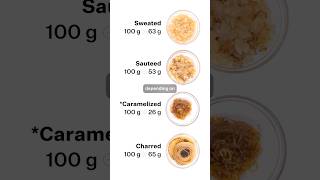
Boiled onions stay translucent and don't caramelize, proving the effect.
Sautéed onions taste sweet even without full caramelization.
What is the main reason onions become sweet when cooked?
Evaporation of water concentrates the natural sugars, not caramelization.
00:01
What is the approximate composition of most onion varieties?
About 90% water and 5-6% natural sugars.
00:13
Why do sugars concentrate during cooking?
Because the water evaporates, leaving the sugars behind to concentrate.
00:26
What happens to onions boiled for about an hour?
They remain translucent and do not darken, as caramelization requires higher temperatures.
00:38
Sweetness from evaporation, not caramelization
Debunks a common cooking myth with a clear scientific explanation.
00:01Onion composition: 90% water, 5-6% sugars
Provides the key numbers that explain the concentration effect.
00:13Water evaporation concentrates sugars
Explains the mechanism behind the sweet taste in a simple, actionable way.
00:26Boiled onions stay translucent
Shows that caramelization is not necessary for sweetness, only heat and time.
00:38[00:01] лук становится слаще при приготовлении не из-за карамелизации? На самом деле всё гораздо проще. Главная причина сладкого вкуса этого лука — испарение, которое полностью меняет его аромат.
[00:13] Вот как это работает. Большинство сортов лука примерно на 90% состоят из воды и лишь около 5-6% натуральных сахаров. Таким образом, когда лук начинает готовиться, эта вода начнет испаряться. Как я недавно проверил, в зависимости от способа
[00:26] и продолжительности приготовления, количество выделяемой воды будет различаться. Но сахара останутся и будут концентрироваться. Например, взгляните на этот лук, который варился около часа, но вода едва достигла
[00:38] точки кипения. Они полупрозрачные, но не темнеют в результате карамелизации или основной реакции, поскольку для этих процессов требуются более высокие температуры. И в этом тесте, который я только что провел, сравнивая обжаренный и
[00:50] карамелизованный лук на жареном сырном сэндвиче, меня поразило, насколько хорош был обжаренный лук. Даже в случае с обжаренным луком сладость отчетливо comes through, especially obviously when you're comparing them.
⚡ Saved you 0h 01m reading this? Transcribe any YouTube video for free — no signup needed.