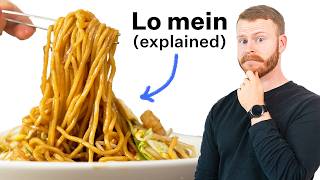

Why I was WRONG about Lo Mein
34sOpens with a strong confession and a relatable takeout disappointment, hooking viewers with the promise of a life-changing homemade alternative.
▶ Play Clip"Title is slightly hyperbolic but the video genuinely shows how homemade Lo Mein can transform your opinion of the dish."
This video explores the art of making Lo Mein at home, debunking the common disappointment of takeout versions. The host presents three distinct variations—classic takeout, spicy beef, and light chicken—while emphasizing the dish's versatility as a framework for using leftovers and customizing flavors.
The host initially disliked Lo Mein due to poor takeout experiences (mostly noodles, little protein/vegetables). Homemade versions changed his mind because of texture control, customizability, and excellent leftovers.
Lo Mein traditionally uses wheat-based noodles (fresh, parcooked, or dried). Fresh or parcooked noodles are preferred for springy texture. Overcooking is a common mistake; cook to the lower end of package time as noodles continue cooking in sauce.
Lo Mein translates to 'toss noodles' (tossed with sauce), while Chow Mein means 'stir-fried noodles' (cooked until crisp). In practice, there is overlap, but homemade allows control over texture.
Lo Mein sauce is primarily salty and umami with slight sweetness. Key ingredients: oyster sauce, light/dark soy sauce, sugar, aromatics (sesame oil, white pepper), and a thickener (cornstarch slurry).
Classic: 50g oyster sauce, 20g light soy, 5g dark soy, chicken bouillon, sugar, white pepper. Spicy beef: more dark soy (10g), beef bouillon, no extra sugar. Chicken: lighter with 25g light soy, 15g oyster sauce, sugar, chicken bouillon.
Aromatics (garlic, ginger, shallots, chilies) are bloomed in hot oil before adding sauce. They balance richness and add complexity. Classic: garlic. Spicy beef: shallot + Thai bird's eye chilies. Chicken: ginger + garlic.
Proteins are lightly marinated and cooked separately at high heat. Shrimp: salt + sesame oil. Beef: soy sauce, sugar, baking soda (tenderizer), chili crisp, cornstarch. Chicken: soy sauce, chicken bouillon, sesame oil, Chinese cooking wine.
Choose colorful vegetables, slice to match noodle shape (long/thin). Cook hearty vegetables first (carrots, cabbage) with salt/soy sauce and cooking wine; add fresh vegetables (bean sprouts, scallions) at the end.
Takeout version was bland and noodle-heavy. Homemade versions had better ratios and flavors. Spicy beef was the host's favorite (savory, spicy, tender beef). Chicken version with ginger was surprisingly good and felt healthier.
Homemade Lo Mein is a versatile, customizable dish that far surpasses takeout in flavor and texture. By understanding the framework of noodles, sauce, aromatics, protein, and vegetables, anyone can create their perfect bowl.
What is the key difference between Lo Mein and Chow Mein?
Lo Mein translates to 'toss noodles' (tossed with sauce), while Chow Mein means 'stir-fried noodles' (cooked until crisp).
3:40
What are the three main categories of noodles for Lo Mein?
Fresh noodles (coated in starch, boil a few minutes), parcooked noodles (partially cooked, oil-coated), and dried noodles (fully cooked in boiling water).
2:22
What is the primary flavor profile of Lo Mein sauce?
Primarily salty and umami with a little sweetness, savory aromas, and a thick texture to cling to noodles.
5:09
What ingredients are used in the classic takeout Lo Mein sauce?
50g oyster sauce, 20g light soy sauce, 5g dark soy sauce, chicken bouillon powder, 10g sugar, white pepper, and water.
6:25
How is the spicy beef Lo Mein sauce different from the classic?
It uses more dark soy sauce (10g), less light soy (10g), adds beef bouillon, and no extra sugar, resulting in a darker, more savory sauce.
6:52
What is the purpose of adding baking soda to beef marinade?
To help tenderize the beef.
10:28
What vegetables are used in the shrimp Lo Mein?
Carrots, red onion, cabbage, bean sprouts, and green onions.
11:33
What is the recommended way to slice vegetables for Lo Mein?
Slice them to roughly match the shape of the noodles: longer and thinner pieces.
11:15
Homemade Lo Mein Changes Everything
The host admits being wrong about Lo Mein after discovering the quality of homemade versions, setting up the video's core argument.
0:08Lo Mein vs. Chow Mein Clarified
Provides a clear linguistic and culinary distinction between two commonly confused noodle dishes.
3:40Sauce Flavor Profile Breakdown
Explains the roles of each sauce ingredient (salty, umami, sweet, aromatic) making the recipe adaptable.
5:09Marinating Proteins for Lo Mein
Demonstrates specific marinades for shrimp, beef, and chicken, including a tenderizing trick with baking soda.
9:49Taste Test Reveals Homemade Superiority
Side-by-side comparison shows homemade versions have better noodle-to-protein ratios and more vibrant flavors.
12:32[00:00] In this video, we're doing a deep dive
[00:02] into Lain, and I'm going to show you
[00:03] three very different versions you can
[00:05] make. But first, I need to tell you why
[00:08] I was wrong about Lain. You see, I've
[00:11] never really been a big fan of this
[00:12] dish. And that's mainly because every
[00:14] time I order it for takeout, it looks
[00:16] like this. Mostly noodles, barely any
[00:18] protein or vegetables, and the flavor is
[00:20] just fine. It's not bad, but I'd almost
[00:23] always rather be going to town on
[00:24] something like Sichuan beef or Kungpow
[00:26] chicken instead. However, that
[00:28] completely changed once I started making
[00:31] it at home. And I now believe that low
[00:33] mane is one of the most useful dishes
[00:34] you can learn for three reasons. First,
[00:37] it's one of the easiest ways to turn
[00:39] random fridge leftovers into a great
[00:41] weekn night meal. Second, it's
[00:42] incredibly customizable. Once you
[00:44] understand the framework, you can make a
[00:46] high protein, low calorie version or go
[00:48] all in on something like a spicy beef
[00:50] lain that will surely tickle the taste
[00:52] buds. And third, which is the biggest
[00:54] one, it makes what might be the best
[00:57] leftovers of all time. So throughout
[00:59] this video, we're going to break down
[01:00] the low main framework and I'll show you
[01:02] all the choices I made to make three
[01:04] different versions. And by the end, I
[01:06] promise you'll know how to create a bowl
[01:08] of glossy, deeply seasoned noodles with
[01:10] crisp vegetables and tender, flavorful
[01:12] protein exactly how you like it. So, I'm
[01:16] going to meet you back here for a final
[01:18] taste test with our three homemade
[01:19] versions versus this takeout version.
[01:21] But to start, let's talk about the
[01:23] noodles. And I think this is one of the
[01:25] biggest upgrades you can make over
[01:27] takeout because of one thing, texture
[01:29] control.
[01:34] Traditionally, Lomain uses a wheat-based
[01:36] noodle, and sometimes they'll be made
[01:37] with egg like these fresh Lain noodles,
[01:39] which gives them that slight yellow
[01:41] color, and more importantly, that
[01:42] springy, chewy texture that holds up
[01:44] really well to the sauce, vegetables,
[01:46] and protein. And how you cook your
[01:48] noodles is really important because if
[01:50] you go to a buffet or a lot of takeout
[01:52] spots, those lowmade noodles have
[01:54] usually been cooked ahead of time and
[01:55] are sitting around in the sauce. So by
[01:57] the time you actually eat them, they're
[01:58] just kind of soft and not that
[02:00] interesting. However, when you make them
[02:02] at home, you have full control. You can
[02:04] cook them fresh and keep that springy
[02:06] chew and bite, which I find absolutely
[02:08] addictive. Now, the biggest mistake that
[02:11] most people make when it comes to the
[02:12] noodles are not knowing which ones to
[02:14] buy because there are definitely some
[02:16] differences. However, if you go to an
[02:18] Asian grocery store, you're usually
[02:19] going to see three main categories.
[02:22] First are fresh noodles. These are often
[02:24] coated in a little bit of starch to keep
[02:26] them from sticking and then need to be
[02:27] boiled for a few minutes like fresh
[02:29] pasta. Second are parcooked noodles.
[02:32] These noodles are partially cooked and
[02:33] then lightly coated in a bit of oil, so
[02:35] they're very quick to work with. And
[02:37] lastly are dried noodles, which are more
[02:39] similar to something like a dried pasta
[02:40] and need to be fully cooked in boiled
[02:42] water before using. Now, you could
[02:44] absolutely use things like spaghetti,
[02:46] ramen, or really any stir- fry noodle
[02:48] and still get a good result. But I do
[02:50] think it's worth grabbing either the
[02:52] fresh or parcooked noodles when you can
[02:55] because part of the fun is just those
[02:56] slight differences in the shape and
[02:58] texture. And I found three different
[03:00] versions at the store that I want to
[03:02] try. So, for our classic takeout lain,
[03:04] I'm going to use standard fresh lomain
[03:06] noodles. For the spicy beef, I found
[03:08] these thicker broad noodles, which you
[03:10] can see they've just got a bit more
[03:11] texture to them for the sauce. And then
[03:13] for the high protein version, I found
[03:14] these thinner noodles. I'm going to use
[03:16] slightly less noodles. So, I want them
[03:18] evenly spread throughout the dish. And
[03:20] now that we have our noodle choices, the
[03:22] next big mistake that most people make
[03:24] after buying them is just overcooking
[03:25] the noodles. So, whatever the package
[03:27] says, I would recommend sticking to the
[03:29] lower end of that range because they're
[03:31] going to cook a little bit more once
[03:33] they are tossed with the sauce. And this
[03:35] brings us to our second component and a
[03:38] question that I've had for a long time.
[03:40] What actually is the difference between
[03:42] lain and chowine? I've never fully
[03:45] understood the difference here because
[03:46] the way these terms are used and what
[03:48] dish is actually served to you at a
[03:50] restaurant could definitely vary quite a
[03:52] bit from place to place. But as far as I
[03:54] can tell, the key difference should be
[03:56] how the noodles are actually cooked with
[03:59] the sauce. Linguistically, chowine
[04:01] translates to stir fried noodles, which
[04:03] would mean they're cooked directly in
[04:05] the pan, and you actually want to
[04:06] develop some browning or crispness on
[04:08] the noodles themselves. And like other
[04:10] stir fries, seasonings and sauces are
[04:12] typically added, but it's definitely on
[04:14] the drier side. Lain, on the other hand,
[04:16] translates to toss noodles. And while
[04:19] it's still made in the walk, you are
[04:20] essentially tossing the noodles with the
[04:22] sauce rather than focusing on kind of
[04:24] stir frying them until they're crisp.
[04:26] Now, in practice, there's definitely
[04:27] some overlap and inconsistency here.
[04:29] Like, I've definitely ordered a chowine
[04:31] that was fairly saucy. So, you might
[04:33] want to double check a menu or ask your
[04:34] waiter if you are ordering this dish.
[04:37] However, the best part again about
[04:39] making it at home is that you can
[04:41] control the texture exactly how you like
[04:43] it. Now, the tricky part when it comes
[04:45] to the sauce is everybody makes it
[04:47] slightly different. And if you watch a
[04:49] bunch of recipes online, it's actually
[04:51] pretty hard to tell what every
[04:53] ingredient is doing. So, I'm going to
[04:55] break down the general sauce flavor
[04:57] profile, then show you the three
[04:59] specific variations I made so we can see
[05:01] how the ingredients are going to change
[05:03] the flavor in the final taste test.
[05:09] At a high level, low main sauce is
[05:11] primarily salty and umami with a little
[05:13] bit of sweetness, some savory aromomas,
[05:15] and then we want the texture thick
[05:16] enough so it clings to the noodles. And
[05:19] once you understand that, all of these
[05:20] ingredients you'll see in recipes start
[05:22] to make a lot more sense because they're
[05:24] playing these specific roles. So, first
[05:26] we have the salty and umami ingredients.
[05:28] These are things like the oyster sauce,
[05:30] light soy sauce, dark soy sauce, and
[05:32] chicken bullion. They're all primarily
[05:34] bringing salty and umami taste. Then you
[05:37] have your sweet ingredients. Oyster
[05:39] sauce actually has some sugar in it
[05:41] already, but you'll typically see plain
[05:43] sugar added as well. And other options
[05:44] could be honey or even something like
[05:46] hoen. Now, the goal isn't to make it so
[05:48] sweet like a sweet and sour sauce, for
[05:50] example. It's more just to have enough
[05:52] sweetness to balance out the salt and
[05:53] make everything more around it. Then
[05:55] finally, we have what I think of as the
[05:57] aroma and finishing ingredients. So
[05:59] these are things like sesame oil or
[06:01] chili oil, white pepper, chicken broth,
[06:04] water, or some Chinese cooking wine. And
[06:06] all of these are going to add a little
[06:07] fragrance and complexity and make that
[06:09] sauce feel more complete. And lastly,
[06:11] there's typically a thickener like a
[06:13] cornstarch lur to make it all saucy and
[06:15] cohesive for the noodles. And now that
[06:18] we understand the core elements at play
[06:20] here, let me show you the three
[06:21] different versions of the sauce that I
[06:23] made. For the classic takeout version, I
[06:25] started with two parts or 50 g of oyster
[06:27] sauce, then one part of soy sauce, but I
[06:30] split this up into 20 g of light soy
[06:32] sauce and 5 g of dark soy sauce. Then I
[06:35] added a spoonful of chicken bullyan
[06:36] powder along with 10 g of sugar. And I
[06:38] finished it with some white pepper and a
[06:40] splash of water just to thin out the
[06:42] sauce. And this first one is a pretty
[06:44] classic slightly sweeter profile which
[06:46] as you can see is going to create that
[06:48] nicely seasoned noodle with that slight
[06:50] brownish tint. Now if we take a look at
[06:52] the spicy beef lain, you'll notice the
[06:55] noodles are quite a bit darker. And this
[06:57] is because I changed a few ingredients.
[06:59] Again, I started with that 50 gram of
[07:01] oyster sauce, but this time I went for
[07:03] just 10 grams of light soy sauce and
[07:05] then added 10 gram of dark soy sauce.
[07:08] So, quite a bit more. I also added 5 g
[07:10] of beef wan and I didn't add any extra
[07:13] sugar. So, this is going to give us a
[07:14] darker, more savory sauce. And the
[07:17] reason this works is because it's going
[07:18] to stand up to the rest of the dish,
[07:20] which is richer beef, heavier spicy
[07:22] aromatics. So, everything is going to
[07:23] stay balanced instead of getting washed
[07:25] out. Then lastly, if we look at the
[07:28] chicken lain, this is going to have the
[07:29] lightest of all the sauces. So for this
[07:32] one, I used 25 g of light soy sauce, 10
[07:35] g of sugar, 15 g of oyster sauce, 5 g of
[07:38] some chicken bullion, and then just
[07:39] added water to thin it out. So to sum it
[07:42] up, we kind of have three different
[07:44] sauce flavor profiles. First, we have
[07:46] that balanced salty umami and slightly
[07:48] sweet classic takeout sauce. Then we
[07:51] have that darker, roastier sauce, which
[07:52] is going to hold up really well to the
[07:54] beef and the chilies. And lastly, a
[07:56] lighter chicken forward sauce that is
[07:58] going to pair very well with lots of
[08:00] vegetables. And once you've chosen your
[08:02] sauce, this is where things start to
[08:03] open up because next we're going to
[08:05] layer in the fresh aromatics. And this
[08:07] is a very fun area of low mane you can
[08:09] experiment with.
[08:15] The way the aromatics work is simple.
[08:17] Dice or mince them up, add them to the
[08:18] hot oil to bloom, then pour your sauce
[08:20] over the top. And this fresh aromatic
[08:23] layer is going to balance the richness
[08:24] of the sauce and make the dish feel more
[08:26] complete. Now, traditionally, Lman keeps
[08:28] it pretty simple. Usually, just some
[08:30] garlic and maybe some ginger. But at
[08:32] home, you can use up any aromatic
[08:34] vegetable you may happen to have laying
[08:35] around. This could be ginger, leaks,
[08:38] fresh chilies, onions, shallots, any
[08:40] pepper, or any vegetable that's
[08:42] aromatic. So, for my versions, I went in
[08:44] three different aromatic directions. For
[08:46] the first one, I kept it simple with
[08:48] just a lot of garlic. You can't really
[08:50] go wrong there. But for the spicy beef
[08:52] version, I use diced shallot and Thai
[08:54] bird's eyee chilis. And this is where
[08:56] I'm going to build in that heat and
[08:57] intensity. The chilis are going to bring
[08:59] that sharp, punchy spice that is going
[09:00] to help cut through the richer beef and
[09:02] sauce. Then for the lighter chicken
[09:04] lain, I went with the classic ginger and
[09:06] garlic combo. The ginger just helps keep
[09:09] everything fresh and almost clean while
[09:11] making that dish feel light and on your
[09:13] feet, ready to go after a workout. So,
[09:15] now that we have our noodles, sauce, and
[09:17] aromatics, you could technically stop
[09:19] right here and have a really solid lain.
[09:21] But to me, where this dish becomes
[09:23] genuinely useful and almost kind of
[09:25] life-changing is in the proteins and
[09:27] vegetables because this is where lain
[09:30] turns into a system. You can make it
[09:32] lighter, you can make it high protein,
[09:34] you can use up leftovers or build it
[09:36] around whatever you have in your fridge.
[09:38] So, let me show you the choices that I
[09:39] made for the vegetables and protein, but
[09:41] try to keep in mind the choices that you
[09:43] may want to make as we go.
[09:49] For the protein, the process is simple.
[09:51] We're first going to lightly marinate
[09:52] it, then just cook everything separately
[09:54] in a high heat walk to develop some
[09:56] browning. And the three most common
[09:58] options you'll see at a takeout spot are
[10:00] chicken, beef, and shrimp. So, that's
[10:01] what I'm doing today. Starting with the
[10:03] shrimp, I added some frozen, peeled, and
[10:05] de vained shrimp into a bowl. And then
[10:07] added a sprinkle of salt and just a tiny
[10:09] drizzle of sesame oil. And when this
[10:11] cooks up, the shrimp is going to be nice
[10:12] and tender and just add that little bit
[10:14] of sesame aroma. Now, for the beef, I'm
[10:17] doing a slightly more involved marinade.
[10:19] So, I started by slicing a piece of
[10:21] sirloin into strips, but really any cut
[10:23] of beef will work. Then I added the beef
[10:25] to a bowl along with a splash of light
[10:26] soy sauce, a little bit of sugar, a
[10:28] pinch of baking soda to help tenderize
[10:30] it, a spoonful of chili crisp for some
[10:32] heat and fat, then a bit of cornstarch
[10:34] to help it brown and stay juicy. Mix
[10:36] that together and you get these nicely
[10:38] coated, well seasoned pieces of beef.
[10:40] Then for the chicken, again, I'm keeping
[10:42] it pretty simple here. A splash of light
[10:44] soy sauce, a little chicken bullion
[10:46] powder to really boost that chicken
[10:47] flavor, some sesame oil for more aroma,
[10:49] and then a bit of Chinese cooking wine.
[10:52] Mix that up and you've got a really
[10:53] clean, wellseeed base. And now that
[10:56] we've got our proteins covered, let's
[10:58] talk the vegetables. And this is where I
[10:59] think Lain really starts to shine
[11:01] because the vegetables are what are
[11:03] going to bring the color, texture, and a
[11:05] lot of the visual appeal.
[11:10] So, the general approach is simple.
[11:12] First, we're going to choose a variety
[11:13] of colored vegetables. Then, we're going
[11:15] to slice the vegetables to roughly match
[11:17] the shape of the noodles. So, longer and
[11:19] thinner pieces. Then we're going to cook
[11:21] the hearty vegetables in the walk with a
[11:22] little salt or soy sauce and a splash of
[11:24] Chinese cooking wine. And lastly, stir
[11:26] the fresher vegetables in at the end. So
[11:28] these are things like bean sprouts and
[11:30] scallions. So for a shrimp version, I
[11:33] went pretty classic with carrots, red
[11:35] onion, cabbage, and then some bean
[11:36] sprouts and green onions, which I'm
[11:38] going to toss in at the end. So you can
[11:40] see me cooking up the carrots, onions,
[11:41] and cabbage first. Then once everything
[11:43] else is in there, I threw the sprouts
[11:45] and scallions in with those noodles. For
[11:47] the spicy beef, I mixed it up a little
[11:49] bit. I used some bell peppers, carrots,
[11:51] green onions, and then I found these
[11:53] really nice mushrooms. And this is a
[11:54] good example of thinking about contrast.
[11:56] You've got the darker mushrooms, the
[11:58] bright peppers, and everything's going
[11:59] to play off each other nice and
[12:01] visually. Then for the chicken version,
[12:03] to make a lower calorie version, I kind
[12:05] of upped the amount of vegetables. I use
[12:07] some Chinese broccoli, yellow squash,
[12:10] bell pepper, red onion, and bean
[12:12] sprouts, which are tossed in at the end.
[12:14] And as you can see, all of these choices
[12:16] really layer together. They're all low
[12:18] main, but visually they have a
[12:20] completely different feel depending on
[12:22] the vegetables we use. So now let's do a
[12:26] final taste test and compare them to the
[12:29] takeout version. Okay, so let's do the
[12:32] final taste test. I have already kind of
[12:33] tasted them individually as I was making
[12:35] them. But it's always so illuminating
[12:37] when you actually taste things side by
[12:39] side. So let's do just that. And I think
[12:41] right away we can see the takeout lain.
[12:44] Like this is what I feel like I would
[12:45] always get into. It feels like it's
[12:47] mostly noodles. Like there are some
[12:49] vegetables. There's some bell peppers.
[12:50] There's a little broccoli in here. There
[12:52] are some pieces of chicken, but overall
[12:54] it kind of feels like more of noodles.
[12:57] But let's give it a shot.
[13:00] So, I've not ordered from this
[13:02] particular place before, but I would say
[13:03] that echoes my common experience with
[13:05] lain and why I was never a big fan of
[13:07] it. It's kind of one of those dishes
[13:08] where it's just kind of fine. It doesn't
[13:10] make me feel anything. It's it's a dish
[13:12] that I would hope maybe someone else
[13:14] would order so I could have like a bite
[13:16] or two of it, but I would much rather be
[13:18] ordering a lot of other things on the
[13:20] menu. However, like I said, that changed
[13:23] when I started making it at home. And as
[13:25] you can see right away visually with the
[13:28] ratios of kind of the noodles and
[13:29] proteins very different in our homemade
[13:32] versions. And that's why I think it's
[13:34] just such a good dish to make at home
[13:35] because, you know, mostly noodles versus
[13:38] mostly protein and vegetables or kind of
[13:40] half and half rather. Um, not to mention
[13:42] the different flavor profiles as well.
[13:49] So, for this first one, sauce and
[13:51] noodle-wise, I would say this is fairly
[13:53] close to the kind of takeout version.
[13:55] Again, very similar noodles, a little
[13:57] bit thicker, which I like over the
[13:58] takeout version. And then the sauce,
[14:01] it's a little bit sweet, a little umami,
[14:03] a little salty, but not any way
[14:04] overpowering. Just like a good classic.
[14:06] You could mix up this version with any
[14:09] variety of like vegetables and proteins.
[14:11] You're going to be in for a good time.
[14:13] However, now we're going to move to
[14:15] number two, and this is the spicy beef
[14:17] lain, which I love spicy stuff. So, this
[14:20] is not something that you can really
[14:21] order a lot of places. So, more beefy
[14:24] sauce, spicy components in here. Let's
[14:27] get into it.
[14:34] For me, I think this is like the best
[14:36] lain that I've ever had because I kind
[14:37] of made it exactly how I wanted it. Um,
[14:40] but the spiciness you get from those tai
[14:42] bird's eye chilis and then the sauce
[14:44] isn't quite as sweet, but it's it's much
[14:46] more savory from kind of that um the
[14:49] beef bullion we put in there. And then
[14:51] the the tender beef pieces are just
[14:54] really nice to bite into. And then I
[14:55] really like that mix of kind of the
[14:57] mushroom with the bell peppers and you
[14:59] get a little freshness from those
[15:00] scallions in there. Um, for me that's
[15:03] yeah, this is probably the best lain
[15:05] I've ever had. I think noodle-wise these
[15:08] are a decent option, although I think I
[15:10] do like the texture of kind of those
[15:11] fresh lain noodles. Little bit thicker.
[15:13] These are a little bit thinner, but
[15:14] still really, really good. And lastly,
[15:17] let's kind of go to our healthy chicken
[15:20] um lain. So, more vegetables, more
[15:23] protein in this, just less noodles to
[15:25] kind of lower the calorie count.
[15:30] It's crazy how the ginger comes through
[15:32] in this. It makes such a big difference.
[15:33] Like, you get Thai chilis here. You get
[15:36] kind of just garlic here. Um, the ginger
[15:39] just it it makes it feel more healthy.
[15:41] Um, I just I really like ginger for
[15:45] being like a lower calorie kind of
[15:46] healthier version. This one is
[15:48] surprisingly good.
[15:50] So, this taste test totally sums up why
[15:52] I'm such a big fan of making low mane at
[15:54] home. Each of these kind of brings
[15:56] something else to the table. Um, and
[15:58] they're kind of like an upgrade over
[16:00] over, you know, the takeout version,
[16:01] which again, it's fine, but again, when
[16:03] you can mix in more vegetables, which
[16:05] when you can change your sauces, change
[16:07] up the aromatics, and really shape the
[16:09] direction of your dish, it's really,
[16:11] really fun. So, we're going to have
[16:12] recipes for each of these linked down
[16:14] below, as well as in the Cookwell app.
[16:16] And we're going to have a low man
[16:18] framework as well where you can actually
[16:20] edit your ingredients to match whatever
[16:22] you may have in the fridge, freezer, and
[16:23] pantry to make some great low man at
[16:25] home. But anyway, that is going to wrap
[16:27] it up for me in this one. Let me know
[16:29] which version of these you want to make
[16:30] down below, but I will catch you all in
[16:32] the next one. Peace y'all.


⚡ Saved you 0h 16m reading this? Transcribe any YouTube video for free — no signup needed.