
You Don't Need $2M to Live Longer
46sChallenges the misconception that longevity is only for the ultra-rich, offering a relatable and hopeful message.
▶ Play Clip"The title promises insights into longevity, and the interview delivers substantive information, though it's a podcast-style conversation with some filler."
Dr. Gene T. Shih, a longevity expert with 40 years of research experience, discusses the importance of tracking biomarkers to optimize health and prevent chronic diseases. He emphasizes that normal lab results are not optimal and that proactive, personalized approaches can add decades of healthy life.
You don't need to spend millions like Brian Johnson; a longevity program can be nearly free and still significantly improve health.
How you feel now isn't a reliable indicator of aging; biomarkers reveal future disease risks.
Dr. Shih would track NAD because cells need it for energy; NAD declines with age, often starting earlier than expected.
Start testing NAD around age 30, or even earlier; about 25% of teenagers are deficient.
Longevity is about quality of life, not just years lived; many diseases are preventable with a healthier body.
Sleep quality, recovery, and pain levels are simple indicators of potential future health issues.
Doctors are trained to manage diseases, not optimize health; 'normal' lab results don't mean optimal.
Eight root causes, including inflammation, oxidative stress, and cellular senescence, are often missed in standard checkups.
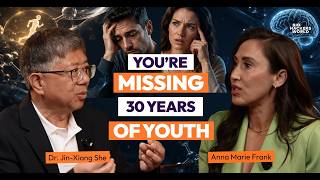
With a holistic, personalized approach, most chronic conditions can be reversed, potentially adding 30 years of healthy life.
CRP is not on standard panels; low-level chronic inflammation, indicated by CRP, is linked to many diseases, but over 3,000 inflammatory proteins exist.
Insulin resistance is the primary driver of type 2 diabetes and is not routinely tested; it should be a standard check.
Uncontrolled glucose leads to high risk of complications; monitoring A1c and complications is critical.
Precision medicine identifies the exact cause of a problem, allowing targeted treatments with fewer side effects than general approaches like chemotherapy.
Proactive health management through biomarker tracking and precision medicine can prevent and even reverse chronic diseases, offering a longer, healthier life regardless of budget.
Longevity is Affordable
Challenges the misconception that longevity programs require huge budgets.
Quality Over Quantity
Reframes longevity as healthspan, not just lifespan.
03:02Doctors Treat Disease, Not Health
Explains a systemic gap in healthcare that viewers can address proactively.
05:04Reversing Chronic Conditions
Offers hope that many chronic diseases are preventable and reversible.
08:29Precision Medicine Explained
Clarifies a complex concept with a concrete example (chemotherapy vs. targeted therapy).
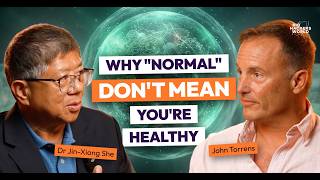
13:08[00:00] You don't have to be Brian Johnson to spend two million dollars a year to have a longevity program. You can spend almost nothing and live much much healthier. What a laboratory test on your annual physical, let's call it normal, doesn't mean it's optimal.
[00:17] Go back and wait until you are much thicker and come back and see me, I'll give you some drug or give you a cut and to fix the problem. Biohackers World Podcast.
[00:35] We are here in New York City at Biohackers World, and I have the pleasure of sitting down with Dr. Gene T. So, you know that chronic disease doesn't start in your 70s. It often starts much earlier, sometimes in your 20s and 30s.
[00:50] So the way you feel in your body right now may not be the best indication of how well you're aging. Instead, you've got to look at the biomarkers that tell you how the symptoms in your body may develop later.
[01:02] So today I've got Dr. Jim Shee here, and he has 40 years of research experience with over 400 academic publications. He is a world-renowned expert in genetics, cancer, diabetes, and precision medicine.
[01:16] He is also the founder of G-Infinity Precision Medicine, and today we're going to talk about his work and how he is changing the way we measure and optimize human longevity and aging.
[01:29] Dr. Shih, welcome. Thank you. I'm really excited to talk to you all things biomarkers, but first let's start with a warm-up question, okay? Sure. All right. So if you could choose one biomarker, only one biomarker, to track for the rest of your
[01:43] life, which one would it be? NAD. NAD, and why is that? because our cells need energy to function. Without NAD, we cannot produce energy, period.
[01:55] And as you grow older, I heard your NAD starts to reduce. A somewhat true and somewhat false statement. Yes, NAD does decline with age,
[02:08] but the decline happens much, much earlier than people anticipated. So at what age do people start to think about their NAD and start measuring it and maybe even supplementing for it?
[02:20] As soon as possible. For most people, you should test if you are around 30 years of age or, if possible, even some toddlers, infants can be deficient in NAD.
[02:35] Infants and toddlers can be deficient. About 25% of teenagers are deficient in NAD. and infants and toddlers with health issues are often deficient in energy. Wow. Well, thank you for that.
[02:48] All right, let's get to the main question. So you spent decades studying disease, aging, human biology, and looking at the average person today, the average person in the population, what do you think we're still getting wrong about longevity?
[03:02] Longevity is not about how many years you can live. It should be more about how well you can live and have a better life for as long as possible.
[03:17] So we are going to age, but is it possible that the disease states that we experience as we age aren't guaranteed or necessary? We can prevent many of the diseases that we see today Most issues are preventable even including infectious diseases If you build your body healthier you can
[03:44] defend the infections much much better than if you are not in a healthy state. Right. So if you're somebody watching and you're in your 30s, for example, most people in their 30s
[03:57] still feel pretty good. But what are some of the signs that they should look at in terms of how their body is aging? Many potential issues that people can watch and spot potential problems.
[04:11] A very simple one is how well you sleep and how well you recover and how much pain that you have.
[04:23] So anything that you feel a little off can be an indication of trouble for the near or longer term future. A lot of people go to their doctor once a year. Their doctor's visit in the U.S. maybe lasts for seven minutes, and they get a clean bill of health, everything is okay. What else should they be asking for, or what is wrong with that type of encounter?
[04:47] The doctors, as you know, you are a doctor, and I worked in medical schools for almost 40 years. I know how doctors are trained. Unfortunately, the doctors are not trained to take care of people's health.
[05:04] They are trained to deal with diseases. Health and wellness are not on the top of their mind. That's not their job, unfortunately. What the laboratory test on your annual statistical, let's call it normal, doesn't mean that's optimal.
[05:24] So in longevity and awareness space, we should be talking about optimization so we can defend, think much better, we can prevent issues that may happen years or even decades into the future.
[05:41] It's all about optimization, not about what's normal. That's what your doctor will tell you. You will never look normal. Go back and wait until you are much thicker and come back and see me.
[05:53] I'll give you some drugs. We'll give you a cut to fix the problem. Right. Yeah, and just to clarify, I'm a PhD, not an MD. Okay. So I can't even prescribe you an aspirin.
[06:05] Doctors are trained to treat disease, not really prevent disease, right? So it's not their fault. it's just how they were trained, right? So what are some of the key biomarkers that aren't in a normal blood panel
[06:18] that people might talk to the doctors about and see if they can start tracking? We even don't track the most basic biomarkers that I call the root causes of disease.
[06:31] The doctor's office is designed to detect or diagnose diseases or symptoms, not how well you are doing or what are causing the diseases.
[06:46] And there are eight different types of root causes that we look at that I believe are very important. The first one that everyone knows is inflammation.
[06:58] Doctors know about inflammation. They do pay some attention to inflammation. but what we don know for example is that chronic inflammation is primarily caused by oxidative stress or phrenoticals and cellular senescence
[07:16] I would bet 90% of practicing doctors don't know what cellular senescence is. Right, so cell senescence is basically like the zombie cells.
[07:28] the cells may be supposed to die, refuse to die, and it cannot carry out their normal function but it secretes a lot of inflammatory cytokines and other
[07:40] molecules that can have a major impact on their surrounding cells and make water travel all over the body and cause problems. So these are the type of root
[07:53] causes that we totally miss in the doctor's office. And nutrition, micronutrients and macronutrient environment, we never catch them in the
[08:05] doctor's office. These are common root causes or common factors that we shouldn't look for, that we can optimize for preventable purposes, but also to
[08:17] manage and reverse chronic conditions. We can actually reverse most chronic conditions now if we can detect, we can detect
[08:29] if people actually try to detect the root causes and take a holistic precision and personalized approach. I believe that we can give people 30 years
[08:41] back that are lost because of lack of proper nutrition, lack of exercise, lack of sleep, many of the lifestyles that can be
[08:54] easily adopted and doesn't cost a lot of money. Everyone can have a longevity program. You don't have to be Brian Johnson to spend too many dollars a year to have a longevity program. You can spend almost nothing and live much
[09:10] much healthier. We know how to do it and it's a personal choice as to whether you want to get engaged now. Right. So you mentioned information earlier, so let's go back to
[09:23] those biomarkers. So my understanding is like C-reactive protein as an example, is that something that's on a normal blood panel with the doctor or is that something you should specifically ask? Even CRP is not on a normal blood panel.
[09:35] if you have an infection or if you are doing the surgery CRP is usually measured because we have an acute infection CRP goes through the roof and that's
[09:48] actually not very informative because we know what's really important is to test lower levels of CRP that are caused by chronic conditions that include many of the
[10:02] common issues that we know cardiovascular disease, kidney problems and pretty much anything will cause increase in inflammation. CRPs are commonly known
[10:14] but there are over 3,000 proteins that are involved in inflammation and the hospitals don't test almost any of them and there are at least a dozen or so that
[10:30] that we should test and that can be tested pretty easily. And it offers a great amount of information that ultimately goes Let talk a little bit about diabetes and what they could or should be looking at For diabetes you really have to separate into pre stage or even pre
[10:50] for preventable purposes. For that purpose, I really want to monitor insulin resistance. Type 2 and type 1. Type 1 is a childhood autoimmune disease.
[11:04] It's more genetically determined. type 2 is the most common one and type 2 diabetes is primarily due to insulin resistance so you still produce enough insulin but your cells are not
[11:18] sensitive to the insulin that you produce insulin resistance is the number one risk factor for type 2 diabetes and obviously obesity and obese people usually
[11:31] have insulin resistance, so they are tiny tiny incommodations. We don't test insulin resistance
[11:43] in any clinical program, but insulin resistance should be a routine check and it's very common in the population. If you have insulin resistance you are much more likely to develop diabetes and
[11:57] many other health conditions as well. And then once someone has diabetes, what you want to worry about is diabetes complications. You know, kidney problems, cardiovascular issues, brain problems, the whole body is impacted by diabetes.
[12:17] The chance of developing diabetes complications is extremely high, almost down T if you don't control glucose level well enough and so monitoring
[12:34] from dropping A1c and monitoring diabetes complications are extremely important for someone with diabetes so for somebody who is used to just having
[12:49] medicine and health care as usual talk about precision medicine what that means what that does for you? Well precision medicine actually started with oncology with cancer and what that means is the precision medicine tools allow you to
[13:08] identify the precise cause or causes of the problem so now you can target the problem with the solutions that can solve the problem more effectively and
[13:22] with meth side effect. That's what it's about. So instead of just targeting the general population right because you can be within normal range but that's normal for a very sick population to begin with. So this is just really being precise in
[13:36] terms of what a specific patient's body is deficient in or needs or what the symptoms are. Chemotherapy is not a precision therapy because you put everyone on the toxin that kills cancer cells. Now to targeting the treatment, we know which gene is mutating in what
[13:54] patient and then we give an inhibitor or molecule that specifically targets that mutated gene so you have much less side effects associated with
[14:08] chemotherapy. Dr. Hsing, thank you so much for spending some time with us this morning. We

⚡ Saved you 0h 14m reading this? Transcribe any YouTube video for free — no signup needed.