
AI Summary
This video explores hwajeon, Korean flower cakes, through a 1670 recipe attributed to Jang Gye-hyang, a remarkable 17th-century woman. It recounts her defiance of educational restrictions, her poetry's royal recognition, and her cookbook 'Eumsik Dimibang' — the first by a woman in Asia. The video also contrasts her original method of mixing flowers into the batter with modern pressing techniques.
Chapters
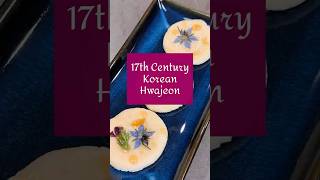
Hwajeon are Korean flower cakes, and the video features a recipe from approximately 1670.
Jang Gye-hyang was born into a time when women, even wealthy ones, were barred from higher education. She secretly learned to read and write from her father.
Her poetry was so accomplished that one piece was eventually recognized by the king.
She married one of her father's students and moved to a remote village, where she worked to feed people displaced and starving after the Manchu invasions.
In her early 70s, she wrote 'Eumsik Dimibang,' a cookbook blending royal court dishes with simple home cooking. It became the first cookbook written by a woman in Asia.
Her hwajeon recipe mixes flowers into the batter, unlike the modern practice of pressing them onto the cake during baking. The cakes are lightly sweet and deliciously soft.
Hwajeon are more than a dessert — they carry the legacy of Jang Gye-hyang, a pioneering woman whose 1670 cookbook shaped Korean culinary history. The video offers both a recipe and a powerful story of resilience.
Mentioned in this Video
Study Flashcards (9)
What are hwajeon?
easy
Click to reveal answer
What are hwajeon?
Hwajeon are Korean flower cakes made with edible flowers and rice flour.
00:01
When does the featured hwajeon recipe date from?
easy
Click to reveal answer
When does the featured hwajeon recipe date from?
The recipe dates to approximately 1670.
00:01
Who wrote the 1670 hwajeon recipe?
easy
Click to reveal answer
Who wrote the 1670 hwajeon recipe?
Jang Gye-hyang.
00:15
How did Jang Gye-hyang learn to read and write?
medium
Click to reveal answer
How did Jang Gye-hyang learn to read and write?
She secretly learned to read and write from her father, as women were not allowed higher education.
00:15
What recognition did Jang Gye-hyang's poetry receive?
medium
Click to reveal answer
What recognition did Jang Gye-hyang's poetry receive?
One of her poems was recognized by the king.
00:30
What did Jang Gye-hyang do after moving to a remote village?
medium
Click to reveal answer
What did Jang Gye-hyang do after moving to a remote village?
She worked to feed people displaced and starving after the Manchu invasions.
00:30
What is the name of Jang Gye-hyang's cookbook?
medium
Click to reveal answer
What is the name of Jang Gye-hyang's cookbook?
'Eumsik Dimibang'.
00:46
Why is 'Eumsik Dimibang' historically significant?
hard
Click to reveal answer
Why is 'Eumsik Dimibang' historically significant?
It is the first cookbook written by a woman in Asia.
00:46
How does Jang Gye-hyang's hwajeon recipe differ from modern methods?
hard
Click to reveal answer
How does Jang Gye-hyang's hwajeon recipe differ from modern methods?
Her recipe mixes flowers into the batter, while modern practice presses them onto the cake's surface during baking.
00:59
💡 Key Takeaways
Hwajeon date to 1670
Provides a concrete historical anchor for a traditional dish still made today.
00:01Jang Gye-hyang defied educational bans
Highlights a woman's determination to learn despite systemic barriers in 17th-century Korea.
00:15Poetry recognized by the king
Shows the exceptional quality of her work, earning royal acknowledgment.
00:30First Asian cookbook by a woman
Establishes 'Eumsik Dimibang' as a cornerstone of Korean culinary history.
00:46Original vs. modern hwajeon method
Reveals a practical difference in preparation that affects the final look and texture.
00:59Full Transcript
[00:01] цветами, называются хваджон, и я приготовила их по рецепту XVII века, относящемуся к Хотя их готовят и сегодня, этот рецепт, датируемый примерно 1670 годом, значительно замечательной женщиной. Ее звали Чан Гёхян, и она родилась в
[00:15] женщинам, даже состоятельным, не разрешалось получать высшее образование, но она вел ее отец, и научилась читать и писать, тайком пробираясь в писал настолько хорошие стихи, что одно из них в конце концов было признано королем.
[00:30] учеников своего отца, и они переехали в отдаленную деревню, где она работала, чтобы прокормить тех, кто был вынужден покинуть свои дома и голодал после вторжения маньчжуров известность она получила лишь в начале своих 70-х. Именно тогда она написала «
[00:46] Эумсик Димибанг», кулинарную книгу, в которой сочетались блюда королевской кухни и простые предназначалась только для неё и её семьи, но поскольку это первая, а женщиной в Азии, она стала краеугольным камнем истории корейской кухни. В её
[00:59] рецепте хваджона цветы нужно смешивать с тестом, и я красивее просто вдавить их в пирог во время выпечки, как это часто делают сегодня. В любом случае, эти слегка сладкие рисовые лепешки восхитительно мягкие и
[01:11] глубже погрузиться в историю, подписывайтесь на мой канал на YouTube, а рецепт вы найдете на сайте me on YouTube, and the recipe is at tastinghistory.com.