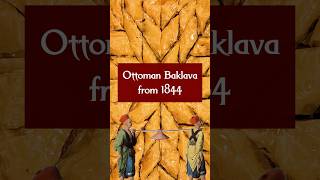

Baklava's 200-Year-Old Ottoman Secret
44sReveals an ancient royal tradition behind baklava that most people don't know, sparking curiosity and cultural fascination.
▶ Play Clip"Delivers on the promise of historical baklava with a solid blend of history and recipe, though a bit thin on detail."
This video explores the history of baklava, tracing its origins to the Ottoman Empire and its connection to the Janissary corps. It also provides a historical recipe for baklava, detailing the ingredients and preparation method.
Baklava is nearly 200 years old, with the custom of preparing it dating back to the 16th century.
Baklava was prepared and displayed on trays covered with thin cloth. Every ten men would return to their barracks with it, a tradition that continued until 1826.
Sultan Mahmud II ended the Janissary corps after they rebelled, leading to their arrest or exile. However, baklava itself remained a lasting culinary legacy.
The recipe comes from 'Melceü't-Tabbahin', an old cookbook containing baklava recipes with fillings described as ordinary or with pistachios.
The baklava is soaked in a syrup made from sugar, honey, or similar sweeteners, which gives it an ideal level of sweetness.
The full video and recipe are available on YouTube and at tastinghistory.com.
Baklava's history is deeply intertwined with the Ottoman Empire and the Janissary corps, and its enduring popularity is a testament to its deliciousness. The video offers a glimpse into both the historical context and a traditional recipe.
Baklava's Age
Establishes the dessert's long history, setting the stage for the historical narrative.
00:01Janissary Baklava Tradition
Reveals a unique cultural practice linking baklava to military life.
00:13End of the Janissaries
Connects the dessert's history to a major political event, showing how food outlives institutions.
00:37Historical Recipe Source
Provides a concrete, verifiable source for the recipe, adding authenticity.
01:02[00:01] которому почти 200 лет. Именно такая пахлава с пахлавой. Этот обычай берет начало с XVI веке и начинался на 15-й
[00:13] готовить пахлаву, которую затем выставляли на подносах, накрытых тонкой тканью. каждые десять мужчин,
[00:25] возвращались к своим казарм, чтобы продолжалась до 1826 года, когда отношения между испортились, и султан Махмуд II решил
[00:37] понравилось, поэтому они подняли его спровоцировал, казармы янычар, известен как «счастливая
[00:49] арестовали или выгнали , что означало конец Но сама пахлава, ну что ж, она осталась. использую, « Melceü't-Tabbahin», была
[01:02] содержит рецепты пахлавы с начинкой из рецепт, какой автор называет обычной или фисташками. Он говорит, что она должна
[01:15] ее пропитают сиропом из сахара, меда или пахлава просто фантастическая. Она имеет придает ей идеальное уровня сладости. Чтобы
[01:27] смотрите полное видео на YouTube, а этот рецепт can be found at tastinghistory.com.
⚡ Saved you 0h 01m reading this? Transcribe any YouTube video for free — no signup needed.