
The Teen King Who Started a War
40sThe dramatic story of a 15-year-old king triggering a massive war is a compelling hook that grabs attention immediately.
▶ Play Clip"The title promises a historical food story and delivers exactly that, though it could have been more concise."
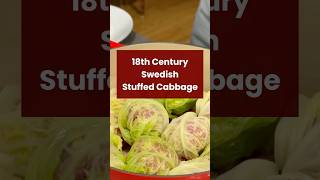
This video explores the historical origins of the Swedish dish kåldolmar (cabbage dolma), tracing its roots back to the Ottoman Empire through the story of King Charles XII of Sweden. It explains how a failed invasion of Russia led to his exile in the Ottoman Empire, where he and his followers encountered stuffed vine leaves, which were later adapted in Sweden using cabbage leaves. The video also includes a brief mention of a 250-year-old recipe and a personal taste test.
Charles XII became king of Sweden at age 15, prompting neighboring countries to attack in the Great Northern War. He initially won victories against Russians, Danes, and Poles.
After a disastrous winter invasion of Russia, Peter the Great crushed the Swedish army. Charles XII fled south to the Ottoman Empire, expecting a two-week stay that turned into five years.
The Ottomans eventually expelled Charles, but he returned to Sweden with debts and Ottoman creditors who brought foods like stuffed vine leaves (dolma).
Since Sweden is not ideal for grape growing, an 18th-century cookbook by Kajsa Warg suggested using cabbage leaves instead, creating kåldolmar (cabbage dolma).
The creator followed a 250-year-old recipe, noting it is more complex than modern versions but worth the effort. The dish is described as spiced beef wrapped in cabbage leaves.
The video highlights how historical events and cultural exchanges can shape culinary traditions, turning a Middle Eastern dish into a Swedish classic. It encourages viewers to explore the recipe and the channel for more food history content.
Who was the Swedish king who fled to the Ottoman Empire?
Charles XII
00:01
What war was fought after Charles XII became king?
The Great Northern War
00:13
Why did Charles XII flee to the Ottoman Empire?
After a failed invasion of Russia, his army was defeated by Peter the Great.
00:26
How long did Charles XII stay in the Ottoman Empire?
Five years, instead of the planned two weeks.
00:26
What dish did the Ottomans introduce to the Swedes?
Stuffed vine leaves (dolma).
00:39
What did Swedish cooks use instead of vine leaves?
Cabbage leaves.
00:51
Who wrote the 18th-century cookbook that suggested using cabbage leaves?
Kajsa Warg.
00:51
What is the Swedish name for cabbage dolma?
Kåldolmar.
00:51
Historical Culinary Exchange
Shows how a political exile led to a lasting food tradition, illustrating the cultural impact of historical events.
00:26Adaptation of Recipes
Demonstrates how local ingredients (cabbage) can replace unavailable ones (vine leaves) to create a new dish.
00:51Historical Recipe Complexity
Highlights that old recipes can be more complex than modern versions, offering a glimpse into past cooking practices.
01:04[00:01] Османской империи в Швецию? Всё это из-за этого парня, короля Карла, или Карла XII. Когда он стал королем в возрасте всего 15 лет, окружающие его страны воспользовались этой возможностью, чтобы отвоевать территории, завоеванные шведами
[00:13] Это называлось Великой Северной войной, и поначалу Карл одержал в ней убедительную победу. Он одержал победу над русскими, датчанами и поляками. У него всё шло как по маслу. Но после неудачной попытки вторжения в Россию зимой (никогда так не делайте) царь
[00:26] Пётр Великий разгромил шведскую армию, и Карл XII бежал на юг, в Османскую империю. То, что должно было стать двухнедельным пребыванием, превратилось в пять долгих султана сражаться на его стороне против русских. В конце концов, османы устали
[00:39] от него, выгнали Карла, и он вернулся в Швецию, но не раньше, чем кучу долгов. Его османские должники последовали за ним обратно в Швецию и привезли с собой ряд продуктов питания. Одним из таких блюд были фаршированные виноградные листья, называемые
[00:51] лучшее место для выращивания винограда. Итак, в кулинарной книге XVIII века Кайсы Варг говорится, что вместо капустных листьев можно использовать капустные листья, и так появилось блюдо kåldolmar, или капустная долма. Я следовал этому рецепту, которому 250 лет
[01:04] от современного варианта, и, честно говоря, мне кажется, он намного сложнее. Но вкус того стоил. Это пряная говядина, завернутая в капустные листья. history, check me out on YouTube and for the recipe, head to tastinghistory.com.

⚡ Saved you 0h 01m reading this? Transcribe any YouTube video for free — no signup needed.