
Breaker Entry: Limit Order & Stop-Loss Strategy
45sThis segment provides a clear, actionable trading strategy that appeals to both novice and experienced traders seeking precise entry techniques.
▶ Play Clip"Delivers a focused, technical explanation of breaker entries, though it's brief and assumes prior knowledge."
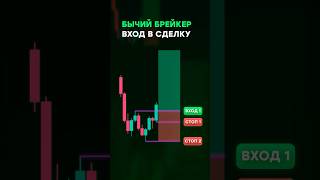
This video explains how to enter a trade using the 'breaker' concept in smart money trading, focusing on placing limit orders and setting stop-losses based on structural levels and imbalances.
The simplest way to enter is placing a limit order at the beginning of the breaker. Stop-loss can be aggressive or conservative depending on the situation.
Aggressive stop-loss is used only if the range minimum coincides with the impulse candle's minimum that broke the structural lower-high. Otherwise, a conservative stop-loss is preferred.
The lower boundary of the breaker is validated for placing a stop-loss behind it by a bullish imbalance, which can be balanced on the next candle, after which growth continues.
The full fill level, not yet confirmed imbalance, is used to open a long position, offering the best risk/reward ratio within a bullish setup, even with a conservative stop-loss.
Sometimes the inefficiency is not completely filled, leaving a gap that price gravitates towards. In that case, entry is made from the beginning of the breaker, which is considered the most optimal method.
A modification uses the volume profile on the range of inefficiency inside the breaker. The level with the least traded volume is likely to become a trigger, and a limit order can be placed there.
The breaker serves as a key support zone, with imbalances providing secondary entry points for better price action and timing. Using volume profile can further refine entries.
What is the basic way to enter a trade from a breaker?
Place a limit order at the beginning of the breaker.
00:01
When is an aggressive stop-loss used?
Only if the range minimum coincides with the minimum of the impulse candle that broke the structural lower-high.
00:14
What validates the lower boundary of the breaker for stop-loss placement?
A bullish imbalance.
00:28
What is the 'full fill level' used for?
To open a long position with the best risk/reward ratio within a bullish setup.
00:57
What happens if the inefficiency is not completely filled?
A gap remains, and the price gravitates towards it, so entry is made from the beginning of the breaker.
01:10
How does volume profile help in entering a trade?
The level with the least traded volume is likely to become a trigger, and a limit order can be placed there.
01:37
Aggressive vs. Conservative Stop-Loss
Provides a clear rule for choosing stop-loss aggressiveness based on structural alignment.
00:14Breaker Lower Boundary Validation
Explains how a bullish imbalance confirms the breaker's support level.
00:28Optimal Entry from Breaker Start
Identifies the most optimal entry method when imbalance is not fully filled.
01:10Volume Profile for Entry Trigger
Introduces a volume-based refinement for entry points.
01:37[00:01] breaker, you must understand how to enter a trade from it and set a stop-loss. The basic and easiest way to place a limit order at its beginning. In this case, stop loss can be either aggressive or conservative depending on the
[00:14] situation. For example, I use an aggressive stop-loss only if the range minimum coincides with the minimum of the impulse candle that has broken through the structural lower-high. Otherwise, I'll always go for the conservative soup-loz. This is
[00:28] inefficiency, which is a marker of active smart money buying and their focus on further delivering the price even higher while protecting the current range. Thus, the lower boundary of the breaker is validated for placing a
[00:44] stop-loss behind it by a bullish imbalance, which can be balanced on the very next candle, after which the growth will continue and a return to the breaker will not be expected. This will be the second more accurate move from the breaker. The
[00:57] full fill level, not yet confirmed imbalance, is used to open a long position, allowing for the best risk/reward ratio within a bullish setup, even with a conservative stop loss. But this does not
[01:10] always happen. And it happens that the inefficiency is not completely filled, but a gap remains, which the price will naturally gravitate towards. Therefore, the entry into the transaction will be made from its beginning. For me, this is the most
[01:23] optimal method for entering a trade. The breaker is a landmark, a key support zone, and the imbalance within it is a secondary zone that is used for better entry, both in terms of price action and timing. The next
[01:37] input is a modification of the previous one and consists of using the volume profile on the range of inefficiency that has arisen inside the breaker. The level where the least volume was traded is highly likely to become the
[01:49] trigger for the price. We can place a limit order blank on it.
⚡ Saved you 0h 01m reading this? Transcribe any YouTube video for free — no signup needed.