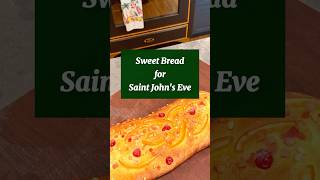

The Pagan Origins of Coca de Sant Joan
45sReveals the surprising pagan-to-Christian transformation behind a beloved Catalan pastry, sparking curiosity about hidden history.
▶ Play Clip"Title is accurate but the content is thin—more history than recipe, and the promised 'how-to' is mostly narrative."
This video explores the history and recipe of Coca de Sant Joan, a traditional Catalan sweet bread baked for the feast of Saint John the Baptist. It traces the bread's origins back to pagan summer solstice celebrations that were later Christianized, and highlights the use of ingredients like candied fruits and anise liqueur.
Coca de Sant Joan is a Catalan bread baked every June for the feast of Saint John. It is a light sweet bread enriched with sugar, eggs, and lard or butter, and can include sweet ingredients like pine nuts or candied fruits.
As Catholicism spread through Europe, pagan festivals were often reinterpreted as Christian celebrations. In 336 AD, the winter solstice was chosen for Christmas, and Saint John the Baptist's feast was set near the summer solstice, on June 24.
Pagans celebrated the solstice with bonfires, and the Christian feast of Saint John adopted this tradition, reinterpreting the fires as a way to scare away evil spirits and witches.
The bread is slightly sweet with a subtle sharpness, and the creator finds it delicious enough to eat the whole loaf. The recipe is available on tastinghistory.com.
What is Coca de Sant Joan?
A light sweet bread from Catalonia, enriched with sugar, eggs, and lard or butter, baked for the feast of Saint John.
00:01
When is the feast of Saint John the Baptist celebrated?
June 24, near the summer solstice.
00:43
Why was the feast of Saint John set near the summer solstice?
Because Saint John the Baptist was born about six months before Jesus, so the date was calculated backward from Christmas.
00:28
How did the Christian church reinterpret pagan bonfires?
As a way to scare away evil spirits and witches.
00:58
Pagan festivals Christianized
Explains how the church repurposed existing traditions to ease conversion, a key historical pattern.
00:14Bonfire tradition adopted
Shows a direct link between pagan solstice fires and the Christian feast, illustrating cultural continuity.
00:43[00:01] каталонский хлеб под названием Coca de Sant Joan, который выпекают каждый июнь к празднику варианты готовят в течение года. Кока — это лёгкий сладкий хлеб, обогащенный сахаром, яйцами и салом или сливочным маслом, а этот вариант, появившийся в
[00:14] цедрой и анисовым ликёром использовать сладкие ингредиенты, такие как кедровые орехи или цукаты (именно их я и использую), или свиные шкварки. Когда католицизм начал активно распространяться по Европе,
[00:28] языческие праздники, являвшиеся частью местной культуры, и было распространенной практикой переосмысливать эти языческие торжества, превращая их в христианские. Вот почему в 336 году нашей эры было решено зимнего солнцестояния. Исходя из этого, они двигались в обратном направлении, поскольку святой Иоанн Креститель
[00:43] Это будет примерно в день летнего солнцестояния. Таким образом, 24 июня стало праздником язычники часто отмечали солнцестояние кострами, поэтому праздник Святого Иоанна перенял эту традицию и решил переосмыслить эти костры как способ
[00:58] отпугивания злых духов и ведьм. Итак, если вы боитесь ведьм, разведите костер и попробуйте этот напиток Coca de Sant Joan. Когда я говорю, что этот хлеб такой вкусный, я действительно так думаю. Он немного сладковатый и имеет едва уловимый
[01:10] резкий. Честно говоря, кусочек восхитителен, но я бы съел всё за один присест, без проблем. Если хотите попробовать сами, я выложу want to try it for yourself, I will put the recipe up on tastinghistory.com.

⚡ Saved you 0h 01m reading this? Transcribe any YouTube video for free — no signup needed.