
Why Price Gets Stuck in a Range
45sExplains a core trading concept in a clear, visual way that appeals to beginners and experienced traders alike.
▶ Play Clip"Delivers on the core concept but lacks depth and examples, feeling more like a teaser than a full explanation."
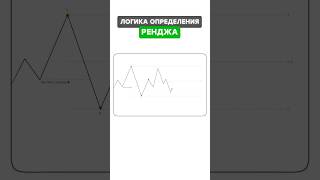
The video explains the logic behind defining a trading range, focusing on how smart money manipulates price within a range to collect liquidity and rebalance volume. It describes how stop-losses are placed beyond range boundaries and how liquidity pools form, enabling large orders to be filled without significant market impact.
When price rises impulsively, a point is reached where sellers outnumber buyers, blocking further markup. Smart capital then forms upper and lower boundaries of a range to rebalance volume, creating a framework for price.
Liquidity for sale is collected below the lower boundary, acting as strong support. Long position stop-losses are placed beyond it, creating a pool of sell orders.
Similarly, liquidity for purchase is formed above the upper boundary. Traders place stop-losses slightly above expected resistance, expecting it not to break, creating a buy-side pool.
Activating stop-losses below the lower boundary provides a pool of sell orders to fill large buy volumes without moving price up at one's own expense. The opposite boundary and its liquidity are then used for further valuation.
A push to buy that floods the market without comparable sellers triggers an upward movement, allowing profit from positions taken at range boundaries.
The video illustrates how smart money uses range boundaries to collect liquidity and execute large orders efficiently, enabling profitable trades by anticipating these manipulations.
What happens when price rises impulsively?
A point is reached where sellers outnumber buyers, blocking further markup.
00:02
How does smart capital rebalance volume?
By forming upper and lower boundaries of a range, creating a framework within which price is held.
00:15
Where is liquidity for sale collected?
Below the lower boundary of the range, acting as strong support.
00:29
Why do traders place stop-losses beyond the lower boundary?
To protect long positions, but this creates a pool of sell orders that smart money can use.
00:29
What is the purpose of the liquidity pool above the upper boundary?
It forms a buy-side pool from stop-losses placed above resistance, which smart money can use to fill large buy orders.
00:43
Market Imbalance
Explains the fundamental trigger for range formation.
00:02Liquidity Below Support
Reveals how stop-losses create liquidity pools for smart money.
00:29Filling Large Orders
Shows a practical method to execute large volumes without market impact.
01:10[00:02] different market participants act during this period? When the price rises impulsively, sooner or later a moment comes when there are significantly more people willing to sell, for example, here, than there are willing to buy. This blocks
[00:15] the possibility of further markup of the asset by smart capital, so they are forced to rebalance the volume. By forming the upper and lower boundaries of the range, they create a framework within which the price will be held. And level 05
[00:29] becomes a benchmark. Liquidity for sale is collected below the lower boundary Liquidity for sale is collected below the lower boundary . as strong support, so when opening long positions, they place stop-losses beyond it
[00:43] same thing happens from above, but in the opposite direction. This is where the liquidity pull for purchase is formed. Traders, when stop-losses slightly above the expected resistance level, expecting that
[00:56] it will not be broken. To fill large buy orders without significantly impacting the market, you need to find, or in our case, create, a zone where there are enough sellers to cover your demand. Stop-losses
[01:10] collected below the lower border completely solve this problem. When they are activated, a which can be used to fill your buy volumes without moving the price up at your own expense. And then the opposite boundary of the range and
[01:25] the liquidity collected behind it will be used for further valuation of the asset. A push to buy, which is flooding the market, will not meet a comparable volume of sellers, which will immediately trigger an upward movement.
[01:38] profit from the positions that you took here and here. y
⚡ Saved you 0h 01m reading this? Transcribe any YouTube video for free — no signup needed.