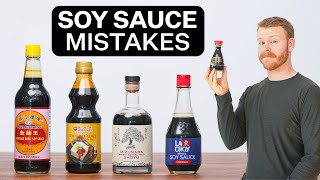

Soy Sauce vs Salt Water: Taste Test
45sA surprising sensory experiment showing how soy sauce is more than just salt, using a nose-plug test to reveal hidden aromas.
▶ Play Clip"The title promises three mistakes and delivers exactly that, backed by food science and practical advice."
This video explores the science behind soy sauce, debunking common mistakes and revealing how to use it effectively. It covers how soy sauce enhances flavor through taste, aroma, and sight, and provides a framework for selecting and applying soy sauce in cooking.
The video covers three common mistakes: not knowing your soy sauce's flavor, buying the wrong type, and following stereotypes instead of techniques.
Soy sauce provides more than saltiness; it offers complex aromas and umami, unlike plain salt water.
Basic brewed soy sauce is 55-65% water, 14-18% salt, 5-8% protein (free amino acids like glutamic acid for umami), 5-8% carbohydrates (sugars and organic acids), and 1-3% minerals and volatiles.
Three steps: sip with nose closed then open, sauté plain rice or vegetables with soy sauce, and add a little salt to balance.
Instead of seeking the 'best,' categorize soy sauces as all-purpose (everyday) or specialty (regional/artisanal).
Popular brands: Pearl River Bridge (Chinese), Kikkoman (Japanese), Sempio (Korean), Healthy Boy (Thai), Datu Puti (Filipino). These are thin/light and substitutable.
Dark soy sauce adds rich color and slight texture; aged soy sauce (e.g., 4-year) offers nutty, roasted notes for special dishes.
Tamari (gluten-free, subtle), barrel-aged (smoky, novel), sweet soy sauces (kecap manis, Thai black) are less recommended for everyday use.
Instead of only using soy sauce when recipes dictate, adopt a technique-based approach to unlock versatility.
Stir-frying, braising, raw garnish/condiment, marinade/cure, sauces/glazes, and flavor booster (e.g., in chili or cookies).
Understanding soy sauce's molecular complexity and adopting technique-based usage transforms it from a simple condiment into a versatile flavor tool. The key is to taste your soy sauce, choose the right type for your cooking, and experiment beyond recipes.
What are the main components of basic brewed soy sauce?
55-65% water, 14-18% salt, 5-8% protein, 5-8% carbohydrates, and 1-3% minerals and volatiles.
03:18
What molecule in soy sauce provides umami taste?
Glutamic acid, a free amino acid.
04:35
What are the three steps to evaluate soy sauce?
Sip with nose closed then open, sauté plain rice/vegetables with soy sauce, and add a little salt.
05:58
Name two categories of soy sauce for purchasing.
All-purpose (everyday) and specialty (regional/artisanal).
10:24
What is dark soy sauce used for?
To add rich, dark color and slight texture to dishes.
13:25
What is the main difference between tamari and regular soy sauce?
Tamari is gluten-free, made with little or no wheat, and has a less salty, more subtle flavor.
15:14
List the six core soy sauce techniques.
Stir-frying, braising, raw garnish/condiment, marinade/cure, sauces/glazes, and flavor booster.
19:20
What is the recommended all-purpose soy sauce for someone who cooks Chinese food most often?
Pearl River Bridge or Lee Kum Kee.
11:08
Why does the video recommend adding salt alongside soy sauce?
Because soy sauce alone may not provide enough saltiness; additional salt balances the dish.
07:47
What is the 'human element' in flavor perception of soy sauce?
Cultural context and memory of dishes influence preference.
08:50
Soy Sauce vs Salt Water
Demonstrates that soy sauce offers complex aromas beyond saltiness, highlighting its molecular complexity.
00:41Composition of Soy Sauce
Provides a clear breakdown of soy sauce's chemical components, explaining its flavor profile.
03:18Tasting Method
Offers a practical, step-by-step method to evaluate soy sauce, empowering home cooks.
05:58Two-Category Purchase Framework
Simplifies soy sauce selection by categorizing into all-purpose and specialty, avoiding overwhelm.
10:24Six Core Techniques
Transforms soy sauce from a recipe ingredient to a versatile tool, encouraging creativity.
19:20[00:01] the three mistakes that most people make when using soy sauce. But, we're going to do this from a food science perspective where each mistake builds on the prior one, and by the end of this video, you'll understand three things.
[00:14] First, how soy sauce makes food taste good in the first place. Two, what types of soy sauce are worth purchasing at the store. And three, how the six core soy sauce technique can be used to create hundreds of the best tasting dishes
[00:28] you'll ever have. And we need to start with that first simple question. Like, how does soy sauce make our food taste good in the first place? When I first probably would have said, "Well, it's salty, obviously, which is why it tastes
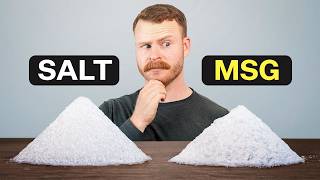
[00:41] good." And that is a big part of it, for sure, but that's not the full story. So, if I plug my nose and take a sip of this salt water, which has the same amount of salt water, which has the same amount of sodium as soy sauce,
[00:59] But, when I open up my nose, I'm not getting any aroma. It's just It's still very salty. Now, if I do that exact same thing with some soy sauce, this gets very interesting very quickly. [Music]
[01:18] it tastes very different. And then, as soon as I open up my nose, I'm getting enveloped in a variety of aromas that are much more interesting than just salt water. Additionally, soy sauce is brown, and this salt water is
[01:33] obviously clear. And this goes to show that there is a lot more going on in soy sauce from a molecular level. And the reality is that when we're using soy sauce in a dish, we're adding a complex spectrum of flavor molecules that hit
[01:47] multiple sensory systems all at once, such as taste, aroma, and sight. And this is why the first mistake that most people make is not knowing what your soy sauce tastes like. And I do mean that very literally. Like,
[02:01] whatever soy sauce you happen to have in your pantry or fridge right now, I'm going to show you how to evaluate it. Because before we even start talking about buying a new bottle of soy sauce in mistake number two, you better
[02:13] understand what your current soy sauce tastes like, or how could you possibly know that one bottle is better than another? So, let's break it down.
[02:25] be used to explain the flavor of food. Taste, aroma, texture, sight, physical, and the human element. And when you read the label on your soy sauce bottle, there's a couple of things on here that begin to tell the story. The main
[02:37] ingredients listed will typically be water, soybeans, wheat, and salt. And to pick out the amount of sodium, but have you ever wondered why there's like a gram or two of protein and then also a gram or two of carbohydrates? Like,
[02:50] where do these come from and how do they provide flavor? Well, as it turns out, these molecules are very important, but there are a whole host of other molecules we can't see on the ingredient label, such as melanoidins, which are
[03:03] what gives soy sauce that dark color. And this is why, in order to understand fridge and pantry, we need to go a little bit deeper and look at all of the molecules that typically make up the flavor of soy sauce. And while the exact
[03:18] ratios are going to vary, a basic brewed soy sauce, which is what many of you likely have, such as Kikkoman or Lee Kum Kee, which are popular brands in the US, is going to be made up of the following. First is 55 to 65% water, and this is
[03:32] the first ingredient listed, and water itself tastes like nothing. But, this water is the main carrier of flavor and is added during the salt brine process, where we also get the next biggest component, the salt.
[03:45] Soy sauce is generally 14 to 18% salt, which is the core preservation and seasoning element that makes it taste salty. And as noted in my deep dive, a 20 to 25% salt water brine is mixed with a soybean and wheat mixture that has
[03:59] been cooked and fermented with koji mold, and this process is where we get the other molecules that create a wide range of flavor. Soy sauce is typically 5 to 8% protein, which are primarily responsible for the
[04:11] umami taste and savory complexity. Now, an important note, these aren't the proteins that you would get in like a chicken breast or a protein shake. These proteins from the soybeans and wheat have been broken down in the
[04:23] fermentation process, leaving us with free amino acids, small peptides, and nitrogenous compounds. And the most important ones are those free amino acids, which is where we get glutamic acid.
[04:35] Glutamic acid is what tastes umami in the soy sauce, and this is the unique taste that pure MSG has. And it's a similar breakdown with the carbohydrates as well. Again, depending on the bottle, there can be 5 to 8% carbohydrates, and
[04:48] these are responsible for the bit of sweet and slightly sour taste, as well as aromatic complexity. Again, the wheat starches are broken down into much typically a mix of simple sugars, like glucose and maltose, organic acids, like
[05:03] lactic acid and acetic acid, alcohols, which can give a touch of aroma, or melanoidins, which are the brown polymers from the Maillard reaction that soybean. And then, lastly, there's generally 1 to 3% of things like
[05:16] minerals, vitamins, and trace compounds, and all of these add depth and complexity. There can be hundreds of aroma volatiles like furans, phenols, esters, aldehydes, and pyrazines, which we can all detect with our nose. And if
[05:31] we lined up like all 10 of these bottles and ran them through lab-style test, we would see some slight but real differences in all of these categories. We could do salinity and pH meters, Brix refractometer, amino acid profiles, or a
[05:44] volatile aroma analysis. And as much as I would love to do all of that testing on these various bottles, you do not need a lab to understand how to use soy sauce well. All you need to do is taste the one you already have in your pantry,
[05:58] and here three simple steps you can start with. First, sip the soy sauce with your nose closed first, and then you can open it up. And I would recommend doing this side by side with some plain salt water or a second bottle
[06:11] of soy sauce, if you already have one, because we tend to learn flavor best through comparison. And here's what you'll likely find. From a taste perspective, salty is always going to be kind of the baseline dominant taste.
[06:24] But, the umami, sweet, sour, and bitter taste will also be present, which helps doing this with salt water, you should easily be able to distinguish the Now, when you open up that nose, you'll be hit with a spectrum of aromas. And
[06:39] rabbit hole itself, but generally, I like to think of the aroma of soy sauce in five to six categories. First is savory and fermented, then we have roasty and malty, fruity, floral, smoky, and kind of a caramelized, almost
[06:53] doing this testing with another soy sauce, you don't really have anything to compare the aroma to, which is what we're going to get into shortly. But, after doing the sip test, the next step is simple. Sauté plain rice or vegetable
[07:07] with a little bit of oil and soy sauce. And I mean that, don't add any salt or other aromatics or anything else for this test. And the reason for this is that it's really hard to understand and learn what soy sauce does if you're only
[07:20] ever using it in the context of following a recipe where there are tons of other ingredients added. However, when you try it on something plain, you'll notice exactly what soy sauce brings and what it doesn't. You'll find
[07:34] the saltiness, the umami depth, and the aroma, but the big realization most of you will also likely have is that while soy sauce is very flavorful on its own, you will feel like the dish is also missing something. And this brings me to
[07:47] the last step, which is adding a little salt alongside it. If you look at most recipes, you'll see this built in. They'll often use soy sauce and still call for a little bit of salt, as well as sugar or some MSG, and it's a subtle
[08:00] point, but it makes a huge difference in actually balancing your food. And hopefully, you can see now why this first mistake is so fundamental. If we do not know what the soy sauce we already have tastes like, how can we
[08:12] even begin to describe some of the differences between all these various bottles here? And to summarize this first part, here's how soy sauce makes our food taste good by hitting the flavor fundamentals. From a taste
[08:24] perspective, it is mostly salty, but it's layered in with umami, a bit of sweetness, sour, and even some bitter, too. From an aroma perspective, that roasty, caramelized, and sometimes fruity notes. From a sight perspective,
[08:37] the colors can range from a reddish brown to almost a dark black. The bottles can feel thinner or thicker on the tongue. From a physical perspective, we tend to salivate from the mixture of salt, umami, and a bit of acid. And
[08:50] lastly, is the human element. The cultural context and the memory of dishes you've had with this is why every country has a slightly different way to make their own soy sauce. And this leads me to mistake number two, which is
[09:03] buying the wrong soy sauce. Now, keep in mind here, the best soy sauce is the one you already have with you and know how to use. But, as I'm going to discuss here, I think there is a case to be made that it is worth it to stock and learn
[09:16] how to use more than just one bottle of soy sauce. bottles of soy sauce last year, I quickly realized how many variations there can be. I had bottles from nine different countries. The sodium levels
[09:32] ranged from 290 mg per serving all the way up to 1,400. Fermentation times varied a lot, too. Some were brewed for over 4 years, others 180 days, and some weren't brewed at all. Most bottles are made with a mix of soybeans and wheat,
[09:45] but some like tamari are made from 100% soybeans. And like we've discussed, all of this will lead to different soy sauce flavor profiles, and the obvious question is, well, like, which one of these should I buy? And most people
[09:58] would assume, well, just get the one that tastes the best. But I realized that's the wrong way to think about that because best is highly subjective. Because we have to keep in mind that preference is shaped by culture and
[10:11] habit, not just flavor chemistry. And if there was one way of making soy sauce that was universally loved more than all of the others, I don't think we'd have all of these different types available at the store. So, instead of trying to
[10:24] it's more useful to think about purchasing your soy sauces across two simple categories. First is all purpose soy sauce, and this is your everyday variety of dishes and all have that similar chemical makeup that I discussed
[10:41] in the first part of this video. And the second category is specialty soy sauces, and these are more regional, artisanal, or significant variations like dark soy sauce that are used for color or sweet sauces that have significant amounts of
[10:55] sugar added to them. And I'll give you the ones that I personally like to stock in these categories. So, first up when it comes to all purpose soy sauces, typically each country has like a best-selling or most commonly used brand
[11:08] that is used for everyday cook with it for anything bottle. And these can be found in the US or online around the world. Pearl River Bridge or Lee Kum Kee are popular Chinese soy sauces, Kikkoman is probably the best-known Japan soy
[11:22] sauce, in Korea the Sempio brand is very popular, in Thailand it's Healthy Boy, and in the Philippines it's Datu Puti. And again, these are all thin or light soy sauces and are typically made in a similar enough fashion with soybeans
[11:36] that traditional fermentation or hydrolysis process. And from a flavor perspective, they typically have thin watery textures, no significant amounts of added sugar, some may be saltier, more umami, or more aromatic than the
[11:49] others, but you can typically safely substitute among these if you are just trying to put great food on the table. And the key here is to pick the one that matches the cuisine you cook the most often and learn how to use it. Now, for
[12:03] sauces out there that I don't prefer like this La Choy soy sauce was probably my least favorite of the bunch. It's mostly just salty without much depth and I probably wouldn't recommend buying it as your main soy sauce. That being said,
[12:17] now that I know what this soy sauce tastes like, I understand its limitations and I could still use this to make a great stir-fry or marinade or dipping sauce if I balance the other ingredients correctly. Because again,
[12:31] you have to remember, soy sauce is typically one part of a dish and you balance it with those other ingredients often will matter far more than just whether it's your absolute favorite bottle. And obviously, if you
[12:46] do have the space in your pantry and want to experiment, you can go buy more than one. However, for the average home cook, my recommendation just would be to buy one of these that matches the dishes that you cook the most often. Now, after
[12:59] all purpose soy sauces, I do think there are a couple of specialty soy sauces that might be worth picking up if you do want to expand how soy sauce is used in your cooking. And this isn't a perfectly defined category, it's anytime there are
[13:12] some significant differences in the flavor composition. And I'm going to give you two in this category that I think might be worth stocking, two I'd probably skip, and one that is a maybe. So, first up in this category is dark
[13:25] soy sauce. And this starts from the same base as light soy sauce, but it's aged longer and concentrated down so it has a deep black-brown color, a touch of texture. If you've ever wondered how some dishes get that rich, dark, glossy
[13:41] look like braised pork belly, soy sauce chicken, or even lo mein, it's just from adding a little bit of dark soy sauce. It's pretty commonly used for a variety of Chinese dishes, but again, this can be used anytime you want to add that
[13:54] richer color to a dish. I've used this for Thai Pad See Ew and Pad Kra Pao recently, and side-by-side it makes a dramatic difference in the sight and the color that the dish looks. Now, a little goes a long way here, so I would just
[14:07] try experimenting with a little bit less of your all purpose soy sauce and adding just a tiny bit of this. You would not want to substitute these one-for-one, it's probably going to be way, way too salty and just dominantly flavored. Then
[14:19] next up on my specialty soy sauces to consider are aged soy sauces. And most soy sauces are fermented and aged for 3 to 6 months for a basic commercially brewed soy sauce, but I do think it is worth exploring for those that are aged
[14:32] much longer such as 2, 3, 4 years and beyond. And here is a 4-year aged Japanese soy sauce, which is significantly more expensive than that I did some side-by-side testing with for fried rice and found out I
[14:47] really like the aroma. Compared to a standard all purpose soy sauce, it has a much stronger depth with a nutty roasted note that makes it feel really special. And I treat this kind of like a fancy bottle of soy sauce. I pull it out for
[15:01] more special occasions when I want to elevate something simple like stir-fried significantly more expensive than a regular bottle, it's not something I would typically use as maybe part of a marinade or a braising dish. Now, these
[15:14] me to keep on hand, but I'm going to give you a couple of more options that I personally maybe wouldn't recommend, but ultimately this is up to you. The next up we have tamari, which is often marketed as a gluten-free soy sauce
[15:27] since it's made with little or no wheat and a byproduct of making miso. Now, from a flavor perspective, I found this maybe a little bit less salty and more subtle, maybe a bit more fruity in its aroma, which many people say is good for
[15:40] where it won't overwhelm those kind of delicate flavors. And again, feel free to check this out, but for me just as kind of like an all purpose soy sauce, I don't find myself ever reaching for this. It's just I don't like the flavor
[15:54] these other options. And this is a similar idea to barrel-aged soy sauces. barrel-aged shoyu has this kind of interesting smoky aroma to it as well as
[16:06] maybe kind of this weird bubblegum note. It's definitely interesting, but not something I'd reach for. It kind of feels more of like a novel kitchen product rather than like a staple that I would always want to have in my kitchen.
[16:20] And this last category of specialty soy sauces that I would call out are sweet have a significant amount of sugar added to them. So, an example would be this, it's like a kecap manis I think from Indonesia, Thai black soy sauce also has
[16:34] around 14 g of sugar per serving, or even something like a soy sauce glaze with 5 g per serving. These are not something you'll probably end up using every day, but they are worth pointing out because certain dishes, especially
[16:46] from Southeast Asian cuisines, really do rely on that sweet and salty backbone. does call for something like this or Thai black soy sauce, you kind of need to go out and get it or figure out a way to incorporate a significant amount of
[17:01] sugar because in these cases the sweet element of these soy sauces is just as important as the salty part. Now, ultimately there isn't a wrong soy would be just going out and buying a bunch of them without tasting and
[17:17] learning how to use one of them first. I think everyone can use one good all purpose soy sauce, and for me I would just pick the one that matches, you often. Then when it comes to like more specialty soy sauces, I love dark soy
[17:30] sauce for the color, I use it all the time in a variety of different ways, and aged one I think is a really nice kind of use case if you want to experiment spending the extra money. That being said, you can get so much done with just
[17:45] a single type of all purpose soy sauce. So, hopefully now we understand how soy sauce makes food taste good, what types of soy sauce are worth purchasing, and the final point that I want to talk about is how you can use the six core
[17:58] soy sauce techniques to create hundreds of the best tasting dishes you'll ever the final mistake of the video and what I'll call following soy sauce stereotypes. I'm going to guess that 99%
[18:12] of you who have soy sauce in your pantry right now bought it because a recipe told you to, and then for many of us this soy sauce will sit here in the pantry on the shelf until another recipe tells us to. And this is completely
[18:26] tells us to. And this is completely normal, but it's also really limiting. Because the reason why all of these great soy sauce dishes exist today isn't were just following recipes, it's because they understood what soy sauce
[18:39] can do and used it to shape the flavor of a dish. Because back in the day there weren't really any instructions to follow. So, instead of trying to think of soy sauce through kind of these recipe stereotypes like, oh I only know
[18:52] how to use it for fried rice, I want to challenge you to adopt a technique perspective when it comes to using soy sauce. And when you adopt this approach, you'll notice two things. First, you'll start to understand why soy sauce is
[19:06] used in the recipes that you do follow. And then secondly, you'll feel empowered to use soy sauce on your own with confidence in all kinds of dishes confidence in all kinds of dishes whether a recipe calls for it or not.
[19:20] So, here are the six core soy sauce techniques that I think everyone should First up is stir-frying, which is probably one of the most commonly seen ones around the internet. This is when the soy sauce hits that hot pan, it
[19:33] caramelizes quickly, and coats the ingredients. So, classic examples are fried rice, chow mein, and quick veggie stir-fries. Second is braising, and this is when soy sauce is used as a seasoning and coloring agent in liquid cooking.
[19:46] So, you can think of soy braised chicken, red cooked pork, or Filipino adobo. But you can also sneak a drizzle into any kind of stew or braise to deepen that flavor. Third is a raw garnish or condiment. And this is when
[19:59] soy sauce is used uncooked as a dip or drizzle. So, sushi, cold soba, chilled tofu are common use cases, but you could do this in non-traditional ways as well, like mixing it into tuna salad for a savory edge or adding a couple of drops
[20:13] to your Caesar salad. Fourth are marinade and cures. This is when the salt and amino acids in the soy sauce are used to kind of tenderize and infuse surface flavor. So, you can think of a teriyaki, bulgogi, soy marinated eggs,
[20:26] but you could use the idea in any kind of marinade you happen to be making. Fifth are sauces and glazes. This is when you reduce soy sauce with some sugar, honey, or other ingredients for a pan sauce. Think of your teriyaki, a soy
[20:39] honey drizzle, or maybe a soy-based butter sauce for some roasted vegetables. And then lastly, we have the flavor booster. And at the simplest something that's salty umami and a bit aromatic. You could add a spoonful to
[20:52] chili, tomato sauces, even chocolate chip cookies. It's an easy way to build some depth of flavor where you wouldn't expect it. And honestly, I need to do a lot more experimenting within these techniques myself across different
[21:05] cuisines. For example, I think I want to try out some dark soy sauce in a chili just to give it a little bit of that deeper, rich color. And I also have this idea in my head that like just a little spoonful of this in like a
[21:17] chocolate chip cookie dough, I think could be very interesting in a number of ways. So, there's really so much room for creativity here when it comes to soy sauce. And now that we understand soy sauce on a much deeper level, this is
[21:30] where I would love to hear from all of you in the comments so we can all expand the comments. First, what are some of your favorite dishes that use soy sauce as a key ingredient that some of us may be less familiar with? And secondly,
[21:44] what are some of your favorite non-traditional ways to use soy sauce, cuisine or just something you tried out one random afternoon? Now, we'll leave plenty of recipes and links down below so you can begin to try
[21:57] these things out for yourself, but the big takeaway from this video is this. Once you understand how soy sauce works from a fundamental level, you'll realize just how useful and how versatile it really is. But anyway, that's going to
[22:13] catch you all in the next one. Peace y'all.
⚡ Saved you 0h 22m reading this? Transcribe any YouTube video for free — no signup needed.