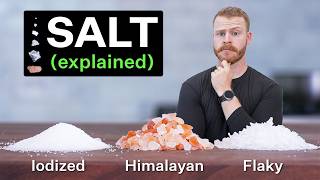

Is Pink Salt Healthier? The Truth
54sDebunks common health claims about expensive salts, appealing to health-conscious viewers.
▶ Play Clip"Delivers a thorough, science-based deep dive that will genuinely change how home cooks think about salt—but the 52-minute length includes some filler and sponsor content."
Salt is the most important ingredient in cooking, yet it is widely misunderstood. This video breaks down the chemistry of sodium chloride, its sources, and the seven key properties every home cook should know, culminating in practical experiments that demonstrate how salt affects taste, aroma, texture, and more.
Sodium chloride (NaCl) forms in a 1:1 ratio of positively charged sodium ions and negatively charged chloride ions, creating a stable crystal lattice.
Water's polarity allows it to dissolve salt, pulling apart Na+ and Cl- ions. This is why salt can season food (which is mostly water) and why our bodies rely on sodium for nerve and muscle function.
Different brands (e.g., Diamond Crystal vs. Morton's Kosher) have different crystal shapes and densities. By weight, they contain the same amount of sodium, but by volume, measurements vary significantly.
Salt is harvested from ocean water, saline lakes (e.g., Dead Sea, Great Salt Lake), underground mines (e.g., Himalayan salt), and salt springs. The extraction method influences crystal size and shape.
Table salt is 97–99% pure NaCl. Trace minerals like magnesium or iron are present in negligible amounts—far below clinical doses. For example, 5 g of Celtic salt provides only 25 mg of magnesium, while pumpkin seeds offer 156 mg per ounce.
In the 1920s, iodine was added to salt to combat goiter and iodine deficiency. Adding just 0.1% sodium iodide solved the problem; today, iodine is less needed due to diverse diets.
When controlling for weight (3 g salt in 300 g water), all types (iodized, Himalayan, sea salt) taste identical. Any perceived difference is due to volume or texture.
1) Odorless, 2) Water-soluble but not fat-soluble, 3) Very high melting point (1474°F), 4) Not a fuel/energy source, 5) Hygroscopic (draws moisture), 6) Diffuses from high to low concentration, 7) Moves through semi-permeable membranes via osmosis.
Salt does not add aroma directly, but by drying the surface of meat, it accelerates browning via the Maillard reaction, which creates savory aromas.
A good starting point for salting food is 1–1.5% salt by weight of the food. This ensures seasoning without overpowering saltiness.
Two options: 1) Add more unsalted food (increase volume), or 2) Balance with other tastes—sweet, sour, bitter, or umami (e.g., sugar, citrus, MSG).
Smaller salt crystals (e.g., table salt) dissolve faster due to greater surface area, hitting the tongue quickly with a salty punch. Flaky salt dissolves slower, providing an extended release.
Mastering salt is the hardest but most rewarding cooking skill. Focus on salting by weight rather than volume, and practice tasting to understand how salt balances with other flavors. The type of salt is far less important than how you use it.
What percentage of sodium by weight is in NaCl?
40%
06:41
Why can salt season food even if it doesn't dissolve in fat?
Because most food contains water, and salt dissolves in water to diffuse through the food.
04:47
What are the four main sources of salt for human consumption?
Ocean water, saline lakes, underground mines, and salt springs.
07:38
Are trace minerals in Himalayan salt present in clinically significant amounts?
No, the amounts are negligible compared to the clinical dose needed for health benefits.
11:24
Why was iodine added to salt in the 1920s?
To prevent goiter and iodine deficiency in areas with low iodine in soil and food.
14:39
List three of the seven properties of salt mentioned in the video.
Odorless, water-soluble, hygroscopic, high melting point, not a fuel, diffuses, moves via osmosis. (Any three acceptable)
21:18
How does salt indirectly affect the aroma of seared meat?
By drying the surface, it promotes the Maillard reaction, which creates savory aromas.
25:07
What is the recommended salt percentage by weight for most foods?
1–1.5% salt by weight of the food.
29:45
What two methods can fix an oversalted dish?
Add more unsalted food or balance with other tastes (sweet, sour, bitter, umami).
31:48
Why does table salt taste saltier than flaky salt when used in the same weight?
Table salt has smaller crystals with greater surface area, so it dissolves faster on the tongue, delivering a quicker salty sensation.
41:54
All Salts Taste the Same by Weight
Debunks the myth that expensive or fancy salts taste significantly different; weight is what matters.
17:58Volume vs. Weight: Why Salt by Weight is Crucial
Different crystal densities mean volume measurements vary widely, leading to inconsistent seasoning.
07:07Salt's Indirect Role in Maillard Reaction
Shows that salt's effect on browning is mechanical (drying surface), not chemical, which surprises many cooks.
25:07The 1–1.5% Salt Rule
Provides a simple, actionable guideline for home cooks to achieve consistently well-seasoned food.
29:45Fixing Oversalted Food with Taste Balance
Introduces the concept of balancing salt with other tastes, not just diluting, for more nuanced cooking.
31:48[00:01] ingredient we use every time we cook it's how you can turn even the most basic food into the best tasting version of something you've ever had so I bought basically every salt at my grocery store ranging from a doar all the way up to
[00:14] $20 for a small box in order to answer this question what is the best salt for the average homecook and I made this video because there are so many misconceptions and outstanding questions when it comes to buying and using salt
[00:28] in our cooking for example how does salt even make our food taste so good what's the difference between Himalayan flaky iodized or table salt is there a healthy as salt do some salts actually taste salty or others and where does salt even
[00:42] come from so to answer these questions and many more this video is broken down into three overarching sections first where does salt come from second the seven properties of salt every homecook should know and third how salt affects
[00:55] the six flavor fundamentals in the first section we'll dive into where salt comes types are basically all the same from a taste and chemistry perspective in the second section we'll explain the chemical properties of sodium chloride
[01:09] which will be the foundation for how salt can affect the flavor of our food for example how does salt move through our food to make something evenly seasoned why can we season our pasta water but not our frying oil and why is
[01:21] seasonings like sugar which can caramelize or burn at just normal cooking temperatures and once we have our heads wrapped around the nature of salt the third section will provide practical takeaways for how salt affects
[01:34] all aspects of flavor we are going to do some experiments that you can replicate at home that clearly show how salt does or does not affect the flavor fundamentals such as taste Aroma texture and many more by the end of this video
[01:47] you will understand how to use salt for your own cooking and know why it's the your own cooking and know why it's the most important ingredient in your kitchen so my goal with this video is to break down salt to its first principle
[01:59] so we can truly understand what it does do but also what it does not do and it might seem like a hot take but using this approach I quickly came to the realization that the particular salt brand or size you buy really does not
[02:15] matter at all we're going to unpack that but this first principes approach is the same approach that today's sponsor brilliant uses brilliant is a platform where you learn by doing with thousands of interactive lessons in math data
[02:28] analysis programming Ai and many more and each lesson is filled with Hands-On problem solving that lets you play with Concepts and build your problem solving recommend that you recreate some of the experiments that I do later in this
[02:41] video I realized I would need to dig into several concepts of chemistry and ended up doing several brilliant lessons such as what's a chemical reaction the equilibrium State and atoms in charges which all helped immensely for me to
[02:54] little bit every day is one of the most just for for personal or professional growth so whether it's chemistry data science math programming or any topic to try everything brilliant has to offer
[03:08] for free for a full 30 days visit brilliant.org Ethan or you can scan the QR code on screen or click the link in the description you can also get 20% off an annual premium subscription so thank you again brilliant for sponsoring this
[03:23] video and now let's get down to the first principles of salt class atoms are the building blocks of everything but on their own they're
[03:37] unstable due to being positively and negatively charged depending on the because of this atoms are typically trying to reach a stable low energy state which often happens when they meet the octet rule meaning they have eight
[03:51] veence electrons in the electron shell one of these such bonds is sodium chloride which is formed in a 1:1 ratio of a positively charged sodium ion and a negatively charged chloride ion now there is another molecule that you must
[04:05] it's probably one that you're much more familiar with H2O H2O or water is often referred to as the universal solvent because it is capable of dissolving more
[04:17] substances than any other liquid this includes salts sugars acids bases and gases it is able to dissolve all these things primarily due to its polarity as it has a partial positive charge on one side of the hydrogen atom and a slightly
[04:32] negative charge on the oxygen atom this helps pull apart various substances and breaks them down into their individual ions so when we add salt to water the slightly positive charge pulls away the negatively charged chloride ion and the
[04:47] slightly negative side pulls away the positively charged sodium ion and this relationship between salt and water is hugely important for two main reasons first all the food we eat is mostly water this is why salt will dissolve and
[05:02] the sodium chloride ions can move inside and internally season our food these dissolve sodium ions from the salt are what we consume and what enter the enac sodium channels which are what scientists believe signal our brain as
[05:15] salty taste and the second reason this is important is because humans are mostly water the dissolved sodium that we consume makes our food taste great sure but we also cannot live without sodium sodium moves around our body
[05:29] through the bloodstream which is mostly water and it's an essential mineral that balance nerve and muscle function and blood pressure regulation now just because we can't live without it we do need to consume it in moderation but now
[05:43] we need to zoom back out and get back to the salt that we can actually see and touch individual salt grains are not a single sodium chloride Bond but instead are a 3D Crystal made up of repeating NAC bonds and the biggest physical
[05:58] difference between all the these salts we have available to buy is this individual salt crystals can vary in volumetric size and density for example diamond crystal kosher salt has a hollower structure while Morton's kosher
[06:12] salt crystals are rolled in processing making them denser so I filled up two shot glasses with 28 G of salt first is diamond crystal and then Morton's Co kosher salt and while the diamond crystal takes up more volume these
[06:27] actually contain the same amount of sodium in them by weight and would make our food taste the same level of salty how is this possible well it's due to some simple math the atomic mass of sodium is
[06:41] math the atomic mass of sodium is 22.98 and the atomic mass of chlorine is 22.98 and the atomic mass of chlorine is 35.453 so in a 1:1 ratio of this Bond sodium makes up 40% of the weight of the compound and the chloride makes up the
[06:53] other 60% however if you are measuring by volume like a teaspoon or tablespoon you could end up using significantly more or less sodium because they are different densities and this is why using volume
[07:07] based measurements for salt in a recipe is really not optimal because there is no standardized salt crystal that is used all around the world and this is the main reason why learning how to Salt by taste is so important and what we'll
[07:21] be covering in the second half of this video but first let's answer how do we end up with so many different sizes of salt crystals and really that all has to do with where it was harvested from and how it was
[07:38] the form of rain rivers and streams have washed over rocks and other materials containing these two atoms and bringing them to be naturally concentrated in several places around the world and the most obvious one is the ocean on average
[07:52] the water in the ocean is around 3.5% salinity by weight and ocean water can be commercially mined or harvested on the Shores in open pans through solar evaporation secondly are saline Lakes which are landlock bodies of water that
[08:06] were once connected to the ocean and there could be different classifications differentiated between subsaline hyposaline mesos saline and hypine and the two most well-known saline Lakes are the Dead Sea which has a solidity of
[08:20] 33.7% about 10 times the amount of the ocean and the Great Salt Lake in Utah which can range from 5 to 27% salinity depending on where you are another significant source of sodium chloride are salt mines or halite and these are
[08:35] rock salt deposits in the earth which are typically formed from a saline Lake which again used to be connected to the ocean but that water has completely evaporated and dried up over hundreds or thousands of years and an example of
[08:48] this is Himalayan salt which are mined from the famous Kura salt mines another Springs which provide a flow of underground salt water that can be EV aerated for Harvest Salt Springs were common as a salt source for humans in
[09:03] the past but are pretty rare today a famous remaining example though is the mara salt mine which is fed by a mineral brine spring the specific process may vary between all of these different boxes but at its core really what we're
[09:16] trying to do for the water-based sources are extract the dissolv sodium chloride through evaporation so we can turn it into salt crystals so first the raw salt source is typically refined in some way to remove other trait minerals for
[09:30] example sea water may be passed through a filtration system prior to the evaporation process this evaporation can be done in large bats of refined water solar evaporation in special ponds or under a vacuum chamber and as the water
[09:44] evaporates and is removed the sodium and chloride ions will begin to find each other again and start forming into a 3D repeating pattern known as a crystal now evaporation and the rate at which the evaporation happens you you end up with
[09:59] crystals of all different shapes and sizes ranging from huge flakes to smaller pieces lastly those salt crystals will be processed and packaged and this is what is available for us to buy now there is an inexhaustible supply
[10:14] of salt on Earth for human consumption and Industrial purposes like road salt for example in just a cubic mile of seawater the weight of the salt as sodium chloride would be about 120 million tons or 240 billion pounds which
[10:29] may make you wonder if salt is so abundant and there is this basically inexhaustible Supply how do some salts end up so much more expensive than others at the grocery store some salt is produced with massive Machinery at a
[10:42] large scale While others are hand processed in small batches some salt sources Also may require more refinement and filtration and some may just be faster overall to produce for example vacuum Chambers can quickly crystallize
[10:56] salt into dense cubes while solar evaporation can make bigger crystals but is really slow and all the salt flake varieties that I bought were generally more expensive so the main difference between these salts we have available to
[11:09] buy is that they will vary in size and density however there's another secondary difference too these salts have different amounts of trace minerals differences in color and the health aspects of
[11:24] salt all the salt available to buy for human consumption is heavily refined and estimated that these are between 97 to 99% pure sodium chloride but that remaining 1 to 3% of the salt crystals can be trace minerals and additives for
[11:40] example pure sodium chloride is white but the reason Himalayan salt can have a reddish pink Hue is because it has Trace Amounts of iron oxide and other trace minerals that can pop up in salt are calcium Cobalt copper iron magnesium
[11:54] potassium zinc and many others now you will not see these on the ingredient label of the salt you buy because these are all naturally occurring and are in super super tiny amounts depending on where the salt Source came from how much
[12:07] refinement was done and how it was processed and a lot of salt companies will add mineral analysis to their website if you want to find yours now were added for a specific purpose and you actually will see these on the
[12:21] ingredient label for example we can see this salt has listed calcium silicate which is an anti-caking agent dextrose and potassium ium iodide now when it additives in salt people will generally make claims that fall under two
[12:35] categories first they will say these minerals and additives can change the flavor of salt and secondly these minerals and additives can make certain salts healthier for you so in order to test this first one I set up four
[12:48] glasses of distilled water with 300 G of water and 3 G of different salts iodized Himalayan Mineral Spring salt and sea salt and while I dissolve these let's dig into claim number two one of the biggest issues in the
[13:04] supplement industry is that the clinical dose for a particular compound that can show a desirable effect from a study is often much higher than the actual dose in the supplement you are taking to evaluate the potential health benefits
[13:17] for any Trace mineral in all these salts you would need to ask yourself these two questions first what outcome am I looking for by consuming a particular compound and second what is the clinical dosage I I need per day to achieve the
[13:30] specified outcome for example many people will say Celtic salt is healthier for you because of its magnesium content and magnesium is another necessary mineral our body needs and the recommended daily value is 420 mg for
[13:44] adults so let's say you use and consume 5 G of salt per day in your cookie of 5 G of salt per day in your cookie of which 99.5% is sodium chloride and .5% is magnesium which is likely going to be really really hot this means you are
[13:56] consuming 2,000 Mig of sodium and just 25 mg of magnesium now if you are looking to consume more magnesium here's a whole list of foods that have magnesium in them and if you snack on an ounce of pumpkin seeds you'll get 156
[14:11] Mig or six times that amount of using salt this is why after you answer these two questions you'll likely find there is not a meaningful amount of any Trace mineral in these common salts we have available at the store except for maybe
[14:25] one compound at least in the past and that is iodine if you've ever wondered why iodine was added to Salt in the first place we can answer that using the same logic from above in the 1920s a lot of people in
[14:39] were having health issues due to an iodine deficiency this would cause the enlarge known as goiter and included other symptoms such as fatigue at the
[14:51] time the soil water and food sources available to them did not have iodine so neither did the people of the northern us so they ask themselves those same two questions from above first what outcome are humans looking for by consuming
[15:06] iodine and obviously we want to reverse the effects of iodine deficiency such as goiter and secondly what is the clinical dosage of iodine humans need per day to achieve that specified outcome and it turns out adults needed just 150
[15:20] turns out adults needed just 150 micrograms not milligrams micrograms per day and by answering these two questions they came up with a solution they found that adding just 0 1% of sodium iodide to existing sodium chloride or salt
[15:34] something everyone added to their food that they could help Americans Reach This specified outcome and as you can guess it worked not long after Michigan's success at kickstarting Salt iodization in the United States iodine
[15:46] fortified salt became a daily part of the American diet this slight but crucial modification eventually saw goers become rare to the point of near Extinction erasing the goer belt forever so why is IOD no longer added to most
[16:00] salt well today we have much more diverse food options available to us and many animal proteins and sea vegetables are high in iodine so we easily reach our daily minimum value which again is just 150 microgr lastly before the taste
[16:15] test do you need to worry about microplastics in your salt another Hot Topic today in general are microplastics or tiny plastic particles that are less than 5 mm in size and these are pervasive everywhere in the ocean soil
[16:30] the air food we eat and researchers are finding them in every part of the human body so it's no surprise that we are starting to see microplastic free salt on the labels so let's ask our questions first what outcome are we looking for by
[16:44] avoiding consuming microplastics from everything I've looked at so far we do not currently know the health impacts of consuming microplastics secondly what is the clinical dosage of microplastics we are looking to avoid again this is
[16:59] another unknown microplastics exist and all of us have them inside of us and we get them from the entire food chain the water we drink Foods we eat vegetables tea bags whatever you're touching you're probably getting microplastics from it
[17:12] so you'd want to evaluate all of your life choices for example drinking water whether it's tap or bottled seems to be the biggest source of microplastics and then you can work back from there this is a space that I want to watch in the
[17:25] coming years but as of now there are just so many unknown so remember a lot of salt varieties may say in their marketing that a particular salt is healthier for you but from a chemical level this is 97 to 99% sodium
[17:39] chloride in a repeating 3D pattern that forms a crystal the total amount of far bigger effect on your health than the trace minerals or additives that may exist in them which hopefully you're starting to realize the answer to this
[17:58] ah that water just tasted different for some reason it's not the actual water those trace minerals in there remember water is odorless and tasteless to us so I use distilled water for this test now while trace minerals can affect the
[18:14] while trace minerals can affect the flavor of water salt is salty so in this case salt is basically acting like an impurity that you would get in water and again while we can see visually there are different volumes to the salts this
[18:29] is all 28 G of these various salt in here and then when you control four salt here and then when you control four salt so 3 G 3 G 3 G 3 G they're all fully dissolved in the water they're all going to taste the
[18:42] water they're all going to taste the same making sure I'm cleaning my palad salty water because remember from a chemical perspective it's just 99%
[18:55] sodium chloride now if we were to add this salt substitute to one of these water it would not taste salty and that is because it's not sodium chloride it's monocalcium phosphate and silicon dioxide and that's why these salt
[19:10] substitutes do not actually taste salty it's hard to describe what these taste like it's kind of bitter kind of sour you could use it to season food but takeaway for doing this test is that you know if we can't taste a difference here
[19:24] when controlled by salt in just plain water there's no way youd be able to taste a difference in adding it to various Foods if you're controlling for the same amount of weight and this is why it's much more important to
[19:38] understand the properties of salt and how those properties affect the flavor fundamentals everything we've covered thus far in the video has been building our understanding of sodium chloride from a fundamental level and here are
[19:51] the key principles from this section to keep in mind as we continue into approaching it this way hopefully you're starting to realize that salt is the most important ingredient that a home cook can learn how to use but the actual
[20:05] type you buy really does not matter all that much and to answer my question from the beginning of this video there is no best salt for the homecook arbitrarily adding expensive flaky salt to every single dish is not how you can make
[20:19] better food we can make equally amazing food with the cheapest iodized table salt and make terrible over or under seasoned food with the most expensive vacation last week and all that was left behind in the cover of the house was
[20:33] some table salt so I was still able to make great food because consciously I know that table salt is much more dense than what I'm used to using so I had to use lighter pinches in the food that I was seasoning and personally I would not
[20:49] recommend wasting your money on a really expensive daily driver salt from a flavor perspective it is far more important to pick one learn how to use buying a certain type of salt will not help you answer those questions that I
[21:02] posed at the beginning of this video but what will are the seven properties of salt that every home cook should know so let's move to section number
[21:18] odorless sodium transmits that salty taste to our brain but sodium chloride has no smell that we can detect if you are smelling something from the salt you have there are hundred of Aroma molecules all around us all the time it
[21:31] could be from the box or container or it's some other compound it's not the sodium chloride secondly sodium chloride is water soluble but it's not fat soluble because it's water soluble we can season our pasta water which in turn
[21:45] Seasons our pasta but we can't season our frying oil so we need to add salt to fried food either before or after it gets out third sodium chloride melting gets out third sodium chloride melting point is 81° C or over, 1400° F and
[21:59] fourth sodium chloride is not a fuel or energy source Salt's melting point is actually closer to the melting point of silver and gold but why does this matter for cooking well if you add some sugar to a pan and heat it up it will start to
[22:13] melt at just around 320° fhe or 160 C then begins to rapidly start caramelizing around 340° F where the color darkens and hundreds of new Aromas are developing all from adding some heat to the sugar caramelization is the the
[22:28] with the sugars found in fruits and vegetables which can lead to lightly crispy or brown exteriors when we cook them carbohydrates in general are a fuel source that provide us with calories and can change drastically in taste Aroma
[22:41] texture sight and physical appearance when heat is applied through cooking sodium chloride does not work this way at all throw some salt in a pan heat it as high as you want for as long as you want nothing is going to happen really
[22:54] dissolve it into our food or dissolve it with the water in our mouth and this that are really important and explain how salt is able to move through our food fifth sodium chloride is hygroscopic meaning it draws moisture
[23:10] from its environment so if we sprinkle salt on two sponges one completely dry and the other sponge is wet the salt will just stay on top of the dry sponge but for the one that is wet it will actually start to draw that moisture
[23:23] towards the salt once it draws enough moisture away this is how salt dissolves and then it goes through two more processes diffusion and osmosis diffusion is the natural movement of particles from an area of
[23:35] higher concentration to an area of lower concentration and building on that concentration and building on that osmosis is the diffusion of a solvent through a semi-permeable membrane most food is made up of water and
[23:47] semi-permeable membranes such as protein fibers in our meat or the cell walls in our fruits and vegetables allowing salt to move around via the water so let's look at a quick real life example to make all of this a little bit more
[23:59] concrete when we add salt to a steak it first draws free water to the surface and once there is enough water that sodium chloride will dissolve now since dissolved sodium chloride on the exterior of the steak it will begin to
[24:13] diffuse into the water that is inside the steak over time until it reaches equilibrium leaving us with an evenly seasoned steak and osmosis is how that dissolved salt can then move through any semi-permeable membranes the food may
[24:26] have so depending on the thick Ness of the steak and the size of the salt crystals you use this typically takes 45 to 60 minutes now from a flavor perspective there are some direct and indirect effects that adding salt can
[24:39] have an example of a direct effect is taste so from a taste perspective the sodium is what our brain identifies as salty taste we have now changed how this steak will taste an example of an indirect effect though is aroma remember
[24:53] sodium chloride is odorless the salt is not changing the aroma of steak but since we have added it it could impact compared to a steak that has not had salt added to it let me explain in this case the salt has completely dried out
[25:07] the exterior of the steak we have which makes it easier for the May reaction to occur the May reaction is a complex chemical process that occurs when amino acids and sugars react under Heat leading to the Browning and development
[25:20] of flavors in various Foods the salt we have added here is not involved in this reaction at all remember the melting point is over 14 00 de F however because the salt dried out the surface the state can quickly reach those temperatures
[25:35] that are required for the May reaction typically north of 350° F or 176 C so while the salt has gone through no chemical change and does not add Aroma directly it could help us achieve even Browning across the Stak which is what
[25:51] we typically identify as the medi Aromas and this is a really important distinction because a lot of people think that we just add salt to make food taste salty when that's not the point at all so to finish this video Let's now
[26:04] walk through how these properties we just learned affect the flavor experiments that are critical in helping you learn these for
[26:19] properties make up the flavor of food taste Aroma texture physical sight and walk through each of these areas with how salt can affect the flavor of our food as noted on cookwell our tongue can register five core tastes sweet sour
[26:34] bitter Umami and salty these tastes make up the base seasoning and balance of recipes and most ingredients have one or more tastes and if you know what a particular ingredient contributes to a dish this is crucial for adjusting and
[26:47] substituting when it comes to learning how much salt we need to add to food we kind of have two levers to pool on first is how much salt by weight we add to a dish and secondly how much salt is in balance with the other four tastes so
[27:01] let's run through a quick experiment for each for this first test I chopped up 500 G of chicken breast and split them into five portions and then added into five portions and then added varying amounts of Salt by weight 0% 1%
[27:13] 2% 3% and 4% salt by weight chicken breast is made up of around 75% water 23% protein and just 1 to 2% fat and from a taste perspective cooked chicken breast doesn't really taste like anything which is why it's such a great
[27:28] canvas to learn how much salt can affect the taste so I have a couple of keys if you are recreating this one at home first I would recommend you do not blindfold up for this one I am going to in some of the later taste tests the
[27:40] reason is because I think it's really important to make this very clear and conscious effort of what something that is overs salted at 4% it tastes like and then kind of here in the middle and then secondly make sure you have
[27:54] something to cleanse your palette in between because if you taste taste this without any salt you may taste this and think it actually tastes a lot better residual of that sodium still on your tongue so make sure you have something
[28:07] to sip in between so you can progress through these in any fashion you want I'm just going to start at this end with no salt as you would expect just tastes like nothing basically it's just boring
[28:21] chicken breast let's move all the way up to 4%
[28:35] something is overs salted if you can clearly pick out the salty taste what we're looking to do with when we actually add salt to food is kind of to have it taste seasoned but you almost
[28:47] there and this is what this kind of middle range will be the saltiness on that one is still even lingering okay 1%
[29:03] something that's completely unsalted but it doesn't just taste dominantly salty it doesn't just taste dominantly salty like 4% so as I'm tasting 2% and the 3% chicken these are kind of interesting because 2% I would say is just it's at
[29:16] that very upper range where it's not too salty at least in my opinion but it is definitely getting close and 3% I would say is Across the Threshold at least for my taste buds and really this is a great test to do to to Really differentiate
[29:30] between using salt to make something taste seasoned but not to make it taste we're going to do we're going to build on this salt test and move forward with 1% salt and then add spices to the equation so we can differentiate between
[29:45] wondering you know is there kind of a general rule with how much salt you should be adding to your food and this will vary but in general 1 to 1.5% salt by weight of the food is generally a good starting point and again by weight
[30:01] is based on the molar mass of that 1:1 ratio of sodium and chloride so this will be the most accurate way to get feedback and I have an old video of mine pinches and it is crazy just how specific you can get them so regardless
[30:15] of if you are making 1,000 G of potatoes ground beef or roasted vegetables try 10 G of salt to start and then you can work up or down from there now like I said anything on its own but knowing how salt balances with ingredients that are sweet
[30:30] balances with ingredients that are sweet sour bitter orami is also very important dish there's kind of two main ways I can fix it which we'll see with test number fix it which we'll see with test number two so in these two cups I have 100 G of
[30:43] two so in these two cups I have 100 G of distilled water and 2 G of salt so to me both of these taste pretty salty so the first way that I can fix this kind of overs salted water in this case is just to Simply increase the
[30:56] volume of water so this is is 100 G of more distilled water give it a quick
[31:10] this is an example of common cooking advice you'll see when someone says hey if you've overs salted a soup try adding some you know cut up potatoes to it because basically what you're doing is just adding more unsalted food by weight
[31:23] the salt from the salty soup will then diffuse into the potatoes so anytime you have an over salted dish this is kind of one option you can do now sometimes when you are cooking you're not able to you know add more volume for example if
[31:36] you've overs salted a steak you can't really add more steak because you've already salted that so in this case this is where you need to turn to option is where you need to turn to option number two so right here I have some MSG
[31:48] this is sugar and then citric acid so this is basically pure Umami pure sweet and pure sour taste and these are just different chemicals just like salt or just different than Salt obviously so in this case what I'm going to do is add
[32:02] this case what I'm going to do is add two grams of citric acid to the water here so this is a you know sour taste I'm adding citric acid is mostly dissolved let's give it a
[32:21] I have not actually reduce the amount of salt added to it but it tastes balance between salty and sour now i' I've added a completely new taste that wasn't there prior so for example in that steak you could try adding maybe some chimy churry
[32:36] to an overs salted steak or maybe just a spritz of lime juice on your tacos for two ways that you can fix overs salted food either add more volume of unsalted food or figure out how to balance it with some of these other tastes Umami
[32:51] sweet sour bitter now there are millions of different tests we could do just principles but for now just remember those two key levers that we can pull on the total weight of the salt we add to a dish and how much salt is IM balance
[33:06] with the other four tastes but now let's talk Aroma as we've mentioned sodium chloride is odorless meaning it can't directly add Aroma to food in the way that spices do aromatic odor molecules from spices will bind to the odor
[33:20] triggers a specific signal to our brains to make cumin smell like cumin and cinnamon smell like cinnamon however if you plug your nose and take a spoonful of cumin it won't smell like anything and it will kind of just not taste like
[33:33] anything either however if you plug your nose or open your nose and take some salt it all just tastes salty and this is what's important to understand here taste and Aroma are different senses that are often used in conjunction with
[33:46] and here's an experiment that you can use to experience this difference in your cooking so again I have four portions of 100 G of chicken breast to one I added absolutely Ely nothing to the second I added 1% or 1 G of Salt by
[34:01] weight to the third I added 1% or 1 G of a spice mix with cumin garlic and chili powder and then to the fourth I added 1% or 1 G of salt and 1% of the spice mix and then cooked them all up so all the taste tests I'm doing in this flavor
[34:16] section are very important but if you could only do one I would recommend because it's very important to understand what salt does and what it does not do and also be able to separate the difference between taste and Aroma
[34:30] and to help you do that I think it is very important to blindfold up just take away your sight then I'm going to use the no salt as a control and mix these up and this one is really fun I highly highly recommend doing this for
[34:42] yourself okay so I have my control over here I'm just going to mix these ones control so nothing added to this just plain cooked chicken breast
[35:02] now let's go to this one instantly I can smell I'm getting Aroma I know there are spices added to this now just by smelling I don't know if there's salt added to it I need to actually taste
[35:20] while it smells good it doesn't taste good which is all right now let's move to number two basically neutral smelling
[35:32] definitely no uh no no smelling of the spices this is probably going to be the salted or right let me just so I can salted or right let me just so I can smell the spices
[35:50] salt you can tell there's a clear difference between that and this one
[36:03] that's what salty taste with Aroma does right there like no question it's the best um this is a really really fundamental test again I think everyone should do it um because what you'll find out is like salt is kind of this really
[36:15] nice almost prerequisite of flavor and if you had the choice between adding 1% of salt and 1% of spices I mean you can do this for yourself and let me know I'd much rather just have the plain chicken with 1% salt rather than chicken with
[36:29] only spices and no salt however when you put them together there's no question want really cool test now we need to do a whole separate Deep dive into spices and Aroma because it's one of the most important
[36:45] properties and can really change our food's flavor from Cuisine to Cuisine but I even don't fully understand all the mechanics of how it works so keep a to do now is go through one more more test and that's going to help us explain
[36:59] sight texture and the physical element of flavor for this test I set up three identical pieces of avocado toast the only thing that I changed is the size of the salt crystal Ed but I did control for the weight so I used Himalayan salt
[37:12] flaky salt and table salt and right away we can see the first difference in the flavor properties has your mouth ever started watering just by looking at some sour candy well that is your sight impacting
[37:26] flavor our eyes eyes are the first sense to interact with the food we eat and we judge many other elements of flavor with our eyes texture temperature and Cuisine can all be addressed by first sight in terms of salt we can visually see
[37:39] differences between the large pieces of Himalayan salt the light flaky sea salt and the tiny pieces of table salt on our avocado toast psych does not typically play a large role when it comes to using salt in our food but seeing two photos
[37:52] of caramels one with flaky salt on top and one just plain I'm personally taking the one with the salt on top now sight and the human elements of food are very of foods can create different associations or emotional reactions one
[38:07] of the biggest bias problems of only watching cooking content and not actually trying these things for yourself is that your site is heavily influencing your perception of what is important and what is not for example
[38:20] but one piece of cooking advice that people blindly follow today because they've probably seen hundreds of reels or shorts at this point is that you have to season your Tomatoes This is just not true sometimes you might want to season
[38:33] your Tomatoes sometimes you definitely do not want to and when you take your sight away as I try to do in every taste test I do on this channel you'll quickly nearly as big of a difference as you would think but now let's talk texture
[38:49] mouth tongue and lips and sometimes we can also hear ingredients with our ears such as biting through a crunchy chip now there there are two ways that salt can affect the texture of a dish first is the texture from the salt itself for
[39:03] Himalayan salt I would describe as crunchy the flaky salt as crisp and the table salt as grainy however since we typically use such a small amount of salt and it dissolves so easily we rarely are picking up on the specific
[39:17] texture of a salt and secondly salt can change the texture of the food it was added to remember since salt is hygroscopic it will draw moisture from its environment and since most food is made of water held in cells and fibers
[39:30] salt almost always has an impact on the texture for example if I add salt to some greens and come back I'm left with a bunch of water in the bowl and some super limp greens that are terrible for salad and this is one of the reasons why
[39:43] salt timing can be so important for a salad we don't add salt directly to the greens instead we want to dissolve that salt in the dressing where it will stay dissolved and not really affect the texture of our greens other times in a
[39:56] steak we do want to add it well ahead of time to dry brine it in order to help us dry the exterior of that steak which can help with Browning so texture and sight are fairly intuitive but lastly let's talk about physical and as noted on
[40:10] cookwell certain ingredients directly impact our physical Sensations and ways that are unique from our odor and taste receptors and typically we use the physical element to describe items such as the temperature of the dish whether
[40:22] it's hot or cold the spicy feeling we get from a jalapeno or the pungent Sting from a raw onion onon now from a salt perspective it's not that we're causing a different physical reaction in this sense but what will change and what is
[40:34] important to know for salt is that the rate of dissolution can change so the at which a solute dissolves in a solvent to form a solution and a very common use case of this concept is in extended release medicine such as Tylenol or
[40:49] melatonin this allows you to take in the medicine and feel the effects of that specific medication over a longer time but with fewer doses so why is this an important concept to know when it comes to Salt well if you
[41:02] understand the rate of dissolution in theory you can make things taste saltier by actually using less total salt overall and in short there are four factors that can influence this rate first is the temperature second is
[41:16] agitation so higher temperatures often increase the rate of dissolution and stirring or agitating is a way to bring the solvent into contact with the solute and this is why most of the time when we add salt to our cooking it will end up
[41:28] fully disolved third is the concentration gradient where a larger difference in the concentration between the salt and the solute speeds up dissolution so this is the example of going from a high concentration in the
[41:40] water down to a low one to end up evenly spread out and then lastly and most importantly when it comes to salt is the surface area of the solute so smaller particles or an increased surface area will speed up dissolution and it comes
[41:54] from out to in and the surface area of the solute is why many people say that table salt tastes saltier than flaky salt the dense tiny crystals have more surface area for our saliva to quickly dissolve and hit our tongue with that
[42:07] salty taste Now using that same logic you can make flaky salt taste saltier too if you just merely crush it up and increase the surface area again this will only make a difference if the salt is not fully dissolved and controlled by
[42:21] weight so in this avocado toast test even though I have added equal amounts rates and this could provide an extended release of the salty taste for me to experience now how different is that
[42:34] really in practice let's put it to the test this is really cool right here cuz you can already see the different rate of disillusion the table salt is it's starting to dissolve into the avocado the flaky salt is still kind of
[42:49] mostly intact but the smaller pieces are and then the Himalayan salt which are those really big thicker chunks are not really dissolving at all but let's get taste I've already seen them but I'm
[43:01] focus in if I can feel that texture and taste difference between
[43:13] these really good number experience like as you chew through it's not like evenly salted you you can feel
[43:27] when you get a crystal and it's like dissolving on maybe one part of your tongue over another texture-wise though I mean all I'm all the texture I'm for me it's impossible to pick up on that super thin flake of the the flaky
[43:41] salt that should change when we get to Himalayan salt obviously feel like that thicker crunchy piece of Himalayan salt but this is
[43:55] so in this case even though I've controlled for the same amount of salt I am getting a different experience right the the more salty throughout the bite
[44:07] that you get from this being evenly dissolved everywhere this you get like you can kind of feel it dissolving on your tongue and then this is kind of a feel it dissolving similar to this one but you need to Crunch through it first
[44:20] to get there and like I said there's no right or wrong answer here like these it's good avocado and it's salt like it's just going to taste good I think most people if you do this test you would come to the conclusion that oh
[44:35] this tastes saltier but really again it's it tastes salty forward but then it quickly dissipates because of that quick rate of disillusion whereas this when you first bite in you it doesn't the salt doesn't hit you right away but then
[44:48] it's kind of like this Slow Burn of salt over time whether you like that or not up to you I think most ofs are probably going to keep away from Himalayan salt on or avocado toast though so lastly the human element is a
[45:03] reminder that flavor is a perception that is formed inside of our brains not just in our mouth and you can't separate food from these human variables this different ways from cultural associations or Nostalgia for a
[45:17] particular dish and when it comes to salt one thing that happens is we all just literally have different amounts of taste buds the average adult can have 2,000 to 10,000 taste buds and we kind of lose them as we age so what may taste
[45:30] perfectly seasoned to you at age 25 could be under seasoned at age 70 and this is why you have to explore how salt works for your own palette and if you learn how to use salt with this fundamental approach you can truly
[45:44] unlock a new flavor level of all the food you are making but as I've mentioned with great power comes great responsibility and it is equally as important to know when not to use extra salt and not just start throwing it on
[45:58] everything I would argue that most home Cooks make the common mistake of not using enough salt in their cooking but the next common mistake is adding too much salt and adding it to everything without considering how salty the other
[46:10] ingredients in a dish are so to round this video out I'm going to show you how to use these flavor fundamentals to decide when not to use salt in your
[46:23] second channel of a simple tomato bacon cream cheese and English muffin sandwich sandwich I did not add any salt to my big old slice of tomato this quickly drove some controversy in the comments with this being the top one quote
[46:38] posting a sandwich recipe that's 90% tomato slice and leaving it completely unseasoned is quite frankly insane this honestly surprised me because based on my experiences adding extra salt to the sandwich would have ruined it for two
[46:52] reasons first the tomato is already great as is secondly I have two let's walk through the flavor fundamentals of how adding salt would have affected this dish and why I ultimately decided not to use it first
[47:07] Aroma adding salt would have no effect on the aroma of this dish sodium chloride has no smell nor is it reacting with anything when added to the Tomato it's simply dissolving into the water of the tomato juice the key Aromas we are
[47:19] getting from this dish are the smokiness of the bacon and that lightly golden brown English muffin secondly texture adding salt would have no effect or a very minimal effect on the texture of this dish the salt is going to quickly
[47:32] dissolve when sprinkled on top due to that high water content and since we are not going to release a significant amount of water nor would we really want sandwich great are the chewy English muffin the juicy tomato the crisp bacon
[47:46] and the creamy cream cheese from a sight perspective adding salt would have no effect on the side of this dish we're not going to see it now from a taste and physical perspective we we do have some differences here remember we can affect
[47:59] the taste in two key ways and in this tomato Deep dive I tasted a bunch of heirloom tomato varieties some of them were quite acidic now a very acidic tomato would have benefited from a little salt in order to help balance it
[48:11] with those other tastes however some of the varieties I had were already a great Harmony between sweet sour and Umami and I didn't want to change anything about them so we can cross that one off the list wo that first one is amazing that
[48:24] one would be really good on a BLT typ to pair with bacon now the second way that we can influence the taste is how much salt by weight we add to a dish in this case I've already added salt through two other ingredients first bacon is a huge
[48:38] salt Source typically around 2% by weight of salt is added when making bacon one slice has 190 Mig of sodium and I use two here so about 380 mg of sodium or close to the same amount of 1 G of pure salt secondly cream cheese is
[48:54] a much smaller Source but it does have salt added to it and per serving has 40 Mig of sodium now remember from a physical perspective 420 mg of sodium that is dissolve between two ingredients is going to be experienced differently
[49:08] than 420 G of sodium through pure crystal salt but to round this out based on my human experiences this is plenty of salty taste in this particular sandwich and I came to the conclusion that no I don't need to Salt my tomatoes
[49:24] for this dish so to recap We Now understand what is salt and where does it come from what are the seven Key properties of salt and how those properties affect these six flavor fundamentals and learning how to
[49:38] Salt by taste is the hardest skill for a homecook to master because it's not something that I can just tell you you need to go out and experience it for yourself we're all human there is no right or wrong way to use salt so one of
[49:52] the biggest mistakes you can make is not actually trying out the concepts we've talked about in this video and we've put together a little companion page that through the experiments and what you need and what you can potentially learn
[50:05] and really whatever salt you already have will work perfectly fine you know Morton is a good kind of budget option if you don't mind spending some more money diamond crystal has kind of a different hollower flake which just
[50:17] they're going to be the same and actually when I was in France I got used to this uh like gray sea salt that I I end up really like it a lot but really what whatever salt you happen to have is perfectly fine and with this video we
[50:31] like curing and preservation or wet brins versus dry brins or talking about to go through all these fundamentals and there was so much to cover already but now that you have this mental framework you should be able to answer almost any
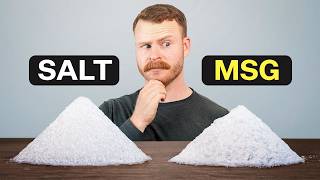
[50:46] cooking and personally I actually have a couple more videos that I want to make that are kind of stemming from questions I now have first I have to do a deep dive into MSG because I understand the basics of how it works but sideb side of
[51:01] like one is Umami and one is salty but with each other so I want to kind of run through some different kind of empirical testing to see what it does do and what it does not do and then secondly I'm now
[51:15] questioning the common cooking advice of you should always season in layers I think that advice might just help people use more salt overall than they normally would and I'm wondering if you controlled for amount of salt and say he
[51:28] had 12 gram and added 12 all in the beginning 333 at various cooking points then 12 all at the end how different would that dish actually taste in some cases I think it may make a big difference in other dishes I think it
[51:41] may make no difference at all so that's another video that I definitely want to we have time for today couple of any notes if you guys want to sign up for the second channel it's more recipe based content and you will be able to
[51:54] see me just kind of salting to taste or sometimes I do bust out my scale if I'm looking for a particular amount of salt to add secondly we are going to launch a product soon here in the next few weeks you may have seen it in this video so
[52:08] be on our newsletter which I'll link below um so if you want to sign up and there but anyway hopefully you guys learned something let me know down in the comments what surprised you maybe any light bulb moments that went off in
[52:22] me in this one I will catch you all in the next one peace y'all
⚡ Saved you 0h 52m reading this? Transcribe any YouTube video for free — no signup needed.