

Spices vs Salt: The Biggest Mistake
45sDebunks a common cooking myth with clear science, making viewers question their knowledge.
▶ Play Clip"The title accurately reflects the content: five clear mistakes are explained with experiments and examples."
This video debunks common misconceptions about using spices, contrasting them with salt and emphasizing the importance of experimentation. It covers five key mistakes home cooks make and offers practical experiments to build a personal spice reference library.
Salt primarily affects taste (salty) and acts linearly and predictably. Spices primarily affect aroma via volatile oils and compounds, reacting with heat, air, water, and fat, making them complex and non-linear.
Relying on spice blends or recipes prevents you from learning individual spice profiles. Cooking with single spices builds a reference library in your brain, allowing you to recognize and combine flavors effectively.
Spices have a high margin for error due to diminishing returns from volatile compound reactions. Recipes often understate amounts; using more can enhance flavor without ruining the dish, and it helps use up older spices.
Spices can be added before cooking (toasting), at the beginning (blooming in fat), during cooking (slow infusion), or at the end (fresh garnish). Each timing yields different aroma profiles and complexity.
Most spice combinations arose from trial and error, not science. Fear of ruining a dish stifles learning. Experimentation is key to discovering new flavor pairings and building confidence.
Mastering spices requires understanding their unique properties, cooking with them individually, using generous amounts, varying when you add them, and embracing experimentation. Building a personal spice reference library through practice is the path to culinary creativity.
What is the primary role of salt in cooking?
Salt primarily affects taste (salty) and acts linearly and predictably.
01:06
What is the primary role of spices in cooking?
Spices primarily affect aroma via volatile oils and compounds that react with heat, air, water, and fat.
01:06
Why is cooking with single spices recommended?
It builds a reference library in your brain, allowing you to recognize and combine flavors effectively.
06:41
What is the 'diminishing returns' effect with spices?
Adding more spice increases aroma but at a decreasing rate; there is a high margin for error before the dish is ruined.
16:08
Name four moments when spices can be added during cooking.
Before cooking (toasting), at the beginning (blooming), during cooking (slow infusion), and at the end (fresh garnish).
22:18
What is 'blooming' in spice cooking?
Toasting spices in fat to unlock fat-soluble volatile compounds.
23:08
Why do barbecue spice rubs use heavy amounts of spices?
Long cooking times mellow spices, and the exterior crust must be flavorful since spices don't diffuse inside meat like salt.
21:22
What is the main flavor compound in cinnamon?
Cinnamaldehyde.
02:57
How does black pepper cause a tingling sensation?
Piperine in black pepper binds to pain receptors on nerve endings.
07:23
Why might two people describe the same dish differently?
Flavor perception is comparative; each person has different reference points based on their experiences.
09:38
Salt vs. Spices: Different Flavor Roles
Clarifies a fundamental confusion: salt affects taste linearly, spices affect aroma complexly.
01:06Stop Following Recipes, Use Single Spices
Encourages building a personal reference library instead of memorizing blends.
06:41Use More Spice Than You Think
Challenges common recipe precision and reveals high margin for error.
15:41Add Spices at Different Cooking Stages
Highlights an underused technique: finishing with spices for fresh aroma.
21:50Don't Be Afraid to Experiment
Emphasizes that most spice combinations came from trial and error, not science.
25:22[00:02] ingredients we use every time we cook. Except the way we are taught how to use them is completely backwards. For example, have you ever found yourself wondering questions like, "What flavor do spices even provide? How do people
[00:15] come up with different spice blends? Why do some recipes call for a spoonful of paprika but just a pinch of cinnamon? Is there a difference between adding spices at the beginning of cooking versus at the end? And why do some cuisines use a
[00:27] ton of spices while others barely use any? Well, in this video, we are going to cover the five mistakes that most home cooks make when trying to learn spices. For each section, we are going to cover why the mistake holds back your
[00:39] an experiment that will help accelerate your understanding. And lastly, I'm going to point out several reall life examples showing how to apply what we are learning. And I have placed these mistakes in this order on purpose
[00:53] because each subsequent one builds on our understanding from the prior mistake. So let's start with mistake number one. Salt and spices are almost always used together when we cook and generally
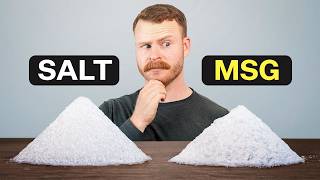
[01:06] we refer to them as seasonings. However, this can be confusing because salt and spices affect different parts of the flavor equation and react completely different when we cook with them. At a high level, these six properties can
[01:20] aroma, texture, sight, physical, and the human element. And as we learned in the salt deep dive, salt primarily affects taste. Pure sodium chloride is odorless, and when controlled by weight and fully dissolved, all sodium chloride will
[01:34] taste the same. Now, many people say that salt enhances the flavor of the ingredients we add it to. And I've said it myself, too, in the past, but that's not actually how salt works. Salt does not chemically react with anything when
[01:48] we cook with it. It is a stable mineral and there's basically just two levers we can pull on. First, how much salty taste we add by weight and second, how much that salty taste is in balance with the other four tastes, sweet, sour, bitter,
[02:02] and umami. So, when we add salt to a chicken breast, for example, the only thing we can really do is make it taste more or less salty. And I showed this in a test from the deep dive where I cooked chicken with 0 to 4% salt. And the key
[02:15] takeaway from that test is that salt acts predictably and linearly when it comes to taste. So when I went from 1 to 2% salt in that test, it tastes twice as salty to me and so on up to 4%. Now, we're going to do a similar
[02:29] test except with spices later in this video, but I'll tell you upfront, spices do not work in this predictable linear fashion. Spices tend to react with all sorts of things when we cook with them and change a lot depending on how they
[02:44] are used. And this is because spices from a chemical level are infinitely more complex than salt is. Spices are made up of multiple volatile oils and aromatic compounds that the around 400 smell receptors in our olfactory
[02:57] epithelium can detect. For example, cinemamaldahhide is the main flavor compound found in cinnamon. But it is also made up of lenal, eugenol, receptors creating the composite smell we know as cinnamon. And unlike sodium
[03:13] chloride, which is very stable, the multiple aromatic compounds that make up an individual spice are complex and interact with heat, air, light, water, and fat. For example, fresh cracked pepper smells different than the toasted
[03:26] different from black pepper I ground up a day ago. On the flip side, you can heat salt to 1,000°. You can leave it out for thousands of years and it's still going to taste salty. And to really understand the difference between
[03:40] what salt and spices do for yourself, I highly recommend redoing this experiment in the salt deep dive where I took four portions of 100 g of chicken breast. To one, I added absolutely nothing. To the second, I added 1% or 1 gram of salt by
[03:53] weight. To the third, I added 1% or 1 gram of a spice mix. And then to the gram of a spice mix. And then to the fourth, I added 1% of salt and 1% of the spice mix and then cooked them up. And the practical reason why understanding
[04:05] the difference between what spices can do versus what salt does is that we can completely transform the aroma and thus the flavor of the food we are making by simply experimenting with one the unique mix of spices we use and two the unique
[04:20] amounts chosen for each spice. For example, this is exactly what I did in a chicken breasts, added salt to them. Then on one breast, I added a bunch of spice mix with garlic powder, cumin, paprika, and chili powder. The black
[04:35] with bacon and a ranch style dressing while the cumin mix went on a southwest chicken salad. And the reason why there are unlimited amounts of dishes and recipes around the world is because this concept of choosing unique spices,
[04:49] varying the amounts of those spices, applying the spices to different foods, and changing how you cook with them can be done for not thousands of different dishes, but millions and in theory billions of different dishes. And in
[05:03] making this video, two of my biggest realizations were that one, there are so many amazing spice combinations and recipes that are yet to be discovered and created. And two, no one on this earth is truly a master of spices, nor
[05:19] will they ever be. And I can explain why using that old combination formula that many of us may have learned in middle school or high school. If I had to choose three spices from a set of 20 jars, there are
[05:32] 1,140 unique combinations that I can make. Now, that's if I'm using the same amount for each one. However, if for each of those spices, I can choose up to four different amounts with repetitions allowed. This means we have 4 * 4 * 4 or
[05:47] 64 amount selections. And if we take our 1,140 spice rubs times the 64 amount selections, we now have 72,960 total combinations. And if we
[06:00] take those 72,000 combinations, which can be applied to three different proteins and paired with two different vegetables, we are literally cooking now vegetables, we are literally cooking now and have
[06:15] simply by choosing three spices from a set of 20. Now, what if I told you there understand all the differences in the spices of those recipes without needing
[06:27] to make 400,000 combinations? And this brings us to mistake number two. If you want to learn how to use spices, you need to stop following recipes and spice rubs and instead start cooking with individual spices. Now, before we jump
[06:41] in, the quick takeaways from this first part are one, salt primarily provides taste and that sodium chloride will not chemically react and it acts fairly linearly and predictably when we use it. Spices on the other hand primarily
[06:54] provide aroma and the volatile oils and aromatic compounds in spices will chemically react and change quite a bit depending on how they are used and these compounds are what our nose can detect to give us tons of depth and complexity.
[07:08] Now some spices can provide other elements of flavor too. For example, turmeric often turns the sight of dishes to a yellow color because it has a very pepper, while it does have a unique aroma, one of the reasons why we like it
[07:23] is because black pepper causes that tingle on your tongue. And this is a physical reaction caused by the pipperine in black pepper, which binds to your pain receptors on your nerve endings. And these are just a couple
[07:35] examples of the things you will start to learn about the flavor of spices if you cook with them individually. And the main problem with only following recipes or using spice rubs is that it's more like memorizing the note cards rather
[07:48] than truly learning the material. Now, can you still get a good grade on a Spanish chef if you memorize the material? Yeah, I mean, plenty of us have done it. However, when we go to a Spanish-speaking country, we quickly
[08:00] find out that we don't really know anything. And it's a similar idea when it comes to spices. Individual spices can contain dozens or sometimes hundreds of aroma compounds. Coriander, for example, gets the floral
[08:15] pining, fresh notes from simine, and citrus notes from lemonine. And when you use a spice alone, you'll find you can detect these subtle differences in a single spice. It's almost like a spice mix within a spice mix. However, when
[08:31] coriander is used as one spice of typically five to seven in a garam masala, you could try tasting and using that garam masala 10,000 times. Or you could ask chat GBT, hey, what does the coriander provide in garam masala? And
[08:45] chatbt will give you an answer. But the problem is AI has never smelled anything. And similarly, if you've never cooked with coriander on its own, you will not be able to recognize what it is really providing or why it may pair well
[08:58] with something like cumin. However, the reason why smelling, tasting, and cooking with single spices can be so powerful when it comes to learning is that you are creating a reference library in your brain. Our perception of
[09:12] flavor is comparative. Meaning, we detect flavors by comparing it to something else we've smelled or tasted or by noticing what's different from what we are used to. For example, have you ever seen those tasty notes on a bag
[09:24] of coffee like cherry, milk chocolate, or mango? However, when you drink it, but I wouldn't say it reminds me of cherry." Now, the person who came up with those particular flavor notes is not wrong. They just likely have a
[09:38] different reference point than you do. The Specialty Coffee Association has this coffee wheel with all the aromomas and individual testing jars they use to identify them. So they may be using that cherry aroma as the reference while you
[09:50] are thinking of sweet marishccino cherries or maybe fresh tart cherries from the tree. And it's kind of weird to think about, but this is why two people can be drinking the exact same coffee or eating the exact same dish and describe
[10:03] the flavor of it differently. And this is why learning spices is so difficult. key aroma compounds in a bunch of different spices, but the words don't mean anything unless you have a reference point. And here's a simple
[10:18] experiment you can do to start building your brain spice library. Take out some potatoes or any basic vegetable or protein and add some salt and oil to each. Then pick out three spices. These can be completely at random or you can
[10:30] pick three spices that you commonly use together. I chose coriander, cumin, and allspice. I've never used all spice on potatoes, but we're going to try it. Then separate the potatoes by each spice. Roast them in the oven. And let's
[10:42] first give them a taste individually. Then we'll start mixing them together. actually going to move them off to the side because you can actually smell the all the smells. They kind of are coming up and hitting my nose. So, I first want
[10:56] to focus on just one. Okay. Going to give them a quick taste one by
[11:13] coriander and something I have never tried alone, stacking these together now. Wow, that's super
[11:30] cool. Coriander and allspice. Coriander and cumin. So doing tests like this is very fun and it almost melts your brain a little bit. individually, kind of like I mentioned, each spice is much more complex when it
[11:45] is on its own. There are these subtle differences you can pick up. However, when you try pairing two of them together, you do lose some complexity of the individual spice, but then the new spice that you've added kind of comes in
[11:58] to compete with something in there. And in the case of allspice, I've never had it alone. And I'm kind of realizing it's a little bit more powerful than the cumin and the coriander, which to me is probably why it is used generally as
[12:12] like a supporting or a lesser spice, but it's really quite good just on its own, I must say. And then the second thing, now that you taste these and kind of are them, it it forces you to kind of ask yourself like, what would I pair this
[12:28] with? Like if I needed to pair this with like chicken and like a salad or a form factor, how would I construct the other elements of the dish based on what I'm smelling here? And yeah, it is really cool just to kind of start building this
[12:43] spice reference library by simply using a single spice. And if you're going, do a bunch of different potato experiments at home. Well, that's okay.
[12:55] You can also make normal great tasting meals with a single spice and still further your learning. For example, recently on the Cookwall channel, I along with a groundup cumin and that's it. Nothing else. Now, the beef
[13:08] obviously is quite good. And like I said, you'll realize cumin has much more complexity on its own than you think if you've never tried it alone. However, to make it into a full meal, I put that cumin beef on some pa with hummus, feta,
[13:21] dill pickles, some pickled beets, which had clove in the liquid, some fresh dice onion, and a spritz of lemon on top. And as I mentioned in the video, part of the reason why this dish is so enjoyable is because it's really easy to tell what
[13:33] every ingredient is providing. There is a reason why I said this is legitimately the fifth time I'm having some variation of it. It's It's so easy to like pick out all the individual elements. Like you get the cumin beef, the nice protein
[13:47] in there. You get both types of pickles. You get the creaminess from the the hummus. You get that salty kick from the feta. And then you get that little bit of the the acidity from the lemon juice. And and that slight fresh crunch and
[14:00] just like such an enjoyable eating experience to like not from just like a taste aroma, but the textures, the temperature contrasts. So, if you start cooking with individual spices and then go back to more complicated recipes and
[14:14] spice blends, you have new reference points and will start noticing, oh, it's smokiness. It's the coriander giving that floral note, or I feel like cumin would be a nice addition for some of those warmer spice notes. And I know
[14:28] around in the online comment sections that a lot of people tend to equate the number of spices with how good the dish must be. are like three spices is definitely better than one, five is better than three, and you know KFC uses
[14:42] have the best buy chicken. But in reality, there's no correlation with the number of different spices you use with how much enjoyment you get out of it. In and recipe combinations that we know today are purely a result of the
[14:58] geographic availability of spices, global spice trade, and cooking trial and error over hundreds of years. Even today, there are countless variations of garam masala. But the only reason this exists in the first place is because
[15:12] probably just like, well, what happens if I add one more spice and one more spice and one more spice and then we come up with a variation of garam chicken breast or some vegetables for roasting, instead of trying to choose
[15:27] three or four spices at once, start with just one that you've been curious about what it does. and then you can use those references as building blocks to create your own spice blends. Okay, so if you're going to start using single
[15:41] spices, the next biggest mistake that most home cooks will make is not using more spices than people tell them to. As we discussed in mistake number one, salt acts predictably and linearly. So, it's very easy to hit this clear
[15:55] threshold that says to our brain, "Hey, this dish is too salty and the dish is basically ruined." However, when it comes to using spices, there is a lot more margin for error than you would have been led to believe by the very
[16:08] specific and precise measurements that a lot of recipes have. The aroma we get from spices tends to simulate a graph with diminishing returns because those volatile oils and compounds react with heat, light, air, water, fat, and they
[16:21] change over time. And this is another area where I think recipes really hold home cooks back because most measurements are likely on the early side of this graph and they tend to keep you there. Like if we see that a recipe
[16:34] calls for a half a teaspoon or 1 g of garlic powder, our brain thinks, well, I the dish will be ruined. And as I alluded to earlier, the person who made that particular recipe with garlic powder could not have possibly tested
[16:48] all the different amounts of garlic powder or tried to establish the minimum and maximum balance that could work for this recipe. It's just not feasible to do all this testing. In fact, I would argue that in the majority of recipes,
[17:02] spices in the ingredient list and it will turn out completely fine. In many cases, you may even go, "Oh, this is way more aromatic and flavorful." I actually chicken where I added increasing amounts of a zitar spice mix to make some
[17:17] marinated chicken and cooked it over the stove. 100 g of chicken, 2.5 g of spice stove. 100 g of chicken, 2.5 g of spice mix, 105, 107.5, and 110 g of zitar. So, let's give them a taste and look at the differences. Okay, so if we even added 5
[17:33] g of salt to 100 g of chicken, this chicken would be completely oversalted to eat that." However, as we'll see with spices, it's much different and it kind of the diminishing returns effect is really kind of what's going on
[17:46] really kind of what's going on here. Let's move up. able to get a little bit of a a spice crust on the 7.5 and the 5 g. And that's
[18:01] just really quite nice. And again, there's definitely more aroma, but there it's not this very clear like, ooh, this is twice as much as the other one, or
[18:13] like, oh, there's just more aroma to it. And then even all the way up at the high end, 10 gram of spice for just 100 grams of food. Quite a lot of spice rub to put of food. Quite a lot of spice rub to put on something like this. And again, in no
[18:28] way is it ruined. Um I think I would maybe lean slightly between like 5 to 7.5 in this particular instant, but there's so many variables out there. But it really goes to show that you have so much more margin for error. And really,
[18:42] the bias to use more spices than you think you should, rather than using just what the recipe says or slightly under. Cook Well channel, I've adopted the mindset of adding more and more spices
[18:57] than I think to all of my dishes. And I've yet to find a single time where I'm like, "Oh, I added way too much and completely ruined the dish." Now, have I maybe that was a little bit too much of a certain spice." Absolutely. But this
[19:11] is how you start to learn. For example, in that Southwest chicken I made, I ended up kind of overpowering the cumin and onion powder more than I would have preferred. Cayenne and other chili powders have capsain in them, which
[19:26] that relay to our brain. And in this case, I just felt like it was a bit too much. So next time, I'm making a note to dial back the amount of that chili powder. Also, instead of regular paprika, I think a smoked paprika might
[19:40] have been a better choice to round out the aroma mixed. And my point is, how can you truly understand what a spice does if you've never used more than a recipe says or what someone has told you to do? And by having this mindset, there
[19:53] is actually a big secondary benefit that you get as a home cook, and that is you'll use up your spices quicker. Another big difference between restaurants typically buy very fresh spices and then use them up quickly
[20:07] because they are making the same dishes over and over. However, at home, that's not how we operate. Put your hand up if you have a spice jar that is over a year old or let me know in the comments what your oldest spice jar is. We've all got
[20:20] at least one. The point is, if you're using a 2-year-old jar of ground cumin for your Tuesday taco night seasoned beef, it's changed and mellowed out over time. So, you should probably be using double or triple the amount anyway to
[20:32] try to get closer to the effect of a fresh jar. Also, another little tip, whenever you are out buying a spice that you know you're not going to use that often, I would recommend buying the whole version. For example, some of my
[20:44] whole spices are allspice, nutmeg, white pepperc corn, cinnamon, cloves, and mustard seed. Then in other cases, I just generally like the intense aroma of some whole spices that I do use often, such as cumin seeds and black
[20:57] peppercorns. And then I also recently found these coarse chili pepper flakes that I can then crush up right before serving. And the key takeaway here is that you have a much higher margin for error than recipes would lead you to
[21:09] believe. So try using more than you think you should. In general, the longer the cooking time and the larger piece of food you are making, the more spices you can safely add. For example, the reason why barbecue typically involves heavy
[21:22] amounts of spice rubs is that one, there's a really long cooking time that mellows out the spices over time, and secondly, those spices you do add cannot diffuse inside the meat like salt does. So, that exterior crust better be very
[21:36] flavorful when you bite into it to make up for the unseasoned interior. Now, on the flip side, if you were adding a spice at the very end of cooking or even as a garnish, you'll typically want to use much less. And this brings me to
[21:50] mistake number four, only using spices at the beginning of cooking. Many of us home cooks learn to toss in spices at the beginning of cooking, and that's generally it. But it is equally as important to experiment
[22:03] with when you are adding spices because depending on when you add spices, it can completely transform a dish's aroma, complexity, and depth. Again, there are no rules here on what is best. But in general, there are four moments when you
[22:18] can think about adding spices. And number one is before cooking. Before cooking, you can try toasting your spices before you grind them up. Toasting spices generates new flavor compounds via the mayar reaction. And a
[22:30] toasted spice will taste different than an untoasted one, but one is not inherently better or worse. Sometimes the flavor of a toasted spice can be a really nice mixup in a meal, but there's no general rule on when you should toast
[22:42] them or when you should not. It's all down to preference. The second moment you can add spices is at the beginning of cooking. This is the one we are most spices to some meat or cooking spices with your aromatics like onion and
[22:54] garlic, the spices that we add at the beginning of cooking create a base layer of aroma that infuses the whole dish. However, we can even add experimentation within this step. For example, blooming is the act of toasting spices in a fat
[23:08] lot of the volatile compounds that make up spices are fat soluble, meaning they can't be unlocked by water alone. Blooming is a very common step done in a lot of Indian cuisine, but you can apply
[23:20] this technique to all other recipes. For example, in this enchilada recipe that Brian made with me, he bloomed the paprika and chili powder and oil before making the rest of the enchilada sauce. The third moment we can add spices is
[23:33] during cooking. So sometimes in longer stew times or simmering, we want to slowly release the flavors of a particular spice. And there are plenty of recipes where we may add whole spices so those flavors slowly integrate and
[23:45] meld. Brazes or stews are kind of classic examples of this. Then the fourth moment and in my opinion the most underrated time to add spices is at the end of cooking. And I have been doing this a ton lately almost every time I
[23:59] cook. For example, I've been loving this one course Aleppo pepper that I have. pasta as a final garnish and these kebabs on top of the yogurt sods. However, you can do this with any spice. In this beef renang recipe, I added a
[24:13] toasted coconut powder at the end. In this chicken swarm, I added some sumac and zitar to the salad component. And I've even been adding spices when I'm just heating up leftovers. In this butter chicken snack wrap video, I made
[24:25] in butter with the aromatics when I was making the sauce. But after I portioned in the microwave, I added some fenugreek and garam masala to give it some fresh life. And depending on what you were using, adding spices at the end of
[24:40] contrast, maybe a fresh punch of spicy pain or a nice warming aroma. And similar to number two, if you've only ever used cumin with a bunch of other spices instead of just on its own, you
[24:53] probably don't know what cumin's aroma is like at these four different moments. whether it was bloomed in the beginning of a dish, whether the seeds were added freshly ground some and added a sprinkle to a salad. So now, if you understand
[25:09] the difference between what salt does and what spices do, you start cooking with single spices, you use more spices than you think you should, and change when you are adding spices, you are well on your way to truly understanding and
[25:22] learning what different spices do. But you could go through this entire video and the biggest mistake of all would be the last one, being afraid to experiment. A lot of people today treat spice blends and recipes like this
[25:37] sacred or authentic formulas that you need to decode and figure out. But the truth is nobody knew any of the science behind spices for most of human history. compounds in cumin were cumin alahhide, pining and simine. No one was
[25:51] categorizing spices into families like the tarpen and the phenolics or that the reason that cumin pairs well with coriander could be explained by science. Like I mentioned earlier, most of the dishes and spice combinations that are
[26:04] popular today are because people just tried stuff. Spices got traded around the world. People tasted them. They experimented with them. They adjusted. They passed things down. And over generations, trial and error is what
[26:17] turned into tradition. It's going to be really interesting to see 50, 100, 200, a thousand years from now to see what combinations and recipes are popular, but it all depends on how much we experiment. Now, I do think it would be
[26:33] fun to do some deep dives into individual spices and maybe we could try some uncommon use cases like that. Potato test has got me thinking that instead of cinnamon rolls, allspice and cumin could make a very interesting
[26:46] aromatic mix. And if that sounds gross to you, it's probably because you, like me, I've only ever had cumin in savory dishes. And often it's surrounded by a lot of other spices that are only used in savory applications. You know,
[26:59] turmeric, uh, chili powder, coriander, and those things. But I wonder what it would be like in in a sweet glaze of a cinnamon roll. So maybe maybe we'll try that one day. And I know we talked about a lot in this video, but truly if you
[27:13] need to do the next time you're cooking, grab a chicken breast, grab some roasted vegetables, open up that spice cabinet, and just pick up one spice, and just go and then you can build your understanding and your spice reference
[27:27] library from there. Also, I'm going to link the Cookwell YouTube channel down below. Obviously, I mentioned it a ton in this video because what I'm kind of using it as for now at least is kind of testing and training myself to think
[27:41] about different concepts. And it's very helpful to kind of make these more meta by having that Cookwell channel where I'm just I'm just kind of trying stuff. I'm using up ingredients I have. I'm using spices in ways that I've never
[27:54] out how to use the fridge, the freezer, given me a lot of more of these kind of meta video ideas. So, in the meantime, longer, if you want to check out that channel, you can. And also check out
[28:09] cookwell.com where we're starting to break down a lot of this science and fundamentals that we talk about in this videos because I want a resource eventually that can be very rigorous and science-based that we can use to learn
[28:22] more about cooking. Because the more questions I ask, the more I realize we all know so little when it comes to cooking. You know, most of things are just kind of trial and error and passed down. And like no one's really a master
[28:35] of cooking at all. And it's just I think for me what is fun about it the most is learning, understanding, experimenting, and you never know what you'll find. So anyway, that will wrap it up for me in this one. I will catch you all in the
[28:47] and I will catch you in the next one. Peace y'all.
⚡ Saved you 0h 28m reading this? Transcribe any YouTube video for free — no signup needed.