
Your Brain Predicts Reality?
45sChallenges viewers' perception of reality with a mind-bending concept about how the brain works.
▶ Play Clip"The title promises a mind-blowing reveal about consciousness, and the video delivers a solid explanation of predictive processing with engaging demonstrations, though the sponsor segment pads the runtime."
This video explores the scientific study of consciousness, contrasting the traditional view that senses passively relay information to the brain with the modern theory of perception error minimization, where the brain actively predicts reality and senses merely confirm those predictions. Through visual illusions and audio examples, the host demonstrates how context and prior knowledge shape our conscious experience.
The scientific study of consciousness began in the late 1800s, with early work on animal brains and epilepsy patients revealing that electrical signals in the brain process information and form neural pathways that lead to sentient consciousness.
The traditional view holds that our senses (sight, hearing, touch, smell, taste) act as windows to observe the external world, and the brain processes this sensory information to create perceptions. The video also notes that humans have more than five senses, including proprioception and thermoception.
A contemporary theory suggests the brain constantly makes predictions based on knowledge and context, and senses only serve to confirm these predictions. This is called perception error minimization, where sensory input backs up what the brain has already predicted.
This illusion demonstrates that perception is not purely sensory: the tiles are actually the same color, but the brain's reliance on past knowledge about shadows makes them appear different. This shows that perception is cognitively impenetrable—even knowing the truth doesn't change what you see.
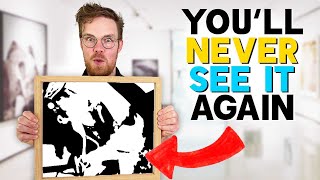
The video shows a two-tone image of a woman kicking a horse and an audio clip with high frequencies removed. Without context, these are incomprehensible, but once the brain is given the correct prediction (via explanation or original audio), the perception changes dramatically—proving that predictions shape consciousness.
The host suggests that what people perceive in ambiguous stimuli (like the audio clip) can reveal insights into their personal context and life experiences. For example, call center workers often heard 'Who is calling you?' instead of the actual sentence.
The video concludes that consciousness is largely driven by the brain's predictive mechanisms, which are shaped by our individual knowledge and context. This understanding can change how we perceive reality and even offer insights into our own minds.
Perception Error Minimization
This is the core theory that challenges the traditional view of consciousness, offering a paradigm shift in understanding how we perceive reality.
02:12Adelson's Checkerboard Illusion
A concrete demonstration that perception is cognitively impenetrable, proving that predictions override sensory input.
02:52Two-Tone Image and Audio Demonstrations
These interactive examples make the abstract theory tangible, showing how context changes perception in real-time.
03:23Personal Insight from Perception
The idea that ambiguous stimuli can reveal personal context is a novel and thought-provoking application of the theory.
04:19[00:00] This episode is sponsored by Babbel. Not only some people can see this image or understand this sentence. Hello, my name is John. For most people, both seem random and confusing, but by the end of this video,
[00:13] you will be able to see this image and understand that sentence based on new theories of how consciousness works. Also, write in the comments below what you think this sentence is saying. Hello, my name is John. As by the end of the video, what you wrote will give you an interesting clue into who you are as a person.
[00:28] It was only in the late 1800s that the scientific study of consciousness began. By studying animal brains in patients with epilepsy, humans started to understand that electrical signals in the brain send and process information,
[00:42] and these neural pathways are likely leading to our sentient consciousness. But even now, scientists are still trying to grapple with how our consciousness is formed. Like our brain, this jelly-like organ sealed in our skull,
[00:54] a waste on everything in complete silence and darkness, is what creates our ability to hear and see things like how. We know that outside of you there is a reality that exists. Outside of your body and mind is a world full of real materials and objects.
[01:09] And our complex bodies use our senses as windows, per se, to observe, touch, smell, hear, and detect the real world around us. And don't ever let someone tell you you only have five senses.
[01:21] What is this, 350 BC? You have proprioception, which is the sense of your body's position, like I'm standing up or farting over. You have thermoception, the sense of temperature and heat that your body is able to pick up So using our senses we convey the information about the world around us to the brain where complex electrical signals process and read the information and create our perceptions leading to consciousness
[01:45] Visually, it would look like this. You, a person, looking at a coffee cup, your sense of vision gathering the information to the center of the brain, where it does all the work to understand, ooh, yay, that is a coffee cup.
[01:57] But if this were fully true, you'd be able to see this image and hear this sentence. And this is where a new theory of consciousness comes in to try and explain what's going on. There is contemporary thought saying that the brain is actually constantly making predictions
[02:12] based on knowledge and context of the world around you, and your senses are only there to tie these predictions to reality. Known as perception error minimization, your senses are just confirming what your brain
[02:24] has already predicted. Visually, it would look something like this. Your brain is predicting to see a coffee cup, and your senses are just backing up for your brain already predicted with the sense of vision. If you make a cup of coffee, then you put it down on a table, next time you look at
[02:39] it your brain predicts, probably there's going to be a coffee cup there, and then your vision is there to back it up. This helps you control your perception of the world. Our brain is a predicting making machine, so much so that there are even times where the predictions get in the way of reality.
[02:52] This illusion is a great example called Adelson's checkerboard. Your perception of grainage is not due to actual sensory input, or you would be able to tell that these tiles are actually the same color. Since your brain is relying on past knowledge and context of how shadows work, you see these
[03:08] tiles as separate colors. And even when you know they are the same color if you go back with the shadows you still can really unsee it Your brain is a prediction machine that can fix itself in this moment This means that this illusion is cognitively impenetrable
[03:23] Now let's look at the image from the beginning of the video. You don't have any knowledge or context of this image, which is why you can't see it. But it is actually a two-tone image of a woman kicking a horse. Here's her head, here's the horse, she's obviously into some interesting things with her life, or just photo-enlightening it. But now when
[03:37] go back to this image, you can likely make out what it is now. The sensory input of this image has not changed at all. The only thing that has changed is your brain's predictions based on knowledge and context, which now changes what you consciously see. You can
[03:52] see the girl, you can see the horse. Now the sentence that I played for you is just a sentence with the high frequencies taken out. The man's painting a sign. Without any context, it has very R2D2 energy. You can't really understand what is being said. Now let's play the real sentence for you.
[04:05] The man's painting a sign. And we play the original audio and you now can hear it. There's a lot of contemporary science now that our consciousness is much more controlled by our brain's predictions based on the context of our lives.
[04:19] So when you go and look at the comments of what you thought that sentence was or what other people thought, it might give insight into the context of your life. For example, many people in call centers thought that the sentence was saying, Who is calling you?
[04:31] Maybe that's something that they were just used to hearing a lot. Or they're just constantly thinking about picking up the phone. Me obsessed with understanding how consciousness works because consciousness is my whole entire life. So this information to me has honestly changed my whole perspective on everything.
[04:44] You can click the link in the description to help our show and help your life as you can get up to 65 off of Babbel Babbel has changed my life as I try to learn Spanish Yo hablo en espa o un poco That means I speak Spanish I don
[04:58] quite fully speak it yet, but I'm getting there thanks to Babbel. I've been wanting to learn Spanish ever since I got back from an amazing trip to Colombia and wanting to make sure I knew the language before I went back so I could speak to the locals and have a better, more enriching experience while traveling. It's beautiful, beautiful. I'm
[05:13] obsessed with going to countries in South and Central America, so Babbel is getting me ready to speak Spanish with the locals. Babbel teaches real-world practical conversations that you can use while traveling without taking up very much of your time. Babbel has these 10-minute
[05:27] quick interactive lessons that can fit into your day easily. They're so fun, in fact, it's sometimes the first thing I do in the morning, which is much better than scrolling Instagram. Another great thing about Babbel is it doesn't just teach you vocab words, it actually teaches you about the
[05:39] culture, about the history, and about the languages you're learning to speak. Babbel's the best for real life situations, real life language, and that's what I really want to know so that I can actually speak en espanol. Yo soy. Boom. Yo soy. You can also start speaking a new language in
[05:55] three weeks if you're focused. Me personally, I don't think that I can speak it after using it for over three weeks, but I definitely am way better at speaking in Spanish now, I think, than I was before. Soy de Canada. Soy de Toronto. Yo soy muy cansado. No, I'm kidding. I'm not
[06:09] tired. I'm wide awake. Also, if you follow me on Instagram, you know I'm obsessed with musicians. like Batsani and Rosalía, and Babbel is helping me to actually understand the songs that I explore. Honestly, Babbel is just amazing. It's enriching my life.
[06:21] Click the link in the description to get up to 65% off and start using Babbel today. Ciao. Hasta luego. Buenos dias. Buenos tardes. Buenos noches. Hasta luego.

⚡ Saved you 0h 06m reading this? Transcribe any YouTube video for free — no signup needed.