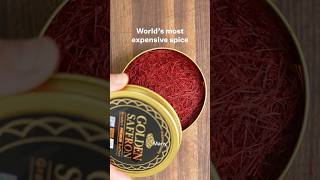

Why Saffron Is So Expensive (And Worth It)
45sThe high cost and curiosity about saffron's taste make this an intriguing hook that viewers will want to watch.
▶ Play Clip"The title promises an exploration of saffron's taste, and the video delivers exactly that with clear, experiment-backed insights."
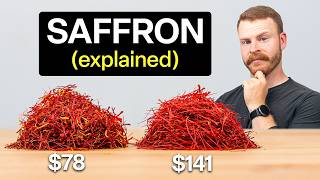
This video explores the flavor profile of saffron, the world's most expensive spice, through hands-on experiments. It breaks down saffron's contribution to dishes into three main elements: color, aroma, and taste, and offers practical advice on its use.
Saffron contributes three main flavor elements: color, aroma, and taste. The color is the most important, giving dishes like paella, biryani, and risotto milanese their signature golden yellow hue.
The golden color comes from compounds called crocins, which are water-soluble but not fat-soluble. This is why recipes often instruct to steep or bloom saffron in water, stock, or milk before adding it to a dish to extract the pigments.
The main aroma compound is safranal, which develops as saffron dries after harvest. It is described as a mix of floral, honey-like, grassy, and even slightly medicinal notes.
Saffron doesn't have a particularly strong taste on its own. However, using too much can introduce a slight bitterness from a compound called picrocrocin, though this is usually overshadowed by salt, sugar, fats, and other aromatics in most dishes.
Despite its distinctive flavor profile, saffron isn't something most home cooks need to keep stocked at all times. It is worth purchasing for special dishes like paella, biryani, or risotto milanese.
Saffron's value lies primarily in its color and aroma rather than its taste, which is subtle and easily overshadowed. For most home cooks, it's a specialty ingredient best reserved for specific dishes.
What are the three main flavor elements saffron contributes to dishes?
Color, aroma, and taste.
What compounds give saffron its golden yellow color?
Crocins.
00:29
Are crocins water-soluble or fat-soluble?
Water-soluble, not fat-soluble.
00:29
What is the main aroma compound in saffron?
Safranal.
00:43
What compound causes bitterness in saffron when used in excess?
Picrocrocin.
00:57
Saffron's Flavor Trio
Establishes the core framework of the video, breaking down saffron's contribution into color, aroma, and taste.
Why Blooming Saffron Works
Explains the scientific reason behind a common cooking technique, linking chemistry to practical application.
00:29Safranal: The Aroma Compound
Identifies the specific compound responsible for saffron's distinctive scent, adding depth to the flavor discussion.
00:43Bitterness from Picrocrocin
Highlights a potential pitfall of overusing saffron, providing a cautionary note for cooks.
00:57Saffron as a Specialty Ingredient
Offers practical, actionable advice for home cooks, concluding the video with a clear recommendation.
01:13[00:02] самая дорогая специя в мире. Но задумывались ли вы когда-нибудь, действительно ли это так вкусно? Мне захотелось это выяснить, поэтому я купил пучок шафрана и провел несколько экспериментов. Как выяснилось, шафран вносит
[00:15] три основных вкусовых компонента. Во-первых, и, пожалуй, самое важное, это его цвет. золотисто-желтый цвет, который вы увидите в таких блюдах, как паэлья, бирьяни и ризотто по- милански. Этот цвет обусловлен соединениями, называемыми кроцинами, которые
[00:29] растворимы в воде, но не растворимы в жирах. Именно поэтому во многих рецептах рекомендуется замачивать или распускать шафран в небольшом количестве воды, бульона или молока перед добавлением в блюдо, чтобы помочь извлечь пигменты. Второй элемент вкуса —
[00:41] это его аромат. Основным ароматическим компонентом является сафранал, который образуется в процессе сушки шафрана после сбора урожая. Его часто описывают как смесь цветочных, медовых, травянистых и даже слегка лекарственных нот. И наконец,
[00:55] вкус. Интересно, что сам по себе шафран не обладает особенно сильным вкусом . Но, как я выяснил в ходе своих экспериментов, если использовать его слишком много, можно заметить легкую горечь, вызванную соединением под названием пикрокроцин. Но в
[01:08] большинстве блюд эта горечь будет заглушена солью, сахаром, жирами и другими ароматическими добавками. Итак, хотя шафран обладает действительно характерным вкусом, я не думаю, что большинству домашних кулинаров нужно постоянно держать его в запасе
[01:20] особенное блюдо, например, паэлью, бирьяни или ризотто по-милански, то определенно стоит их risotto Milanese, it is absolutely worth picking some up.

⚡ Saved you 0h 01m reading this? Transcribe any YouTube video for free — no signup needed.