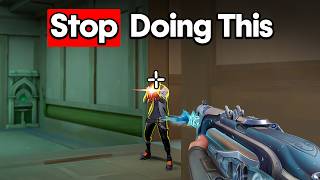

The Aim Trainer Myth Exposed
45sChallenges the common belief that aim trainers are the key to improving, sparking debate among gamers.
▶ Play Clip"Solid content with actionable tips, but the 'overnight' promise is exaggerated; improvement takes consistent practice."
The video presents a comprehensive guide to improving aim in Valorant, emphasizing that aim is not just about crosshair placement but a chain of skills including visualization, reactions, radar usage, confidence, and movement mechanics. The creator, So, provides practical drills and a structured practice schedule to help players improve their duels and rank up.
Crosshair placement is important but not sufficient; Valorant's fast movement means you need to think about where the enemy is behind the wall, not just where your crosshair is.
Predict enemy positions based on agent abilities (e.g., Jett peaks aggressively, Killjoy tucks in with utility). This narrows down likely spots and improves pre-aim.
Mixing up timings and swing widths creates uncertainty, turning 50/50 duels into ones where you have the advantage.
Reaction speed is less important if your crosshair is already close; micro-adjustments are faster than large flicks. Practice in deathmatch by holding angles and focusing on small adjustments.
Practice snapping to bot heads from a resting position, starting slow for accuracy before adding speed. Progress from medium to longer distances.
The radar provides information about enemy positions before they appear on screen, allowing pre-aiming. Zekken is cited as an example of a player who constantly references the radar.
Hesitation loses fights; committing to a decision, even a bad one, is better than freezing. Confidence is a mental framework that allows improvement.
Real improvement requires daily, focused practice. Avoid spreading yourself too thin; structure sessions with specific mechanics.
Example: 10 min range, 20 min deathmatch, 30-40 min ranked, all focusing on one mechanic. Adjust based on available time; add VOD review if you have more time.
Stop before shooting; use counter-strafing to cancel momentum. Silent strafing and wide swings are advanced techniques. Burst firing pace is also crucial.
Improving aim in Valorant is a holistic process that combines mental preparation, consistent practice, and mastering movement mechanics. By integrating these tips into a structured routine, players can see meaningful improvements in their duels and rank.
What is the key to crosshair placement in Valorant?
Think about where the enemy is behind the wall, not just where your crosshair is.
00:27
How can you predict enemy positions based on agent?
Know agent tendencies: Jett peaks aggressively, Killjoy tucks in with utility.
01:07
What is the chain of skills for winning gunfights?
Visualization and reactions working hand in hand.
02:13
How should you practice flicking?
Start slow for accuracy, then add speed; progress from medium to longer distances.
03:20
How does the radar help with aim?
It provides information about enemy positions before they appear, allowing pre-aiming.
04:00
What is 'delusional confidence' in Valorant?
Committing to a decision, even a bad one, is better than freezing.
06:32
What is a structured practice schedule example?
10 min range, 20 min deathmatch, 30-40 min ranked, all focusing on one mechanic.
08:34
Why is movement an underrated aiming tool?
You must stop before shooting; counter-strafing cancels momentum for accuracy.
09:53
What is burst firing pace?
Two taps, full stop, two taps, full stop, at a pace slightly faster than comfortable.
11:38
Visualization and reactions are a chain
This reframes aim as a combined skill, not separate ones, which is a key insight for improvement.
02:13Radar as a live aim tool
Using the radar for pre-aiming is a pro-level technique that many players overlook.
04:00Delusional confidence
The mental aspect of committing to fights is often ignored but crucial for breaking plateaus.
06:32Movement as an aiming tool
Counter-strafing and burst firing are fundamental mechanics that directly affect accuracy.
09:53[00:02] grind for eons in aim trainers, never leaving aim labs or Kovak's routines designed for stats and points? Or does it mean you have to run around the map like Primi, looking to fight everyone and everything as fast as possible?
[00:14] What's up everyone? My name is So, and I'm here to show you that the world of aim in Valorant isn't as complicated as it may seem. So, let me show you exactly why, and more importantly, what you can do about it starting today. And to
[00:27] crosshair placement. Because crosshair placement is only the beginning. You often hear people say that crosshair placement is the most important factor focus on. And to be honest, there's a lot of truth to that. Crosshair
[00:40] placement is still important, but Valorant's movement is so fast in so thinking about keeping your crosshair on the wall, you are already reacting too head level on a random wall means nothing if the enemy is already past the
[00:55] angle, playing a completely different position, or using their utility to get focusing on where your crosshair is sitting on the wall, think about where the enemy actually is behind it.
[01:07] peak and react. Start thinking about enemies as agents, not just nameless bodies. As an example, a Jett on defense is far more likely to be peaking aggressively into mains, like peaking B main on Ascent. Or in other instances,
[01:21] using her updraft to hold an elevated angle such as the top of truck on Bind. Compare this to a Killjoy, who is almost always going to be tucked somewhere their utility. When you know an agent, you can start mentally narrowing down
[01:33] the two or three spots that a player is realistically going to be in, and that accordingly before you even swing. Beyond agents, think about what you are there is any validation to how you approach your fights. If you are always
[01:47] walking out of the same spot at the same time, enemies will start expecting it and they will be pre-aiming you before you even peak. Another aspect to help your approach. You can do this by mixing up your timings by half a second and
[02:00] varying whether you swing wide or tight. Like creating uncertainty in the enemy's head, you can turn a 50/50 duel into one where they react to your plays instead enemy. Getting your crosshair in the right place is only part of the battle.
[02:13] players skip is a larger factor in what decides whether you win or you lose your gun fights. And that's visualization and reactions working hand in hand. Once you have a mental picture of where the enemy is likely to be, what happens when your
[02:27] crosshair is close, but not perfectly on them the second they peek? That is where your reaction kicks in. And your reaction speed in a real game is almost adjustment needs to be. If your crosshair is already within a few pixels
[02:41] do the trick. If your crosshair is on the floor at chest level, you might need to do a major adjustment, which is both slow and mostly inaccurate for many players, causing them to lose the fight. This is why visualization and reactions
[02:54] are not two separate skills. They work as a chain. If you want to practice your micro adjustments, load up a deathmatch, stay generally in one area of the map exclusively in that space. When you hear an enemy close, hold the most likely
[03:07] angle at head height, and focus on landing the first shot with the smallest trying to do a massive flick, you're trying to finish the fight with your Over time, your pre-aim will tighten more and your reaction does less heavy
[03:20] lifting in each fight. For flicking practice, load up in the range, shoot stand at a medium distance. Now you can practice snapping to the head of these bots from a resting position. The goal at the start isn't about speed, it's
[03:33] about accuracy on the first snap. Start slow and tighten the motion before adding speed. A slow accurate flick trains your brain and body accurately, nothing useful besides trying to look cool in these scenarios. After you are
[03:47] comfortable at a medium distance, try and go for a longer range version of the same scenario. After you're done with these exercises, there is another key start to implement in all of your games to help both of your visualization and
[04:00] your reactions on this moving chain, your radar. But before we get into the built-in UAV of Valorant, let's talk about how we can build up your gameplay to be like a radar hack over at the Immortal Road Map Program. Our team of
[04:12] Radiant and VCT coaches can give you personalized feedback inside of our premium 10-week Road Map Program. Our average student gains 500 RR in 10 weeks, and these are some of the things that our students have to say about us.
[04:24] We offer 100 hours of personalized coaching with one-on-ones, mechanics drills, and even private scrims. We're so confident in our coaching that if you don't rank up 500 RR in 10 weeks, we'll give you a full refund. [music] We only
[04:38] season of the program, so use the link in the description to book a call where we'll check your tracker to see if you'd be a good fit for us. Now, back to the be surprised to hear this, but the radar does more for your aim than you think. I
[04:52] bet a lot of players open up the map to check where their teammates are and possibly check why they keep dying by themselves. However, by using the radar, reacting to what they see on their screen. They're constantly processing
[05:05] information before the enemy even appears. Zekken is one of the clearest you watch his Twitch VODs closely, you will notice he references the radar constantly to make aim decisions in real time. When he sees a dot pushing up mid
[05:18] sliding toward that angle the enemy shows up on his screen. He's not reacting to the information the mini-map gives him 2 seconds earlier. Pull up any recent Zekken stream VOD and watch his eye movement glancing at his radar. When
[05:33] enemies are funneling into a choke, his crosshair is pre-positioned on that the radar behind the play, he is already turning before the footstep audio registers or they fully show themselves. The radar isn't just a navigation tool.
[05:47] It is a live representation of where your crosshair should be moving forward. Utility feeds into this exact same idea as well. When your Sova fires a drone can immediately cross off the B site and mid from your mental map. Your crosshair
[06:02] three possible entry points anymore. It narrows it down to just one. When your KAY/O suppresses a corner and scans someone, you know that escape characters can't escape anymore. When your Brimstone drops a smoke on the map, the
[06:16] smoke when you enter [music] or retake a site. All of that utility is directly crosshair needs to cover, which makes every aim decision you take faster and not as separate systems for your aim, but as the foundation that makes your
[06:32] All of that preparation we've talked about in this chain of tips means nothing if you freeze when the moment to fight comes. And that's a problem almost every low ELO player has. You need delusional confidence in order to
[06:45] improve. This is the part most aim guides skip entirely, and it is honestly plateau in their rank grinds. If you don't know whether to swing or if you feel doubt the moment an enemy is close, you've already lost the fight before
[06:58] where you commit [music] and use your gun is better than a bad play where you freeze and never take the fight at all. At least the first one gives you a rep next time when you approach a fight like that. You could win that bad fight off
[07:12] of your mechanics alone, even if the fight itself wasn't perfect or ideal Players who genuinely grind to get better at Valorant don't approach duels prepare mentally for the fight before it happens, they commit to the decision,
[07:25] and they move on immediately after the result regardless of outcome. That's not arrogance, that's the mental framework that lets you actually build on your hesitation loop. Next time you feel doubt on whether to swing, ignore it and
[07:38] swing anyway. You will miss your shots sometimes, but that's how the habit gets preparing yourself to be confident is to ask yourself honestly, are you actually practicing every day or you telling yourself that you are? There is a real
[07:51] grinding a specific mechanic with intention. If you want to aim better than other players in your lobby, there is no version of that reality where you consistent part of your routine. Whether that is a deathmatch before ranked, a
[08:05] range drill in the morning, or dedicated aim trainer session, it has to become a anything actually changes from your gameplay. But wanting to be better and two completely different things, [music] and most players are lying to themselves
[08:19] stop lying to yourself, build a realistic practice schedule. The biggest is trying to do everything in one session. You play ranked for 2 hours, squeeze in one deathmatch, and call it a day. Nothing gets deep enough to
[08:34] spreading yourself too thin. If you have 1 hour a day due to school or work, structure it like this: 10 minutes in the range working on one mechanic only. Whether that's counter strafing, burst firing, pre-fire timings, then spend 20
[08:48] minutes on deathmatch with that same specific mechanic as your focus point. Then 30 to 40 minutes of ranked where you actively look for those moments to apply what you just drilled. That structure means your practice directly
[09:00] existing separately from it. The best part about this realistic schedule? You can adjust based on the time you have and fit more quality reps when you do have more time or less time. If you have 30 minutes total, cut the range session
[09:12] to 5 minutes and DM to 15. Then play one or two team deathmatches. If you have 2 hours, add a VOD review at the end where you pull two or three death clips and diagnose what the actual mechanical failure was, not just I got out-aimed.
[09:25] Were you moving while you're shooting? Were you crouching too much? That self-assessment is what tells you what to focus on in tomorrow's session. Set this, too. If you're silver, you are not reaching immortal in 2 weeks. But if you
[09:39] your mechanics will feel genuinely different. Your duels will feel more controlled, and your rank will reflect that over time. The players who climb are the most consistent. And even if you fix everything we have covered so far,
[09:53] there's still one thing quietly losing you duels that we hinted at in our first chain with visualization, Valorant's movement mechanics. And in Valorant, movement is your most underrated aiming tool. Most players spend hours grinding
[10:06] their aim and never thinking about the one thing that is directly affecting the accuracy of every single bullet they shoot. If you are holding W and firing at the same time in a large majority of situations, you are spraying bullets
[10:18] with zero accuracy. So, stop gambling that you get a kill. That habit alone is quietly losing you more duels than any crosshair placement mistake ever has. Every shot you fire in Valorant needs to happen from a stop position, or at the
[10:31] very least from the end of a completed strafe. The mechanics work like this. is wide. When you fully stop, your spread tightens to its base value. the opposite direction key to cancel your momentum instantly, is what lets
[10:44] you go from moving to accurate in the shortest possible time. If you're not you are slower and less accurate than the players who are, and you will lose crosshair placement is better than theirs. Silent strafing is the next
[10:58] quick intervals, you create lateral without fully breaking your own accuracy window. Wide swings work on the same angle where the enemy already has your head pre-aimed, swinging wide forces
[11:12] them to move their crosshair further and gives you a timing advantage. These are Radiant players. They're fundamental movement skills that anyone can drill in Deathmatch with 10 to 20 minutes of focus. The one movement mechanic that
[11:24] most players sleep on completely is burst firing pace. If you are stopping slowly, you are handing the enemy a free window to reposition, reload, or swing enough that the enemy doesn't get a clean pause to react to them, and
[11:38] range can help you. Go in the range, do two taps, full stop, two taps, full stop, and at a pace that feels slightly faster than comfortable. That pace is what high-level players use to stack
[11:50] magazine. There you have [music] it. Which tip are you going to be working on first? Let me know in the comments, and I'll catch you in the next one.
⚡ Saved you 0h 11m reading this? Transcribe any YouTube video for free — no signup needed.