
Why Your Crosshair Placement Sucks
60sChallenges a common misconception with a relatable analogy, offering a fresh perspective that viewers will want to share.
▶ Play Clip"Solid content that delivers on the promise, but the sponsor break and repetitive points dilute the value."
This video is a no-nonsense guide to improving in Valorant and ranking up, focusing on mechanics, crosshair placement, movement, deathmatch practice, VOD reviews, and building a personal playstyle. The creator emphasizes intentional practice over generic advice, offering a structured approach to transfer raw aim into real-game performance and avoid common pitfalls like filling roles.
The video promises a no-fluff guide to improving in Valorant, starting with mechanics, and criticizes generic advice from TikTok and shorts.
Raw aim is isolated using third-party aim trainers like Aim Lab. The Voltaic Aim Labs Valorant benchmarks are recommended to test and score raw aim, identifying weak categories to focus on.
Many players fail to transfer aim trainer results to actual gameplay. Playing Sheriff and Guardian deathmatches is suggested to practice micro-adjustments, tracking, and flicking in a realistic context.
Crosshair placement is about predicting where enemies will be, not just clearing angles. The creator uses the analogy of wall hackers who pre-aim where enemies actually are, and advises picturing enemies behind walls.
Promotes a premium coaching program claiming average students gain 500 RR in 10 weeks, with a refund guarantee. This is a sponsor break.
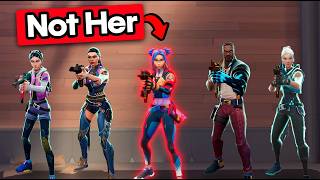
To improve, players must take winnable gunfights and commit fully, avoiding passive play. The creator references Asuna as an example of confident, committed play.
Movement is an overlooked skill. Intentional movement involves moving unpredictably, avoiding autopilot AD spam, and using strafes, crouches, and wide swings to dodge bullets and be less readable.
Deathmatch is powerful but often wasted. Always enter with a specific goal, such as clearing close angles or focusing on movement, to improve mechanics effectively.
VOD reviews should be done at 2-3x speed, focusing on one to three consistent issues rather than a long list. Set a specific goal before reviewing, and use pro ranked VODs (not VCT) for reference.
Identify your preferred playstyle (aggressive, passive, lurker, etc.) and study 2-3 pro players who match it. Learn their utility setups and mimic them in practice.
Filling roles in ranked is difficult for consistent improvement. Instead, pick an agent that fits your playstyle, even if it sacrifices the 'ideal' composition, as consistency in agent mastery is key.
Improving in Valorant requires intentional practice across mechanics, crosshair placement, movement, and mental approach. By focusing on specific goals, reviewing VODs effectively, and building a consistent playstyle, players can break through rank plateaus.
What is the recommended way to isolate raw aim?
Use third-party aim trainers like Aim Lab with Voltaic benchmarks.
00:43
Why are Sheriff and Guardian DMs recommended?
They require using all core aspects of raw aim: micro-adjustments, tracking, flicking.
01:24
What is the key to good crosshair placement?
Predicting where enemies can be based on situation, not just clearing angles.
02:16
What is the recommended speed for VOD review?
2-3 times faster than normal speed.
07:23
How many consistent issues should you focus on in VOD review?
One to three consistent issues.
07:49
Why avoid using VCT VODs for learning?
VCT is not ranked; pro ranked VODs show fundamentals in a vulnerable state.
08:31
What is the main downside of being a fill main?
It's one of the most difficult ways to climb because of inconsistent agent mastery.
11:32
Wall hacker analogy
Explains crosshair placement as prediction, not just clearing angles.
02:16Intentional movement
Emphasizes movement as a skill that can be practiced and is often overlooked.
05:10VOD review speed
Practical tip to watch VODs at 2-3x speed to spot mistakes efficiently.
07:23Avoid filling
Challenges common advice to fill for team composition, advocating for consistent agent mastery.
11:32[00:01] YouTube guides, tried random tips from TikTok or shorts, and honestly, most of it feels useless because the advice you always hear is either too generic or it's something you try once, don't instantly see results from, and then you
[00:14] today, I'm not wasting your time with fluff. This is a no-BS guide to improving in Valorant and finally ranking up, starting with mechanics. Valorant mechanic is your raw aim. And yeah, aim isn't everything, but the
[00:29] consistent you become. That's because having better raw aim means you stop you'll actually start trusting your hands to aim exactly where you're thinking. Now, the best way to isolate raw aim is to use a third-party aim
[00:43] remove everything else, utility, positioning, timing, teammates, mechanics in the purest form. And if you want an actual system to follow, use the Voltaic Aim Labs Valorant benchmarks. These benchmarks test your raw aim
[00:56] actually relate to Valorant. And after each scenario, you get a score tied to a at aim?" you get a clear answer like, "My tracking is good, but my what makes it useful. Then, once you've tested yourself, you just grind the same
[01:10] scenarios again, but focus mostly on the categories you scored worst in because back. Now, here's the problem. Most players can aim train for weeks and everything because they have no idea how to transfer raw aim into real in-game
[01:24] you. One of the best ways to transfer your raw aim from aim trainers to Valorant is to play more DMs. Specifically, Sheriff and Guardian DMs. The reason why these DMs are so impactful for translating your aim is
[01:36] because it requires you to use all the core aspects of raw aim to perform well. Micro-adjustments, tracking, flicking, you name it. It's in these structured DMs. Not only that, it helps your movement shine to new levels, mainly
[01:48] to back you up like a regular Vandal or Phantom DM. Now, if you feel like your whiffing shots in game, it's probably Crosshair placement is one of the most misunderstood concepts in Valorant
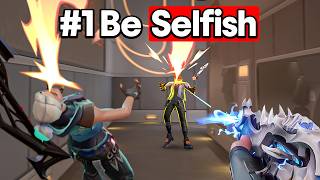
[02:02] vague aim better skill. But think about it like this, who has the best crosshair placement in the world? [music] Wall hackers. They don't just clear every perfect textbook peaks, they just pre-aim where the enemy actually is.
[02:16] Okay, obviously we don't have wall hacks unless you're level 20 Reyna main on a suspicious new account. But the point is this, good crosshair placement is really just the ability to predict where enemies can be. And I see so many
[02:29] players clear every angle like a robot, only to get caught off guard by someone technically clear everything? Sure. Did they have good crosshair placement? No, because their crosshair wasn't placed at the one spot that actually matters.
[02:42] the enemy is likely to be based on the situation, whether that's their economy, their tendencies, or their positioning for the side they're on. For example, if your opponents are on an eco and you're holding an angle with your crosshair
[02:55] side, that's bad crosshair placement because eco weapons like the Stingers and Sheriffs thrive off wide swings and fast movement. So what happens? You hold just get [music] deleted. Instead of thinking of crosshair placement like
[03:08] some separate skill, I'll pretend sometimes that I actually do have wall literally picture where the enemy is behind the wall as if they're pinged. Then I place my crosshair where I think their head will appear. And over time,
[03:21] the instincts to predict how people play different angles in different scenarios your aim is actually solid but you're still stuck in lower ranks, our team of personalized feedback inside of our premium 10-week Immortal Roadmap
[03:37] program. Our average student gains 500 RR in 10 weeks and these are some of the things our students have to say about us. We offer 100 plus hours of coaching, one-on-ones, mechanics drills, and even private scrims with the community. And
[03:49] we're so confident in our coaching that if you don't rank up 500 RR in 10 weeks, we'll give you a full refund, guaranteed. We only have a few spots link in the description of this video to book a free strategy call. We'll check
[04:02] fit. Now, back to the video. Crosshair placement won't win you gunfights alone. Some players don't understand that they need to utilize their hard-earned aim. I who never commit to anything. They jiggle, they spam smokes, and sometimes
[04:16] crosshair. And even if your aim is trash, a big part of improving your mechanics is giving yourself the opportunity to use your aim. That means a beginner, make sure you're actually swinging your opponents even when you're
[04:30] want to improve as fast as possible, you need to take all the gunfights you can. that in DMs, but even when playing ranked, if you tend to sit back a lot, gunfights in more scenarios. The best mechanical players in the world trust
[04:45] in as many winnable fights as possible. should be playing like someone who's trying to become him. That doesn't mean constantly taking stupid fights. It just means that when you decide to fight, you
[04:57] fully commit with the confidence of someone who really, really, really wants to be like Asuna. Now, having good aim without good movement is basically probably the most overlooked mechanical skill in Valorant. Valorant movement
[05:10] looks simple at first, but intentional movement is a skill even the best pros still grind constantly. Intentional movement means that you're moving while give you an example of what not to do for intentional movement. A lot of
[05:22] players tend to spam with A and D, but then stop right as the enemy peeks them, essentially giving them a free headshot. Meanwhile, some pros barely move at all, moment and dodge bullets like they're Neo from The Matrix. Unpredictable
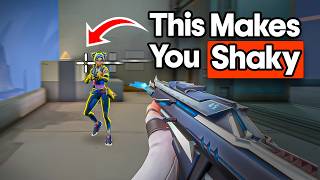
[05:35] movement is also huge. You can't autopilot the same AD AD rhythm every single fight. Sometimes, you should swing wider than expected. Sometimes, you should crouch multiple times in your fight. Sometimes, you should strafe in
[05:47] up the enemy timing. The goal is to stop being easily readable by putting do you actually practice this? This leads us how to death match correctly. We talked about death match earlier in the video, but let's focus on what it
[06:01] actually means. As a tool, death match is powerful, but most players only use autopilot mode and get almost nothing out of it. And yeah, death match can be boring, tilting, or just feel pointless at times. The spawns can drive you mad,
[06:13] and there's always a guy sitting at an angle with a judge. I swear. Really, I reality, it's the only mode that gives you consistent gun fights back-to-back, your mechanics in game. The key to make the best use of DMs is simple. Always go
[06:27] into death match with a specific goal. For example, maybe you bump into objects when taking gun fights. If that's the case, your goal will be to clear close extra [music] attention to your surroundings. If instead, you have no
[06:40] focusing on your movement. That's where many players have the most room for improvement. A movement goal for your next DMs could be to avoid defaulting to more intentional overall in your death matches with goals in mind will
[06:54] will also help you improve your aim. Basically, if you can set aside 30 to 60 goals, your mechanics will improve insanely fast. But, if your movement is even know what the goals are to set, that's where VOD reviews come in. VOD
[07:09] reviews are one of the most difficult components to utilize when you're trying so many things that you could point out that are mistakes that you may not be they are mistakes. It becomes confusing very quickly. So, you need to find a way
[07:23] to utilize VOD reviewing in a productive manner. So, to start, don't watch your VODs at normal speed. Up that speed up to two times faster. Even three times faster is totally fine. And if you're not sure where to start, start with the
[07:37] dumb deaths, your bad movement, your awkward gun fights, your missed utility, rotations that make no sense, and crosshair placement mistakes that you sure about in the moment. And keep in mind, when you're looking through these
[07:49] mistakes, and you're not trying to build a list. If you build a list of 50 focus your improvement on any of those mistakes. So, instead, you're trying to find one to three consistent issues that you see in your own gameplay. And
[08:03] are, the better. Because if you can only VOD review when you're in the mood to be consistently. If you're still struggling to find what to fix, then set a goal before the VOD, like in our DMs. Make it intentional. Today, I'm reviewing my
[08:16] movement. Today, I'm reviewing my macro rotations. Today, I'm reviewing my post plants. Then, you can cross-reference what you see with pro replays from their ranked games. Please, please, please, avoid using VCT. VCT is not ranked, and
[08:31] you will not learn the same if you use those VCT VODs. If you're interested in the team play for your premier team, then go right ahead, but they're very different things. Either way, the value you get from VOD reviewing is important.
[08:43] Trying to improve purely off of your own understanding can be difficult. So, like I mentioned, the reason why we focus on pro players and their ranked VODs is because that is them in their most vulnerable state. It's all fundamentals.
[08:57] Sometimes, they're not even on their main roles, and that means they have to have to have better fundamentals than everyone else in the lobby in order to hit those radiant ranks consistently. So, if you're interested, search YouTube
[09:10] and look for radiant ranked VODs from your favorite players. Type their name to their Twitch channels to see if they have some recent streams. Even better if you can watch a live stream when someone's playing something that you're
[09:23] corrode with an agent you want to learn. Then, when you do get those VODs, set movement? How does Primy move? Do you want to improve your Sova utility? How does Brock play Sova? No matter who you look at, especially as a beginner, you
[09:37] can take away insane value from a single VOD review. And you only need a couple of goals your next session. Speaking of sessions, when you are watching these that not a lot of people do. They have very distinct play styles, even in roles
[09:51] if you want to rank up long-term, you need to build your own play style. [music] So, what exactly does it mean to build your own play style? Well, let's ask a few questions. Do you prefer being aggressive, forcing mistakes, and
[10:04] prefer playing passive, letting enemies overextend, and then punishing them? Do you like to rotate fast on defense? Or do you prefer to anchor a site and then you always find yourself entering, or are you naturally more of a lurk player
[10:16] who likes to play off of your team's pressure? Once you understand how you with similar styles. That makes choosing a role to focus on and VOD reviewing way easier. Ideally, this is where you can find a list of who you would like to
[10:29] look at. Try to limit it down to two or three pro players that you respect and example, study players like Nats or Meteor if you want to master lurking and map control. Another example would be studying aspas or Kayak if you want to
[10:42] play aggressive duelists. Now, with all those fundamentals we talked about when and who you need to look at for your play style, it's important to understand now what abilities and utility you need to learn for those play styles you want
[10:55] to mimic. If you look at Nats and you see that he has three different setups on his defense that he mainly uses, why would you not practice those three you see that Nats likes to lurk a
[11:07] certain way with certain trips, then it makes sense to mimic those trips to help you learn how to lurk like Nats. If you see aspas entry on Jett when he goes ground, you might notice that he takes different fights than you might be used
[11:20] go into a server, go into offline, find the time for yourself to learn those agents and what they want to do. And if going to struggle with your other fundamentals because you're going to be
[11:32] too focused on your utility usage. Finally, with all of those other things that we talked about, there is one major thing that could hold you back despite other things. And that's becoming a fill main. If you like to fill in ranked, I'm
[11:45] sorry to say, it's one of the most difficult ways to climb in Valorant. fun ways to play the game, but if you want to improve consistently, you need to worry about that could affect the rest of your mechanics. If you have 10
[11:59] agents in your agent pool versus the guy that instalocks Reyna every game, that a lot more consistent because he has so much less to worry about [music] in terms of his decision making. He understands exactly what Reyna does and
[12:11] Reyna. So, don't lock yourself into filling these games just because you have to instalock duelists, and you maybe aren't sure about something. Instead, find an agent that fits your playstyle even at the sacrifice of the
[12:25] correct composition. I'm doing that in quotations [music] because the correct composition isn't real in ranked. You can have ideal compositions, but it's okay if you can block a third duelist. It's okay if you want to lock two
[12:37] play initiator. If you've never played initiator before. Don't put yourself in a position where you need to fill these things when you're not familiar. Learn ranked. And finally, once you understand everything we've talked about in this
[12:50] your roles, [music] your playstyle, the fact that you're not rank up to your dream rank. Thank you guys for watching. If you're curious videos out. Otherwise, I'll see you guys next time.
⚡ Saved you 0h 13m reading this? Transcribe any YouTube video for free — no signup needed.